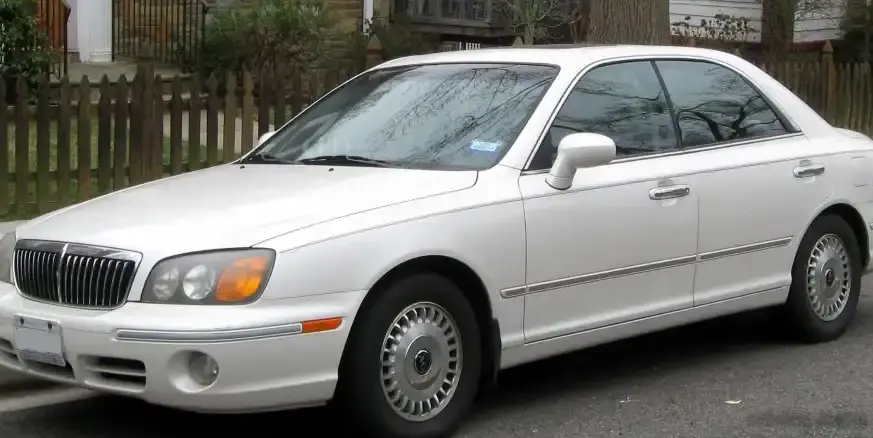
The Hyundai Grandeur III, known as the Azera in some markets, represented a significant step forward for the South Korean automaker in the late 1990s and early 2000s. Produced between 1999 and 2002, the XG generation aimed to establish Hyundai as a contender in the mid-size luxury sedan segment. The 2.0i V6 Automatic variant, equipped with the Delta 2.0-liter engine producing 148 horsepower, served as a key entry point into the Grandeur lineup, offering a balance of comfort, features, and affordability. It was positioned below the more powerful 2.5L V6 and, in some markets, a diesel option, targeting buyers seeking a refined driving experience without the higher price tag of the flagship models.
Technical Specifications
| Brand | Hyundai |
| Model | Grandeur/Azera |
| Generation | Grandeur III (XG) |
| Type (Engine) | 2.0i V6 (148 Hp) Automatic |
| Start of production | 1999 |
| End of production | 2002 |
| Powertrain Architecture | Internal Combustion engine |
| Body type | Sedan |
| Seats | 5 |
| Doors | 4 |
| Fuel Type | Petrol (Gasoline) |
| Weight-to-power ratio | 10 kg/Hp, 100.3 Hp/tonne |
| Weight-to-torque ratio | 8.1 kg/Nm, 124.1 Nm/tonne |
| Power | 148 Hp @ 6300 rpm |
| Power per litre | 74.1 Hp/l |
| Torque | 183 Nm @ 4000 rpm, 134.97 lb.-ft. @ 4000 rpm |
| Engine layout | Front, Transverse |
| Engine Model/Code | Delta / G6BP |
| Engine displacement | 1998 cm3, 121.93 cu. in. |
| Number of cylinders | 6 |
| Engine configuration | V-engine |
| Compression ratio | 10:1 |
| Number of valves per cylinder | 4 |
| Fuel injection system | Multi-port manifold injection |
| Engine aspiration | Naturally aspirated engine |
| Valvetrain | DOHC |
| Engine oil capacity | 4.5 l, 4.76 US qt | 3.96 UK qt |
| Kerb Weight | 1475 kg, 3251.82 lbs |
| Trunk (boot) space – minimum | 450 l, 15.89 cu. ft |
| Fuel tank capacity | 70 l, 18.49 US gal | 15.4 UK gal |
| Length | 4865 mm, 191.54 in |
| Width | 1825 mm, 71.85 in |
| Height | 1420 mm, 55.91 in |
| Wheelbase | 2750 mm, 108.27 in |
| Front track | 1540 mm, 60.63 in |
| Rear (Back) track | 1520 mm, 59.84 in |
| Ride height (ground clearance) | 160 mm, 6.3 in |
| Drag coefficient (Cd) | 0.32 |
| Minimum turning circle (turning diameter) | 11 m, 36.09 ft |
| Drivetrain Architecture | The Internal combustion engine (ICE) drives the front wheels of the vehicle. |
| Drive wheel | Front wheel drive |
| Number of gears and type of gearbox | 4 gears, automatic transmission |
| Front suspension | Double wishbone |
| Rear suspension | Independent multi-link suspension |
| Front brakes | Ventilated discs |
| Rear brakes | Disc |
| Assisting systems | ABS (Anti-lock braking system) |
| Steering type | Steering rack and pinion |
| Power steering | Hydraulic Steering |
| Tires size | 205/60 R15 V |
| Wheel rims size | 15 |
Powertrain & Engine Architecture
The heart of the Grandeur III 2.0i is the Hyundai Delta engine, specifically the G6BP code. This 1.998-liter (121.93 cubic inches) V6 engine utilizes a naturally aspirated configuration with a 10:1 compression ratio. It features a double overhead camshaft (DOHC) valvetrain with four valves per cylinder, contributing to its relatively efficient power output. Fuel delivery is managed by a multi-port fuel injection system, a common setup for engines of this era. The engine’s design prioritized smoothness and refinement over outright performance. The automatic transmission is a conventional 4-speed unit, chosen for its ease of use and suitability for the target market. While not offering the sporty responsiveness of a manual gearbox, it provided comfortable and effortless cruising.
Driving Characteristics
The 2.0i V6 Automatic Grandeur offered a comfortable and predictable driving experience. With 148 horsepower and 183 Nm (134.97 lb-ft) of torque, acceleration was adequate for everyday driving, but not particularly brisk. The 4-speed automatic transmission, while smooth, lacked the close gear ratios found in more modern transmissions, resulting in a noticeable delay during overtaking maneuvers. Compared to the 2.5L V6, the 2.0L felt noticeably less powerful, especially when fully loaded. However, the 2.0L’s lighter weight and less stressed engine contributed to slightly better fuel economy. The focus was on providing a relaxed and refined ride, making it well-suited for highway cruising and city commuting.
Equipment & Trim Levels
The 2.0i Automatic trim typically included features such as air conditioning, power windows and locks, a basic audio system, and cloth upholstery. Higher trim levels, often denoted by additional packages, added features like leather seats, a sunroof, upgraded audio systems, and alloy wheels. Safety features were relatively basic for the time, typically including ABS (Anti-lock Braking System) and dual front airbags. The interior design was generally conservative, prioritizing functionality and comfort over stylistic flair. The dashboard layout was straightforward, with easy-to-use controls.
Chassis & Braking
The Grandeur III utilized a front-wheel-drive layout with a double wishbone suspension at the front and an independent multi-link suspension at the rear. This suspension setup aimed to provide a comfortable ride while maintaining reasonable handling characteristics. The front brakes were ventilated discs, offering good stopping power, while the rear brakes were solid discs. The steering was rack and pinion with hydraulic power assistance, providing a light and easy steering feel. The 205/60 R15 tires offered a good balance of comfort and grip for typical driving conditions.
Market Reception & Comparison
The Hyundai Grandeur III 2.0i Automatic was generally well-received as a value-oriented mid-size sedan. Critics praised its spacious interior, comfortable ride, and generous features for the price. However, it was often criticized for its lack of sporty handling and its relatively unrefined engine compared to some of its Japanese and European competitors. In terms of fuel economy, the 2.0L variant offered a slight advantage over the 2.5L V6, but it was not class-leading. Reliability was generally good, although some owners reported minor issues with the automatic transmission over time. Compared to the 2.5L V6, the 2.0L appealed to buyers who prioritized fuel efficiency and affordability over outright performance.
Legacy
The Hyundai Grandeur III 2.0i Automatic played a crucial role in establishing Hyundai’s reputation for building reliable and affordable vehicles. While not a performance icon, it offered a compelling package for buyers seeking a comfortable and well-equipped sedan. Today, these vehicles are relatively rare and are often sought after by collectors and enthusiasts who appreciate their classic styling and simple mechanicals. The Delta engine, while not known for its high performance, proved to be a durable and relatively easy-to-maintain powerplant. The 4-speed automatic transmission, while dated by modern standards, is generally reliable if properly maintained. In the used car market, well-maintained examples of the Grandeur III 2.0i Automatic can still provide years of reliable service.