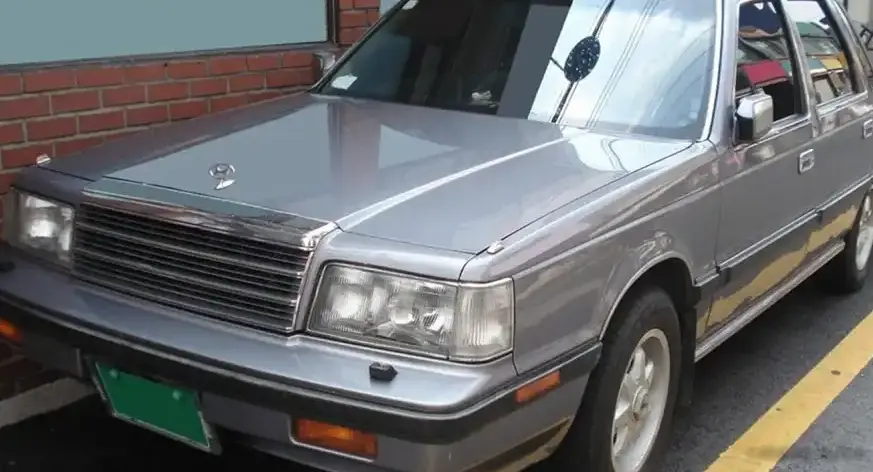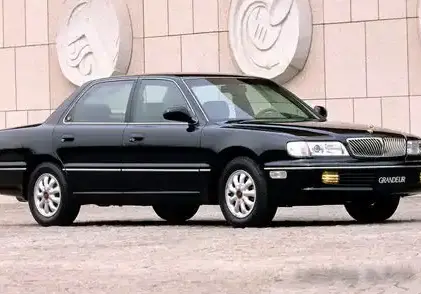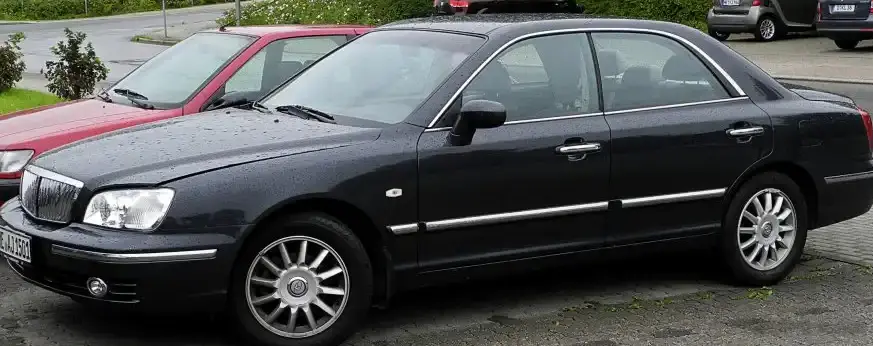
The Hyundai Grandeur III (XG), specifically the facelifted version produced from 2003 to 2005, represented a significant step forward for Hyundai in the mid-size luxury sedan segment. This iteration, often marketed as the Azera in North America, aimed to compete with established Japanese and American brands. The 2.0i V6 Automatic variant occupied a middle ground within the XG lineup, offering a balance between performance, fuel efficiency, and affordability. It served as a more accessible entry point into the Grandeur range compared to the more powerful 3.0L V6 models, targeting buyers who prioritized a comfortable ride and refined interior over outright speed.
Technical Specifications
| Brand | Hyundai |
| Model | Grandeur/Azera |
| Generation | Grandeur III (XG, facelift 2003) |
| Type (Engine) | 2.0i V6 (137 Hp) Automatic |
| Start of production | 2003 |
| End of production | 2005 |
| Powertrain Architecture | Internal Combustion engine |
| Body type | Sedan |
| Seats | 5 |
| Doors | 4 |
| Fuel Type | Petrol (Gasoline) |
| Maximum speed | 192 km/h (119.3 mph) |
| Weight-to-power ratio | 11.2 kg/Hp, 89.1 Hp/tonne |
| Weight-to-torque ratio | 8.7 kg/Nm, 115.2 Nm/tonne |
| Power | 137 Hp @ 6000 rpm |
| Power per litre | 68.6 Hp/l |
| Torque | 177 Nm @ 4000 rpm (130.55 lb.-ft. @ 4000 rpm) |
| Engine layout | Front, Transverse |
| Engine Model/Code | Delta / G6BP |
| Engine displacement | 1998 cm3 (121.93 cu. in.) |
| Number of cylinders | 6 |
| Engine configuration | V-engine |
| Compression ratio | 10:1 |
| Number of valves per cylinder | 4 |
| Fuel injection system | Multi-port manifold injection |
| Engine aspiration | Naturally aspirated engine |
| Valvetrain | DOHC |
| Engine oil capacity | 4.3 l (4.54 US qt | 3.78 UK qt) |
| Kerb Weight | 1537 kg (3388.5 lbs) |
| Max. weight | 2220 kg (4894.26 lbs) |
| Max load | 683 kg (1505.76 lbs) |
| Trunk (boot) space – minimum | 410 l (14.48 cu. ft) |
| Fuel tank capacity | 70 l (18.49 US gal | 15.4 UK gal) |
| Length | 4875 mm (191.93 in) |
| Width | 1800 mm (70.87 in) |
| Height | 1420 mm (55.91 in) |
| Wheelbase | 2750 mm (108.27 in) |
| Front track | 1540 mm (60.63 in) |
| Rear (Back) track | 1520 mm (59.84 in) |
| Ride height (ground clearance) | 160 mm (6.3 in) |
| Minimum turning circle (turning diameter) | 12.6 m (41.34 ft) |
| Drivetrain Architecture | The Internal combustion engine (ICE) drives the front wheels of the vehicle. |
| Drive wheel | Front wheel drive |
| Number of gears and type of gearbox | 4 gears, automatic transmission |
| Front brakes | Ventilated discs |
| Rear brakes | Disc |
| Assisting systems | ABS (Anti-lock braking system) |
| Steering type | Steering rack and pinion |
| Power steering | Hydraulic Steering |
| Tires size | 205/65 R15 H |
| Wheel rims size | 15 |
Powertrain & Engine Architecture
The heart of the 2.0i Grandeur was the Hyundai Delta engine, specifically the G6BP variant. This 1.998-liter, naturally aspirated V6 engine featured a 60-degree V-angle and a double overhead camshaft (DOHC) valvetrain with four valves per cylinder. The engine utilized a multi-port fuel injection system, delivering fuel directly into the intake ports. The 10:1 compression ratio was a standard figure for the time, balancing performance and fuel efficiency. Paired with this engine was a four-speed automatic transmission, designed for smooth and comfortable shifts. This transmission, while not offering the responsiveness of a manual, was well-suited to the Grandeur’s intended role as a comfortable cruiser. The G6BP engine was known for its relatively simple design, contributing to its overall reliability.
Driving Characteristics
The 2.0i V6 Automatic Grandeur offered a comfortable and predictable driving experience. With 137 horsepower and 130.55 lb-ft of torque, acceleration was adequate for everyday driving, but not particularly sporty. The four-speed automatic transmission, while smooth, lacked the close gear ratios found in more performance-oriented vehicles. This resulted in a noticeable delay during overtaking maneuvers. Compared to the 3.0L V6 models, the 2.0i felt less powerful, especially when fully loaded with passengers and cargo. However, the 2.0i’s lighter weight and less stressed engine contributed to slightly better fuel economy. The front-wheel-drive configuration provided decent traction in most conditions, but lacked the all-weather capability of an all-wheel-drive system.
Equipment & Trim Levels
The 2.0i V6 Automatic trim typically included features such as air conditioning, power windows and locks, a CD player, and cloth upholstery. Higher trim levels, often denoted by additional packages, added features like leather seats, a sunroof, upgraded audio systems, and automatic climate control. Safety features included ABS (Anti-lock Braking System) as standard equipment. The interior design was generally conservative and focused on providing a comfortable and spacious environment for passengers. The dashboard layout was straightforward and easy to use, with clearly labeled controls.
Chassis & Braking
The Grandeur III utilized a front-wheel-drive platform with an independent suspension system in the front and a multi-link suspension in the rear. The front suspension featured MacPherson struts, while the rear suspension aimed to provide a comfortable ride and stable handling. Braking duties were handled by ventilated discs in the front and solid discs in the rear. The ABS system helped to prevent wheel lockup during hard braking, enhancing safety. The suspension tuning was geared towards comfort rather than sporty handling, resulting in a smooth ride over most road surfaces. Stabilizer bars were included to reduce body roll during cornering, but the Grandeur was not designed to be a particularly agile vehicle.
Market Reception & Comparison
The 2.0i V6 Automatic Grandeur received mixed reviews from automotive critics. While praised for its spacious interior, comfortable ride, and competitive price, it was often criticized for its lack of performance and somewhat bland styling. Compared to the 3.0L V6 models, the 2.0i offered a more affordable entry point into the Grandeur lineup, but at the expense of performance. Fuel economy was generally considered to be good for a vehicle of its size and class. Reliability was also a positive point, with the Delta engine proving to be relatively durable. In terms of competition, the Grandeur 2.0i faced rivals such as the Toyota Camry, Honda Accord, and Nissan Maxima.
Legacy
The Hyundai Grandeur III (XG) 2.0i V6 Automatic holds a modest but respectable position in the used car market today. The G6BP engine, while not known for its blistering performance, has proven to be reasonably reliable with proper maintenance. Common issues include oil leaks and occasional sensor failures, but these are generally not major concerns. The four-speed automatic transmission is also generally durable, although it may exhibit some wear and tear after high mileage. The Grandeur’s spacious interior and comfortable ride continue to appeal to buyers seeking an affordable and reliable mid-size sedan. While it may not be a collector’s item, the 2.0i V6 Automatic Grandeur remains a viable option for those seeking a practical and dependable vehicle.