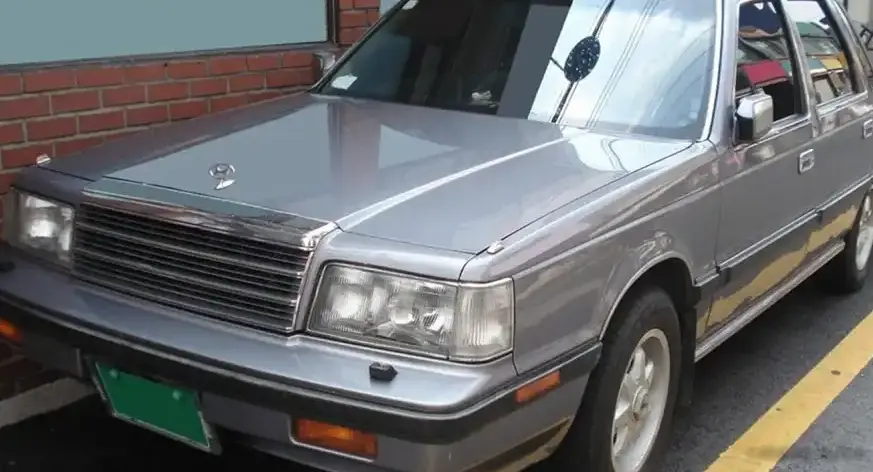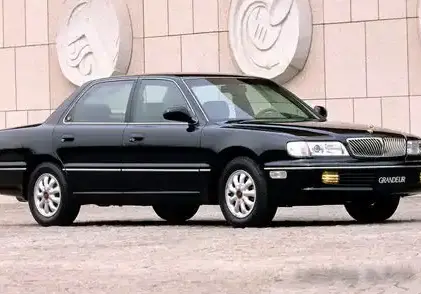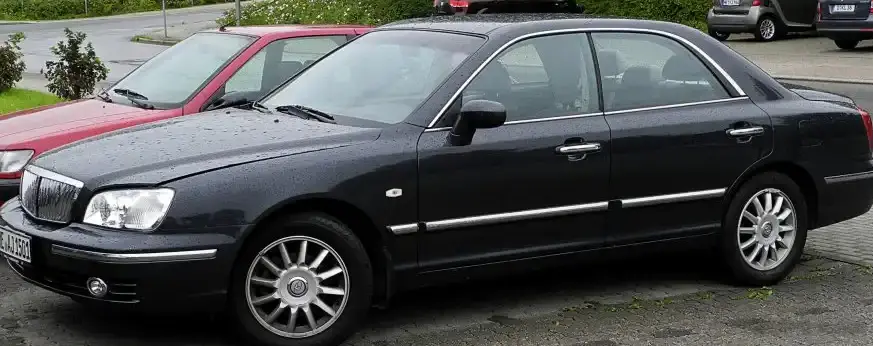
The Hyundai Grandeur III (XG), specifically the facelifted version produced from 2003 to 2005, represented a significant step forward for Hyundai in the mid-size luxury sedan segment. This generation, known as the XG30/XG35 in some markets, aimed to compete with established Japanese and American brands. The 2.5i V6 Automatic variant, powered by the Delta engine and paired with a four-speed automatic transmission, occupied a middle ground within the Grandeur III lineup, offering a balance of performance and affordability. It was positioned above the base 2.0L models and below the more powerful 3.0L V6 options.
Technical Specifications
| Brand | Hyundai |
| Model | Grandeur/Azera |
| Generation | Grandeur III (XG, facelift 2003) |
| Type (Engine) | 2.5i V6 (172 Hp) Automatic |
| Start of production | 2003 |
| End of production | 2005 |
| Powertrain Architecture | Internal Combustion engine |
| Body type | Sedan |
| Seats | 5 |
| Doors | 4 |
| Fuel Type | Petrol (Gasoline) |
| Maximum speed | 205 km/h (127.38 mph) |
| Weight-to-power ratio | 9.1 kg/Hp, 110.5 Hp/tonne |
| Weight-to-torque ratio | 6.9 kg/Nm, 144.5 Nm/tonne |
| Power | 172 Hp @ 6250 rpm |
| Power per litre | 69 Hp/l |
| Torque | 225 Nm @ 4000 rpm (165.95 lb.-ft. @ 4000 rpm) |
| Engine layout | Front, Transverse |
| Engine Model/Code | Delta / G6BV |
| Engine displacement | 2494 cm3 (152.19 cu. in.) |
| Number of cylinders | 6 |
| Engine configuration | V-engine |
| Cylinder Bore | 84 mm (3.31 in.) |
| Piston Stroke | 75 mm (2.95 in.) |
| Compression ratio | 10:1 |
| Number of valves per cylinder | 4 |
| Fuel injection system | Multi-port manifold injection |
| Engine aspiration | Naturally aspirated engine |
| Valvetrain | DOHC |
| Engine oil capacity | 4.5 l (4.76 US qt | 3.96 UK qt) |
| Coolant | 9.5 l (10.04 US qt | 8.36 UK qt) |
| Kerb Weight | 1557 kg (3432.6 lbs) |
| Trunk (boot) space – minimum | 410 l (14.48 cu. ft.) |
| Fuel tank capacity | 70 l (18.49 US gal | 15.4 UK gal) |
| Length | 4875 mm (191.93 in.) |
| Width | 1800 mm (70.87 in.) |
| Height | 1420 mm (55.91 in.) |
| Wheelbase | 2750 mm (108.27 in.) |
| Front track | 1540 mm (60.63 in.) |
| Rear (Back) track | 1520 mm (59.84 in.) |
| Ride height (ground clearance) | 160 mm (6.3 in.) |
| Minimum turning circle (turning diameter) | 12.6 m (41.34 ft.) |
| Drivetrain Architecture | The Internal combustion engine (ICE) drives the front wheels of the vehicle. |
| Drive wheel | Front wheel drive |
| Number of gears and type of gearbox | 4 gears, automatic transmission |
| Front suspension | Double wishbone |
| Rear suspension | Independent multi-link suspension |
| Front brakes | Ventilated discs |
| Rear brakes | Disc |
| Assisting systems | ABS (Anti-lock braking system) |
| Steering type | Steering rack and pinion |
| Power steering | Hydraulic Steering |
| Tires size | 205/60 R16 H |
| Wheel rims size | 16 |
Powertrain & Engine Architecture
The heart of the 2.5i Grandeur was the Hyundai Delta 2.5L V6 engine, internally designated as the G6BV. This engine featured a 60-degree V-angle, a cast iron block, and an aluminum cylinder head. It utilized a multi-port fuel injection (MPI) system, delivering fuel directly into the intake ports, and a double overhead camshaft (DOHC) valvetrain with four valves per cylinder. This configuration allowed for efficient combustion and a relatively smooth power delivery. The engine produced 172 horsepower at 6,250 rpm and 225 Nm (165.95 lb-ft) of torque at 4,000 rpm. The engine was paired with a four-speed automatic transmission, a common choice for this class of vehicle at the time, prioritizing comfort and ease of use over outright performance. While not a particularly advanced transmission by modern standards, it was known for its reliability.
Driving Characteristics
The 2.5i V6 Automatic Grandeur offered a comfortable and refined driving experience. The four-speed automatic transmission, while lacking the responsiveness of a manual or more modern automatic, provided smooth shifts and adequate acceleration for everyday driving. The engine delivered sufficient power for highway cruising and merging, but it wasn’t particularly sporty. Compared to the higher-output 3.0L V6 models, the 2.5L felt noticeably less powerful, especially when fully loaded. The gear ratios were tuned for fuel efficiency and comfort, rather than aggressive acceleration. The front-wheel-drive configuration provided predictable handling, but lacked the dynamic capabilities of rear-wheel-drive competitors.
Equipment & Trim Levels
The 2.5i V6 Automatic trim typically included features such as air conditioning, power windows and locks, a CD player, and cloth upholstery. Higher trim levels, often denoted with additional packages, added features like leather seats, a sunroof, upgraded audio systems, and automatic climate control. Safety features included ABS (Anti-lock Braking System) as standard equipment. The interior design was generally conservative and focused on providing a comfortable and spacious cabin. The dashboard layout was straightforward and easy to use, with clearly labeled controls.
Chassis & Braking
The Grandeur III utilized a front-engine, front-wheel-drive layout. The front suspension employed a double wishbone design, while the rear suspension featured an independent multi-link setup. This combination aimed to provide a balance of ride comfort and handling stability. Braking duties were handled by ventilated discs at the front and solid discs at the rear. The ABS system helped to prevent wheel lockup during hard braking, enhancing safety. The steering system was a rack-and-pinion setup with hydraulic power assistance, providing a reasonably responsive steering feel.
Market Reception & Comparison
The 2.5i V6 Automatic Grandeur was generally well-received by critics as a comfortable and well-equipped mid-size sedan. It offered a compelling value proposition compared to more expensive European and Japanese competitors. However, some reviewers noted that the engine lacked the refinement and power of its rivals. Fuel economy was considered average for its class. Compared to the 3.0L V6 Grandeur, the 2.5L offered better fuel efficiency but sacrificed performance. The 2.0L models were more affordable but lacked the power and refinement of the V6 options. Reliability was generally good, although some owners reported minor issues with the automatic transmission over time.
Legacy
The Hyundai Grandeur III, including the 2.5i V6 Automatic variant, played a crucial role in establishing Hyundai as a credible competitor in the global automotive market. It demonstrated Hyundai’s ability to produce a well-built, comfortable, and feature-rich sedan that could challenge established brands. Today, the 2.5i V6 Automatic Grandeur is a relatively affordable and reliable used car option. The Delta engine is known for its durability, and parts availability is generally good. While not a collector’s item, it remains a popular choice for those seeking a comfortable and practical mid-size sedan with a proven track record. The four-speed automatic transmission, while dated, is generally reliable if properly maintained.