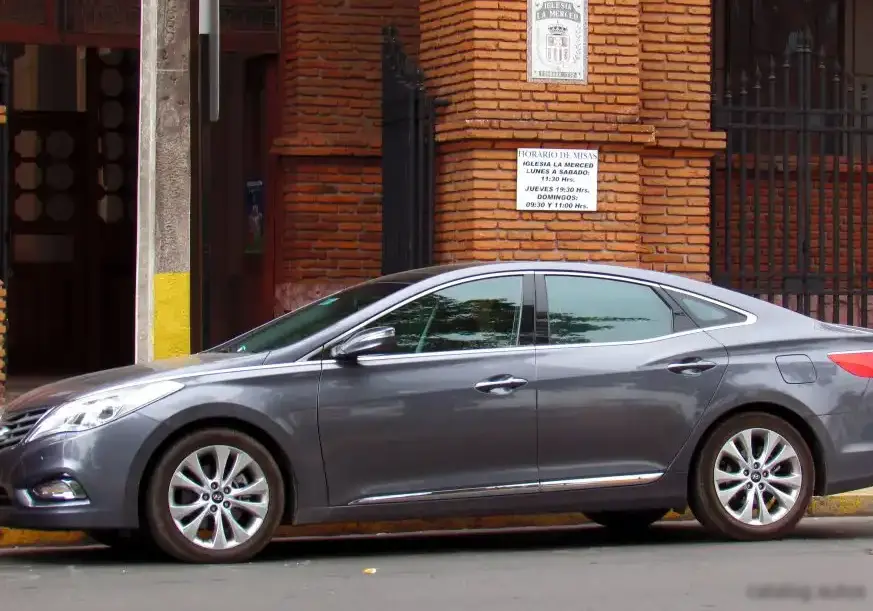
The Hyundai Grandeur, marketed as the Azera in North America, represents Hyundai’s flagship sedan. The fourth generation, designated TG, was produced from 2005 to 2010 and marked a significant step forward in Hyundai’s design and engineering capabilities. Within the TG generation, the 3.3-liter V6 engine paired with a five-speed automatic transmission was a prominent offering, positioned as the mid-to-upper trim level. It aimed to provide a balance of performance, luxury, and refinement for buyers seeking a comfortable and well-equipped full-size sedan. This variant was primarily sold in the Korean domestic market and export markets like Russia, the Middle East, and select regions in North and South America.
Technical Specifications
| Brand | Hyundai |
| Model | Grandeur/Azera |
| Generation | Grandeur/Azera IV (TG) |
| Type (Engine) | 3.3 V6 (235 Hp) Automatic |
| Start of production | 2005 |
| End of production | 2010 |
| Powertrain Architecture | Internal Combustion engine |
| Body type | Sedan |
| Seats | 5 |
| Doors | 4 |
| Fuel consumption (urban) | 15.1 l/100 km (15.6 US mpg) |
| Fuel consumption (extra urban) | 7.4 l/100 km (31.8 US mpg) |
| Fuel consumption (combined) | 10.2 l/100 km (23.1 US mpg) |
| CO2 emissions | 245 g/km |
| Fuel Type | Petrol (Gasoline) |
| Acceleration 0 – 100 km/h | 7.8 sec |
| Acceleration 0 – 62 mph | 7.8 sec |
| Acceleration 0 – 60 mph | 7.4 sec |
| Maximum speed | 237 km/h (147.26 mph) |
| Emission standard | Euro 4 |
| Weight-to-power ratio | 7.1 kg/Hp |
| Weight-to-torque ratio | 5.5 kg/Nm |
| Power | 235 Hp @ 6000 rpm |
| Torque | 304 Nm @ 3500 rpm (224.22 lb.-ft. @ 3500 rpm) |
| Engine layout | Front, Transverse |
| Engine Model/Code | Lambda / G6DB |
| Engine displacement | 3342 cm3 (203.94 cu. in.) |
| Number of cylinders | 6 |
| Engine configuration | V-engine |
| Cylinder Bore | 92 mm (3.62 in.) |
| Piston Stroke | 83.8 mm (3.3 in.) |
| Compression ratio | 10.4:1 |
| Number of valves per cylinder | 4 |
| Fuel injection system | Multi-port manifold injection |
| Engine aspiration | Naturally aspirated engine |
| Valvetrain | DOHC, CVVT |
| Engine oil capacity | 5.5 l (5.81 US qt | 4.84 UK qt) |
| Coolant capacity | 9.1 l (9.62 US qt | 8.01 UK qt) |
| Kerb Weight | 1664 kg (3668.49 lbs.) |
| Max. weight | 2220 kg (4894.26 lbs.) |
| Max load | 556 kg (1225.77 lbs.) |
| Trunk (boot) space – minimum | 523 l (18.47 cu. ft.) |
| Fuel tank capacity | 75 l (19.81 US gal | 16.5 UK gal) |
| Length | 4895 mm (192.72 in.) |
| Width | 1865 mm (73.43 in.) |
| Height | 1495 mm (58.86 in.) |
| Wheelbase | 2780 mm (109.45 in.) |
| Front track | 1580 mm (62.2 in.) |
| Rear track | 1565 mm (61.61 in.) |
| Ride height (ground clearance) | 162 mm (6.38 in.) |
| Drag coefficient (Cd) | 0.29 |
| Minimum turning circle | 12.5 m (41.01 ft.) |
| Drivetrain Architecture | Front wheel drive |
| Number of gears | 5 |
| Gearbox type | Automatic transmission |
| Front suspension | Double wishbone |
| Rear suspension | Independent multi-link suspension |
| Front brakes | Ventilated discs |
| Rear brakes | Disc |
| Assisting systems | ABS (Anti-lock braking system) |
| Steering type | Steering rack and pinion |
| Power steering | Hydraulic Steering |
| Tires size | 235/55 R17 V |
| Wheel rims size | 17 |
Powertrain & Engine Architecture
The heart of this Grandeur variant is the Hyundai Lambda 3.3-liter V6 engine, internally designated as the G6DB. This engine is a naturally aspirated, 60-degree V6 featuring a cast iron block and aluminum cylinder heads. It utilizes a multi-port fuel injection system, delivering fuel directly into the intake ports, and a Double Overhead Camshaft (DOHC) valvetrain with Continuously Variable Valve Timing (CVVT) on both intake and exhaust valves. The CVVT system optimizes valve timing based on engine speed and load, improving both performance and fuel efficiency. The engine produces 235 horsepower at 6000 rpm and 304 Nm (224.22 lb-ft) of torque at 3500 rpm. The five-speed automatic transmission was a conventional torque converter type, offering smooth shifts but lacking the efficiency of more modern transmissions. Gear ratios were tuned for comfortable cruising rather than aggressive acceleration.
Driving Characteristics
The 3.3L V6 automatic Grandeur offered a comfortable and refined driving experience. Acceleration from 0-60 mph took approximately 7.4-7.8 seconds, making it adequately quick for everyday driving and highway merging. However, it wasn’t a particularly sporty vehicle. The automatic transmission, while smooth, could feel somewhat sluggish in its responses, especially when compared to the available manual transmission options. The focus was on providing a relaxed and quiet ride, with the V6 engine delivering ample power for most situations. The suspension was tuned for comfort, absorbing bumps and imperfections in the road well. Compared to the smaller 2.7L V6, the 3.3L offered noticeably more power and torque, resulting in a more effortless driving experience. It also provided a more substantial feel than the four-cylinder options.
Equipment & Trim Levels
The 3.3L V6 automatic trim typically included features such as leather upholstery, power-adjustable front seats, automatic climate control, a premium audio system, and alloy wheels. Optional extras often included a sunroof, navigation system, and upgraded sound systems. The interior design emphasized spaciousness and comfort, with a focus on quality materials and a user-friendly layout. The TG Grandeur aimed to compete with established luxury sedans from Japanese and European manufacturers, offering a comparable level of equipment at a competitive price point.
Chassis & Braking
The TG Grandeur utilized a front-wheel-drive layout with a double wishbone suspension at the front and an independent multi-link suspension at the rear. This suspension setup provided a good balance of ride comfort and handling. Braking duties were handled by ventilated disc brakes at the front and solid disc brakes at the rear. An Anti-lock Braking System (ABS) was standard, enhancing safety and control during emergency braking situations. The steering was a hydraulic rack and pinion system, providing a reasonably direct and responsive feel.
Market Reception & Comparison
The 3.3L V6 Grandeur/Azera received generally positive reviews, with critics praising its spacious interior, comfortable ride, and generous equipment list. However, some reviewers noted that the automatic transmission could be slow to respond and that the handling wasn’t as sharp as some of its competitors. Fuel economy was also a point of concern, with the 3.3L V6 consuming a significant amount of fuel, especially in urban driving conditions. Compared to the 2.7L V6, the 3.3L offered a noticeable performance advantage but at the cost of increased fuel consumption. The 3.3L was also more expensive than the lower-trim models, making it a more premium offering.
Legacy
The Hyundai Grandeur/Azera TG 3.3L V6 automatic, while not a performance icon, proved to be a reliable and durable powertrain. The Lambda V6 engine family has continued to be used in various Hyundai and Kia vehicles, undergoing further refinement and development. In the used car market, these Grandeur/Azeros are generally considered to be a good value, offering a lot of features and comfort for the price. Maintenance costs are typically reasonable, although sourcing parts for older models can sometimes be challenging. The TG generation Grandeur/Azera played a crucial role in establishing Hyundai as a serious contender in the global automotive market, demonstrating the brand’s ability to produce well-engineered and well-equipped vehicles.