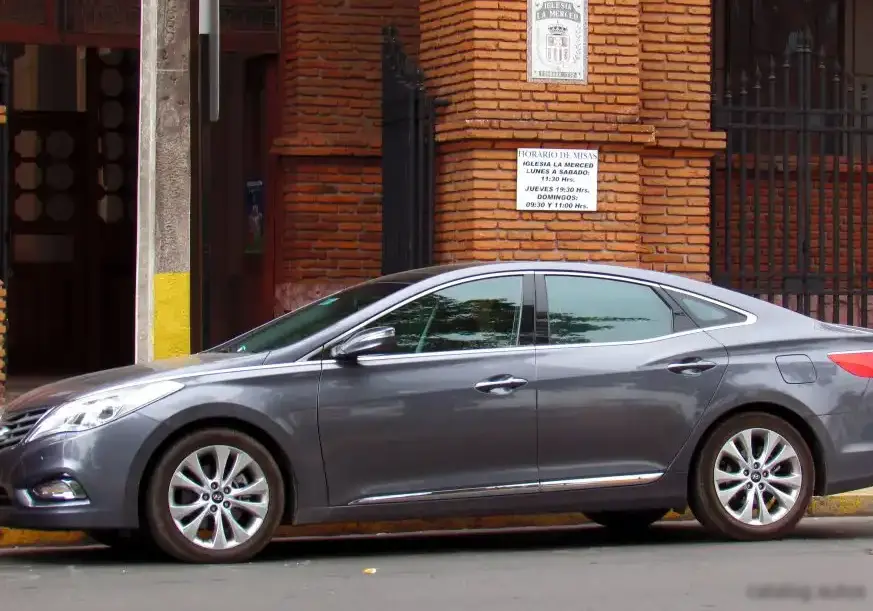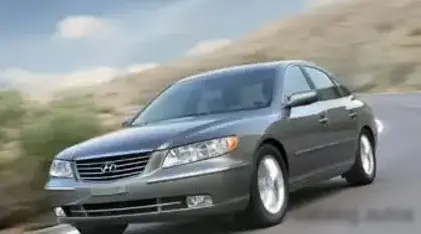
The Hyundai Grandeur/Azera IV (TG), produced between 2005 and 2007, represented a significant step forward for Hyundai in the full-size sedan segment. Positioned as a premium offering, the TG generation aimed to compete with established Japanese and American luxury vehicles. This particular variant, equipped with the 3.8-liter V6 engine paired with a five-speed automatic transmission, occupied the upper echelon of the TG lineup, offering a balance of performance and comfort. The Grandeur name was used in most markets, while in North America, it was sold as the Azera. The TG platform was a dedicated front-wheel-drive design, emphasizing interior space and a smooth ride.
Technical Specifications
| Brand | Hyundai |
| Model | Grandeur/Azera |
| Generation | Grandeur/Azera IV (TG) |
| Type (Engine) | 3.8 V6 (264 Hp) Automatic |
| Start of production | 2005 |
| End of production | 2007 |
| Powertrain Architecture | Internal Combustion engine |
| Body type | Sedan |
| Seats | 5 |
| Doors | 4 |
| Fuel Type | Petrol (Gasoline) |
| Acceleration 0 – 100 km/h | 7.2 sec |
| Acceleration 0 – 62 mph | 7.2 sec |
| Acceleration 0 – 60 mph | 6.8 sec |
| Maximum speed | 230 km/h (142.92 mph) |
| Weight-to-power ratio | 6.6 kg/Hp, 152.6 Hp/tonne |
| Weight-to-torque ratio | 5 kg/Nm, 201.2 Nm/tonne |
| Power | 264 Hp @ 6000 rpm |
| Power per litre | 69.9 Hp/l |
| Torque | 348 Nm @ 4500 rpm (256.67 lb.-ft. @ 4500 rpm) |
| Engine layout | Front, Transverse |
| Engine Model/Code | Lambda / G6DA |
| Engine displacement | 3778 cm3 (230.55 cu. in.) |
| Number of cylinders | 6 |
| Engine configuration | V-engine |
| Cylinder Bore | 96 mm (3.78 in.) |
| Piston Stroke | 87 mm (3.43 in.) |
| Compression ratio | 10.4:1 |
| Number of valves per cylinder | 4 |
| Fuel injection system | Multi-port manifold injection |
| Engine aspiration | Naturally aspirated engine |
| Valvetrain | DOHC, CVVT |
| Engine oil capacity | 5.9 l (6.23 US qt | 5.19 UK qt) |
| Coolant | 8.8 l (9.3 US qt | 7.74 UK qt) |
| Kerb Weight | 1730 kg (3814 lbs.) |
| Max. weight | 2055 kg (4530.5 lbs.) |
| Max load | 325 kg (716.5 lbs.) |
| Trunk (boot) space – minimum | 523 l (18.47 cu. ft.) |
| Fuel tank capacity | 75 l (19.81 US gal | 16.5 UK gal) |
| Length | 4895 mm (192.72 in.) |
| Width | 1850 mm (72.83 in.) |
| Height | 1490 mm (58.66 in.) |
| Wheelbase | 2780 mm (109.45 in.) |
| Front track | 1580 mm (62.2 in.) |
| Rear (Back) track | 1565 mm (61.61 in.) |
| Drag coefficient (Cd) | 0.29 |
| Minimum turning circle | 12.5 m (41.01 ft.) |
| Drivetrain Architecture | The Internal combustion engine (ICE) drives the front wheels of the vehicle. |
| Drive wheel | Front wheel drive |
| Number of gears | 5 gears, automatic transmission |
| Front suspension | Double wishbone |
| Rear suspension | Independent multi-link suspension |
| Front brakes | Ventilated discs |
| Rear brakes | Disc |
| Assisting systems | ABS (Anti-lock braking system) |
| Steering type | Steering rack and pinion |
| Power steering | Hydraulic Steering |
| Tires size | 235/55 R17 V |
| Wheel rims size | 17 |
Powertrain & Engine Architecture
The heart of this Grandeur/Azera variant is the Hyundai Lambda engine, specifically the G6DA 3.8-liter V6. This engine is a naturally aspirated, 60-degree V6 featuring a cast iron block and aluminum cylinder heads. It utilizes multi-port fuel injection and Hyundai’s Continuously Variable Valve Timing (CVVT) technology on both intake and exhaust valves. CVVT optimizes valve timing based on engine speed and load, improving both performance and fuel efficiency. The engine produces 264 horsepower at 6000 rpm and 256.67 lb-ft of torque at 4500 rpm. The five-speed automatic transmission, while not offering the responsiveness of a manual, was tuned for smooth shifts and comfortable cruising. Gear ratios were optimized for highway driving, prioritizing relaxed acceleration over outright performance.
Driving Characteristics
The 3.8L V6 automatic Grandeur/Azera offered a comfortable and refined driving experience. Acceleration to 60 mph took approximately 6.8 seconds, respectable for a full-size sedan of its era. However, it wasn’t designed to be a sporty vehicle. The automatic transmission, while smooth, could feel somewhat hesitant during quick overtaking maneuvers. Compared to the available 2.7-liter V6, the 3.8 offered significantly more power and torque, resulting in a more confident driving experience, especially when fully loaded with passengers or cargo. It lacked the fuel efficiency of the smaller engine, but the trade-off in performance was often considered worthwhile by buyers seeking a more luxurious experience. The front-wheel-drive configuration contributed to predictable handling, but also limited the car’s cornering ability compared to rear-wheel-drive competitors.
Equipment & Trim Levels
The 3.8L V6 automatic trim typically came well-equipped, representing the higher end of the Grandeur/Azera range. Standard features often included leather upholstery, power-adjustable front seats (often with heating and ventilation), a premium sound system, automatic climate control, and alloy wheels. Optional extras could include a sunroof, navigation system, and upgraded interior trim. The interior design emphasized spaciousness and comfort, with a focus on high-quality materials and a user-friendly layout. Safety features such as ABS, front and side airbags were standard.
Chassis & Braking
The TG Grandeur/Azera utilized a front-wheel-drive chassis with a double wishbone front suspension and an independent multi-link rear suspension. This setup prioritized ride comfort and stability. The suspension was tuned to absorb bumps and provide a smooth ride, even on less-than-perfect road surfaces. Braking duties were handled by ventilated discs at the front and solid discs at the rear. ABS was standard, providing enhanced braking control in emergency situations. Steering was rack-and-pinion with hydraulic power assistance, offering a light and easy steering feel.
Market Reception & Comparison
The 3.8L V6 automatic Grandeur/Azera received generally positive reviews from automotive critics. It was praised for its spacious interior, comfortable ride, and generous equipment list. However, some critics noted that the handling wasn’t as sharp as some of its competitors, and the automatic transmission could feel sluggish at times. Compared to rivals like the Toyota Avalon and Honda Accord, the Grandeur/Azera offered a compelling value proposition, often undercutting its competitors in price while offering similar levels of features and comfort. Fuel economy was average for the class, typically achieving around 18-22 mpg in combined driving.
Legacy
The Hyundai Grandeur/Azera IV (TG) 3.8 V6 automatic has proven to be a relatively reliable vehicle in the used car market. The Lambda engine is known for its durability, and the five-speed automatic transmission, while not the most advanced, has generally held up well over time. Common maintenance items include regular oil changes, timing belt replacement (depending on mileage), and inspection of the cooling system. Today, these vehicles are often sought after by buyers looking for a comfortable, spacious, and affordable full-size sedan. While not a performance icon, the TG Grandeur/Azera represents a pivotal moment in Hyundai’s history, demonstrating the brand’s growing ability to compete with established luxury carmakers.