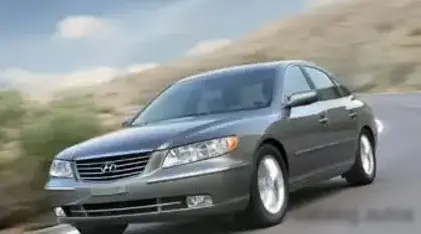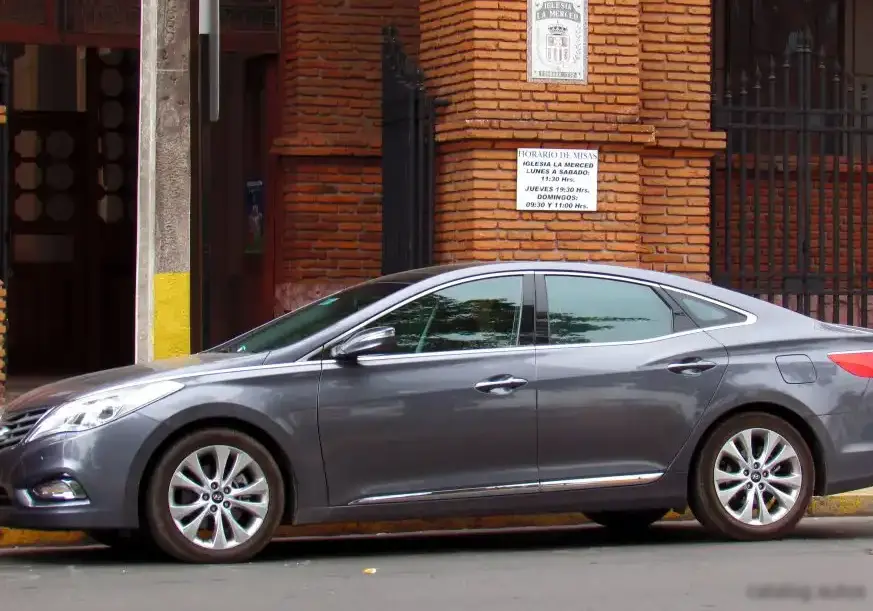
The Hyundai Grandeur/Azera IV (TG), specifically the facelifted version produced from 2009 to 2011, represented a significant step forward for Hyundai in the mid-size luxury sedan segment. This generation, designated TG, aimed to compete directly with established Japanese and American brands. The 2.4-liter variant, producing 179 horsepower and paired with a 6-speed automatic transmission, served as a key offering within the lineup, positioned as a balance between affordability and refinement. It was primarily marketed towards buyers seeking a comfortable and well-equipped sedan without the higher price tag of the flagship V6 models. This model was sold as the “Azera” in the North American market and as the “Grandeur” in South Korea and other regions.
Technical Specifications
| Brand | Hyundai |
| Model | Grandeur/Azera |
| Generation | Grandeur/Azera IV (TG, facelift 2009) |
| Type (Engine) | 2.4 (179 Hp) Automatic |
| Start of production | 2010 |
| End of production | 2011 |
| Powertrain Architecture | Internal Combustion engine |
| Body type | Sedan |
| Seats | 5 |
| Doors | 4 |
| Fuel Type | Petrol (Gasoline) |
| Maximum speed | 216 km/h (134.22 mph) |
| Weight-to-power ratio | 8.7 kg/Hp, 114.4 Hp/tonne |
| Weight-to-torque ratio | 6.8 kg/Nm, 147 Nm/tonne |
| Power | 179 Hp @ 6000 rpm |
| Power per litre | 75.9 Hp/l |
| Torque | 230 Nm @ 4000 rpm (169.64 lb.-ft. @ 4000 rpm) |
| Engine layout | Front, Transverse |
| Engine Model/Code | Theta II / G4KE |
| Engine displacement | 2359 cm3 (143.96 cu. in.) |
| Number of cylinders | 4 |
| Engine configuration | Inline |
| Cylinder Bore | 88 mm (3.46 in.) |
| Piston Stroke | 97 mm (3.82 in.) |
| Compression ratio | 10.5:1 |
| Number of valves per cylinder | 4 |
| Fuel injection system | Multi-port manifold injection |
| Engine aspiration | Naturally aspirated engine |
| Valvetrain | DOHC, CVVT |
| Engine oil capacity | 4.1 l (4.33 US qt | 3.61 UK qt) |
| Coolant | 6.8 l (7.19 US qt | 5.98 UK qt) |
| Kerb Weight | 1565 kg (3450.23 lbs.) |
| Max. weight | 1890 kg (4166.74 lbs.) |
| Max load | 325 kg (716.5 lbs.) |
| Trunk (boot) space – minimum | 523 l (18.47 cu. ft.) |
| Fuel tank capacity | 75 l (19.81 US gal | 16.5 UK gal) |
| Length | 4895 mm (192.72 in.) |
| Width | 1850 mm (72.83 in.) |
| Height | 1490 mm (58.66 in.) |
| Wheelbase | 2780 mm (109.45 in.) |
| Front track | 1580 mm (62.2 in.) |
| Rear (Back) track | 1565 mm (61.61 in.) |
| Ride height (ground clearance) | 162 mm (6.38 in.) |
| Drag coefficient (Cd) | 0.29 |
| Minimum turning circle (turning diameter) | 12.5 m (41.01 ft.) |
| Drivetrain Architecture | The Internal combustion engine (ICE) drives the front wheels of the vehicle. |
| Drive wheel | Front wheel drive |
| Number of gears and type of gearbox | 6 gears, automatic transmission |
| Front suspension | Double wishbone |
| Rear suspension | Independent multi-link suspension |
| Front brakes | Ventilated discs |
| Rear brakes | Disc |
| Assisting systems | ABS (Anti-lock braking system) |
| Steering type | Steering rack and pinion |
| Tires size | 225/60 R16 H |
| Wheel rims size | 6.5J x 16 |
Introduction
The 2010-2011 Hyundai Grandeur/Azera IV 2.4 Automatic represented a significant evolution for Hyundai, showcasing improved design, technology, and overall refinement. Built on the TG platform, this facelift brought subtle styling updates and focused on enhancing the driving experience. The 2.4-liter engine and six-speed automatic transmission combination was designed to appeal to a broader audience, offering a more economical and accessible entry point into the Grandeur/Azera range compared to the more powerful 3.3-liter V6 options. It aimed to provide a comfortable and feature-rich experience for families and commuters alike.
Powertrain & Engine Architecture
At the heart of this variant lies the Hyundai Theta II G4KE 2.4-liter inline-four cylinder engine. This engine utilizes a cast iron block with an aluminum cylinder head, incorporating Hyundai’s Continuously Variable Valve Timing (CVVT) technology on both intake and exhaust valves. This system optimizes valve timing based on engine speed and load, improving both fuel efficiency and performance. Fuel delivery is managed by a multi-port fuel injection system. The engine produces 179 horsepower at 6000 rpm and 230 Nm (169.64 lb.-ft.) of torque at 4000 rpm. The engine is transversely mounted in the front of the vehicle.
The engine is paired with a Hyundai-developed six-speed automatic transmission. This transmission features a torque converter and electronically controlled shifting. Gear ratios were tuned to prioritize smooth operation and fuel economy, rather than outright acceleration. While not a sport-oriented transmission, it provided adequate performance for everyday driving conditions. The transmission also included a ‘Shiftronic’ manual shift mode, allowing drivers some control over gear selection.
Driving Characteristics
The 2.4-liter engine and automatic transmission combination delivered a comfortable and predictable driving experience. Acceleration was adequate for merging onto highways and passing slower traffic, but it wasn’t particularly brisk. The focus was on smooth power delivery and fuel efficiency. Compared to the V6 models, the 2.4-liter version felt noticeably less powerful, especially when fully loaded with passengers and cargo. The automatic transmission’s gear ratios were optimized for fuel economy, meaning the engine sometimes felt strained during aggressive acceleration. The steering was light and easy, making it well-suited for city driving, but lacked the feedback desired by more enthusiastic drivers. Overall, the driving experience was geared towards comfort and convenience rather than sporty performance.
Equipment & Trim Levels
The 2.4-liter automatic Grandeur/Azera typically came well-equipped, even in its base trim. Standard features often included air conditioning, power windows and locks, a CD/MP3 stereo system, and alloy wheels. Higher trim levels added features such as leather upholstery, a sunroof, heated front seats, and a premium audio system. Safety features like ABS, front airbags, and side airbags were standard across the range. Optional extras included navigation systems, rear parking sensors, and automatic climate control. The interior design emphasized spaciousness and comfort, with a focus on user-friendly controls and quality materials.
Chassis & Braking
The Grandeur/Azera IV utilized a front-wheel-drive layout with a double wishbone suspension at the front and an independent multi-link suspension at the rear. This suspension setup provided a comfortable ride, effectively absorbing bumps and irregularities in the road surface. The front brakes were ventilated discs, while the rear brakes were solid discs. ABS (Anti-lock Braking System) was standard, enhancing braking performance and stability. The chassis was designed to provide a balance between ride comfort and handling, prioritizing a smooth and stable driving experience over sporty cornering ability. Stabilizer bars were included both front and rear to reduce body roll.
Market Reception & Comparison
The 2.4-liter Grandeur/Azera received generally positive reviews, particularly for its value proposition. Critics praised its spacious interior, comfortable ride, and extensive list of standard features. However, some reviewers noted that the 2.4-liter engine lacked the power of its V6 counterparts. Compared to the 3.3-liter V6 models, the 2.4-liter version offered significantly better fuel economy, making it a more attractive option for budget-conscious buyers. Reliability was generally good, with few reported issues specific to the 2.4-liter engine and transmission combination. It competed with models like the Toyota Camry, Honda Accord, and Nissan Maxima, offering a compelling alternative with a longer warranty and a more luxurious feel.
Legacy
The Hyundai Grandeur/Azera IV 2.4 Automatic has proven to be a relatively reliable and durable vehicle. The Theta II engine, while not without its potential issues (such as oil consumption in some cases), generally holds up well with proper maintenance. The six-speed automatic transmission is also known for its dependability. In the used car market, these models represent a good value for buyers seeking a comfortable and well-equipped mid-size sedan. Parts availability is generally good, and maintenance costs are reasonable. While not a collector’s item, the 2.4-liter variant remains a practical and affordable option for those seeking a dependable and spacious vehicle.