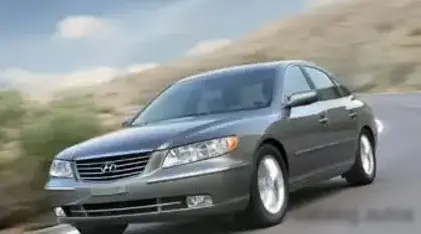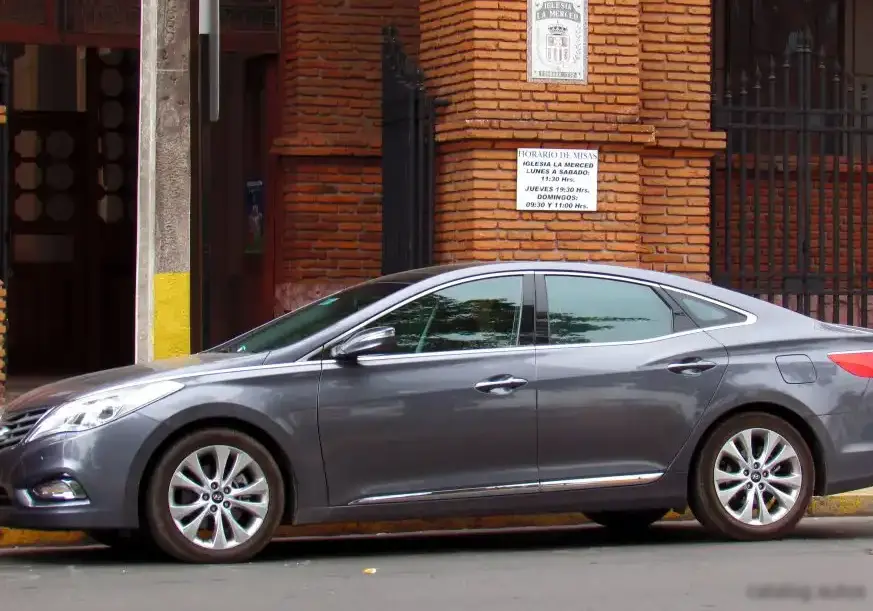
The Hyundai Grandeur, known as the Azera in North America, represents Hyundai’s flagship sedan, positioned above the Sonata and Elantra. The fifth generation, designated HG, was produced from 2011 to 2016 and marked a significant step forward in terms of design, refinement, and available technology for the brand. Within the HG generation, the 2.4-liter engine paired with a six-speed automatic transmission offered a compelling blend of efficiency and adequate performance, serving as a popular choice for buyers prioritizing value and comfort. This variant occupied the entry-level to mid-range position within the HG lineup, slotting below the more powerful 3.0-liter V6 models.
Technical Specifications
| Brand | Hyundai |
| Model | Grandeur/Azera |
| Generation | Grandeur/Azera V (HG) |
| Type (Engine) | 2.4 (180 Hp) Automatic |
| Start of production | 2011 |
| End of production | 2016 |
| Powertrain Architecture | Internal Combustion engine |
| Body type | Sedan |
| Seats | 5 |
| Doors | 4 |
| Fuel consumption (urban) | 13.1 l/100 km (18 US mpg, 21.6 UK mpg, 7.6 km/l) |
| Fuel consumption (extra urban) | 7 l/100 km (33.6 US mpg, 40.4 UK mpg, 14.3 km/l) |
| Fuel consumption (combined) | 9.3 l/100 km (25.3 US mpg, 30.4 UK mpg, 10.8 km/l) |
| Fuel Type | Petrol (Gasoline) |
| Acceleration 0 – 100 km/h | 9.8 sec |
| Acceleration 0 – 62 mph | 9.8 sec |
| Acceleration 0 – 60 mph | 9.3 sec |
| Maximum speed | 210 km/h (130.49 mph) |
| Emission standard | Euro 4 |
| Weight-to-power ratio | 9.2 kg/Hp, 108.3 Hp/tonne |
| Weight-to-torque ratio | 7.2 kg/Nm, 139 Nm/tonne |
| Power | 180 Hp @ 6000 rpm |
| Power per litre | 76.3 Hp/l |
| Torque | 231 Nm @ 4000 rpm (170.38 lb.-ft. @ 4000 rpm) |
| Engine layout | Front, Transverse |
| Engine Model/Code | Theta II / G4KE |
| Engine displacement | 2359 cm3 (143.96 cu. in.) |
| Number of cylinders | 4 |
| Engine configuration | Inline |
| Cylinder Bore | 88 mm (3.46 in.) |
| Piston Stroke | 97 mm (3.82 in.) |
| Compression ratio | 10.5:1 |
| Number of valves per cylinder | 4 |
| Fuel injection system | Multi-port manifold injection |
| Engine aspiration | Naturally aspirated engine |
| Valvetrain | DOHC, D-CVVT |
| Engine oil capacity | 4.2 l (4.44 US qt | 3.7 UK qt) |
| Coolant | 6.8 l (7.19 US qt | 5.98 UK qt) |
| Kerb Weight | 1662 kg (3664.08 lbs.) |
| Max. weight | 2050 kg (4519.48 lbs.) |
| Max load | 388 kg (855.39 lbs.) |
| Trunk (boot) space – minimum | 546 l (19.28 cu. ft.) |
| Fuel tank capacity | 70 l (18.49 US gal | 15.4 UK gal) |
| Length | 4910 mm (193.31 in.) |
| Width | 1860 mm (73.23 in.) |
| Height | 1470 mm (57.87 in.) |
| Wheelbase | 2845 mm (112.01 in.) |
| Front track | 1606-1613 mm (63.23 – 63.5 in.) |
| Rear (Back) track | 1607-1614 mm (63.27 – 63.54 in.) |
| Front overhang | 950 mm (37.4 in.) |
| Rear overhang | 1115 mm (43.9 in.) |
| Ride height (ground clearance) | 151 mm (5.94 in.) |
| Drag coefficient (Cd) | 0.29 |
| Minimum turning circle (turning diameter) | 11.1 m (36.42 ft.) |
| Drivetrain Architecture | The Internal combustion engine (ICE) drives the front wheels of the vehicle. |
| Drive wheel | Front wheel drive |
| Number of gears and type of gearbox | 6 gears, automatic transmission |
| Front suspension | Independent type McPherson |
| Rear suspension | Independent multi-link suspension |
| Front brakes | Ventilated discs |
| Rear brakes | Disc |
| Assisting systems | ABS (Anti-lock braking system) |
| Steering type | Steering rack and pinion |
| Power steering | Hydraulic Steering |
| Tires size | 225/55 R17; 245/45 R18 |
| Wheel rims size | 7.0J x 17; 7.5J x 18 |
Powertrain & Engine Architecture
The heart of this Grandeur variant is the Hyundai Theta II 2.4-liter inline-four cylinder engine, internally designated as the G4KE. This engine is a naturally aspirated powerplant featuring multi-port fuel injection and a double overhead camshaft (DOHC) valvetrain with Hyundai’s Dual Continuously Variable Valve Timing (D-CVVT) technology. D-CVVT optimizes valve timing based on engine load and speed, improving both performance and fuel efficiency. The engine produces 180 horsepower at 6000 rpm and 231 Nm (170.38 lb-ft) of torque at 4000 rpm. The engine’s aluminum cylinder head and block contribute to a relatively lightweight design. The six-speed automatic transmission, a common choice for this generation, provides smooth shifts and contributes to the car’s overall refinement. While not a sport-oriented transmission, it’s well-suited to the engine’s characteristics and the Grandeur’s focus on comfortable cruising.
Driving Characteristics
The 2.4-liter engine and six-speed automatic combination delivers adequate, though not exhilarating, performance. Acceleration from 0 to 60 mph takes approximately 9.3 seconds, and the car has a top speed of 210 km/h (130.49 mph). The automatic transmission is programmed for comfort, with relatively early upshifts designed to maximize fuel economy. This can sometimes result in the engine feeling slightly strained during aggressive acceleration or when climbing hills. Compared to the available 3.0-liter V6, the 2.4-liter model offers noticeably less power, but it also provides better fuel economy and a lighter front-end feel. The gear ratios are tuned for relaxed highway cruising, making it a comfortable long-distance vehicle.
Equipment & Trim Levels
The 2.4-liter Grandeur/Azera typically came standard with a respectable array of features, including air conditioning, power windows and locks, a sound system with USB and auxiliary inputs, and alloy wheels. Higher trim levels added features such as leather upholstery, a sunroof, a navigation system, and upgraded audio systems. Interior materials were generally of good quality for the price point, and the cabin offered ample space for passengers. Safety features included ABS, airbags, and stability control. Optional extras often included a rearview camera and parking sensors.
Chassis & Braking
The HG Grandeur utilizes an independent McPherson strut suspension in the front and an independent multi-link suspension in the rear, providing a comfortable and controlled ride. The suspension is tuned more for comfort than sporty handling. Braking duties are handled by ventilated discs in the front and solid discs in the rear, coupled with an Anti-lock Braking System (ABS). The braking system is adequate for everyday driving, but it lacks the stopping power of more performance-oriented vehicles. Steering is rack-and-pinion with hydraulic power assistance, offering a reasonably direct feel.
Market Reception & Comparison
The 2.4-liter Grandeur/Azera was generally well-received by critics as a comfortable, spacious, and well-equipped sedan offering good value for money. It was often praised for its smooth ride and quiet cabin. However, some reviewers noted that the 2.4-liter engine could feel underpowered, especially when fully loaded with passengers and cargo. Compared to competitors like the Toyota Camry and Honda Accord, the Grandeur/Azera offered a more luxurious interior and a longer warranty, but it didn’t quite match the established reputation for reliability of its Japanese rivals. Fuel economy figures of around 9.3 l/100 km (25.3 US mpg) were competitive for its class.
Legacy
The Hyundai Grandeur/Azera HG 2.4-liter automatic has proven to be a relatively reliable powertrain combination. The Theta II engine, while not without its issues (some early versions experienced oil consumption problems), is generally durable when properly maintained. The six-speed automatic transmission is also known for its dependability. In the used car market, these models represent a good value proposition, offering a lot of features and comfort for the price. Regular maintenance, including oil changes and timing belt replacements (if applicable), is crucial to ensure long-term reliability. The HG generation Grandeur/Azera helped solidify Hyundai’s position as a major player in the mid-size sedan segment, demonstrating the brand’s commitment to quality and innovation.