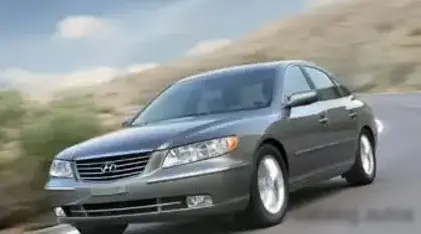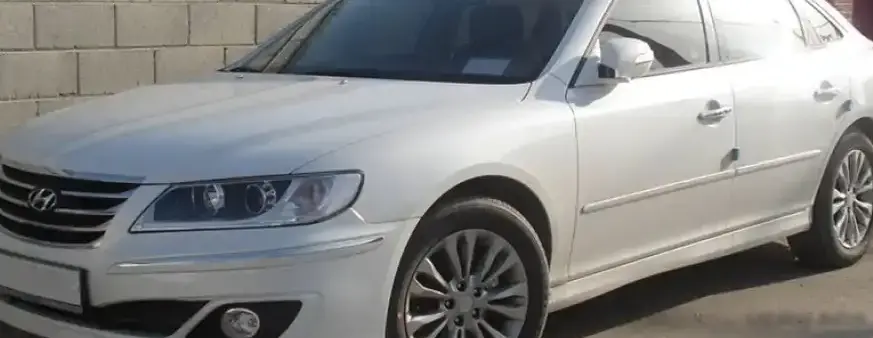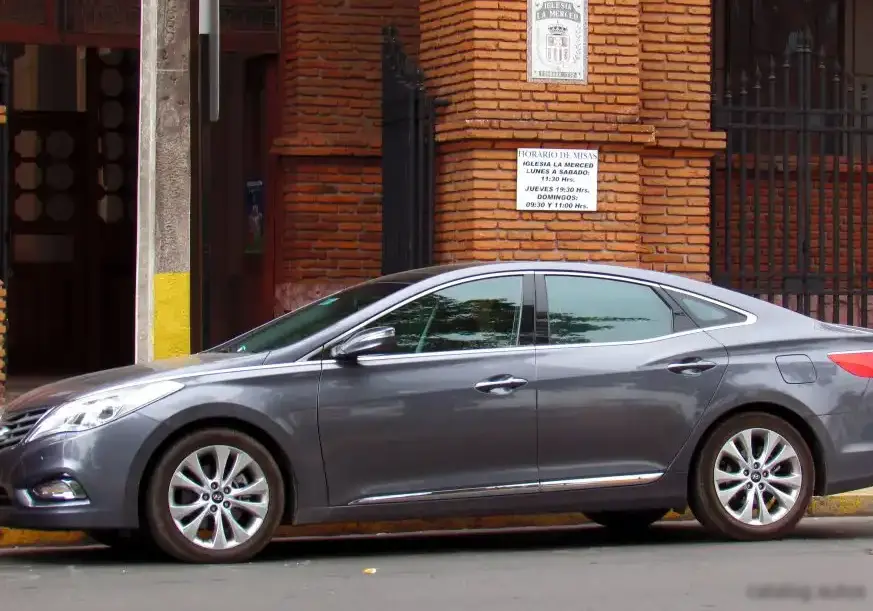
The Hyundai Grandeur/Azera V (HG) 2.4 Hybrid Shiftronic, produced from 2013 to 2017, represents a significant step in Hyundai’s pursuit of fuel efficiency and sophisticated technology within the large sedan segment. Positioned as a mid-range offering within the HG generation (the fifth generation of the Grandeur, marketed as the Azera in North America), this variant combined a 2.4-liter gasoline engine with an electric motor, offering a balance between performance and economy. The HG generation, built on the Y6 platform, aimed to elevate Hyundai’s brand image with a more luxurious and refined vehicle, competing with established players like the Toyota Avalon and Ford Taurus. This particular hybrid configuration was primarily aimed at buyers seeking a comfortable, well-equipped sedan with lower running costs.
Technical Specifications
| Brand | Hyundai |
| Model | Grandeur/Azera |
| Generation | Grandeur/Azera V (HG) |
| Type (Engine) | 2.4 (204 Hp) Hybrid Shiftronic |
| Start of production | 2013 |
| End of production | 2017 |
| Powertrain Architecture | FHEV (Full Hybrid Electric Vehicle) |
| Body type | Sedan |
| Seats | 5 |
| Doors | 4 |
| Fuel consumption (urban) | 6.5 l/100 km (36.2 US mpg) |
| Fuel consumption (extra urban) | 6 l/100 km (39.2 US mpg) |
| Fuel consumption (combined) | 6.25 l/100 km (37.6 US mpg) |
| Fuel Type | Petrol (Gasoline) |
| Maximum speed | 210 km/h (130.49 mph) |
| Weight-to-power ratio | 8.2 kg/Hp |
| Weight-to-torque ratio | 8 kg/Nm |
| Electric motor power | 47 Hp |
| Electric motor Torque | 205 Nm (151.2 lb.-ft.) |
| System power | 204 Hp |
| Engine Power | 159 Hp @ 5500 rpm |
| Engine Torque | 209 Nm @ 4500 rpm (154.15 lb.-ft. @ 4500 rpm) |
| Engine layout | Front, Transverse |
| Engine Model/Code | Theta II / G4KK |
| Engine displacement | 2359 cm3 (143.96 cu. in.) |
| Number of cylinders | 4 |
| Engine configuration | Inline |
| Cylinder Bore | 88 mm (3.46 in.) |
| Piston Stroke | 97 mm (3.82 in.) |
| Compression ratio | 13:1 |
| Number of valves per cylinder | 4 |
| Fuel injection system | Multi-port manifold injection |
| Engine aspiration | Naturally aspirated engine |
| Valvetrain | DOHC |
| Engine oil capacity | 4.8 l (5.07 US qt | 4.22 UK qt) |
| Kerb Weight | 1680 kg (3703.77 lbs.) |
| Trunk (boot) space | 460 l (16.24 cu. ft.) |
| Fuel tank capacity | 65 l (17.17 US gal | 14.3 UK gal) |
| Length | 4920 mm (193.7 in.) |
| Width | 1860 mm (73.23 in.) |
| Height | 1470 mm (57.87 in.) |
| Wheelbase | 2845 mm (112.01 in.) |
| Front track | 1606-1613 mm (63.23 – 63.5 in.) |
| Rear track | 1607-1614 mm (63.27 – 63.54 in.) |
| Front overhang | 960 mm (37.8 in.) |
| Rear overhang | 1115 mm (43.9 in.) |
| Ride height (ground clearance) | 151 mm (5.94 in.) |
| Drag coefficient (Cd) | 0.29 |
| Minimum turning circle | 11.1 m (36.42 ft.) |
| Drivetrain Architecture | Front wheel drive, FHEV |
| Drive wheel | Front wheel drive |
| Number of gears | 6 |
| Gearbox type | Automatic transmission Shiftronic |
| Front suspension | Independent type McPherson |
| Rear suspension | Independent multi-link suspension |
| Front brakes | Ventilated discs |
| Rear brakes | Ventilated discs |
| Assisting systems | ABS (Anti-lock braking system) |
| Steering type | Steering rack and pinion |
| Power steering | Hydraulic Steering |
| Tires size | 225/55 R17 |
| Wheel rims size | 7.0J x 17 |
Powertrain & Engine Architecture
At the heart of the Grandeur/Azera 2.4 Hybrid lies the Hyundai Theta II G4KK engine, a 2.4-liter inline-four cylinder gasoline engine. This engine utilizes multi-port fuel injection and a double overhead camshaft (DOHC) valvetrain, contributing to its relatively efficient operation. The engine produces 159 horsepower at 5500 rpm and 154 lb-ft of torque at 4500 rpm. Crucially, this engine is paired with a 47 horsepower electric motor, drawing power from a lithium-polymer battery pack. The combined system output is rated at 204 horsepower. The ‘Shiftronic’ transmission is a six-speed automatic, designed to provide smooth shifts and optimize fuel economy. The hybrid system allows for electric-only driving at low speeds and assists the gasoline engine during acceleration, improving overall efficiency. The engine’s 13:1 compression ratio is relatively high, contributing to thermal efficiency, but also requiring premium fuel in some markets for optimal performance.
Driving Characteristics
The 2.4L Hybrid Shiftronic offered a noticeably different driving experience compared to the more powerful 3.3L V6 models. While lacking the outright acceleration of the V6, the hybrid powertrain provided adequate power for everyday driving situations. The electric motor provides instant torque, which helps to fill in gaps in the gasoline engine’s power delivery, particularly at lower speeds. The six-speed automatic transmission is tuned for fuel efficiency, meaning shifts are generally smooth but not particularly sporty. The hybrid system’s regenerative braking feature helps to recapture energy during deceleration, further enhancing fuel economy. Compared to manual transmission versions (not widely available on this hybrid trim), the automatic offers convenience but sacrifices some driver engagement. The overall driving experience is geared towards comfort and refinement rather than performance.
Equipment & Trim Levels
The 2.4 Hybrid Shiftronic typically came well-equipped, reflecting its positioning as a mid-range offering. Standard features often included leather upholstery, power-adjustable front seats, a touchscreen infotainment system with navigation, a rearview camera, and automatic climate control. Safety features such as ABS, electronic stability control, and multiple airbags were also standard. Optional extras could include a panoramic sunroof, premium sound system, and advanced driver-assistance systems like lane departure warning and blind-spot monitoring. Interior trim levels varied depending on the market, but generally featured woodgrain accents and a focus on creating a luxurious cabin environment.
Chassis & Braking
The Grandeur/Azera HG utilized an independent McPherson strut suspension in the front and an independent multi-link suspension in the rear, providing a comfortable ride quality. The suspension was tuned to prioritize comfort over sporty handling. Braking duties were handled by ventilated disc brakes on all four wheels, providing adequate stopping power. The ABS system helped to prevent wheel lockup during hard braking. Stabilizer bars were fitted to both the front and rear axles to reduce body roll during cornering. The car’s weight of approximately 3704 lbs meant that the braking system needed to work effectively to provide confident stopping performance.
Market Reception & Comparison
The Hyundai Grandeur/Azera 2.4 Hybrid Shiftronic was generally well-received by critics, who praised its fuel efficiency, comfortable ride, and spacious interior. However, some reviewers noted that the powertrain lacked the punch of the V6 engine and that the handling was not particularly engaging. Compared to the 3.3L V6 models, the hybrid offered significantly better fuel economy but less performance. Compared to other hybrid sedans in its class, such as the Toyota Avalon Hybrid, the Grandeur/Azera offered a more luxurious interior and a more competitive price point. Reliability reports generally indicate good long-term reliability for the hybrid powertrain, although some owners have reported issues with the battery pack over time.
Legacy
The Hyundai Grandeur/Azera V (HG) 2.4 Hybrid Shiftronic represents an important step in Hyundai’s evolution as a manufacturer of sophisticated and fuel-efficient vehicles. The hybrid powertrain demonstrated Hyundai’s commitment to reducing emissions and improving fuel economy. In the used car market, these models remain relatively affordable and offer a good value proposition for buyers seeking a comfortable, well-equipped, and fuel-efficient large sedan. The Theta II engine, while generally reliable, is known to have potential issues with oil consumption in some cases, so prospective buyers should be aware of this and check the engine’s maintenance history. The hybrid system itself has proven to be relatively durable, but the battery pack may eventually require replacement, which can be a significant expense.