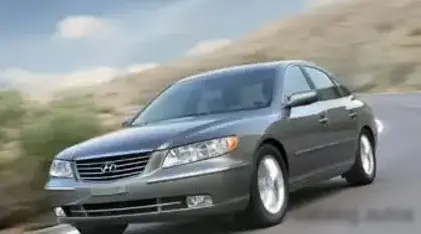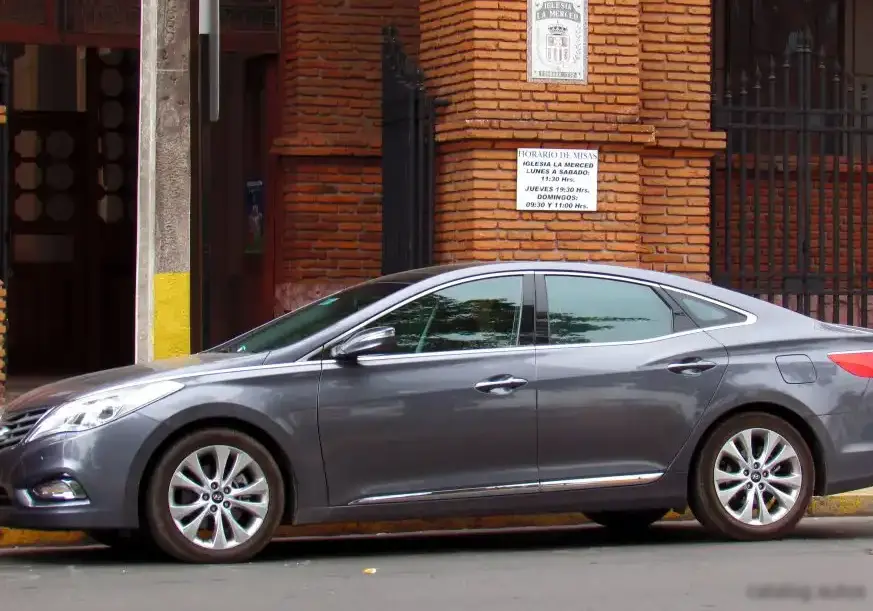
The Hyundai Grandeur, marketed as the Azera in North America, is Hyundai’s flagship sedan, positioned above the Sonata and Elantra in their model lineup. The fifth generation, internally designated HG, was produced from 2011 to 2013 and represented a substantial advancement in design, technology, and overall refinement for the brand. Within the HG generation, the 3.3-liter V6 model paired with an automatic transmission stood as the premium offering, aiming to deliver a blend of robust power and a comfortable driving experience. This variant was specifically designed to compete with established luxury sedans from Japanese and European manufacturers, offering a compelling value proposition to consumers.
Technical Specifications
| Brand | Hyundai |
| Model | Grandeur/Azera |
| Generation | Grandeur/Azera V (HG) |
| Type (Engine) | 3.3 V6 (297 Hp) Automatic |
| Start of production | 2011 |
| End of production | 2013 |
| Powertrain Architecture | Internal Combustion engine |
| Body type | Sedan |
| Seats | 5 |
| Doors | 4 |
| Fuel consumption (urban) | 13.1 l/100 km (18 US mpg, 21.6 UK mpg, 7.6 km/l) |
| Fuel consumption (extra urban) | 8.4 l/100 km (28 US mpg, 33.6 UK mpg, 11.9 km/l) |
| Fuel consumption (combined) | 10 l/100 km (23.5 US mpg, 28.2 UK mpg, 10 km/l) |
| Fuel Type | Petrol (Gasoline) |
| Acceleration 0 – 100 km/h | 8.4 sec |
| Acceleration 0 – 62 mph | 8.4 sec |
| Acceleration 0 – 60 mph | 8 sec |
| Maximum speed | 223 km/h (138.57 mph) |
| Weight-to-power ratio | 5.5 kg/Hp, 181.7 Hp/tonne |
| Weight-to-torque ratio | 4.7 kg/Nm, 211.6 Nm/tonne |
| Power | 297 Hp @ 6400 rpm |
| Power per litre | 88.9 Hp/l |
| Torque | 346 Nm @ 5200 rpm (255.2 lb.-ft. @ 5200 rpm) |
| Engine layout | Front, Transverse |
| Engine Model/Code | Lambda II / G6DH |
| Engine displacement | 3342 cm3 (203.94 cu. in.) |
| Number of cylinders | 6 |
| Engine configuration | V-engine |
| Cylinder Bore | 92 mm (3.62 in.) |
| Piston Stroke | 83.8 mm (3.3 in.) |
| Compression ratio | 11.5:1 |
| Number of valves per cylinder | 4 |
| Fuel injection system | Direct injection |
| Engine aspiration | Naturally aspirated engine |
| Valvetrain | DOHC, D-CVVT |
| Engine oil capacity | 5.7 l (6.02 US qt | 5.02 UK qt) |
| Coolant | 8.4 l (8.88 US qt | 7.39 UK qt) |
| Kerb Weight | 1635 kg (3604.56 lbs.) |
| Max. weight | 2170 kg (4784.03 lbs.) |
| Max load | 535 kg (1179.47 lbs.) |
| Trunk (boot) space – minimum | 546 l (19.28 cu. ft.) |
| Fuel tank capacity | 70 l (18.49 US gal | 15.4 UK gal) |
| Length | 4910 mm (193.31 in.) |
| Width | 1860 mm (73.23 in.) |
| Height | 1470 mm (57.87 in.) |
| Wheelbase | 2845 mm (112.01 in.) |
| Front track | 1606-1613 mm (63.23 – 63.5 in.) |
| Rear (Back) track | 1607-1614 mm (63.27 – 63.54 in.) |
| Front overhang | 950 mm (37.4 in.) |
| Rear overhang | 1115 mm (43.9 in.) |
| Ride height (ground clearance) | 151 mm (5.94 in.) |
| Drag coefficient (Cd) | 0.29 |
| Minimum turning circle (turning diameter) | 11.1 m (36.42 ft.) |
| Drivetrain Architecture | The Internal combustion engine (ICE) drives the front wheels of the vehicle. |
| Drive wheel | Front wheel drive |
| Number of gears and type of gearbox | 6 gears, automatic transmission |
| Front suspension | Independent type McPherson |
| Rear suspension | Independent multi-link suspension |
| Front brakes | Ventilated discs |
| Rear brakes | Disc |
| Assisting systems | ABS (Anti-lock braking system) |
| Steering type | Steering rack and pinion |
| Power steering | Hydraulic Steering |
| Tires size | 245/40 R19 |
| Wheel rims size | 19 |
Powertrain & Engine Architecture
The powertrain of the Grandeur/Azera 3.3 V6 centers around the Hyundai Lambda II engine, specifically the G6DH code. This 3.3-liter, naturally aspirated V6 engine employs direct fuel injection (GDI) to optimize both efficiency and power output. The engine incorporates a double overhead camshaft (DOHC) valvetrain, coupled with Hyundai’s D-CVVT (Dual Continuous Variable Valve Timing) system, which dynamically adjusts valve timing to enhance performance throughout the engine’s operating range. The six-speed automatic transmission, developed in-house by Hyundai, was selected for its smooth shifting characteristics and its ability to effectively manage the engine’s torque. This transmission utilizes a torque converter for seamless low-speed operation and includes an overdrive gear for improved fuel economy during highway driving.
Driving Characteristics
The 3.3L V6 automatic Grandeur/Azera delivered a refined and comfortable driving experience. Producing 297 horsepower and 255 lb-ft of torque, the vehicle could accelerate from 0-60 mph in approximately 8 seconds. While not designed as a performance-oriented sedan, the engine provided sufficient power for confident highway merging and overtaking. The automatic transmission was calibrated for comfort, prioritizing smooth gear transitions and minimizing any abruptness. Compared to the base 2.4L four-cylinder engine, the V6 offered a substantial performance improvement. However, it didn’t quite match the sporty responsiveness found in some European competitors. The transmission’s gear ratios were optimized for relaxed cruising, making it a particularly enjoyable vehicle for long-distance travel.
Equipment & Trim Levels
The 3.3L V6 automatic trim generally represented the highest level of standard equipment offered on the Grandeur/Azera. Standard features typically included leather upholstery, heated and ventilated front seats, a premium audio system, a touchscreen infotainment system, and a power sunroof. Optional packages often added features such as a navigation system, a rear-seat entertainment system, and advanced safety technologies like lane departure warning and blind-spot monitoring. Interior trim levels varied, with higher-specification models featuring woodgrain accents and more luxurious materials throughout the cabin.
Chassis & Braking
The HG Grandeur/Azera employed a front-engine, front-wheel-drive configuration. The suspension system consisted of an independent McPherson strut setup at the front and an independent multi-link suspension at the rear, designed to provide a comfortable ride quality and reasonable handling characteristics. Braking was provided by ventilated discs at the front and solid discs at the rear, incorporating an Anti-lock Braking System (ABS) for enhanced safety. The steering system was a hydraulic rack-and-pinion design, offering a moderate level of steering feedback. The chassis was engineered to prioritize ride comfort over aggressive handling, making it well-suited for everyday driving conditions.
Market Reception & Comparison
The Grandeur/Azera 3.3 V6 generally received positive reviews from automotive critics. It was lauded for its spacious interior, comfortable ride, and generous feature set, particularly when considering its price point. Fuel economy, however, was a frequent point of criticism, as the V6 engine consumed considerably more fuel than the four-cylinder alternative. When compared to competitors such as the Toyota Avalon and Honda Accord V6, the Grandeur/Azera offered a comparable level of refinement and features, often at a potentially lower price. Reliability was generally considered good, although some owners reported occasional issues with the operation of the infotainment system.
Legacy
The Hyundai Grandeur/Azera HG 3.3 V6 represents a significant milestone for Hyundai, showcasing the brand’s capability to produce a genuinely competitive luxury sedan. The Lambda II V6 engine proved to be a durable and reliable powerplant, and numerous examples continue to be driven today. While not currently considered a collectible vehicle, well-maintained HG Grandeur/Azeras continue to provide a comfortable and well-equipped driving experience at an accessible price in the used car market. The success of this generation played a crucial role in solidifying Hyundai’s reputation for quality and value, laying the groundwork for the development of future models.