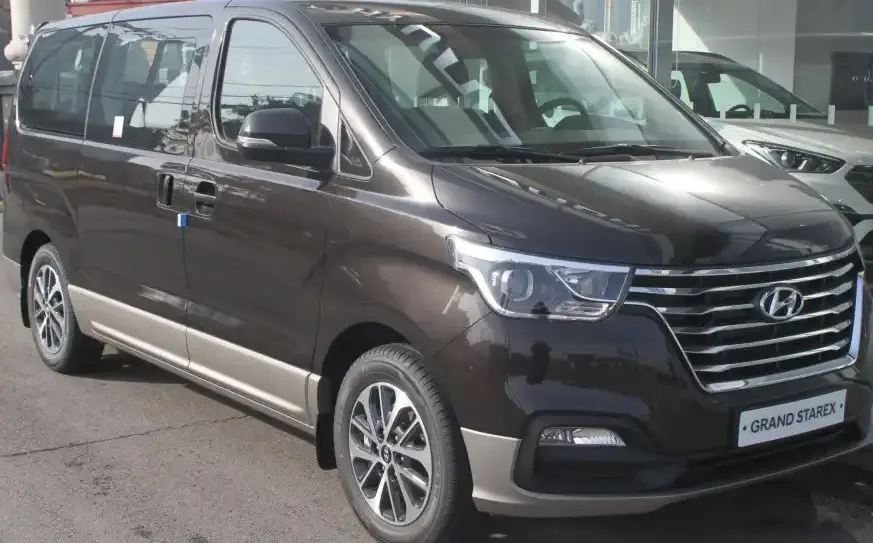
The Hyundai H-1 II, also known as the Grand Starex in some markets, received a significant facelift in 2018, updating its styling and refining its mechanicals. This particular variant, the 2.5 D (175 Hp) 4WD Automatic, represents a compelling blend of practicality, space, and all-weather capability within the H-1 lineup. Production of this facelifted model began in 2018 and continued as a key offering for Hyundai in markets where large, versatile minivans remain popular. The H-1 II/Grand Starex is built on a body-on-frame construction, prioritizing durability and passenger comfort over sporty handling. This version specifically caters to families and businesses needing a robust vehicle capable of carrying up to nine passengers and tackling varied terrain.
Technical Specifications
| Brand | Hyundai |
| Model | H-1 |
| Generation | H-1 II/Grand Starex (facelift 2018) |
| Type (Engine) | 2.5 D (175 Hp) 4WD Automatic |
| Start of production | 2018 |
| Powertrain Architecture | Internal Combustion engine |
| Body type | Minivan |
| Seats | 7-9 |
| Doors | 5 |
| Fuel consumption (urban) | 10.6 l/100 km (22.2 US mpg, 26.6 UK mpg, 9.4 km/l) |
| Fuel consumption (extra urban) | 8.8 l/100 km (26.7 US mpg, 32.1 UK mpg, 11.4 km/l) |
| Fuel consumption (combined) | 10.3 l/100 km (22.8 US mpg, 27.4 UK mpg, 9.7 km/l) |
| CO2 emissions | 203 g/km |
| Fuel Type | Diesel |
| Weight-to-power ratio | 14.3 kg/Hp, 70.1 Hp/tonne |
| Weight-to-torque ratio | 5.7 kg/Nm, 176.6 Nm/tonne |
| Power | 175 Hp @ 3600 rpm |
| Power per litre | 70.1 Hp/l |
| Torque | 441 Nm @ 2000-2250 rpm (325.26 lb.-ft. @ 2000-2250 rpm) |
| Engine Model/Code | D4CB |
| Engine displacement | 2497 cm3 (152.38 cu. in.) |
| Number of cylinders | 4 |
| Engine configuration | Inline |
| Cylinder Bore | 91 mm (3.58 in.) |
| Piston Stroke | 96 mm (3.78 in.) |
| Compression ratio | 16.4:1 |
| Number of valves per cylinder | 4 |
| Fuel injection system | Diesel Commonrail |
| Engine aspiration | Turbocharger, Intercooler |
| Valvetrain | DOHC |
| Engine oil capacity | 7.4 l (7.82 US qt | 6.51 UK qt) |
| Coolant capacity | 13 l (13.74 US qt | 11.44 UK qt) |
| Kerb Weight | 2497 kg (5504.94 lbs.) |
| Fuel tank capacity | 75 l (19.81 US gal | 16.5 UK gal) |
| Length | 5169 mm (203.5 in.) |
| Width | 1920 mm (75.59 in.) |
| Height | 1925 mm (75.79 in.) |
| Wheelbase | 3200 mm (125.98 in.) |
| Front track | 1685 mm (66.34 in.) |
| Rear track | 1660 mm (65.35 in.) |
| Front overhang | 880 mm (34.65 in.) |
| Rear overhang | 1089 mm (42.87 in.) |
| Ride height (ground clearance) | 190 mm (7.48 in.) |
| Minimum turning circle | 11.2 m (36.75 ft.) |
| Drive wheel | All wheel drive (4×4) |
| Number of gears | 5 |
| Gearbox type | Automatic transmission |
| Front suspension | Independent type McPherson |
| Rear suspension | Independent multi-link suspension |
| Front brakes | Ventilated discs |
| Rear brakes | Disc |
| Assisting systems | ABS (Anti-lock braking system) |
| Steering type | Steering rack and pinion |
| Power steering | Hydraulic Steering |
| Tires size | 235/60 R17 |
| Wheel rims size | 17 |
Powertrain & Engine Architecture
The heart of this H-1 variant is the Hyundai D4CB 2.5-liter inline-four cylinder diesel engine. This engine utilizes a common-rail direct injection system, delivering fuel at extremely high pressure for optimized combustion and reduced emissions. The D4CB is turbocharged and intercooled, boosting power output to 175 horsepower at 3600 rpm and a substantial 441 Nm (325 lb-ft) of torque between 2000 and 2250 rpm. The engine features a double overhead camshaft (DOHC) valvetrain with four valves per cylinder, enhancing breathing and contributing to its overall efficiency. The five-speed automatic transmission is specifically tuned to handle the engine’s torque characteristics, providing smooth shifts and adequate acceleration for a vehicle of this size and weight. While not a performance-oriented setup, the combination delivers sufficient power for everyday driving and hauling loads.
Driving Characteristics
The 2.5 D 4WD Automatic H-1 offers a comfortable and predictable driving experience. The automatic transmission prioritizes smooth operation over rapid acceleration. The gear ratios are optimized for fuel efficiency and towing capacity rather than outright speed. Compared to manual transmission versions of the same engine, the automatic sacrifices some responsiveness, but gains in ease of use, particularly in urban environments. The all-wheel-drive system provides enhanced traction in slippery conditions, making it a capable vehicle for inclement weather or light off-road use. The body-on-frame construction results in a noticeable body roll during cornering, but contributes to a robust and durable feel.
Equipment & Trim Levels
The 2018 facelifted H-1 II/Grand Starex 2.5 D 4WD Automatic typically came equipped with a range of standard features, including air conditioning, power windows and locks, a basic audio system, and ABS brakes. Higher trim levels offered upgrades such as leather upholstery, a more advanced infotainment system with touchscreen display, rear parking sensors, and alloy wheels. The interior layout prioritized practicality and space, with flexible seating configurations allowing for up to nine passengers. Optional extras often included a sunroof, upgraded sound system, and navigation system.
Chassis & Braking
The H-1 II utilizes a robust body-on-frame chassis, providing a solid foundation for its large size and intended use. The front suspension employs an independent McPherson strut setup, while the rear features an independent multi-link suspension. This configuration aims to balance ride comfort with handling stability. Braking duties are handled by ventilated discs at the front and solid discs at the rear. The hydraulic power steering provides a reasonably light and responsive feel. The 4WD system is typically part-time, allowing the driver to switch between two-wheel drive and four-wheel drive modes as needed.
Market Reception & Comparison
The H-1 II/Grand Starex, and specifically this 2.5 D 4WD Automatic variant, was generally well-received in markets where large minivans are popular, such as Southeast Asia, the Middle East, and parts of Eastern Europe. Critics praised its spacious interior, robust construction, and all-weather capability. However, the automatic transmission was sometimes criticized for being less responsive than the manual option. Fuel economy, while adequate, wasn’t a standout feature compared to some smaller, more modern vehicles. Compared to the gasoline-powered versions of the H-1, the diesel offered significantly better fuel economy and torque, making it the preferred choice for those needing to tow or carry heavy loads.
Legacy
The Hyundai H-1 II/Grand Starex, particularly the 2.5 D engine, has proven to be a relatively reliable powertrain. The D4CB engine, when properly maintained, is known for its durability and longevity. Common maintenance items include regular oil changes, filter replacements, and inspection of the turbocharger and fuel injection system. In the used car market, these H-1s remain a popular choice for families and businesses seeking a spacious, practical, and affordable vehicle. While not known for its luxury or performance, the H-1 II/Grand Starex 2.5 D 4WD Automatic continues to offer a compelling value proposition for those prioritizing functionality and durability.