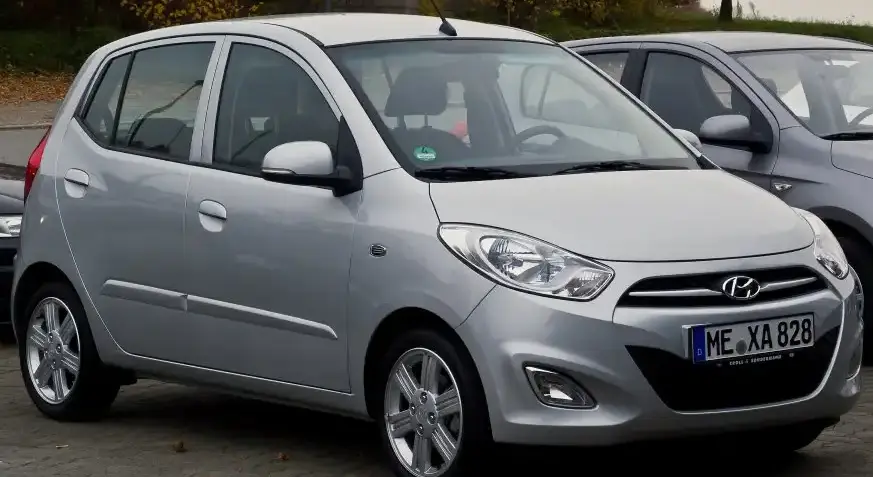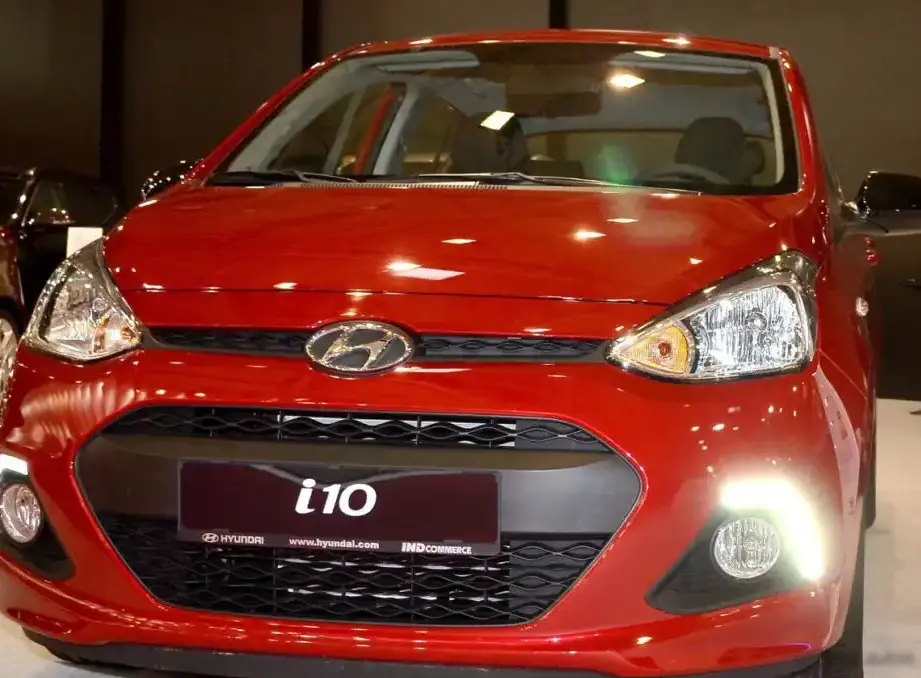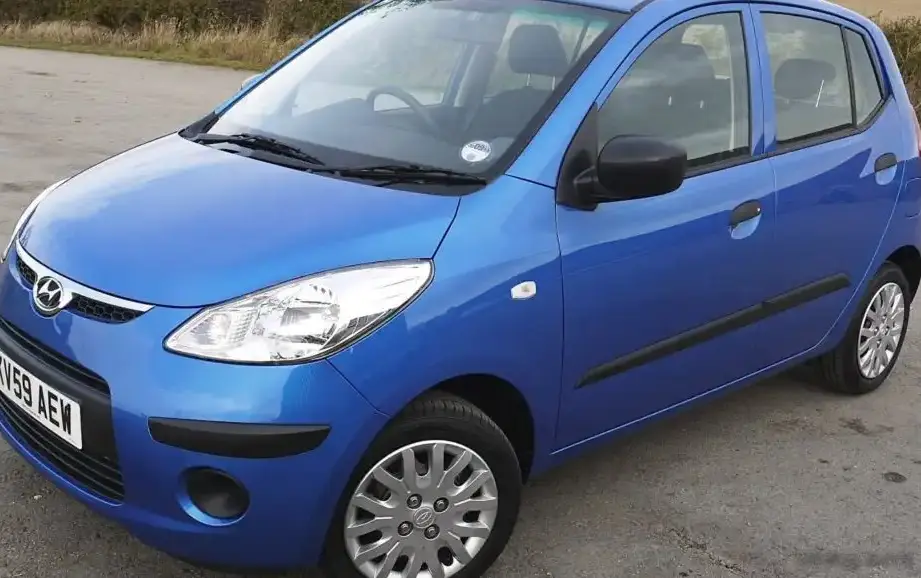
The Hyundai i10 first generation (internal designation PA, commonly referred to as the i10 I) was Hyundai’s entry into the European city car segment, launched in 2008 and produced through 2010. Designed specifically for the European market, it represented Hyundai’s commitment to offering affordable and practical transportation. The 1.1-liter engine with an automatic transmission was a key variant, positioned as the most accessible and convenience-focused option within the i10 lineup. This model aimed to appeal to buyers prioritizing ease of driving over outright performance, particularly in congested urban environments.
Technical Specifications
| Brand | Hyundai |
| Model | i10 |
| Generation | i10 I |
| Type (Engine) | 1.1 (67 Hp) Automatic |
| Start of production | 2008 |
| End of production | 2010 |
| Powertrain Architecture | Internal Combustion engine |
| Body type | Hatchback |
| Seats | 5 |
| Doors | 5 |
| Fuel consumption (urban) | 7.2 l/100 km (32.7 US mpg) |
| Fuel consumption (extra urban) | 5.1 l/100 km (46.1 US mpg) |
| Fuel consumption (combined) | 5.9 l/100 km (39.9 US mpg) |
| Fuel Type | Petrol (Gasoline) |
| Acceleration 0 – 100 km/h | 18.5 sec |
| Acceleration 0 – 62 mph | 18.5 sec |
| Acceleration 0 – 60 mph | 17.6 sec |
| Maximum speed | 142 km/h (88.23 mph) |
| Emission standard | Euro 4 |
| Weight-to-power ratio | 15.4 kg/Hp |
| Weight-to-torque ratio | 10.5 kg/Nm |
| Power | 67 Hp @ 5500 rpm |
| Torque | 98 Nm @ 2800 rpm (72.28 lb.-ft. @ 2800 rpm) |
| Engine layout | Front, Transverse |
| Engine Model/Code | G4HG |
| Engine displacement | 1086 cm3 (66.27 cu. in.) |
| Number of cylinders | 4 |
| Engine configuration | Inline |
| Cylinder Bore | 67 mm (2.64 in.) |
| Piston Stroke | 77 mm (3.03 in.) |
| Number of valves per cylinder | 3 |
| Fuel injection system | Multi-port manifold injection |
| Engine aspiration | Naturally aspirated engine |
| Valvetrain | OHC |
| Engine oil capacity | 3 l (3.17 US qt | 2.64 UK qt) |
| Coolant capacity | 4.7 l (4.97 US qt | 4.14 UK qt) |
| Kerb Weight | 1030 kg (2270.76 lbs.) |
| Max. weight | 1430 kg (3152.61 lbs.) |
| Max load | 400 kg (881.85 lbs.) |
| Trunk (boot) space – minimum | 225 l (7.95 cu. ft.) |
| Trunk (boot) space – maximum | 910 l (32.14 cu. ft.) |
| Fuel tank capacity | 35 l (9.25 US gal | 7.7 UK gal) |
| Length | 3565 mm (140.35 in.) |
| Width | 1595 mm (62.8 in.) |
| Height | 1540 mm (60.63 in.) |
| Wheelbase | 2380 mm (93.7 in.) |
| Front track | 1400 mm (55.12 in.) |
| Rear track | 1385 mm (54.53 in.) |
| Minimum turning circle | 9.5 m (31.17 ft.) |
| Drivetrain Architecture | Front wheel drive |
| Number of gears | 4 |
| Gearbox type | Automatic transmission |
| Front suspension | Independent, McPherson with coil spring and anti-roll bar |
| Rear suspension | Independent multi-link with stabilizer |
| Front brakes | Disc |
| Rear brakes | Drum |
| Assisting systems | ABS (Anti-lock braking system) |
| Steering type | Steering rack and pinion |
| Power steering | Electric |
| Tires size | 155/70 R13; 165/60 R14 |
Powertrain & Engine Architecture
The i10 1.1 Automatic was powered by Hyundai’s G4HG engine, a 1.1-liter (1086 cc) inline-four cylinder gasoline engine. This engine featured a single overhead camshaft (SOHC) valvetrain with three valves per cylinder (two intake, one exhaust). Fuel delivery was managed by a multi-point fuel injection system. The G4HG was designed for fuel efficiency and smooth operation rather than high performance. The engine produced 67 horsepower at 5500 rpm and 98 Nm (72.28 lb-ft) of torque at 2800 rpm. Paired with a four-speed automatic transmission, the powertrain prioritized ease of use and convenience. This automatic transmission was a traditional hydraulic unit, offering smooth but not particularly quick shifts. It was chosen to provide a comfortable driving experience, especially in city traffic.
Driving Characteristics
The 1.1-liter engine and four-speed automatic combination resulted in leisurely acceleration. The 0-60 mph time was around 17.6 seconds, and the top speed was 88.23 mph. The automatic transmission’s gear ratios were optimized for fuel economy and drivability at lower speeds. Compared to the five-speed manual version of the 1.1, the automatic offered less direct control and slightly reduced fuel efficiency. The automatic also felt noticeably slower, particularly during overtaking maneuvers. However, the automatic transmission provided a smoother and more relaxed driving experience, making it ideal for drivers who primarily used the car for short trips in urban areas. The steering was light and easy, further enhancing the car’s maneuverability in tight spaces.
Equipment & Trim Levels
The 1.1 Automatic i10 typically came with a basic level of equipment, reflecting its position as the entry-level trim. Standard features generally included power steering, central locking, electric front windows, and an adjustable steering wheel. Safety features included ABS (Anti-lock Braking System) and driver and passenger airbags. Interior upholstery was typically cloth, and the dashboard featured a simple, functional design. Optional extras could include air conditioning, alloy wheels, and a radio/CD player. Higher trim levels, such as the i10 Style, offered more features, but the 1.1 Automatic was deliberately kept relatively basic to maintain its affordability.
Chassis & Braking
The i10 I utilized a McPherson strut front suspension with a coil spring and anti-roll bar, providing a comfortable ride. The rear suspension was an independent multi-link setup with a stabilizer bar, contributing to improved handling and stability. The braking system consisted of disc brakes on the front wheels and drum brakes on the rear. While adequate for the car’s weight and performance, the rear drum brakes were a cost-saving measure and didn’t offer the same stopping power as disc brakes. The i10’s chassis was designed to be lightweight and rigid, contributing to its nimble handling characteristics.
Market Reception & Comparison
The Hyundai i10 1.1 Automatic was generally well-received as an affordable and practical city car. Critics praised its ease of driving, comfortable ride, and low running costs. However, the engine’s lack of power and the automatic transmission’s sluggishness were common criticisms. Compared to other city cars of the time, such as the Fiat Panda and the Toyota Aygo, the i10 offered a good balance of price, features, and reliability. The 1.1 Automatic was often seen as a sensible choice for drivers who prioritized convenience and fuel economy over performance. The manual transmission versions of the i10 offered better fuel economy and acceleration, while higher-powered variants (not available with the automatic) provided a more engaging driving experience.
Legacy
The Hyundai i10 I 1.1 Automatic, while not a performance standout, proved to be a reliable and durable vehicle. The G4HG engine is known for its longevity, and the four-speed automatic transmission, while simple, is generally robust. In the used car market, these i10s are often sought after as affordable and economical transportation. Maintenance costs are relatively low, and parts availability is generally good. While not a collector’s item, the i10 I 1.1 Automatic represents a significant step forward for Hyundai in the European market, establishing the brand as a credible competitor in the city car segment.