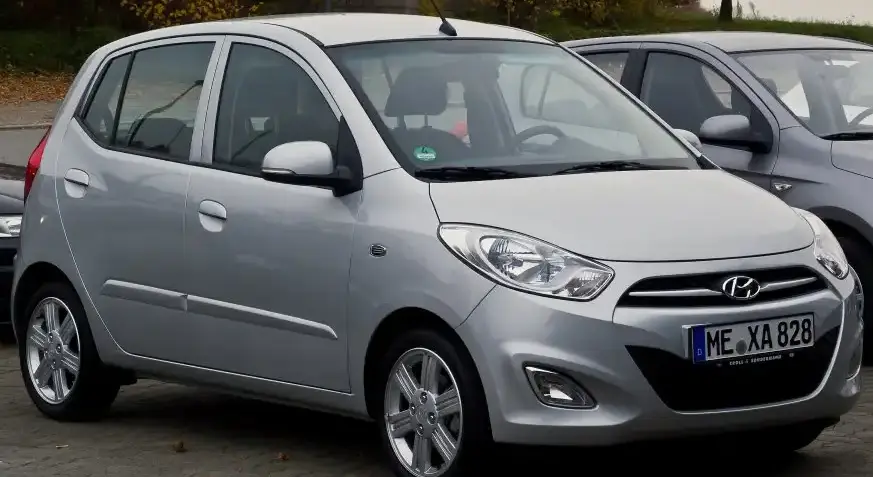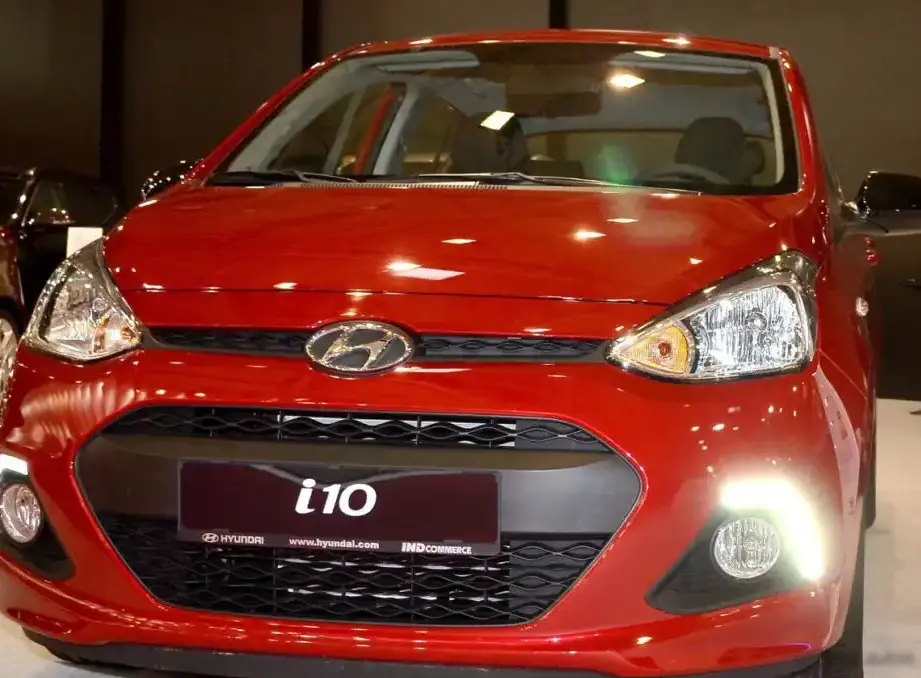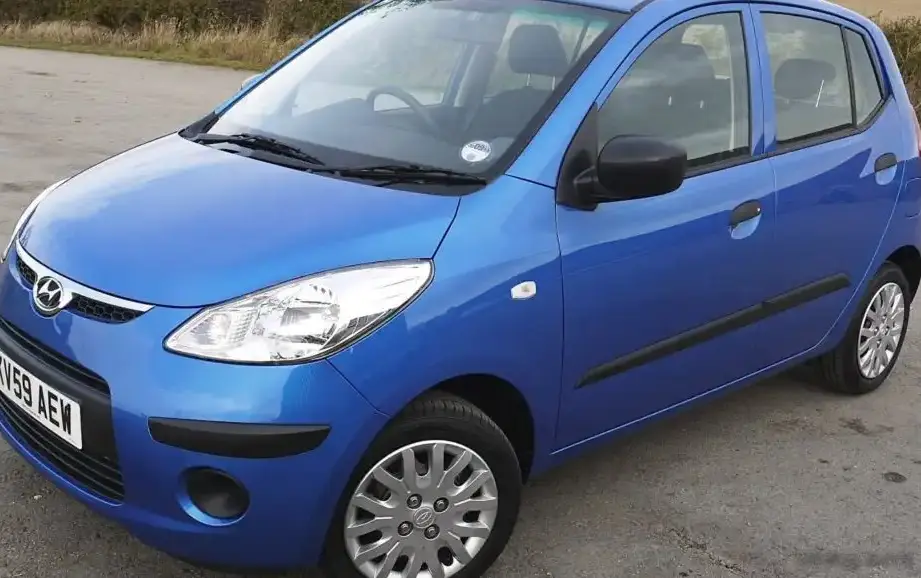
The Hyundai i10 first generation (internally designated PA, and sold as the i10 I) was Hyundai’s entry into the European city car market, launched in 2008 and continuing through 2010. Designed specifically for the European consumer, it represented a significant step up in quality and refinement compared to previous Hyundai offerings. The 1.2-liter engine, producing 78 horsepower, was a key component of the i10 lineup, positioned as the mainstream offering between the base 1.1-liter and, later, more powerful 1.25-liter variants. This variant aimed to balance affordability with acceptable performance for urban driving and occasional highway use.
Technical Specifications
| Brand | Hyundai |
| Model | i10 |
| Generation | i10 I |
| Type (Engine) | 1.2 (78 Hp) |
| Start of production | 2008 |
| End of production | 2010 |
| Powertrain Architecture | Internal Combustion engine |
| Body type | Hatchback |
| Seats | 5 |
| Doors | 5 |
| Fuel consumption (urban) | 6.3 l/100 km (37.3 US mpg) |
| Fuel consumption (extra urban) | 4.3 l/100 km (54.7 US mpg) |
| Fuel consumption (combined) | 5 l/100 km (47 US mpg) |
| Fuel Type | Petrol (Gasoline) |
| Acceleration 0 – 100 km/h | 12.8 sec |
| Acceleration 0 – 62 mph | 12.8 sec |
| Acceleration 0 – 60 mph | 12.2 sec |
| Maximum speed | 164 km/h (101.9 mph) |
| Emission standard | Euro 4 |
| Weight-to-power ratio | 13.3 kg/Hp |
| Weight-to-torque ratio | 8.7 kg/Nm |
| Power | 78 Hp @ 6000 rpm |
| Torque | 119 Nm @ 4000 rpm (87.77 lb.-ft. @ 4000 rpm) |
| Engine layout | Front, Transverse |
| Engine Model/Code | G4LA |
| Engine displacement | 1248 cm3 (76.16 cu. in.) |
| Number of cylinders | 4 |
| Engine configuration | Inline |
| Compression ratio | 10.5:1 |
| Number of valves per cylinder | 4 |
| Fuel injection system | Multi-port manifold injection |
| Engine aspiration | Naturally aspirated |
| Engine oil capacity | 3.6 l (3.8 US qt | 3.17 UK qt) |
| Coolant capacity | 4.2 l (4.44 US qt | 3.7 UK qt) |
| Kerb Weight | 1035 kg (2281.78 lbs.) |
| Max. weight | 1415 kg (3119.54 lbs.) |
| Max load | 380 kg (837.76 lbs.) |
| Trunk (boot) space – minimum | 225 l (7.95 cu. ft.) |
| Trunk (boot) space – maximum | 910 l (32.14 cu. ft.) |
| Fuel tank capacity | 35 l (9.25 US gal | 7.7 UK gal) |
| Length | 3565 mm (140.35 in.) |
| Width | 1595 mm (62.8 in.) |
| Height | 1540 mm (60.63 in.) |
| Wheelbase | 2380 mm (93.7 in.) |
| Front track | 1400 mm (55.12 in.) |
| Rear track | 1385 mm (54.53 in.) |
| Minimum turning circle | 9.5 m (31.17 ft.) |
| Drivetrain | Front wheel drive |
| Number of gears | 5 gears, manual transmission |
| Front suspension | Independent, McPherson with coil spring and anti-roll bar |
| Rear suspension | Independent multi-link with stabilizer |
| Front brakes | Disc |
| Rear brakes | Drum |
| Assisting systems | ABS (Anti-lock braking system) |
| Steering type | Steering rack and pinion |
| Power steering | Electric |
| Tires size | 165/60 R14 |
Powertrain & Engine Architecture
The heart of the i10 1.2 was the Hyundai G4LA engine, a 1.248-liter (76.16 cubic inches) inline-four cylinder gasoline engine. This engine utilized a multi-point fuel injection system and a double overhead camshaft (DOHC) valvetrain with four valves per cylinder. The G4LA was a relatively simple, naturally aspirated design, prioritizing fuel efficiency and reliability over outright performance. The compression ratio of 10.5:1 was a typical value for engines of this era, balancing efficiency and knock resistance. The engine produced 78 horsepower at 6000 rpm and 119 Nm (87.77 lb-ft) of torque at 4000 rpm. The engine was paired with a five-speed manual transmission, which was the most common configuration. While an automatic transmission was offered in some markets, it was less frequently seen with the 1.2-liter engine.
Driving Characteristics
The i10 1.2 with the manual transmission offered adequate, though not exhilarating, performance for city driving. Acceleration from 0-60 mph took around 12.2 seconds, and the top speed was approximately 101.9 mph. The engine felt relatively strained at higher speeds, and highway overtaking required careful planning. The five-speed gearbox was well-matched to the engine’s characteristics, providing reasonable spacing between gears. The power delivery was linear, making it easy to modulate the throttle. Compared to the base 1.1-liter engine, the 1.2 offered a noticeable improvement in responsiveness and overall drivability. However, it lacked the punch of the later 1.25-liter versions.
Equipment & Trim Levels
The i10 1.2 typically came with a reasonable level of standard equipment for its price point. Base models included central locking, power steering, and an adjustable steering column. Higher trim levels, often denoted by suffixes like ‘Comfort’ or ‘Style’, added features such as air conditioning, electric front windows, and a radio/CD player. Interior upholstery was typically cloth, with a simple, functional dashboard layout. Optional extras included alloy wheels, metallic paint, and a sunroof. Safety features included dual front airbags and ABS brakes.
Chassis & Braking
The i10 featured a front-wheel-drive layout with independent suspension at all four corners. The front suspension utilized a McPherson strut design with a coil spring and anti-roll bar, while the rear suspension employed a multi-link setup with a stabilizer. This suspension configuration provided a comfortable ride quality, particularly on smooth roads. Braking duties were handled by disc brakes at the front and drum brakes at the rear. The ABS system helped to maintain steering control during emergency braking situations. The i10’s relatively light weight (around 1035 kg or 2282 lbs) contributed to its nimble handling.
Market Reception & Comparison
The Hyundai i10 1.2 was generally well-received by automotive critics as a practical and affordable city car. It was praised for its comfortable ride, decent fuel economy (around 47 US mpg combined), and competitive price. However, some reviewers noted its lack of refinement compared to more established European rivals. Compared to the 1.1-liter i10, the 1.2 offered a significant improvement in performance, making it a more suitable choice for drivers who frequently ventured outside of urban areas. The 1.25-liter i10, introduced later, provided even more power but came at a higher price point. In terms of reliability, the i10 1.2 proved to be a generally dependable vehicle, with few major mechanical issues reported.
Legacy
The Hyundai i10 first generation played a crucial role in establishing Hyundai as a credible player in the European small car market. The 1.2-liter engine, while not particularly powerful, proved to be a reliable and fuel-efficient powerplant. Today, used i10 1.2 models are relatively affordable and can be a good option for budget-conscious buyers seeking a practical and economical city car. Maintenance costs are generally low, and spare parts are readily available. However, potential buyers should be aware of the car’s age and potential for wear and tear. The i10’s success paved the way for subsequent generations of the i10, which have continued to build on its reputation for value and reliability.