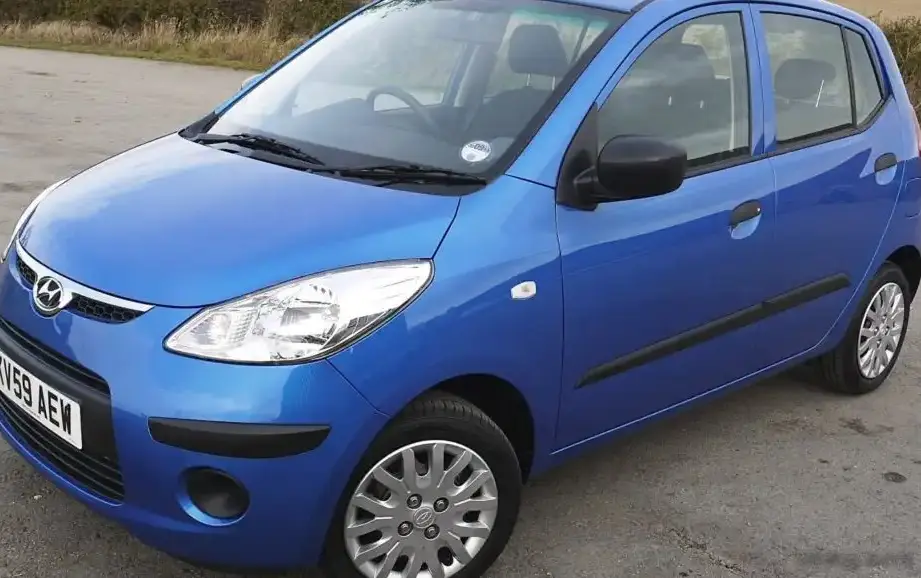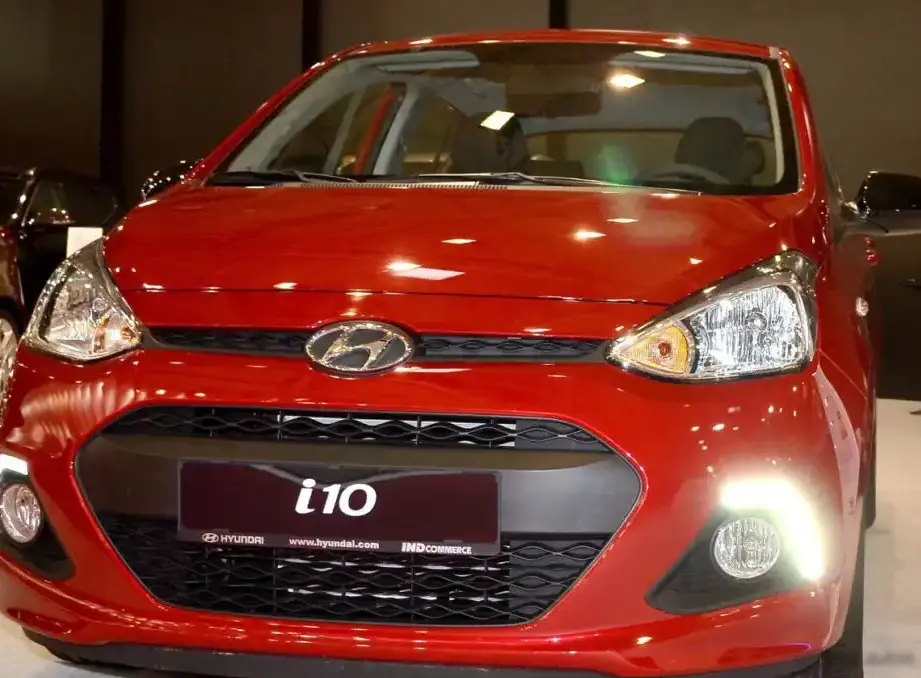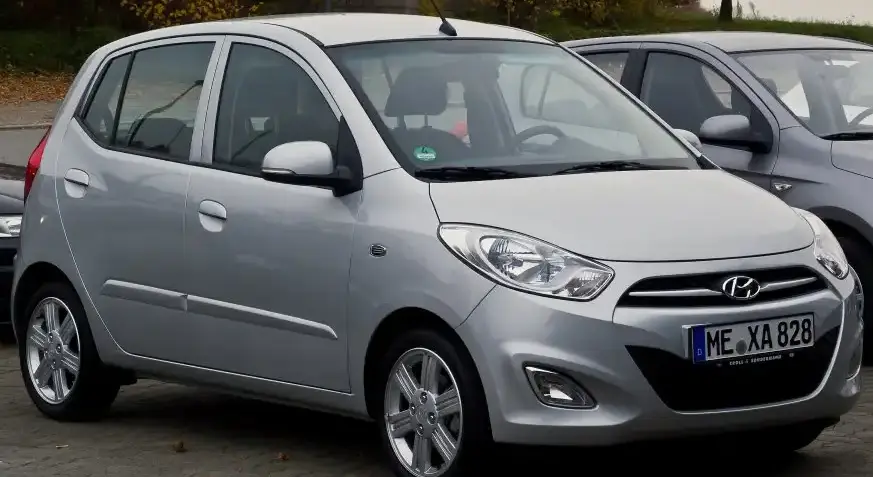
The Hyundai i10 first generation (PA), particularly the facelifted version introduced in 2011, represented a significant step forward for the South Korean automaker in the European city car segment. Produced from 2008 to 2013, with the facelift arriving in 2011, the i10 aimed to provide affordable, reliable transportation with a focus on practicality and fuel efficiency. The 1.0-liter engine variant, producing 69 horsepower, served as the entry point to the i10 range, targeting budget-conscious buyers and those prioritizing economy over outright performance. This version was primarily sold in Europe, where the demand for small, economical cars was – and remains – high. The facelift brought subtle styling updates and improvements to the interior, enhancing the i10’s appeal.
Technical Specifications
| Brand | Hyundai |
| Model | i10 |
| Generation | i10 I (facelift 2011) |
| Type (Engine) | 1.0 (69 Hp) |
| Start of production | 2011 |
| End of production | 2013 |
| Powertrain Architecture | Internal Combustion engine |
| Body type | Hatchback |
| Seats | 5 |
| Doors | 5 |
| Fuel consumption (urban) | 5 l/100 km (47 US mpg, 56.5 UK mpg, 20 km/l) |
| Fuel consumption (extra urban) | 3.8 l/100 km (61.9 US mpg, 74.3 UK mpg, 26.3 km/l) |
| Fuel consumption (combined) | 4.2 l/100 km (56 US mpg, 67.3 UK mpg, 23.8 km/l) |
| CO2 emissions | 99 g/km |
| Fuel Type | Petrol (Gasoline) |
| Acceleration 0 – 100 km/h | 14.8 sec |
| Acceleration 0 – 62 mph | 14.8 sec |
| Acceleration 0 – 60 mph | 14.1 sec |
| Maximum speed | 150 km/h (93.21 mph) |
| Emission standard | Euro 5 |
| Weight-to-power ratio | 12.7 kg/Hp |
| Weight-to-torque ratio | 9.2 kg/Nm |
| Power | 69 Hp @ 6200 rpm |
| Torque | 95 Nm @ 3500 rpm (70.07 lb.-ft. @ 3500 rpm) |
| Engine layout | Front, Transverse |
| Engine Model/Code | G3LA |
| Engine displacement | 998 cm3 (60.9 cu. in.) |
| Number of cylinders | 3 |
| Engine configuration | Inline |
| Cylinder Bore | 71 mm (2.8 in.) |
| Piston Stroke | 84 mm (3.31 in.) |
| Compression ratio | 10.5:1 |
| Number of valves per cylinder | 4 |
| Fuel injection system | Multi-port manifold injection |
| Engine aspiration | Naturally aspirated engine |
| Valvetrain | DOHC |
| Engine oil capacity | 2.9 l (3.06 US qt | 2.55 UK qt) |
| Coolant capacity | 3.9 l (4.12 US qt | 3.43 UK qt) |
| Kerb Weight | 873 kg (1924.64 lbs.) |
| Max. weight | 1400 kg (3086.47 lbs.) |
| Max load | 527 kg (1161.84 lbs.) |
| Trunk (boot) space – minimum | 225 l (7.95 cu. ft.) |
| Trunk (boot) space – maximum | 910 l (32.14 cu. ft.) |
| Fuel tank capacity | 35 l (9.25 US gal | 7.7 UK gal) |
| Permitted trailer load with brakes (12%) | 700 kg (1543.24 lbs.) |
| Permitted trailer load without brakes | 400 kg (881.85 lbs.) |
| Length | 3585 mm (141.14 in.) |
| Width | 1595 mm (62.8 in.) |
| Height | 1540 mm (60.63 in.) |
| Wheelbase | 2380 mm (93.7 in.) |
| Front track | 1400 mm (55.12 in.) |
| Rear track | 1385 mm (54.53 in.) |
| Ride height (ground clearance) | 149 mm (5.87 in.) |
| Drag coefficient (Cd) | 0.32 |
| Minimum turning circle | 9.5 m (31.17 ft.) |
| Drivetrain | Front wheel drive |
| Number of gears | 5 |
| Gearbox type | Manual transmission |
| Front brakes | Ventilated discs |
| Rear brakes | Drum |
| Assisting systems | ABS (Anti-lock braking system) |
| Steering type | Steering rack and pinion |
| Tires size | 155/70 R13 |
| Wheel rims size | 13 |
Powertrain & Engine Architecture
The heart of the i10 1.0 was the Hyundai G3LA engine, a 998cc inline-three cylinder petrol engine. This engine utilized a multi-point fuel injection system and a double overhead camshaft (DOHC) valvetrain, contributing to relatively efficient combustion for its size. The G3LA was a naturally aspirated engine, meaning it didn’t rely on a turbocharger or supercharger for increased power. Its modest output of 69 horsepower at 6200 rpm and 95 Nm (70 lb-ft) of torque at 3500 rpm was geared towards fuel economy rather than spirited acceleration. The engine’s relatively simple design contributed to its reliability and ease of maintenance. The i10 1.0 was typically paired with a five-speed manual transmission, although a four-speed automatic transmission was also available, albeit less common. The automatic version further prioritized ease of use over performance.
Driving Characteristics
The i10 1.0, particularly in its manual transmission guise, offered a light and nimble driving experience. However, the 69 hp engine meant acceleration was leisurely. 0-60 mph took around 14.1 seconds, and top speed was limited to 93 mph. The automatic transmission version felt even slower due to the less efficient power delivery of the four-speed unit. Gear ratios were optimized for fuel economy, with taller gearing in higher gears. The i10 wasn’t designed for highway cruising; it excelled in urban environments where its small size and light steering made maneuvering and parking a breeze. Compared to higher-spec i10 models with larger 1.25-liter engines, the 1.0 felt noticeably underpowered, especially when carrying passengers or cargo. The manual transmission offered a more engaging driving experience, allowing drivers to better utilize the available power.
Equipment & Trim Levels
The i10 1.0 typically came with a basic level of equipment, reflecting its position as the entry-level model. Standard features generally included power steering, central locking, electric front windows, and an audio system with USB connectivity. Safety features included ABS brakes and airbags for the driver and front passenger. Higher trim levels, such as the Style or Comfort, added features like air conditioning, alloy wheels, and body-colored door handles and mirrors. Interior upholstery was typically cloth, with a simple and functional dashboard layout. Optional extras included a panoramic sunroof and parking sensors.
Chassis & Braking
The i10’s chassis was designed for comfort and practicality. It featured a MacPherson strut front suspension and a torsion beam rear suspension. The front brakes were ventilated discs, providing adequate stopping power, while the rear brakes were drums, a cost-saving measure common in this segment. The i10’s suspension was tuned for a comfortable ride, absorbing bumps and imperfections in the road reasonably well. The relatively lightweight construction of the i10 helped to offset the modest engine power, contributing to its nimble handling. Stabilizer bars were present, but relatively thin, prioritizing comfort over outright handling precision.
Market Reception & Comparison
The Hyundai i10 1.0 was generally well-received by critics as an affordable and practical city car. Its fuel economy was a major selling point, and its compact size made it ideal for navigating congested urban areas. However, its lack of power was often criticized, particularly when compared to rivals like the Fiat Panda and Volkswagen Up!. The i10’s reliability was also praised, and it proved to be a cost-effective option for budget-conscious buyers. Compared to the 1.25-liter i10, the 1.0 offered significantly lower running costs but at the expense of performance and refinement. The automatic transmission version, while convenient, further reduced performance and fuel economy.
Legacy
The Hyundai i10 1.0, and the first-generation i10 as a whole, played a crucial role in establishing Hyundai as a credible player in the European small car market. The G3LA engine proved to be a reliable and durable unit, and many examples are still on the road today. While not known for its performance, the i10 1.0 remains a popular choice for those seeking an affordable, economical, and practical city car. In the used car market, these i10s are often sought after for their low running costs and simple mechanicals, making them a good option for first-time car owners or those on a tight budget. Maintenance is generally straightforward and inexpensive, contributing to its continued appeal.