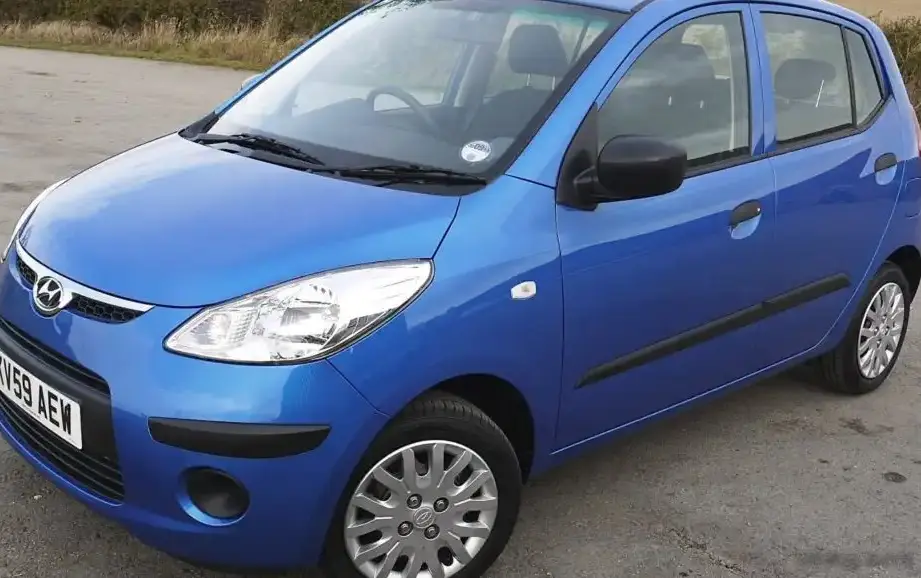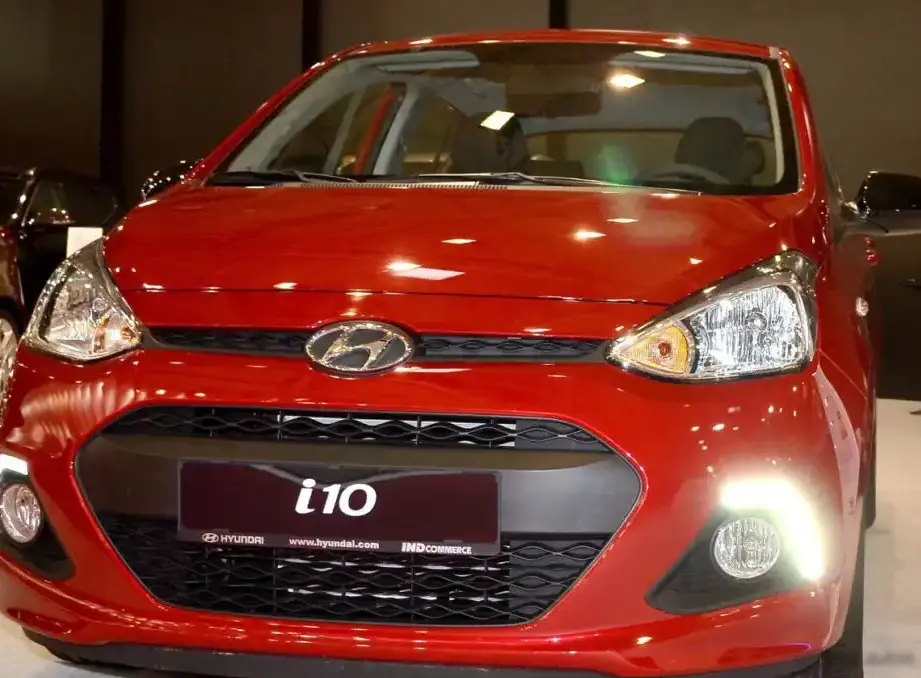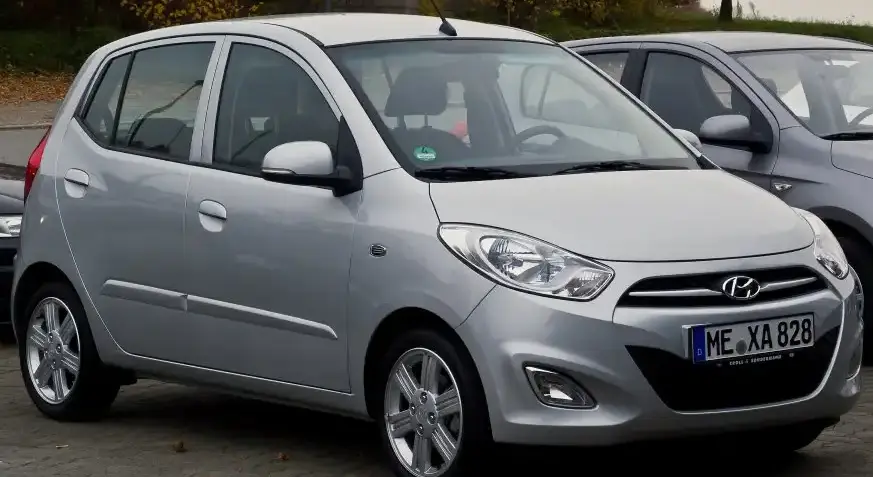
The Hyundai i10 first generation (PA), particularly the facelifted version introduced in 2011, represented a significant step forward for the South Korean automaker in the European city car segment. Produced from 2008 to 2013, with the facelift arriving in 2011, the i10 aimed to provide affordable, reliable transportation with a surprisingly spacious interior for its diminutive size. The 1.1-liter engine paired with a four-speed automatic transmission was positioned as the entry-level offering, prioritizing ease of use and fuel efficiency over outright performance. This variant was primarily targeted towards drivers seeking a simple, economical, and easy-to-drive vehicle for urban commuting.
Technical Specifications
| Brand | Hyundai |
| Model | i10 |
| Generation | i10 I (facelift 2011) |
| Type (Engine) | 1.1 (69 Hp) Automatic |
| Start of production | 2011 |
| End of production | 2013 |
| Powertrain Architecture | Internal Combustion engine |
| Body type | Hatchback |
| Seats | 5 |
| Doors | 5 |
| Fuel consumption (urban) | 7.2 l/100 km (32.7 US mpg, 39.2 UK mpg, 13.9 km/l) |
| Fuel consumption (extra urban) | 4.9 l/100 km (48 US mpg, 57.6 UK mpg, 20.4 km/l) |
| Fuel consumption (combined) | 5.8 l/100 km (40.6 US mpg, 48.7 UK mpg, 17.2 km/l) |
| CO2 emissions | 134 g/km |
| Fuel Type | Petrol (Gasoline) |
| Acceleration 0 – 100 km/h | 17.1 sec |
| Acceleration 0 – 62 mph | 17.1 sec |
| Acceleration 0 – 60 mph | 16.2 sec |
| Maximum speed | 149 km/h (92.58 mph) |
| Emission standard | Euro 5 |
| Weight-to-power ratio | 13.6 kg/Hp, 73.8 Hp/tonne |
| Weight-to-torque ratio | 9.4 kg/Nm, 105.9 Nm/tonne |
| Power | 69 Hp @ 5500 rpm |
| Power per litre | 63.5 Hp/l |
| Torque | 99 Nm @ 4500 rpm (73.02 lb.-ft. @ 4500 rpm) |
| Engine layout | Front, Transverse |
| Engine Model/Code | G4HG |
| Engine displacement | 1086 cm3 (66.27 cu. in.) |
| Number of cylinders | 4 |
| Engine configuration | Inline |
| Cylinder Bore | 67 mm (2.64 in.) |
| Piston Stroke | 77 mm (3.03 in.) |
| Compression ratio | 10.1:1 |
| Number of valves per cylinder | 3 |
| Fuel injection system | Multi-port manifold injection |
| Engine aspiration | Naturally aspirated engine |
| Valvetrain | SOHC |
| Engine oil capacity | 3 l (3.17 US qt | 2.64 UK qt) |
| Coolant | 4.7 l (4.97 US qt | 4.14 UK qt) |
| Kerb Weight | 935 kg (2061.32 lbs.) |
| Max. weight | 1430 kg (3152.61 lbs.) |
| Max load | 495 kg (1091.29 lbs.) |
| Trunk (boot) space – minimum | 225 l (7.95 cu. ft.) |
| Trunk (boot) space – maximum | 910 l (32.14 cu. ft.) |
| Fuel tank capacity | 35 l (9.25 US gal | 7.7 UK gal) |
| Permitted trailer load with brakes (12%) | 700 kg (1543.24 lbs.) |
| Permitted trailer load without brakes | 400 kg (881.85 lbs.) |
| Length | 3585 mm (141.14 in.) |
| Width | 1595 mm (62.8 in.) |
| Height | 1540 mm (60.63 in.) |
| Wheelbase | 2380 mm (93.7 in.) |
| Front track | 1400 mm (55.12 in.) |
| Rear (Back) track | 1385 mm (54.53 in.) |
| Ride height (ground clearance) | 149 mm (5.87 in.) |
| Drag coefficient (Cd) | 0.32 |
| Minimum turning circle (turning diameter) | 9.5 m (31.17 ft.) |
| Drivetrain Architecture | The Internal combustion engine (ICE) drives the front wheels of the vehicle. |
| Drive wheel | Front wheel drive |
| Number of gears and type of gearbox | 4 gears, automatic transmission |
| Front brakes | Ventilated discs |
| Rear brakes | Drum |
| Assisting systems | ABS (Anti-lock braking system) |
| Steering type | Steering rack and pinion |
| Tires size | 175/60 R14 |
| Wheel rims size | 14 |
Powertrain & Engine Architecture
The heart of this i10 variant is the Hyundai G4HG engine, a 1.1-liter inline-four cylinder petrol engine. This engine utilizes a single overhead camshaft (SOHC) valvetrain with three valves per cylinder (two intake, one exhaust). Fuel delivery is managed by a multi-point fuel injection system, a common setup for engines of this era aiming for a balance between efficiency and cost-effectiveness. The G4HG is a naturally aspirated engine, meaning it doesn’t employ a turbocharger or supercharger. The engine’s modest output of 69 horsepower at 5500 rpm and 99 Nm (73 lb-ft) of torque at 4500 rpm reflects its focus on fuel economy rather than performance. Paired with this engine is a four-speed automatic transmission. This transmission, while providing the convenience of automatic operation, is a relatively simple design and contributes to the car’s overall affordability. It lacks the sophistication of more modern automatic transmissions with more gears and advanced control systems.
Driving Characteristics
The 1.1-liter automatic i10 delivers a driving experience best described as undemanding. Acceleration is leisurely, taking over 17 seconds to reach 62 mph. The four-speed automatic transmission has relatively long gear ratios, prioritizing fuel efficiency over quick acceleration. In real-world driving, this translates to a car that feels comfortable at lower speeds in urban environments but struggles when attempting to merge onto highways or overtake other vehicles. Compared to the five-speed manual version of the same engine, the automatic suffers a noticeable performance penalty. Higher-output versions of the i10, such as those equipped with the 1.25-liter engine, offer significantly more responsive acceleration and a more engaging driving experience. The automatic transmission’s shift quality is adequate but not particularly refined, with noticeable shifts during acceleration.
Equipment & Trim Levels
The 1.1-liter automatic i10 typically came with a basic but functional equipment list. Standard features generally included power steering, central locking, electric front windows, and an audio system with USB connectivity. Safety features included ABS (Anti-lock Braking System) and airbags for the driver and front passenger. Interior upholstery was typically cloth, and the dashboard featured a simple, straightforward design. Optional extras included air conditioning, alloy wheels, and a passenger airbag. The trim level associated with this engine/transmission combination was generally the base model, designed to offer the most affordable entry point into the i10 range.
Chassis & Braking
The i10’s chassis is a typical front-wheel-drive configuration with a MacPherson strut front suspension and a torsion beam rear suspension. The torsion beam rear suspension is a cost-effective solution that provides adequate ride comfort for everyday driving. Braking duties are handled by ventilated discs at the front and drum brakes at the rear. While adequate for the car’s weight and performance, the drum brakes on the rear wheels are less effective than disc brakes, particularly in demanding braking situations. The steering is a rack and pinion system, providing reasonably precise steering feel.
Market Reception & Comparison
The Hyundai i10 1.1 automatic was generally well-received as a practical and affordable city car. Critics praised its spacious interior, good fuel economy, and competitive price. However, the engine’s lack of power and the automatic transmission’s sluggishness were common criticisms. Compared to rivals like the Fiat Panda, Volkswagen Up!, and Toyota Aygo, the i10 offered a compelling value proposition, particularly in terms of interior space and standard equipment. In terms of fuel economy, the 1.1-liter automatic i10 performed competitively with other small city cars, achieving around 40-49 mpg on the combined cycle. Reliability was generally good, with few reported issues with the engine or transmission.
Legacy
The Hyundai i10 1.1 automatic, while not a performance standout, proved to be a reliable and economical city car. The G4HG engine and four-speed automatic transmission are known for their durability, and well-maintained examples can still be found on the road today. In the used car market, this variant represents an affordable option for those seeking a basic, no-frills city car. Its simplicity and relatively low running costs make it an attractive choice for first-time car buyers or those seeking a second car for urban commuting. While newer city cars offer more advanced technology and improved fuel efficiency, the first-generation i10 remains a testament to Hyundai’s growing competence in the small car segment.