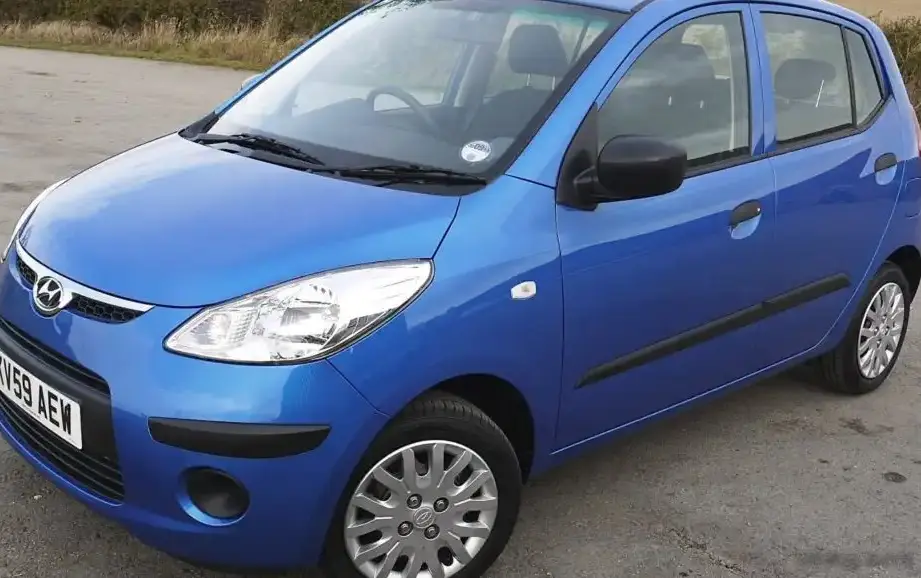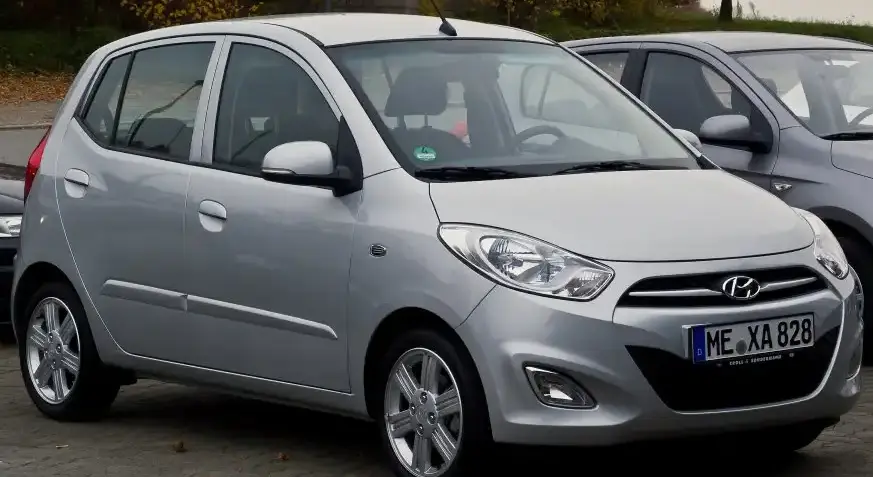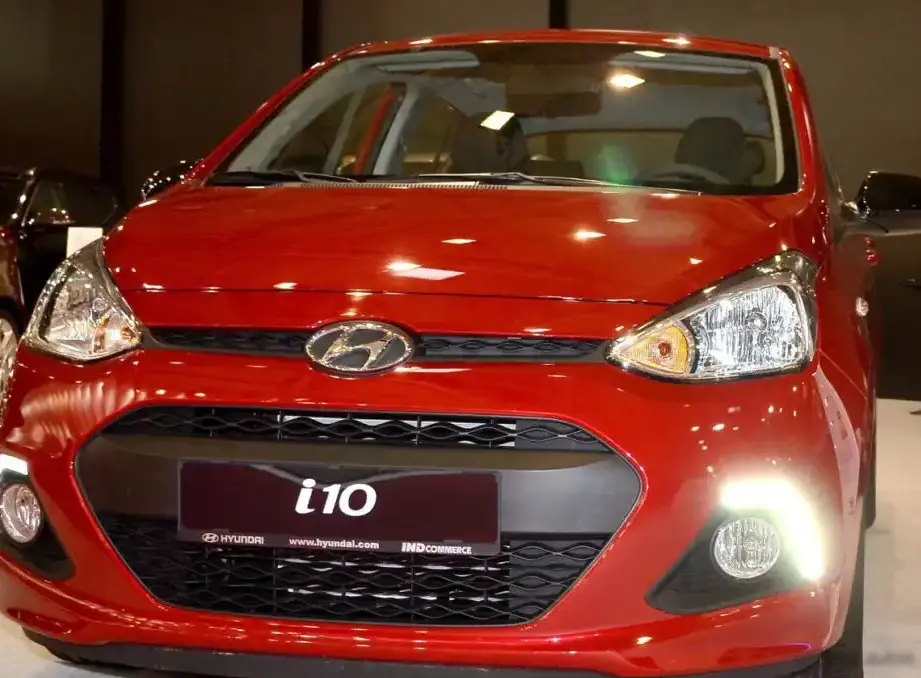
The Hyundai i10 II 1.0 16V (67 hp) LPG, produced between 2013 and 2016, represents an entry-level offering within the second generation of Hyundai’s popular city car. Positioned as a budget-friendly and economical option, this variant catered to buyers prioritizing fuel efficiency and low running costs. It was a key model in Hyundai’s strategy to gain market share in the European A-segment, competing with vehicles like the Fiat 500, Volkswagen Up!, and Toyota Aygo. The i10 II, built on the HA3 platform, offered a significant step up in refinement and space compared to its predecessor, and the 1.0L LPG version was particularly popular in markets where LPG infrastructure was well-developed.
Technical Specifications
| Brand | Hyundai |
| Model | i10 |
| Generation | i10 II |
| Type (Engine) | 1.0 16V (67 Hp) LPG |
| Start of production | 2013 |
| End of production | 2016 |
| Powertrain Architecture | Internal Combustion engine |
| Body type | Hatchback |
| Seats | 5 |
| Doors | 5 |
| Fuel consumption (urban) | 5.1 l/100 km (46.1 US mpg, 55.4 UK mpg, 19.6 km/l) |
| Fuel consumption (extra urban) | 3.7 l/100 km (63.6 US mpg, 76.3 UK mpg, 27 km/l) |
| Fuel consumption (combined) | 4.3 l/100 km (54.7 US mpg, 65.7 UK mpg, 23.3 km/l) |
| CO2 emissions | 98 g/km |
| Fuel Type | Petrol / LPG |
| Acceleration 0 – 100 km/h | 15.2 sec |
| Acceleration 0 – 62 mph | 15.2 sec |
| Acceleration 0 – 60 mph | 14.4 sec |
| Maximum speed | 153 km/h (95.07 mph) |
| Emission standard | Euro 5 |
| Weight-to-power ratio | 14.8 kg/Hp, 67.7 Hp/tonne |
| Weight-to-torque ratio | 10.4 kg/Nm, 96.1 Nm/tonne |
| Power | 67 Hp @ 5500 rpm |
| Power per litre | 67.1 Hp/l |
| Torque | 95 Nm @ 5500 rpm (70.07 lb.-ft. @ 5500 rpm) |
| Engine layout | Front, Transverse |
| Engine Model/Code | B3LA |
| Engine displacement | 998 cm3 (60.9 cu. in.) |
| Number of cylinders | 3 |
| Engine configuration | Inline |
| Cylinder Bore | 71 mm (2.8 in.) |
| Piston Stroke | 84 mm (3.31 in.) |
| Compression ratio | 10.5:1 |
| Number of valves per cylinder | 4 |
| Fuel injection system | Multi-port manifold injection |
| Engine aspiration | Naturally aspirated engine |
| Valvetrain | DOHC |
| Engine oil capacity | 3 l (3.17 US qt | 2.64 UK qt) |
| Coolant | 4.6 l (4.86 US qt | 4.05 UK qt) |
| Kerb Weight | 989 kg (2180.37 lbs.) |
| Max. weight | 1470 kg (3240.8 lbs.) |
| Max load | 481 kg (1060.42 lbs.) |
| Trunk (boot) space – minimum | 252 l (8.9 cu. ft.) |
| Trunk (boot) space – maximum | 1046 l (36.94 cu. ft.) |
| Fuel tank capacity | 40 l (10.57 US gal | 8.8 UK gal) |
| Length | 3665 mm (144.29 in.) |
| Width | 1660 mm (65.35 in.) |
| Height | 1500 mm (59.06 in.) |
| Wheelbase | 2385 mm (93.9 in.) |
| Front track | 1491 mm (58.7 in.) |
| Rear (Back) track | 1504 mm (59.21 in.) |
| Minimum turning circle | 9.6 m (31.5 ft.) |
| Drivetrain Architecture | Front wheel drive |
| Number of gears and type of gearbox | 5 gears, manual transmission |
| Front suspension | Independent type McPherson |
| Rear suspension | Independent coil spring |
| Front brakes | Ventilated discs |
| Rear brakes | Disc |
| Assisting systems | ABS (Anti-lock braking system) |
| Steering type | Steering rack and pinion |
| Power steering | Electric Steering |
| Tires size | 155/70 R13; 175/65 R14; 185/55 R15 |
| Wheel rims size | 4.5J x 13; 5.5J x 14; 5.5J x 14; 6.0J x 15 |
Powertrain & Engine Architecture
The heart of the i10 II 1.0 16V LPG is the Hyundai B3LA engine, a 998cc inline-three cylinder petrol engine. This engine utilizes a multi-point fuel injection system and a double overhead camshaft (DOHC) valvetrain, contributing to relatively efficient combustion for its size. The LPG conversion is typically a factory-fitted option, integrating seamlessly with the petrol system allowing the driver to switch between fuels. The engine produces 67 horsepower at 5500 rpm and 95 Nm (70 lb-ft) of torque at the same engine speed. The engine’s relatively simple design prioritized reliability and ease of maintenance. The five-speed manual transmission was the standard offering, chosen for its cost-effectiveness and contribution to fuel economy. The transmission featured typical gear ratios for a city car, prioritizing acceleration from low speeds over high-speed cruising.
Driving Characteristics
The 1.0L 67hp engine, paired with the five-speed manual transmission, delivered modest but adequate performance for urban driving. Acceleration was leisurely, taking around 15.2 seconds to reach 62 mph (100 km/h). The engine felt strained at higher speeds, and highway overtaking required careful planning. However, the light weight of the i10 (around 989 kg or 2180 lbs) helped to mitigate the lack of outright power. The gear ratios were well-suited to city traffic, providing sufficient torque for quick starts and navigating congested streets. Compared to the more powerful 1.25L engine option, the 1.0L LPG felt noticeably slower, but offered a significant advantage in fuel economy.
Equipment & Trim Levels
The i10 II 1.0 16V LPG typically came with a basic but functional equipment list. Standard features included central locking, power steering, electric front windows, and an ABS anti-lock braking system. Interior upholstery was typically cloth, with a simple dashboard layout. Optional extras included air conditioning, alloy wheels, and a radio/CD player. Trim levels varied by market, but generally, the LPG version was positioned as a value-oriented trim, focusing on affordability rather than luxury.
Chassis & Braking
The i10 II featured a McPherson strut front suspension and a semi-independent coil spring rear suspension. This setup provided a comfortable ride quality, well-suited to the often-poor road surfaces found in urban environments. The front brakes were ventilated discs, while the rear brakes were discs, providing adequate stopping power for the vehicle’s weight and performance. The electric power steering offered light and easy steering, making maneuvering in tight spaces effortless.
Market Reception & Comparison
The Hyundai i10 II 1.0 16V LPG was generally well-received by critics as a practical and economical city car. Its low running costs, thanks to the LPG conversion, were a major selling point. Compared to the 1.25L petrol version, the 1.0L LPG offered similar levels of practicality and comfort, but with significantly improved fuel economy. However, the slower acceleration and limited power were drawbacks for some drivers. Reliability was generally good, with the Hyundai i10 II proving to be a dependable and trouble-free vehicle.
Legacy
The Hyundai i10 II 1.0 16V LPG remains a popular choice on the used car market, particularly in countries with established LPG infrastructure. The B3LA engine is known for its durability and relatively low maintenance costs. While not a performance car, the i10 II 1.0 LPG offers a compelling combination of affordability, fuel efficiency, and practicality, making it a sensible choice for budget-conscious buyers seeking a reliable city car. Its continued presence on roads today is a testament to its robust engineering and enduring appeal.