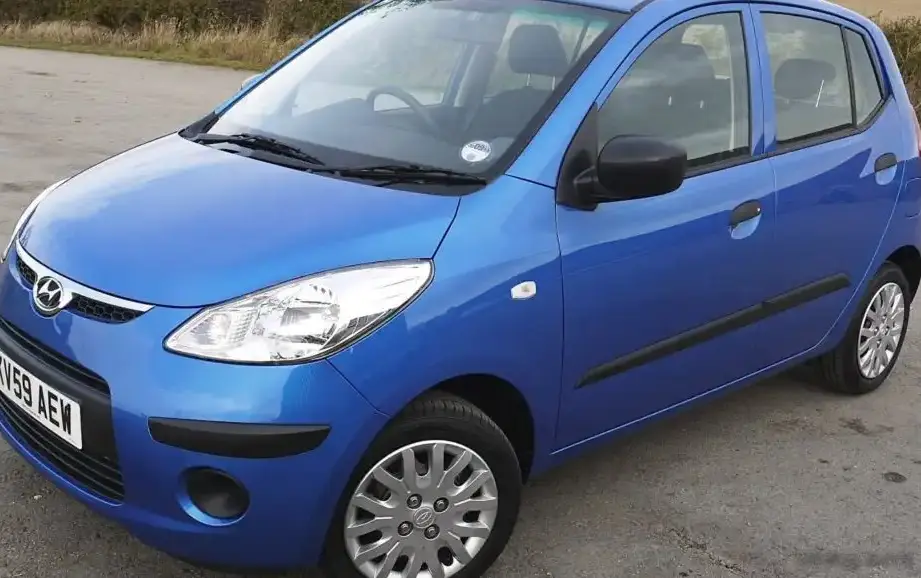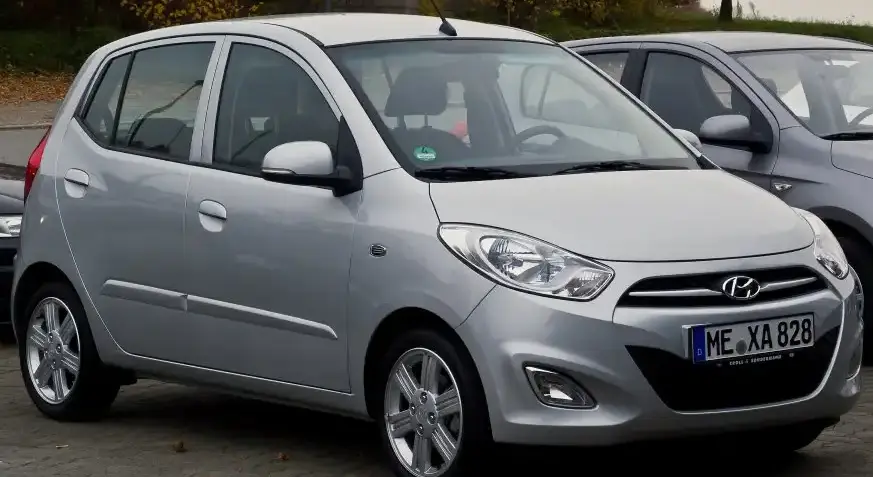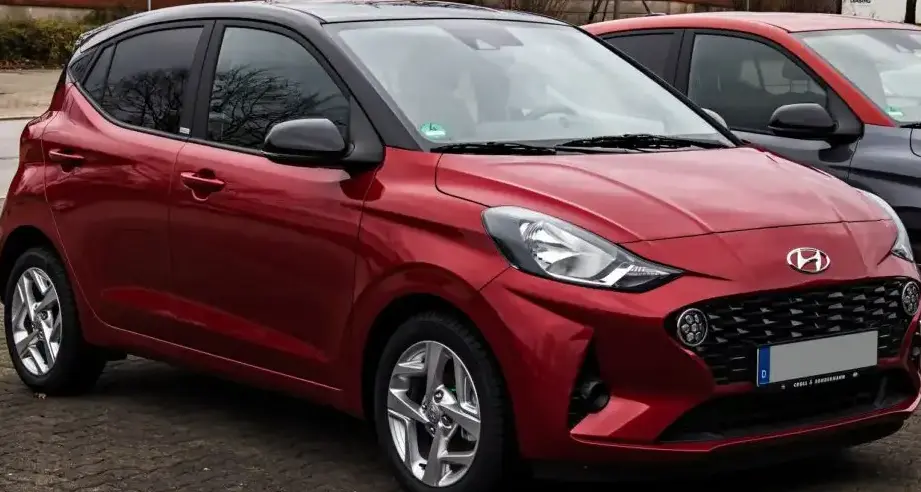
The Hyundai i10 III 1.0 MPi (67 Hp) Eco Pack is a city car produced by the South Korean manufacturer Hyundai from August 2019 to April 2023. Positioned as the entry-level variant of the third-generation i10 (internally designated PA3), the Eco Pack aimed to provide affordable and fuel-efficient transportation. It played a significant role in Hyundai’s strategy to offer a competitive product in the European A-segment, a market dominated by vehicles like the Fiat 500, Volkswagen Up!, and Kia Picanto. The i10 III represented a substantial step forward in terms of interior space, safety features, and overall refinement compared to its predecessors.
Technical Specifications
| Brand | Hyundai |
| Model | i10 |
| Generation | i10 III |
| Type (Engine) | 1.0 MPi (67 Hp) Eco Pack |
| Start of production | August, 2019 |
| End of production | April, 2023 |
| Powertrain Architecture | Internal Combustion engine |
| Body type | Hatchback |
| Seats | 4 |
| Doors | 5 |
| Fuel consumption (combined) | 4.9 l/100 km (48 US mpg, 57.6 UK mpg, 20.4 km/l) |
| CO2 emissions | 112 g/km |
| Fuel Type | Petrol (Gasoline) |
| Acceleration 0 – 100 km/h | 16.6 sec |
| Acceleration 0 – 62 mph | 16.6 sec |
| Acceleration 0 – 60 mph | 15.8 sec |
| Maximum speed | 147 km/h (91.34 mph) |
| Emission standard | Euro 6d-TEMP |
| Weight-to-power ratio | 14 kg/Hp, 71.7 Hp/tonne |
| Weight-to-torque ratio | 9.7 kg/Nm, 102.7 Nm/tonne |
| Power | 67 Hp |
| Power per litre | 67.1 Hp/l |
| Torque | 96 Nm (70.81 lb.-ft.) |
| Engine layout | Front, Transverse |
| Engine Model/Code | G3LA, G3LD |
| Engine displacement | 998 cm3 (60.9 cu. in.) |
| Number of cylinders | 3 |
| Engine configuration | Inline |
| Cylinder Bore | 71 mm (2.8 in.) |
| Piston Stroke | 84 mm (3.31 in.) |
| Compression ratio | 11:1 |
| Number of valves per cylinder | 4 |
| Fuel injection system | Multi-port manifold injection |
| Engine aspiration | Naturally aspirated engine |
| Valvetrain | DOHC |
| Engine oil capacity | 3.1 l (3.28 US qt | 2.73 UK qt) |
| Coolant | 4.5 l (4.76 US qt | 3.96 UK qt) |
| Kerb Weight | 935 kg (2061.32 lbs.) |
| Max. weight | 1350 kg (2976.24 lbs.) |
| Max load | 415 kg (914.92 lbs.) |
| Trunk (boot) space – minimum | 252 l (8.9 cu. ft.) |
| Fuel tank capacity | 36 l (9.51 US gal | 7.92 UK gal) |
| Length | 3670 mm (144.49 in.) |
| Width | 1680 mm (66.14 in.) |
| Height | 1480 mm (58.27 in.) |
| Wheelbase | 2425 mm (95.47 in.) |
| Front track | 1467-1479 mm (57.76 – 58.23 in.) |
| Rear (Back) track | 1478-1490 mm (58.19 – 58.66 in.) |
| Front overhang | 705 mm (27.76 in.) |
| Rear overhang | 540 mm (21.26 in.) |
| Ride height (ground clearance) | 149 mm (5.87 in.) |
| Minimum turning circle | 10.0 m (32.81 ft.) |
| Drivetrain Architecture | Front wheel drive |
| Drive wheel | Front wheel drive |
| Number of gears and type of gearbox | 5 gears, manual transmission |
| Front suspension | Independent type McPherson |
| Rear suspension | Torsion |
| Front brakes | Ventilated discs, 252 mm |
| Rear brakes | Disc, 234 mm |
| Assisting systems | ABS (Anti-lock braking system) |
| Steering type | Steering rack and pinion |
| Power steering | Electric Steering |
| Tires size | 175/65 R14; 185/55 R15; 195/45 R16 |
| Wheel rims size | 14; 15; 16 |
Powertrain & Engine Architecture
The i10 Eco Pack is powered by Hyundai’s 1.0-liter Kappa II three-cylinder engine, specifically the G3LA or G3LD variant depending on the exact production date and market. This engine is a naturally aspirated, inline-three cylinder unit featuring multi-point fuel injection and a double overhead camshaft (DOHC) valvetrain with four valves per cylinder. The engine produces 67 horsepower and 96 Nm (70.81 lb-ft) of torque. The Eco Pack was exclusively offered with a five-speed manual transmission, prioritizing fuel economy over outright performance. The engine’s relatively simple design contributes to its reliability and ease of maintenance. It’s a non-turbocharged engine, meaning power delivery is linear but requires the engine to be revved to achieve optimal performance.
Driving Characteristics
The 1.0-liter engine paired with the five-speed manual transmission delivers modest performance. Acceleration from 0-60 mph takes approximately 15.8 seconds, and the top speed is around 91 mph. In real-world driving, the i10 Eco Pack feels best suited for urban environments and shorter trips. The gear ratios are tuned for fuel efficiency, meaning the engine can feel strained when climbing hills or during overtaking maneuvers. Compared to higher-trim i10 models equipped with the 1.2-liter engine, the Eco Pack offers significantly less power, but it compensates with improved fuel economy. The manual transmission provides a more engaging driving experience than an automatic would, allowing drivers to better control the engine’s power band.
Equipment & Trim Levels
The Eco Pack trim level was designed to be the most affordable option in the i10 III lineup. Standard equipment typically included air conditioning, central locking, electric front windows, a basic audio system with USB connectivity, and ABS brakes with Electronic Stability Control (ESC). Safety features like airbags were also standard. The interior upholstery was typically a basic cloth material. Optional extras were limited to maintain the low price point, but could include features like alloy wheels, a touchscreen infotainment system, and rear parking sensors. The Eco Pack focused on providing essential features for everyday commuting and practicality.
Chassis & Braking
The i10 III utilizes a McPherson strut front suspension and a torsion beam rear suspension. This setup provides a comfortable ride quality, particularly on smooth roads. The front brakes are ventilated discs, while the rear brakes are solid discs. The Eco Pack, being the entry-level trim, typically featured smaller wheels (14 or 15 inches) and narrower tires, contributing to its fuel efficiency. The steering is electrically assisted, providing light and easy maneuverability, ideal for navigating tight city streets. The suspension tuning is geared towards comfort rather than sporty handling.
Market Reception & Comparison
The Hyundai i10 III 1.0 MPi Eco Pack was generally well-received by automotive critics as a value-for-money city car. Its fuel economy of around 4.9 l/100 km (48 US mpg) was a major selling point. Compared to other A-segment cars like the Volkswagen Up! and Kia Picanto, the i10 offered a more spacious interior and a longer warranty. However, its performance was often criticized as being underpowered, especially when fully loaded with passengers and luggage. The Eco Pack’s simplicity and affordability made it a popular choice for first-time car buyers and those seeking a low-cost, reliable urban runabout.
Legacy
The Hyundai i10 III 1.0 MPi Eco Pack has proven to be a reliable and durable vehicle. The Kappa II engine is known for its longevity, and the simple mechanical design minimizes the potential for major issues. On the used car market, these models are generally affordable and represent a good value proposition for buyers seeking a cheap and economical city car. While not a performance icon, the Eco Pack’s focus on practicality and fuel efficiency has ensured its continued relevance in the used car segment. Its reputation for reliability and low running costs makes it a sensible choice for budget-conscious drivers.