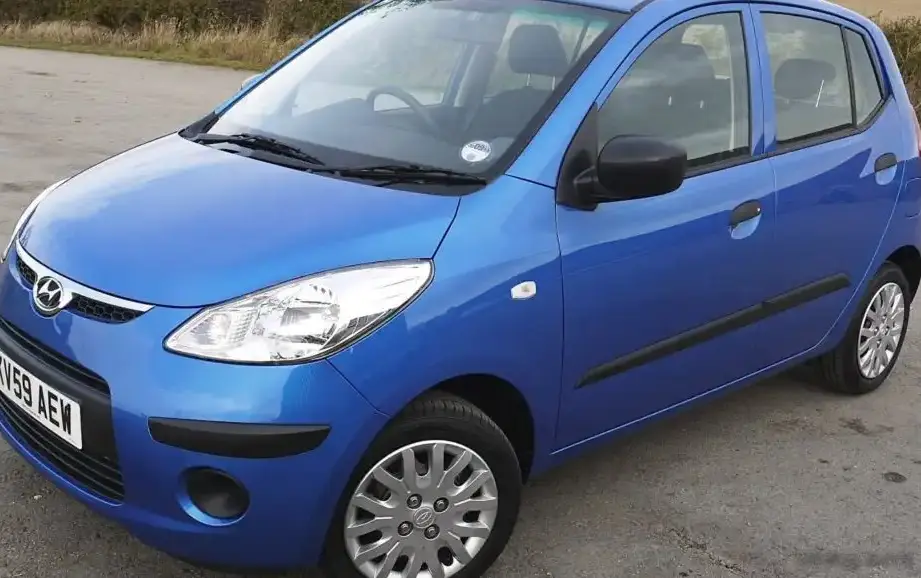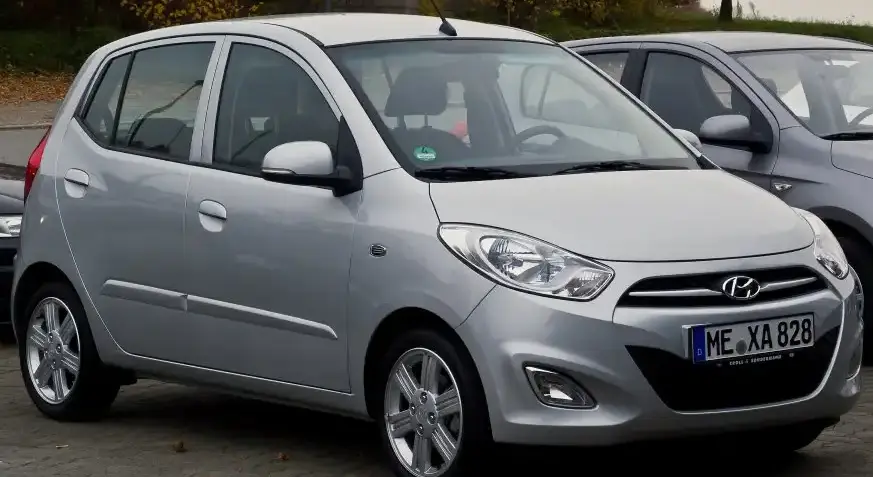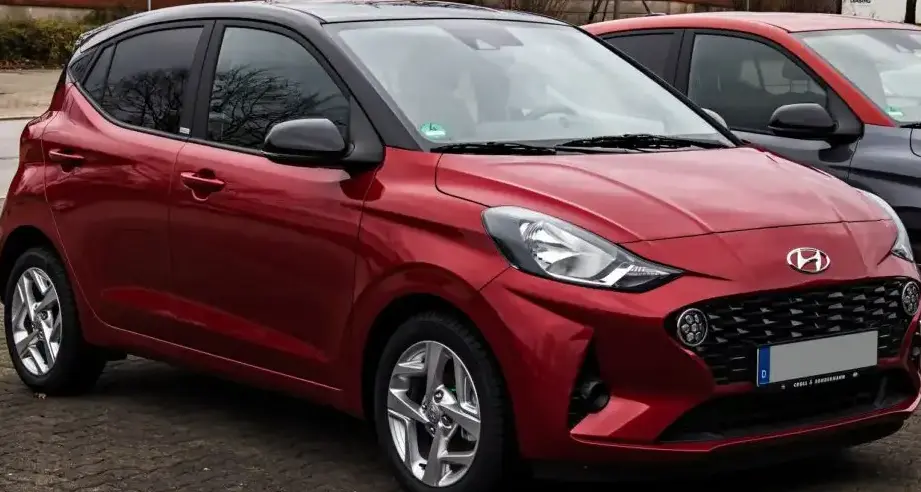
The Hyundai i10 III 1.2 MPi (84 hp) Automatic, produced from August 2019 to April 2023, represents an entry-level offering within the third generation of Hyundai’s popular city car. Positioned as a practical and affordable option, this variant aimed to provide comfortable and economical transportation for urban drivers. It falls within the IA/PA platform family, sharing its underpinnings with the Kia Picanto. This specific configuration – the 1.2-liter engine paired with a four-speed automatic transmission – was designed to appeal to buyers prioritizing ease of use over outright performance. It served as a key model in Hyundai’s strategy to gain market share in the competitive European and Asian city car segments.
Technical Specifications
| Brand | Hyundai |
| Model | i10 |
| Generation | i10 III |
| Type (Engine) | 1.2 MPi (84 Hp) Automatic |
| Start of production | August, 2019 |
| End of production | April, 2023 |
| Powertrain Architecture | Internal Combustion engine |
| Body type | Hatchback |
| Seats | 5 |
| Doors | 5 |
| Fuel consumption (combined) | 5.5 l/100 km |
| Fuel consumption (US mpg) | 42.8 US mpg |
| Fuel consumption (UK mpg) | 51.4 UK mpg |
| Fuel consumption (km/l) | 18.2 km/l |
| CO2 emissions | 126 g/km |
| Fuel Type | Petrol (Gasoline) |
| Acceleration 0 – 100 km/h | 15.8 sec |
| Acceleration 0 – 62 mph | 15.8 sec |
| Acceleration 0 – 60 mph | 15 sec |
| Maximum speed | 171 km/h / 106.25 mph |
| Emission standard | Euro 6d-TEMP |
| Power | 84 Hp @ 6000 rpm |
| Power per litre | 70.2 Hp/l |
| Torque | 118 Nm @ 4200 rpm / 87.03 lb.-ft. @ 4200 rpm |
| Engine layout | Front, Transverse |
| Engine Model/Code | G4LF |
| Engine displacement | 1197 cm3 / 73.05 cu. in. |
| Number of cylinders | 4 |
| Engine configuration | Inline |
| Cylinder Bore | 71 mm / 2.8 in. |
| Piston Stroke | 75.6 mm / 2.98 in. |
| Compression ratio | 11:1 |
| Number of valves per cylinder | 4 |
| Fuel injection system | Multi-port manifold injection |
| Engine aspiration | Naturally aspirated engine |
| Valvetrain | DOHC |
| Engine oil capacity | 3.4 l / 3.59 US qt | 2.99 UK qt |
| Coolant capacity | 4.77 l / 5.04 US qt | 4.2 UK qt |
| Trunk (boot) space – minimum | 252 l / 8.9 cu. ft. |
| Fuel tank capacity | 36 l / 9.51 US gal | 7.92 UK gal |
| Length | 3670 mm / 144.49 in. |
| Width | 1680 mm / 66.14 in. |
| Height | 1480 mm / 58.27 in. |
| Wheelbase | 2425 mm / 95.47 in. |
| Front track | 1467-1479 mm / 57.76 – 58.23 in. |
| Rear track | 1478-1490 mm / 58.19 – 58.66 in. |
| Front overhang | 705 mm / 27.76 in. |
| Rear overhang | 540 mm / 21.26 in. |
| Ride height (ground clearance) | 149 mm / 5.87 in. |
| Minimum turning circle | 10.0 m / 32.81 ft. |
| Drivetrain Architecture | Front wheel drive |
| Number of gears and type of gearbox | 5 gears, automatic transmission |
| Front suspension | Independent type McPherson |
| Rear suspension | Torsion |
| Front brakes | Ventilated discs, 252 mm |
| Rear brakes | Disc, 234 mm |
| Assisting systems | ABS (Anti-lock braking system) |
| Steering type | Steering rack and pinion |
| Power steering | Electric Steering |
| Tires size | 175/65 R14; 185/55 R15; 195/45 R16 |
| Wheel rims size | 14; 15; 16 |
Powertrain & Engine Architecture
The heart of the i10 III 1.2 MPi Automatic is the Hyundai G4LF engine, a 1.2-liter inline-four cylinder naturally aspirated gasoline engine. This engine utilizes multi-point fuel injection, delivering fuel directly into the intake ports. The engine features a double overhead camshaft (DOHC) valvetrain with four valves per cylinder, contributing to improved breathing and efficiency. The G4LF engine is known for its relatively simple design, prioritizing reliability and ease of maintenance. Paired with this engine is a traditional four-speed automatic transmission. While not offering the efficiency of more modern continuously variable transmissions (CVTs) or dual-clutch transmissions, the four-speed automatic provides smooth, if somewhat leisurely, gear changes. The transmission is electronically controlled, adapting to driving conditions to optimize shift points.
Driving Characteristics
The 1.2-liter engine with 84 horsepower and 87 lb-ft of torque delivers modest performance. Acceleration from 0 to 60 mph takes approximately 15 seconds, and top speed is around 106 mph. The four-speed automatic transmission contributes to a relaxed driving experience, prioritizing comfort over sporty responsiveness. Gear ratios are tuned for fuel economy and smooth cruising, rather than rapid acceleration. Compared to the manual transmission version of the same engine, the automatic suffers a slight performance penalty due to the transmission’s inherent inefficiencies. However, the automatic offers a significant convenience advantage, particularly in congested urban environments. Compared to higher-spec i10 models equipped with more powerful engines, this variant feels noticeably slower, especially when fully loaded or tackling inclines.
Equipment & Trim Levels
The i10 III 1.2 MPi Automatic typically came equipped with a reasonable level of standard features. These included air conditioning, central locking, electric front windows, a basic audio system with USB connectivity, and ABS brakes. Safety features such as airbags were also standard. Higher trim levels, such as SE or Premium, added features like alloy wheels, a touchscreen infotainment system with Apple CarPlay and Android Auto compatibility, rear parking sensors, and heated seats. Interior upholstery was typically cloth, with a simple and functional dashboard layout. Optional extras included metallic paint, a panoramic sunroof, and a navigation system.
Chassis & Braking
The i10 III utilizes a front-wheel-drive layout with an independent McPherson strut suspension at the front and a torsion beam suspension at the rear. This suspension setup provides a comfortable ride quality, well-suited for city driving. Braking duties are handled by ventilated discs at the front and solid discs at the rear. ABS (Anti-lock Braking System) is standard, enhancing safety during emergency braking situations. The steering is electrically assisted, providing light and easy steering feel. Stabilizer bars are fitted to both the front and rear axles to reduce body roll during cornering.
Market Reception & Comparison
The Hyundai i10 III 1.2 MPi Automatic was generally well-received by critics as a practical and affordable city car. Its fuel economy of around 42.8 US mpg was a major selling point, and its compact size made it easy to maneuver in tight urban spaces. However, some reviewers criticized its lack of power and the dated feel of the four-speed automatic transmission. Compared to rivals like the Kia Picanto, Volkswagen Up!, and Toyota Aygo, the i10 offered a competitive level of equipment and value for money. The automatic transmission version was particularly popular with drivers who prioritized convenience over performance.
Legacy
The Hyundai i10 III 1.2 MPi Automatic has proven to be a reliable and durable vehicle. The G4LF engine is known for its longevity, and the four-speed automatic transmission, while not cutting-edge, is generally robust. On the used car market, these i10s represent a good value proposition for buyers seeking an affordable and economical city car. Maintenance costs are relatively low, and parts availability is good. While not a performance icon, the i10 III 1.2 MPi Automatic remains a popular choice for those seeking a practical and dependable mode of transportation.