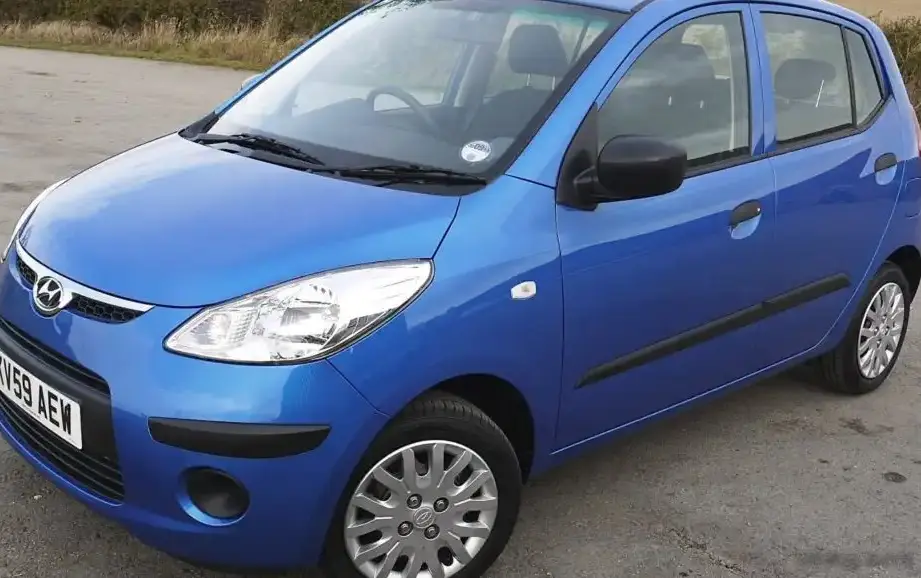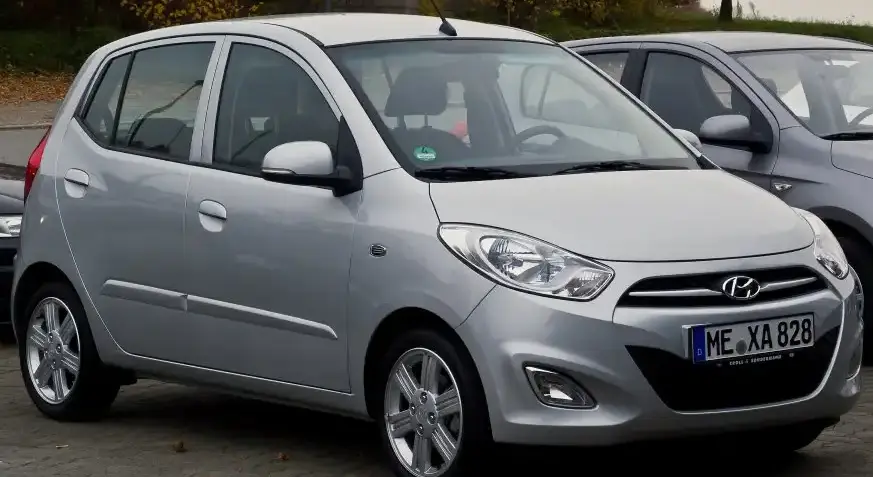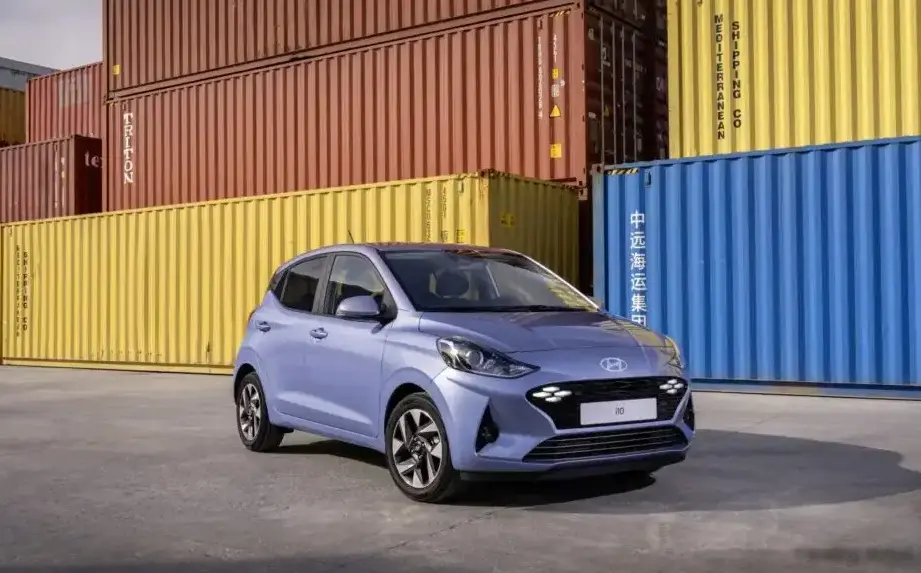
The Hyundai i10 III (facelift, introduced in May 2024) 1.2-liter 79 horsepower variant represents an entry point into the third generation of Hyundai’s city car. Positioned as a practical and affordable option, this model caters to buyers prioritizing fuel efficiency and ease of use within an urban environment. It builds upon the foundation of the PA3 platform, offering a refreshed design and updated technology compared to its predecessors. This specific configuration, with its naturally aspirated engine and five-speed manual transmission, is a key offering in many European and Asian markets where small, economical cars remain highly popular.
Technical Specifications
| Brand | Hyundai |
| Model | i10 |
| Generation | i10 III (facelift 2023) |
| Type (Engine) | 1.2 (79 Hp) |
| Start of production | May, 2024 |
| Powertrain Architecture | Internal Combustion engine |
| Body type | Hatchback |
| Seats | 5 |
| Doors | 5 |
| Combined fuel consumption (WLTP) | 5.3-5.4 l/100 km (44.4 – 43.6 US mpg, 53.3 – 52.3 UK mpg, 18.9 – 18.5 km/l) |
| CO2 emissions (WLTP) | 119-123 g/km |
| Fuel Type | Petrol (Gasoline) |
| Acceleration 0 – 100 km/h | 13.2 sec |
| Acceleration 0 – 62 mph | 13.2 sec |
| Acceleration 0 – 60 mph | 12.5 sec |
| Maximum speed | 158 km/h (98.18 mph) |
| Emission standard | Euro 6e |
| Weight-to-power ratio | 11.8 kg/Hp, 84.8 Hp/tonne |
| Weight-to-torque ratio | 8.2 kg/Nm, 121.2 Nm/tonne |
| Power | 79 Hp @ 6000 rpm |
| Power per litre | 66 Hp/l |
| Torque | 113 Nm @ 4200 rpm (83.34 lb.-ft. @ 4200 rpm) |
| Engine layout | Front, Transverse |
| Engine Model/Code | G4LF |
| Engine displacement | 1197 cm3 (73.05 cu. in.) |
| Number of cylinders | 4 |
| Engine configuration | Inline |
| Cylinder Bore | 71 mm (2.8 in.) |
| Piston Stroke | 75.6 mm (2.98 in.) |
| Number of valves per cylinder | 4 |
| Fuel injection system | Multi-port manifold injection |
| Engine aspiration | Naturally aspirated engine |
| Engine oil capacity | 3.4 l (3.59 US qt | 2.99 UK qt) |
| Coolant | 4.8 l (5.07 US qt | 4.22 UK qt) |
| Kerb Weight | 932-1007 kg (2054.71 – 2220.05 lbs.) |
| Max. weight | 1430 kg (3152.61 lbs.) |
| Max load | 423-498 kg (932.56 – 1097.9 lbs.) |
| Trunk (boot) space – minimum | 252 l (8.9 cu. ft.) |
| Trunk (boot) space – maximum | 1050 l (37.08 cu. ft.) |
| Fuel tank capacity | 36 l (9.51 US gal | 7.92 UK gal) |
| Max. roof load | 60 kg (132.28 lbs.) |
| Permitted trailer load with brakes (12%) | 310 kg (683.43 lbs.) |
| Permitted trailer load without brakes | 310 kg (683.43 lbs.) |
| Permitted towbar download | 75 kg (165.35 lbs.) |
| Length | 3670 mm (144.49 in.) |
| Width | 1680 mm (66.14 in.) |
| Height | 1480 mm (58.27 in.) |
| Wheelbase | 2425 mm (95.47 in.) |
| Front track | 1467 mm (57.76 in.) |
| Rear (Back) track | 1478 mm (58.19 in.) |
| Front overhang | 540 mm (21.26 in.) |
| Rear overhang | 705 mm (27.76 in.) |
| Ride height (ground clearance) | 149 mm (5.87 in.) |
| Drivetrain Architecture | The Internal combustion engine (ICE) drives the front wheels of the vehicle. |
| Drive wheel | Front wheel drive |
| Number of gears and type of gearbox | 5 gears, manual transmission |
| Front suspension | Independent type McPherson |
| Rear suspension | Torsion |
| Front brakes | Ventilated discs |
| Rear brakes | Disc |
| Assisting systems | ABS (Anti-lock braking system) |
| Steering type | Steering rack and pinion |
| Power steering | Electric Steering |
| Tires size | 185/55 R15; 195/45 R16 |
| Wheel rims size | 6.0J x 15; 6.5J x 16 |
Powertrain & Engine Architecture
The heart of this i10 variant is the Hyundai G4LF engine, a 1.2-liter inline-four cylinder gasoline engine. This engine utilizes a multi-point fuel injection system, delivering fuel directly into the intake ports. The engine features a single overhead camshaft (SOHC) valvetrain with four valves per cylinder, contributing to reasonable efficiency and responsiveness for its size. The G4LF is known for its simplicity and reliability, making it a cost-effective choice for Hyundai. Paired with this engine is a five-speed manual transmission, chosen for its affordability and driver engagement. The transmission’s gear ratios are tuned for urban driving, prioritizing acceleration from low speeds and fuel economy at cruising speeds.
Driving Characteristics
The 79 horsepower output and 113 Nm (83.34 lb-ft) of torque translate to modest but adequate performance for city driving. Acceleration from 0-60 mph takes approximately 12.5 seconds, and the top speed is around 98 mph. While not sporty, the i10 1.2 offers sufficient power for merging into traffic and navigating hills. The five-speed manual transmission allows for a degree of driver control, and the relatively light weight of the vehicle (932-1007 kg) helps to mitigate the effects of the modest power output. Compared to higher-spec i10 models with more powerful engines, this variant feels noticeably slower, particularly during highway overtaking. However, the trade-off is improved fuel economy and a lower purchase price.
Equipment & Trim Levels
The 1.2-liter 79 hp i10 typically serves as the entry-level trim in many markets. Standard equipment generally includes air conditioning, power steering, central locking, and basic safety features like ABS and airbags. Interior upholstery is typically cloth, and the dashboard features a functional but basic design. Optional extras often include alloy wheels, a touchscreen infotainment system with Bluetooth connectivity, and parking sensors. Higher trim levels add features like heated seats, a leather-wrapped steering wheel, and more advanced safety systems.
Chassis & Braking
The i10 III utilizes a McPherson strut front suspension and a torsion beam rear suspension. This setup provides a comfortable ride quality, well-suited for navigating uneven urban roads. The front brakes are ventilated discs, offering adequate stopping power, while the rear brakes are discs. The electric power steering provides light and easy steering, making it ideal for maneuvering in tight spaces. The relatively narrow tires (185/55 R15 or 195/45 R16) contribute to fuel efficiency but offer limited grip compared to wider tires.
Market Reception & Comparison
The Hyundai i10 1.2 has been generally well-received as a practical and affordable city car. Critics have praised its fuel efficiency, ease of driving, and value for money. However, some have noted its lack of power and basic interior. Compared to other small cars in its class, such as the Kia Picanto or Volkswagen Up!, the i10 1.2 offers a competitive level of equipment and a longer warranty. Its fuel economy is comparable to its rivals, and its reliability has been generally good.
Legacy
The Hyundai G4LF engine has proven to be a reliable and durable unit, and the i10 1.2 is expected to hold its value reasonably well in the used car market. Its simplicity and affordability make it an attractive option for budget-conscious buyers. While not a performance car, the i10 1.2 provides a practical and economical solution for urban transportation, and its reputation for reliability should ensure its continued popularity for years to come.