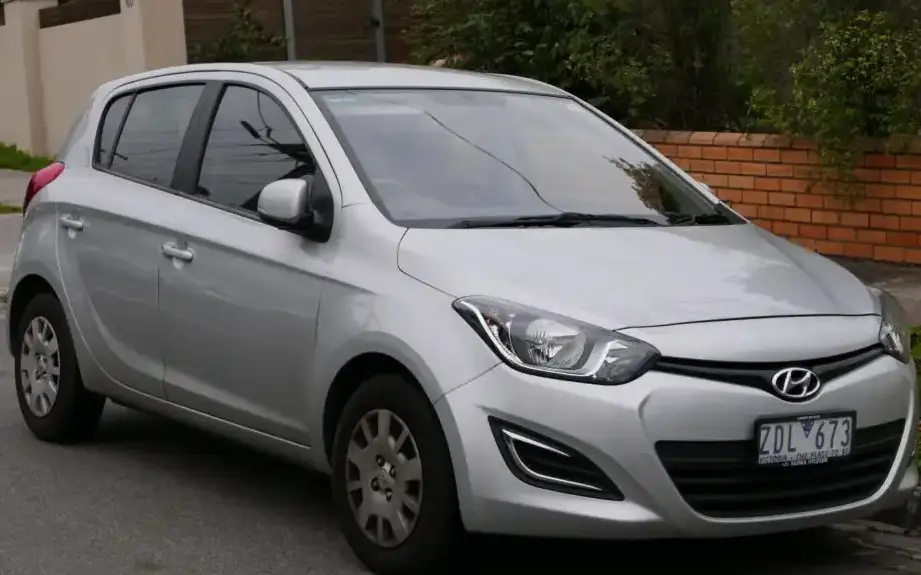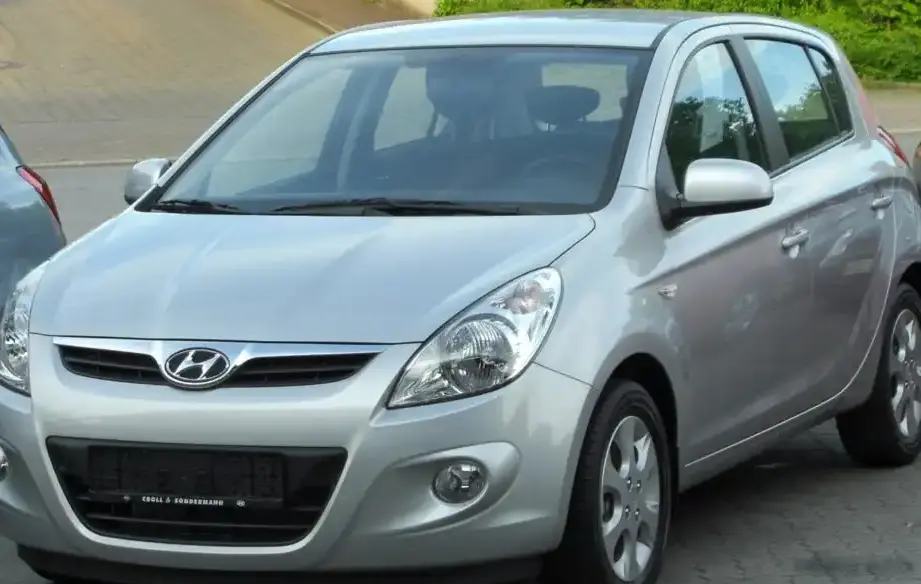
The Hyundai i20 first generation (PB) was produced from 2009 to 2012, representing Hyundai’s entry into the competitive subcompact hatchback segment in Europe and other global markets. The 1.2-liter engine producing 78 horsepower was a key variant, positioned as the entry-level offering in the i20 lineup. It aimed to provide affordable and economical transportation, appealing to first-time buyers and those seeking a practical city car. This model played a significant role in establishing Hyundai’s reputation for value and reliability in a new market segment.
Technical Specifications
| Brand | Hyundai |
| Model | i20 |
| Generation | i20 I (PB) |
| Type (Engine) | 1.2 (78 Hp) |
| Start of production | 2009 |
| End of production | 2012 |
| Powertrain Architecture | Internal Combustion engine |
| Body type | Hatchback |
| Seats | 5 |
| Doors | 5 |
| Fuel consumption (urban) | 6.4 l/100 km (36.8 US mpg, 44.1 UK mpg, 15.6 km/l) |
| Fuel consumption (extra urban) | 4.5 l/100 km (52.3 US mpg, 62.8 UK mpg, 22.2 km/l) |
| Fuel consumption (combined) | 5.2 l/100 km (45.2 US mpg, 54.3 UK mpg, 19.2 km/l) |
| Fuel Type | Petrol (Gasoline) |
| Acceleration 0 – 100 km/h | 12.9 sec |
| Acceleration 0 – 62 mph | 12.9 sec |
| Acceleration 0 – 60 mph | 12.3 sec |
| Maximum speed | 165 km/h (102.53 mph) |
| Emission standard | Euro 5 |
| Weight-to-power ratio | 13.4 kg/Hp, 74.6 Hp/tonne |
| Weight-to-torque ratio | 8.8 kg/Nm, 113.9 Nm/tonne |
| Power | 78 Hp @ 6000 rpm |
| Power per litre | 62.5 Hp/l |
| Torque | 119 Nm @ 4000 rpm (87.77 lb.-ft. @ 4000 rpm) |
| Engine layout | Front, Transverse |
| Engine Model/Code | G4LA |
| Engine displacement | 1248 cm3 (76.16 cu. in.) |
| Number of cylinders | 4 |
| Engine configuration | Inline |
| Number of valves per cylinder | 4 |
| Fuel injection system | Multi-port manifold injection |
| Engine aspiration | Naturally aspirated engine |
| Valvetrain | DOHC |
| Engine oil capacity | 3.6 l (3.8 US qt | 3.17 UK qt) |
| Coolant capacity | 4.1 l (4.33 US qt | 3.61 UK qt) |
| Kerb Weight | 1045 kg (2303.83 lbs.) |
| Max. weight | 1515 kg (3340 lbs.) |
| Max load | 470 kg (1036.17 lbs.) |
| Trunk (boot) space – minimum | 295 l (10.42 cu. ft.) |
| Trunk (boot) space – maximum | 1045 l (36.9 cu. ft.) |
| Fuel tank capacity | 45 l (11.89 US gal | 9.9 UK gal) |
| Length | 3940 mm (155.12 in.) |
| Width | 1710 mm (67.32 in.) |
| Height | 1490 mm (58.66 in.) |
| Wheelbase | 2525 mm (99.41 in.) |
| Front track | 1487 mm (58.54 in.) |
| Rear track | 1485 mm (58.46 in.) |
| Minimum turning circle | 10.4 m (34.12 ft.) |
| Drivetrain Architecture | Front wheel drive |
| Number of gears | 5 gears, manual transmission |
| Front suspension | Independent, type McPherson with coil spring and anti-roll bar |
| Rear suspension | Threaded twist beam |
| Front brakes | Ventilated discs |
| Rear brakes | Disc |
| Assisting systems | ABS (Anti-lock braking system) |
| Steering type | Steering rack and pinion |
| Power steering | Electric Steering |
| Tires size | 175/70 R14 |
| Wheel rims size | 5.0J x 14 |
Powertrain & Engine Architecture
The Hyundai i20 1.2-liter engine, designated the G4LA, is a naturally aspirated, inline-four cylinder gasoline engine. It features a double overhead camshaft (DOHC) valvetrain and multi-point fuel injection. This engine was designed with a focus on fuel efficiency and low emissions, making it suitable for the European market’s stringent regulations. The 1.2-liter displacement (1248 cc) provided a modest 78 horsepower at 6000 rpm and 119 Nm (87.77 lb-ft) of torque at 4000 rpm. The engine’s relatively simple design contributed to its reliability and ease of maintenance. The i20 1.2 was typically paired with a five-speed manual transmission, although a four-speed automatic transmission was also offered, albeit less commonly. The automatic transmission was geared towards providing smooth, comfortable shifts, prioritizing ease of use over sporty performance.
Driving Characteristics
The i20 1.2 with the manual transmission offered adequate performance for urban driving and short highway trips. Acceleration from 0 to 60 mph took around 12.3 seconds, and the top speed was approximately 102.53 mph. The 1.2-liter engine felt somewhat strained when fully loaded or climbing hills. The automatic transmission version, while providing convenience, further reduced acceleration due to the transmission’s inherent efficiency losses and conservative gear ratios. The steering was light and easy, making it maneuverable in city traffic. The suspension, tuned for comfort, absorbed bumps reasonably well, but the handling wasn’t particularly engaging. Compared to higher-trim i20 models with larger engines (like the 1.4 or 1.6), the 1.2 felt noticeably slower and less refined.
Equipment & Trim Levels
The 1.2-liter i20 typically served as the base trim level. Standard equipment generally included air conditioning, power steering, central locking, and an audio system with USB connectivity. Safety features such as ABS (Anti-lock Braking System) and front airbags were also standard. Higher trim levels added features like alloy wheels, electric windows, heated mirrors, and a more sophisticated audio system. Interior upholstery was typically cloth, with a simple and functional dashboard layout. Optional extras included a sunroof, parking sensors, and upgraded audio systems.
Chassis & Braking
The i20’s chassis featured a McPherson strut front suspension and a threaded twist beam rear suspension. This setup prioritized ride comfort and cost-effectiveness. The front brakes were ventilated discs, providing adequate stopping power, while the rear brakes were solid discs. The electric power steering offered light and easy steering feel. The i20’s weight of around 1045 kg (2303.83 lbs) contributed to its relatively good fuel economy, but also limited its overall performance. The suspension was tuned to provide a comfortable ride, but it wasn’t particularly sporty or responsive.
Market Reception & Comparison
The Hyundai i20 1.2 received generally positive reviews for its value for money, fuel efficiency, and reliability. Critics noted that it wasn’t the most exciting car to drive, but it offered a practical and affordable transportation solution. Compared to rivals like the Ford Fiesta, Volkswagen Polo, and Toyota Yaris, the i20 1.2 often offered more equipment for the price. However, it typically lagged behind these competitors in terms of driving dynamics and brand prestige. Fuel economy was a strong point, with combined figures around 45.2 US mpg. Reliability proved to be good, with few reported issues with the 1.2-liter engine or the automatic transmission.
Legacy
The Hyundai i20 1.2 (PB) has proven to be a reliable and durable vehicle in the used car market. The G4LA engine is known for its longevity, and the relatively simple mechanical design makes it relatively inexpensive to maintain. While not a performance car, the i20 1.2 remains a popular choice for budget-conscious buyers seeking a practical and economical city car. The availability of spare parts is good, and the i20’s reputation for reliability has helped it maintain a reasonable resale value. The i20 1.2 played a crucial role in establishing Hyundai as a credible competitor in the European subcompact hatchback segment, paving the way for future models.