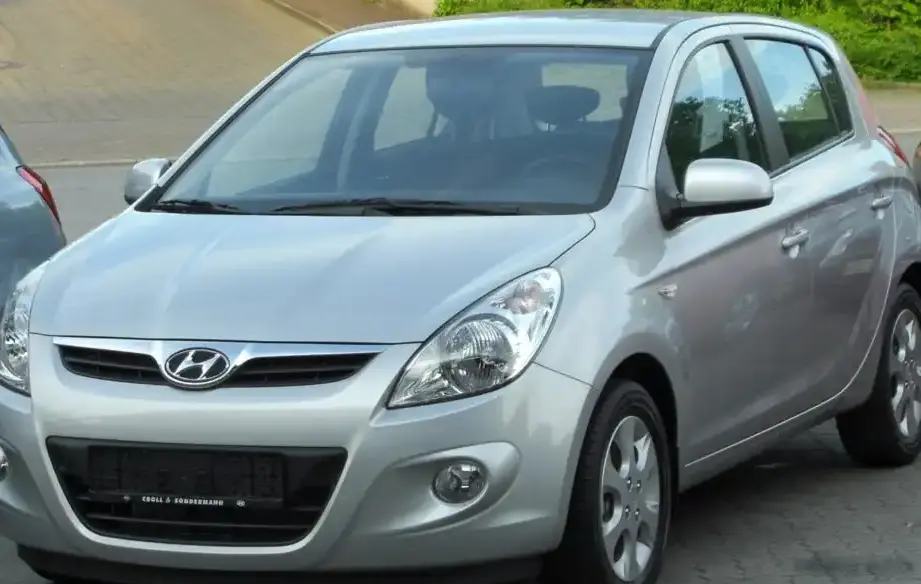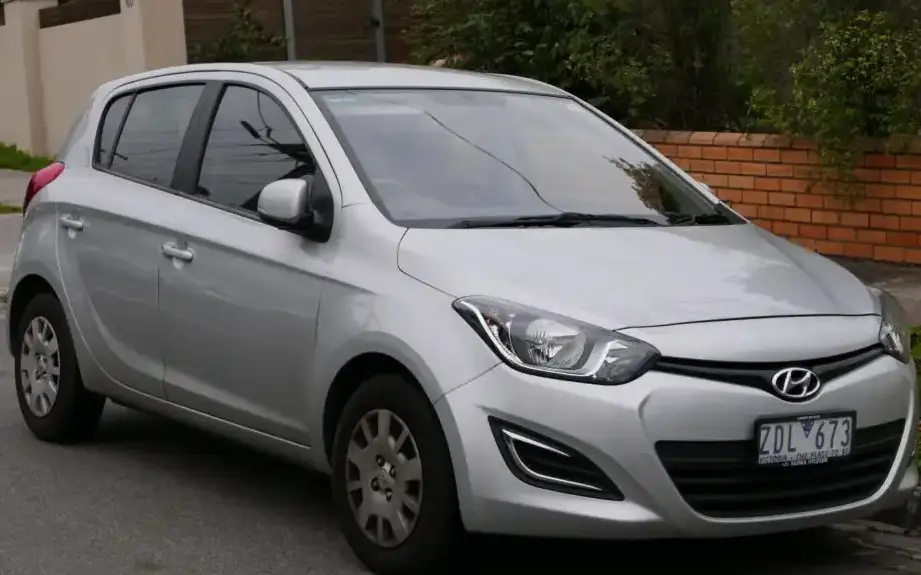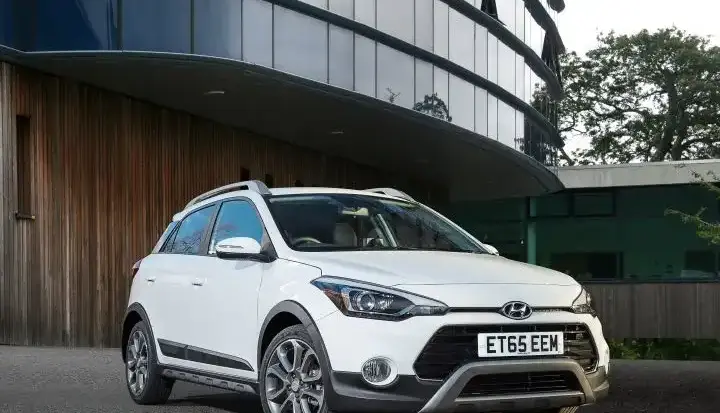
The Hyundai i20 II Active 1.0 T-GDI, produced from 2016 to 2018, represents a specific variant within the second generation of Hyundai’s popular subcompact hatchback, the i20. Positioned as a crossover-styled version of the i20, the “Active” trim aimed to capitalize on the growing popularity of small SUVs and offered a slightly more rugged aesthetic and increased ground clearance. This particular configuration, equipped with the 1.0-liter turbocharged gasoline direct injection (T-GDI) engine producing 100 horsepower, was primarily marketed in Europe and other international markets. It served as an entry-level to mid-range option within the i20 Active lineup, offering a balance of fuel efficiency and acceptable performance for urban driving.
Technical Specifications
| Brand | Hyundai |
| Model | i20 |
| Generation | i20 II Active |
| Type (Engine) | 1.0 T-GDI (100 Hp) |
| Start of production | 2016 |
| End of production | 2018 |
| Powertrain Architecture | Internal Combustion engine |
| Body type | Crossover |
| Seats | 5 |
| Doors | 5 |
| Fuel consumption (combined) | 4.6 – 4.8 l/100 km (51.1 – 49 US mpg, 61.4 – 58.9 UK mpg, 21.7 – 20.8 km/l) |
| CO2 emissions | 106 – 111 g/km |
| Fuel Type | Petrol (Gasoline) |
| Acceleration 0 – 100 km/h | 10.9 sec |
| Acceleration 0 – 62 mph | 10.9 sec |
| Acceleration 0 – 60 mph | 10.4 sec |
| Maximum speed | 176 km/h (109.36 mph) |
| Emission standard | Euro 6 |
| Weight-to-power ratio | 10.9 kg/Hp, 92.2 Hp/tonne |
| Weight-to-torque ratio | 6.3 kg/Nm, 158.5 Nm/tonne |
| Power | 100 Hp @ 4500 rpm |
| Power per litre | 100.2 Hp/l |
| Torque | 172 Nm @ 1500 rpm (126.86 lb.-ft. @ 1500 rpm) |
| Engine layout | Front, Transverse |
| Engine Model/Code | Kappa II / G3LC |
| Engine displacement | 998 cm3 (60.9 cu. in.) |
| Number of cylinders | 3 |
| Engine configuration | Inline |
| Cylinder Bore | 71 mm (2.8 in.) |
| Piston Stroke | 84 mm (3.31 in.) |
| Compression ratio | 10:1 |
| Number of valves per cylinder | 4 |
| Fuel injection system | Direct injection |
| Engine aspiration | Turbocharger, Intercooler |
| Valvetrain | DOHC |
| Engine oil capacity | 3.6 l (3.8 US qt | 3.17 UK qt) |
| Coolant | 6.4 l (6.76 US qt | 5.63 UK qt) |
| Kerb Weight | 1085 kg (2392.02 lbs.) |
| Max. weight | 1610 kg (3549.44 lbs.) |
| Max load | 525 kg (1157.43 lbs.) |
| Trunk (boot) space – minimum | 326 l (11.51 cu. ft.) |
| Trunk (boot) space – maximum | 1042 l (36.8 cu. ft.) |
| Fuel tank capacity | 50 l (13.21 US gal | 11 UK gal) |
| Max. roof load | 70 kg (154.32 lbs.) |
| Length | 4065 mm (160.04 in.) |
| Width | 1760 mm (69.29 in.) |
| Height | 1529 mm (60.2 in.) |
| Wheelbase | 2570 mm (101.18 in.) |
| Front track | 1511-1517 mm (59.49 – 59.72 in.) |
| Rear (Back) track | 1513-1519 mm (59.57 – 59.8 in.) |
| Front overhang | 843 mm (33.19 in.) |
| Rear overhang | 652 mm (25.67 in.) |
| Ride height (ground clearance) | 160 mm (6.3 in.) |
| Minimum turning circle | 10.2 m (33.46 ft.) |
| Drivetrain Architecture | Front wheel drive |
| Drive wheel | Front wheel drive |
| Number of gears and type of gearbox | 5 gears, manual transmission |
| Front suspension | Independent type McPherson |
| Rear suspension | Semi-independent, coil spring |
| Front brakes | Ventilated discs |
| Rear brakes | Disc |
| Assisting systems | ABS (Anti-lock braking system) |
| Steering type | Steering rack and pinion |
| Power steering | Electric Steering |
| Tires size | 185/65 R15; 195/55 R16; 205/45 R17 |
| Wheel rims size | 6.0J x 15; 6.0J x 16; 6.5J x 17 |
INTRODUCTION
The Hyundai i20 II Active 1.0 T-GDI, launched in 2016, was a key component of Hyundai’s strategy to broaden the appeal of the i20 range. Built on the PB platform (internally designated as the 1HX0/A3), the second-generation i20 represented a significant step forward in terms of design, quality, and technology compared to its predecessor. The Active variant, with its raised ride height, plastic body cladding, and slightly more robust styling cues, aimed to attract buyers seeking a vehicle that looked and felt a little more adventurous than a standard hatchback. This 100 horsepower version of the 1.0 T-GDI engine was a popular choice, offering a good compromise between fuel economy and performance.
Powertrain & Engine Architecture
At the heart of the i20 Active 1.0 T-GDI lies the Hyundai-Kia Kappa II engine family, specifically the G3LC three-cylinder gasoline engine. This 998cc unit utilizes direct fuel injection and a single scroll turbocharger with an intercooler to deliver a respectable 100 horsepower at 4500 rpm and 172 Nm (126.86 lb-ft) of torque from just 1500 rpm. The engine features a double overhead camshaft (DOHC) valvetrain with four valves per cylinder, contributing to its efficient operation. The direct injection system allows for precise fuel delivery, optimizing combustion and reducing emissions. The engine was typically paired with a five-speed manual transmission, although a six-speed automatic was also available as an option. The automatic transmission, while offering convenience, did slightly impact fuel economy and acceleration compared to the manual.
Driving Characteristics
The i20 Active 1.0 T-GDI offered a surprisingly refined driving experience for a small, three-cylinder engine. While not particularly quick – 0-60 mph took around 10.4 seconds – the readily available torque from 1500 rpm made it feel responsive in everyday driving situations. The five-speed manual transmission was well-matched to the engine’s characteristics, allowing drivers to keep the engine in its optimal power band. The automatic transmission, while smooth, could sometimes feel hesitant during quick acceleration. The raised suspension of the Active model provided a slightly more comfortable ride over rough surfaces, but also resulted in a bit more body roll in corners compared to the standard i20. Steering was light and precise, making it easy to maneuver in urban environments.
Equipment & Trim Levels
The i20 Active 1.0 T-GDI typically came equipped with a decent level of standard equipment. This included air conditioning, power windows, central locking, a basic audio system with USB connectivity, and ABS brakes. Higher trim levels added features such as alloy wheels, a touchscreen infotainment system with Apple CarPlay and Android Auto compatibility, a reversing camera, and parking sensors. Interior upholstery was typically cloth, with a relatively simple but functional dashboard layout. Optional extras included a panoramic sunroof, heated seats, and a more advanced audio system.
Chassis & Braking
The i20 Active utilized a McPherson strut front suspension and a semi-independent coil spring rear suspension. The Active variant featured a slightly raised ride height compared to the standard i20, providing increased ground clearance. Braking duties were handled by ventilated discs at the front and solid discs at the rear. ABS (Anti-lock Braking System) was standard, providing enhanced safety during emergency braking. The steering system employed an electric power steering (EPS) setup, offering light and precise steering feel.
Market Reception & Comparison
The Hyundai i20 Active 1.0 T-GDI was generally well-received by automotive critics. It was praised for its fuel efficiency, comfortable ride, and surprisingly refined engine. However, some reviewers noted that the engine could feel strained at higher speeds and that the interior materials were not as premium as those found in some competitors. Compared to other trims in the i20 lineup, the 1.0 T-GDI offered a good balance of performance and economy. The more powerful 1.4-liter engine provided quicker acceleration, but at the expense of fuel efficiency. The diesel-powered i20 models offered even better fuel economy, but were generally more expensive to purchase and maintain.
Legacy
The Kappa II engine family, including the 1.0 T-GDI unit found in the i20 Active, has proven to be relatively reliable. While some early examples experienced minor issues with the turbocharger, these were generally addressed through software updates and improved manufacturing processes. Today, used examples of the i20 Active 1.0 T-GDI represent a good value proposition for buyers seeking a fuel-efficient and practical small car. Maintenance costs are generally reasonable, and parts availability is good. The i20 Active’s blend of practicality, affordability, and style has ensured its continued popularity in the used car market.