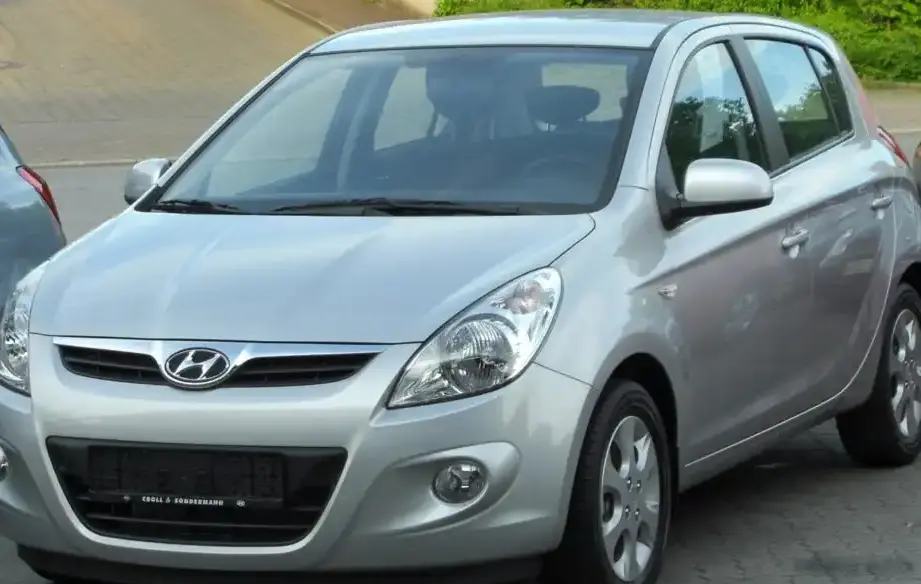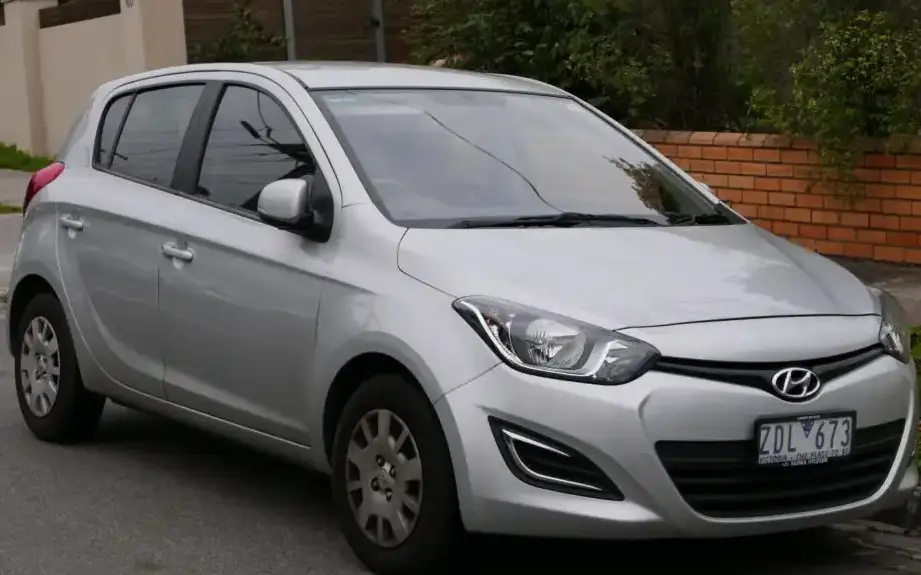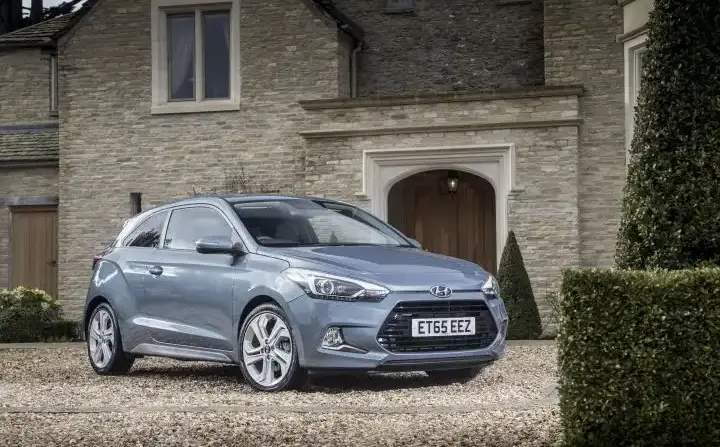
The Hyundai i20 II Coupe 1.0 T-GDI, produced from 2016 to 2018, represented a sporty and efficient offering within the second generation of Hyundai’s popular subcompact hatchback. Positioned as a more style-focused alternative to the five-door i20, the Coupe targeted younger buyers seeking a blend of practicality and visual appeal. This particular variant, powered by the 1.0-liter turbocharged gasoline direct injection (T-GDI) engine producing 120 horsepower, occupied a mid-range position in the i20 Coupe lineup, offering a balance between performance and fuel economy. It was a key model for Hyundai in the European market, where the three-door coupe body style remained relatively popular.
Technical Specifications
| Brand | Hyundai |
| Model | i20 |
| Generation | i20 II Coupe |
| Type (Engine) | 1.0 T-GDI (120 Hp) |
| Start of production | 2016 |
| End of production | 2018 |
| Powertrain Architecture | Internal Combustion engine |
| Body type | Coupe |
| Seats | 5 |
| Doors | 3 |
| Fuel consumption (urban) | 6 l/100 km (39.2 US mpg, 47.1 UK mpg, 16.7 km/l) |
| Fuel consumption (extra urban) | 4.1 l/100 km (57.4 US mpg, 68.9 UK mpg, 24.4 km/l) |
| Fuel consumption (combined) | 4.8 l/100 km (49 US mpg, 58.9 UK mpg, 20.8 km/l) |
| CO2 emissions | 112 g/km |
| Fuel Type | Petrol (Gasoline) |
| Acceleration 0 – 100 km/h | 10.2 sec |
| Acceleration 0 – 62 mph | 10.2 sec |
| Acceleration 0 – 60 mph | 9.7 sec |
| Maximum speed | 190 km/h (118.06 mph) |
| Emission standard | Euro 6 |
| Weight-to-power ratio | 8.9 kg/Hp, 112.1 Hp/tonne |
| Weight-to-torque ratio | 6.2 kg/Nm, 160.7 Nm/tonne |
| Power | 120 Hp @ 6000 rpm |
| Power per litre | 120.2 Hp/l |
| Torque | 172 Nm @ 1500-4000 rpm (126.86 lb.-ft. @ 1500-4000 rpm) |
| Engine layout | Front, Transverse |
| Engine Model/Code | Kappa II / G3LC |
| Engine displacement | 998 cm3 (60.9 cu. in.) |
| Number of cylinders | 3 |
| Engine configuration | Inline |
| Cylinder Bore | 71 mm (2.8 in.) |
| Piston Stroke | 84 mm (3.31 in.) |
| Number of valves per cylinder | 4 |
| Fuel injection system | Direct injection |
| Engine aspiration | Turbocharger, Intercooler |
| Engine oil capacity | 3.6 l (3.8 US qt | 3.17 UK qt) |
| Coolant | 6.4 l (6.76 US qt | 5.63 UK qt) |
| Kerb Weight | 1070-1217 kg (2358.95 – 2683.03 lbs.) |
| Max. weight | 1640 kg (3615.58 lbs.) |
| Max load | 423-570 kg (932.56 – 1256.63 lbs.) |
| Trunk (boot) space – minimum | 336 l (11.87 cu. ft.) |
| Trunk (boot) space – maximum | 1011 l (35.7 cu. ft.) |
| Fuel tank capacity | 50 l (13.21 US gal | 11 UK gal) |
| Max. roof load | 70 kg (154.32 lbs.) |
| Permitted trailer load with brakes (12%) | 1110 kg (2447.13 lbs.) |
| Permitted trailer load without brakes | 450 kg (992.08 lbs.) |
| Permitted towbar download | 75 kg (165.35 lbs.) |
| Length | 4045 mm (159.25 in.) |
| Width | 1730 mm (68.11 in.) |
| Height | 1449 mm (57.05 in.) |
| Wheelbase | 2570 mm (101.18 in.) |
| Front track | 1515 mm (59.65 in.) |
| Rear (Back) track | 1513 mm (59.57 in.) |
| Front overhang | 815 mm (32.09 in.) |
| Rear overhang | 660 mm (25.98 in.) |
| Drivetrain Architecture | The Internal combustion engine (ICE) drives the front wheels of the vehicle. |
| Drive wheel | Front wheel drive |
| Number of gears and type of gearbox | 6 gears, manual transmission |
| Front brakes | Ventilated discs |
| Rear brakes | Disc |
| Assisting systems | ABS (Anti-lock braking system) |
| Steering type | Steering rack and pinion |
| Power steering | Electric Steering |
| Tires size | 195/55 R16; 205/45 R17 |
| Wheel rims size | 6.0J x 16; 6.5J x 17 |
Powertrain & Engine Architecture
The heart of the i20 Coupe 1.0 T-GDI is the Hyundai Kappa II engine, specifically the G3LC variant. This is a three-cylinder, 1.0-liter (998 cc) gasoline engine featuring direct injection and a single scroll turbocharger with an intercooler. The engine produces 120 horsepower at 6000 rpm and 172 Nm (126.86 lb-ft) of torque between 1500 and 4000 rpm. The direct injection system allows for precise fuel delivery, contributing to both performance and efficiency. The Kappa II engine family was designed to be lightweight and compact, aiding in the i20’s overall agility. The engine utilizes a timing chain, reducing maintenance compared to timing belts. The 6-speed manual transmission was standard, offering precise shifts and a direct connection to the engine. The transmission’s gear ratios were tuned to maximize the engine’s torque output and provide reasonable acceleration.
Driving Characteristics
The 1.0 T-GDI engine in the i20 Coupe provided a surprisingly lively driving experience for its size. While not a performance car, the turbocharger provided a noticeable boost in power, making overtaking and merging onto highways manageable. Acceleration from 0 to 60 mph took around 9.7 seconds, and top speed was rated at 190 km/h (118 mph). The manual transmission allowed drivers to fully exploit the engine’s powerband. Compared to the base 1.2-liter engine, the 1.0 T-GDI offered significantly more punch. However, it didn’t quite match the responsiveness of larger-displacement engines available in other i20 variants. The steering was light and accurate, making the car easy to maneuver in urban environments. The suspension provided a comfortable ride, although it could feel a bit firm on rough roads.
Equipment & Trim Levels
The i20 Coupe 1.0 T-GDI typically came with a decent level of standard equipment. This included air conditioning, power windows, central locking, a touchscreen infotainment system with Bluetooth connectivity, and alloy wheels. Higher trim levels added features such as a rear-view camera, parking sensors, automatic headlights, and rain-sensing wipers. Interior upholstery was typically cloth, with options for upgraded materials. The dashboard layout was modern and functional, with a focus on ease of use. Optional extras included a panoramic sunroof and a premium audio system.
Chassis & Braking
The i20 Coupe utilized a front-wheel-drive platform with a MacPherson strut front suspension and a torsion beam rear suspension. The front brakes were ventilated discs, providing good stopping power, while the rear brakes were solid discs. ABS (Anti-lock Braking System) was standard. The chassis was designed to be lightweight and rigid, contributing to the car’s handling characteristics. Stabilizer bars were fitted to both the front and rear axles to reduce body roll during cornering. The steering system was an electric power-assisted rack and pinion system, providing light and precise steering feel.
Market Reception & Comparison
The Hyundai i20 Coupe 1.0 T-GDI was generally well-received by automotive critics. It was praised for its stylish design, fuel efficiency, and surprisingly peppy engine. However, some reviewers noted that the three-cylinder engine could be a bit noisy and vibrate more than larger engines. Compared to other subcompact hatchbacks, the i20 Coupe offered a competitive level of equipment and a generous warranty. Fuel economy was a strong point, with combined figures around 4.8 l/100 km (49 US mpg). Reliability was generally good, although some owners reported minor issues with the infotainment system.
Legacy
The Hyundai i20 II Coupe 1.0 T-GDI has proven to be a relatively reliable and affordable used car. The Kappa II engine has a good reputation for durability, although regular maintenance is essential. The turbocharger requires careful attention to ensure it remains in good working order. Today, these cars represent a good value for buyers seeking a stylish and economical subcompact hatchback. The 1.0 T-GDI engine provides a good balance of performance and fuel efficiency, making it suitable for both city driving and longer journeys. The i20 Coupe’s sporty design and decent equipment levels continue to appeal to buyers in the used car market.