Technical Specifications
| Brand | Hyundai |
| Model | i20 |
| Generation | i20 II Elite (facelift 2018) |
| Type (Engine) | 1.2 Kappa Dual (83 Hp) CVT |
| Start of production | May, 2018 |
| End of production | 2020 |
| Powertrain Architecture | Internal Combustion engine |
| Body type | Hatchback |
| Seats | 5 |
| Doors | 5 |
| Fuel Type | Petrol (Gasoline) |
| Power | 83 Hp @ 6000 rpm |
| Power per litre | 69.3 Hp/l |
| Torque | 115 Nm @ 4000 rpm / 84.82 lb.-ft. @ 4000 rpm |
| Engine layout | Front, Transverse |
| Engine Model/Code | G4LA |
| Engine displacement | 1197 cm3 / 73.05 cu. in. |
| Number of cylinders | 4 |
| Engine configuration | Inline |
| Number of valves per cylinder | 4 |
| Engine aspiration | Naturally aspirated engine |
| Valvetrain | DOHC, Dual VTVT |
| Engine oil capacity | 3.5 l / 3.7 US qt | 3.08 UK qt |
| Coolant | 4.3 l / 4.54 US qt | 3.78 UK qt |
| Fuel tank capacity | 40 l / 10.57 US gal | 8.8 UK gal |
| Length | 3985 mm / 156.89 in. |
| Width | 1734 mm / 68.27 in. |
| Height | 1505 mm / 59.25 in. |
| Wheelbase | 2570 mm / 101.18 in. |
| Drivetrain Architecture | The Internal combustion engine (ICE) drives the front wheels of the vehicle. |
| Drive wheel | Front wheel drive |
| Number of gears and type of gearbox | automatic transmission CVT |
| Front suspension | Independent, type McPherson with coil spring and anti-roll bar |
| Rear suspension | Torsion |
| Front brakes | Disc |
| Rear brakes | Drum |
| Assisting systems | ABS (Anti-lock braking system) |
| Tires size | 185/65 R15; 195/55 R16 |
| Wheel rims size | 15; 16 |
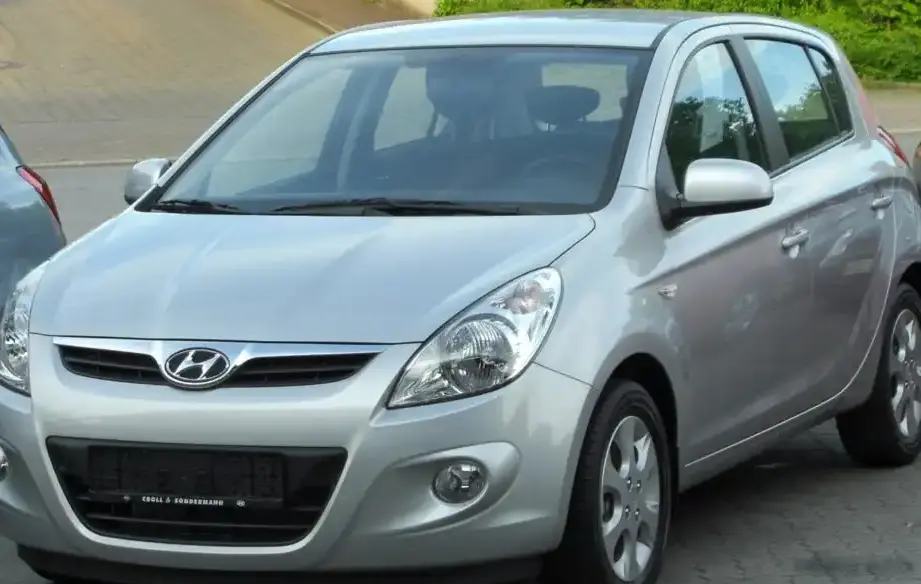
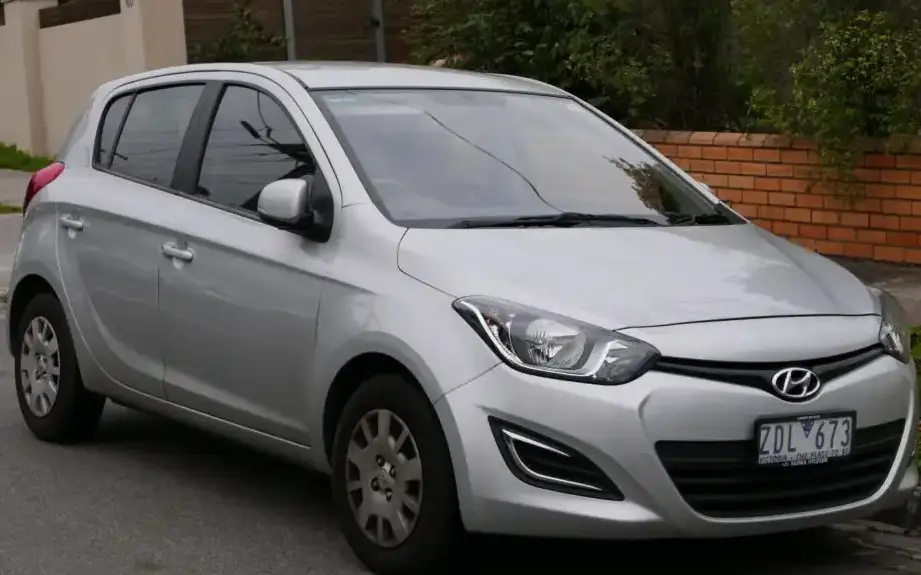
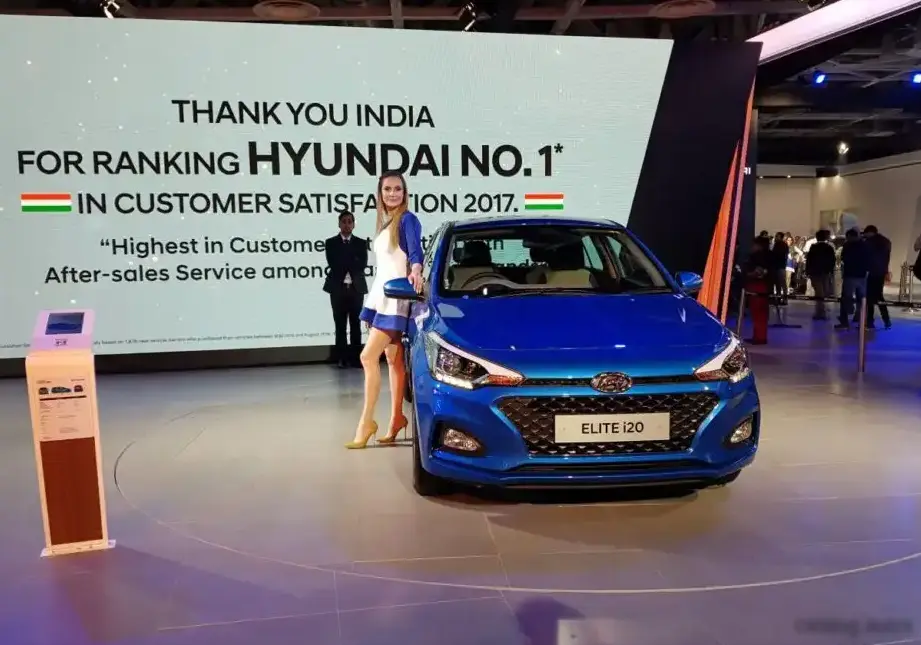
The Hyundai i20 II Elite (facelift 2018) 1.2 Kappa Dual, producing 83 horsepower with a Continuously Variable Transmission (CVT), represents an entry-level offering within the second generation i20 range. Introduced in May 2018 and continuing through 2020, this variant was primarily aimed at buyers seeking an affordable and fuel-efficient supermini for urban driving. It occupied the lower end of the i20 lineup, positioned below higher-powered engine options and more generously equipped trim levels. The facelift brought styling updates and minor equipment revisions to the already popular i20 platform (coded PB), enhancing its appeal in the competitive European B-segment.
Powertrain & Engine Architecture
The heart of this i20 variant is the Hyundai G4LA 1.2-liter Kappa Dual engine. This naturally aspirated, inline-four cylinder engine utilizes a dual variable timing system (Dual VTVT) on both the intake and exhaust camshafts, aimed at improving efficiency and responsiveness. The engine employs multi-point fuel injection and a compression ratio of 10.5:1. The 83 horsepower output is achieved at 6000 rpm, with peak torque of 115 Nm (84.82 lb-ft) arriving at 4000 rpm. Paired with this engine is a CVT (Continuously Variable Transmission), offering stepless gear changes designed to maximize fuel economy. While the CVT provides smooth acceleration, it often lacks the direct feel of a traditional automatic or manual gearbox.
Driving Characteristics
The 1.2 Kappa Dual with CVT delivers modest performance. Acceleration is adequate for city driving and short highway trips, but overtaking maneuvers require careful planning. The CVT’s programming prioritizes fuel efficiency, resulting in a somewhat relaxed power delivery. Compared to the 1.0 T-GDi turbocharged engine offered in other i20 trims, this 1.2L naturally aspirated version feels significantly less powerful. The CVT’s lack of fixed gear ratios can also lead to a “rubber band” effect, where engine speed increases without a corresponding increase in vehicle speed, particularly under hard acceleration. The gear ratios are tuned for economy, meaning the engine often operates at higher RPMs during highway cruising to maintain speed.
Equipment & Trim Levels
The “Elite” trim level, even in its base 1.2 Kappa Dual CVT configuration, offered a reasonable level of standard equipment. Typically, this included air conditioning, power windows, central locking, a basic audio system with USB connectivity, and driver and passenger airbags. Safety features such as ABS (Anti-lock Braking System) were standard. Optional extras often included alloy wheels, a touchscreen infotainment system with Apple CarPlay and Android Auto compatibility, rear parking sensors, and a reversing camera. Interior upholstery was generally cloth, with a functional but not luxurious design. The dashboard layout was straightforward and user-friendly.
Chassis & Braking
The i20 II Elite utilizes a front-wheel-drive layout with an independent McPherson strut suspension at the front and a torsion beam suspension at the rear. This setup provides a comfortable ride quality, well-suited for navigating urban roads. The front brakes are discs, offering adequate stopping power, while the rear brakes are drums, a cost-saving measure common in this segment. Stabilizer bars are present at both the front and rear, helping to reduce body roll during cornering. The steering is electrically assisted, providing light and easy maneuverability.
Market Reception & Comparison
The Hyundai i20 II Elite 1.2 Kappa Dual CVT was generally well-received as an affordable and practical city car. Critics praised its fuel efficiency and comfortable ride, but noted its lack of outright performance. Compared to other 1.2-liter naturally aspirated rivals like the Volkswagen Polo or Ford Fiesta, the i20 offered a competitive price point and a generous warranty. However, the CVT transmission was sometimes criticized for its lack of responsiveness and the “rubber band” effect. The 1.0 T-GDi versions of the i20 offered significantly improved performance and were favored by drivers seeking a more engaging driving experience, but came at a higher price.
Legacy
The 1.2 Kappa Dual CVT powertrain has proven to be relatively reliable in the long term. The engine is known for its durability, and the CVT transmission, while not as robust as a traditional automatic, has generally held up well with regular maintenance. In the used car market, this variant represents a good value proposition for buyers seeking an economical and dependable supermini. However, potential buyers should be aware of the CVT’s potential for needing fluid changes at the recommended intervals to ensure longevity. The i20 II Elite, in all its variants, helped solidify Hyundai’s reputation for building well-equipped and reliable vehicles at a competitive price point.