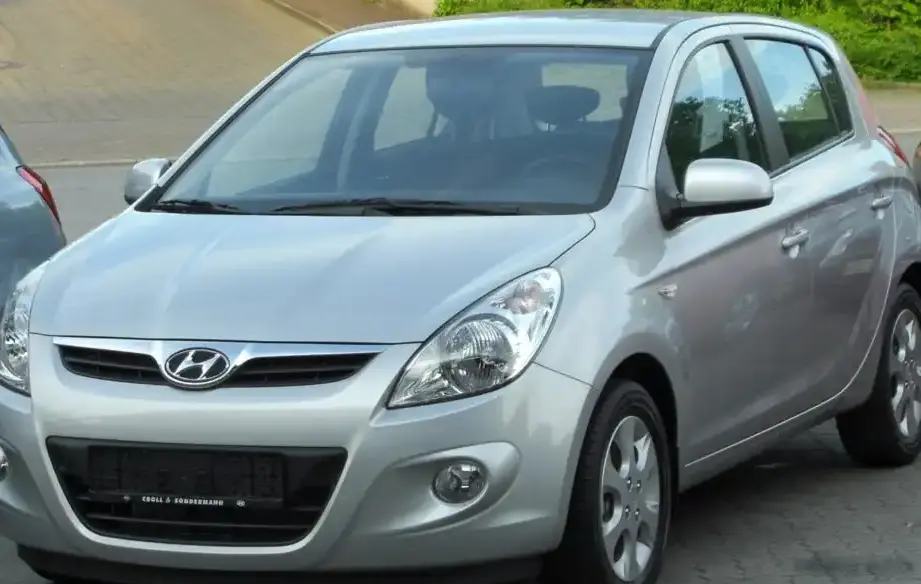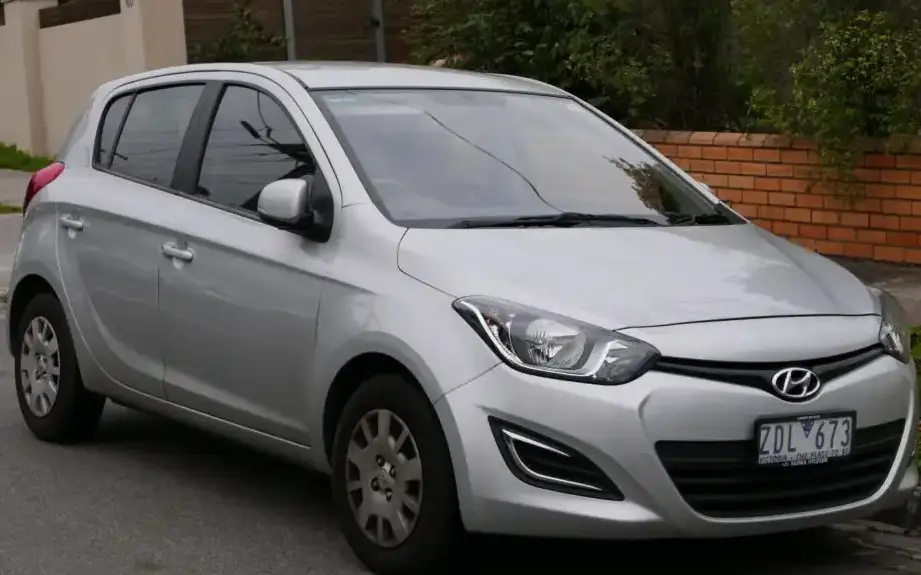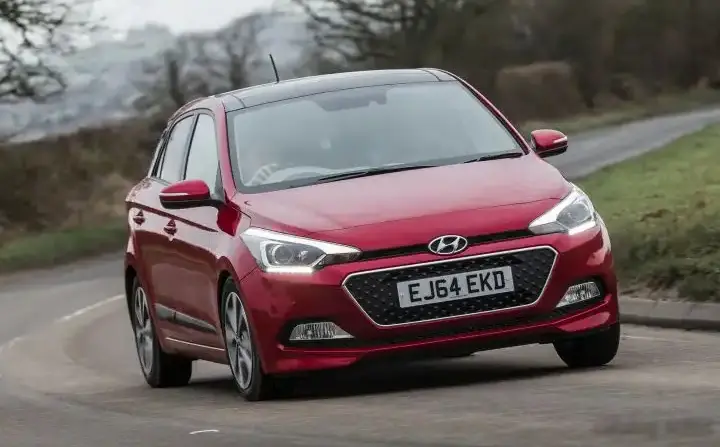
The Hyundai i20 II (GB) 1.4 (100 Hp) Automatic, produced between 2014 and 2018, represents a key variant within the second generation of Hyundai’s popular subcompact hatchback. Positioned as a comfortable and practical option, this model aimed to provide a balance between affordability, fuel efficiency, and ease of driving, particularly appealing to urban commuters and drivers seeking an automatic transmission. It was built on the PB platform, shared with the Kia Rio, and served as a significant offering in the competitive European B-segment market.
Technical Specifications
| Brand | Hyundai |
| Model | i20 |
| Generation | i20 II (GB) |
| Type (Engine) | 1.4 (100 Hp) Automatic |
| Start of production | 2014 |
| End of production | 2018 |
| Powertrain Architecture | Internal Combustion engine |
| Body type | Hatchback |
| Seats | 5 |
| Doors | 5 |
| Fuel consumption (urban) | 9.2 l/100 km (25.6 US mpg, 30.7 UK mpg, 10.9 km/l) |
| Fuel consumption (extra urban) | 5.3 l/100 km (44.4 US mpg, 53.3 UK mpg, 18.9 km/l) |
| Fuel consumption (combined) | 6.7 l/100 km (35.1 US mpg, 42.2 UK mpg, 14.9 km/l) |
| CO2 emissions | 155 g/km |
| Fuel Type | Petrol (Gasoline) |
| Acceleration 0 – 100 km/h | 11.6 sec |
| Acceleration 0 – 62 mph | 11.6 sec |
| Acceleration 0 – 60 mph | 11 sec |
| Maximum speed | 184 km/h (114.33 mph) |
| Emission standard | Euro 6 |
| Weight-to-power ratio | 10.8 kg/Hp, 92.7 Hp/tonne |
| Weight-to-torque ratio | 8.1 kg/Nm, 124.2 Nm/tonne |
| Power | 100 Hp @ 6000 rpm |
| Power per litre | 73.1 Hp/l |
| Torque | 134 Nm @ 3500 rpm (98.83 lb.-ft. @ 3500 rpm) |
| Engine layout | Front, Transverse |
| Engine Model/Code | Kappa / G4LC |
| Engine displacement | 1368 cm3 (83.48 cu. in.) |
| Number of cylinders | 4 |
| Engine configuration | Inline |
| Cylinder Bore | 72 mm (2.83 in.) |
| Piston Stroke | 84 mm (3.31 in.) |
| Compression ratio | 10.5:1 |
| Number of valves per cylinder | 4 |
| Fuel injection system | Multi-port manifold injection |
| Engine aspiration | Naturally aspirated engine |
| Valvetrain | DOHC |
| Engine oil capacity | 3.5 l (3.7 US qt | 3.08 UK qt) |
| Coolant | 4.3 l (4.54 US qt | 3.78 UK qt) |
| Kerb Weight | 1079 kg (2378.79 lbs.) |
| Max. weight | 1620 kg (3571.49 lbs.) |
| Max load | 541 kg (1192.7 lbs.) |
| Trunk (boot) space – minimum | 326 l (11.51 cu. ft.) |
| Trunk (boot) space – maximum | 1042 l (36.8 cu. ft.) |
| Fuel tank capacity | 50 l (13.21 US gal | 11 UK gal) |
| Max. roof load | 70 kg (154.32 lbs.) |
| Length | 4035 mm (158.86 in.) |
| Width | 1734 mm (68.27 in.) |
| Height | 1474 mm (58.03 in.) |
| Wheelbase | 2570 mm (101.18 in.) |
| Front track | 1514-1520 mm (59.61 – 59.84 in.) |
| Rear (Back) track | 1513-1519 mm (59.57 – 59.8 in.) |
| Front overhang | 815 mm (32.09 in.) |
| Rear overhang | 650 mm (25.59 in.) |
| Ride height (ground clearance) | 140 mm (5.51 in.) |
| Minimum turning circle | 10.2 m (33.46 ft.) |
| Drivetrain Architecture | The Internal combustion engine (ICE) drives the front wheels of the vehicle. |
| Drive wheel | Front wheel drive |
| Number of gears and type of gearbox | 4 gears, automatic transmission |
| Front suspension | Independent type McPherson |
| Rear suspension | Semi-independent, coil spring |
| Front brakes | Ventilated discs |
| Rear brakes | Disc |
| Assisting systems | ABS (Anti-lock braking system) |
| Steering type | Steering rack and pinion |
| Power steering | Electric Steering |
| Tires size | 185/65 R15; 195/55 R16 |
| Wheel rims size | 6.0J x 15; 6.0J x 16 |
INTRODUCTION
The Hyundai i20 II (GB) 1.4 Automatic, launched in 2014, was a significant update to Hyundai’s popular supermini. This second-generation i20, internally designated GB, represented a substantial leap forward in terms of design, interior quality, and overall refinement compared to its predecessor. The 1.4-liter engine paired with a four-speed automatic transmission was positioned as a mid-range offering, appealing to buyers who prioritized convenience and ease of use over outright performance. It competed directly with vehicles like the Volkswagen Polo, Ford Fiesta, and Renault Clio in the highly competitive European B-segment.
Powertrain & Engine Architecture
At the heart of the i20 1.4 Automatic lies Hyundai’s Kappa 1.4-liter inline-four cylinder engine, bearing the code G4LC. This engine is a naturally aspirated unit featuring multi-point fuel injection and a double overhead camshaft (DOHC) valvetrain. The 1368cc engine produces 100 horsepower at 6000 rpm and 134 Nm (98.83 lb-ft) of torque at 3500 rpm. The engine’s design focused on providing a balance between fuel efficiency and adequate power for everyday driving. The four-speed automatic transmission, while providing convenience, is a relatively older design. It features traditional hydraulic control and lacks the efficiency of more modern continuously variable transmissions (CVTs) or dual-clutch transmissions (DCTs). The transmission’s gear ratios are tuned for comfortable cruising and acceptable acceleration, but it doesn’t offer the responsiveness of manual transmissions or more advanced automatics.
Driving Characteristics
The driving experience in the i20 1.4 Automatic is characterized by smoothness and ease of use. Acceleration from 0-100 km/h (0-62 mph) takes approximately 11.6 seconds, which is adequate for urban and suburban driving but noticeably slower than the manual transmission versions or models equipped with more powerful engines. The four-speed automatic transmission can sometimes feel sluggish during quick overtaking maneuvers, requiring a downshift to access more power. The steering is light and precise, making it easy to maneuver in tight spaces. The suspension provides a comfortable ride, absorbing bumps and imperfections in the road surface effectively. However, it’s not particularly sporty, with some body roll noticeable during cornering.
Equipment & Trim Levels
The i20 1.4 Automatic typically came equipped with a reasonable level of standard features. These included air conditioning, power windows, central locking, a basic audio system with USB connectivity, and ABS brakes. Higher trim levels, such as Style or Premium, added features like alloy wheels, a more advanced audio system with Bluetooth connectivity, a multi-function steering wheel, and fog lights. Interior upholstery was typically cloth, with options for different color schemes. Optional extras included a sunroof, parking sensors, and a navigation system.
Chassis & Braking
The i20 II (GB) utilizes a front-wheel-drive layout with an independent McPherson strut suspension at the front and a semi-independent coil spring suspension at the rear. The front brakes are ventilated discs, providing good stopping power, while the rear brakes are discs. ABS (Anti-lock Braking System) is standard, enhancing safety during emergency braking situations. The chassis is designed to provide a comfortable ride and predictable handling. The relatively lightweight construction of the i20 helps to offset the modest power output of the 1.4-liter engine.
Market Reception & Comparison
The Hyundai i20 1.4 Automatic received generally positive reviews from automotive critics. It was praised for its comfortable ride, spacious interior, and good value for money. However, the four-speed automatic transmission was often criticized for its lack of responsiveness and efficiency compared to more modern alternatives. Compared to the 1.2-liter engine option, the 1.4-liter offered noticeably more power, making it a better choice for drivers who frequently carry passengers or drive on highways. Compared to the diesel variants, the 1.4-liter petrol engine offered lower fuel economy but a quieter and smoother driving experience. Fuel economy figures averaged around 6.7 l/100 km (35.1 US mpg), which was competitive for its class.
Legacy
The Hyundai i20 II (GB) 1.4 Automatic has proven to be a relatively reliable vehicle, with few major mechanical issues reported. The Kappa engine is generally considered durable, and the automatic transmission, while not the most sophisticated, is capable of withstanding normal use. In the used car market, these models represent a good value proposition for buyers seeking an affordable and practical supermini. However, potential buyers should be aware of the age of the vehicle and the potential for wear and tear on components such as the suspension and brakes. The i20 II helped solidify Hyundai’s reputation for building well-equipped, reliable, and affordable vehicles, paving the way for the continued success of the i20 model line.