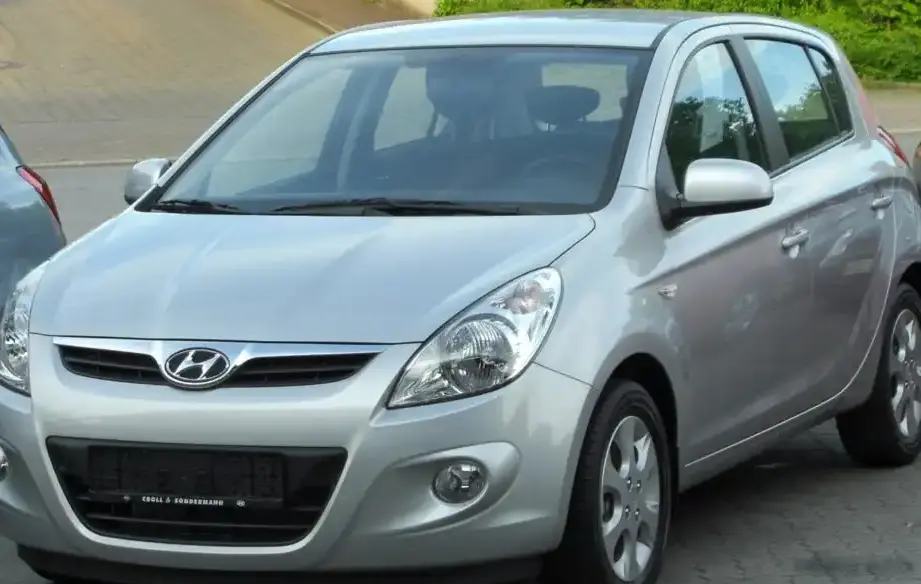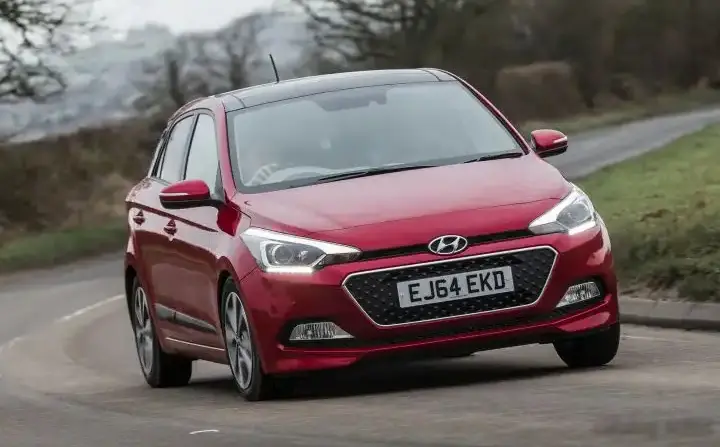
The Hyundai i20 II (GB) 1.4 CRDi 90 hp, produced between 2014 and 2018, represents a significant entry point into the second generation of Hyundai’s popular subcompact hatchback. Positioned within the broader i20 (GB) range – which spanned various engine and transmission options – this variant aimed to deliver fuel efficiency and reasonable performance for urban and everyday driving. It was primarily marketed in Europe, where demand for economical diesel-powered vehicles was strong. The “GB” designation refers to the European-market specification of the second-generation i20 (internally known as the PB platform).
Technical Specifications
| Brand | Hyundai |
| Model | i20 |
| Generation | i20 II (GB) |
| Type (Engine) | 1.4 CRDi (90 Hp) |
| Start of production | 2014 |
| End of production | 2018 |
| Powertrain Architecture | Internal Combustion engine |
| Body type | Hatchback |
| Seats | 5 |
| Doors | 5 |
| Fuel consumption (urban) | 4.5 – 4.9 l/100 km (52.3 – 48 US mpg) |
| Fuel consumption (extra urban) | 3.3 – 3.5 l/100 km (71.3 – 67.2 US mpg) |
| Fuel consumption (combined) | 3.7 – 4.1 l/100 km (63.6 – 57.4 US mpg) |
| CO2 emissions | 97 – 106 g/km |
| Fuel Type | Diesel |
| Acceleration 0 – 100 km/h | 12.1 sec |
| Acceleration 0 – 62 mph | 12.1 sec |
| Acceleration 0 – 60 mph | 11.5 sec |
| Maximum speed | 175 km/h (108.74 mph) |
| Emission standard | Euro 6 |
| Weight-to-power ratio | 12.9 kg/Hp |
| Weight-to-torque ratio | 4.9 kg/Nm |
| Power | 90 Hp @ 4000 rpm |
| Torque | 240 Nm @ 1500-2500 rpm (177.01 lb.-ft.) |
| Engine layout | Front, Transverse |
| Engine Model/Code | D4FC |
| Engine displacement | 1396 cm3 (85.19 cu. in.) |
| Number of cylinders | 4 |
| Engine configuration | Inline |
| Cylinder Bore | 75 mm (2.95 in.) |
| Piston Stroke | 79 mm (3.11 in.) |
| Compression ratio | 16:1 |
| Number of valves per cylinder | 4 |
| Fuel injection system | Diesel Commonrail |
| Engine aspiration | Turbocharger, Intercooler |
| Engine oil capacity | 5.3 l (5.6 US qt | 4.66 UK qt) |
| Coolant capacity | 6.4 l (6.76 US qt | 5.63 UK qt) |
| Kerb Weight | 1165 kg (2568.39 lbs.) |
| Max. weight | 1690 kg (3725.81 lbs.) |
| Max load | 525 kg (1157.43 lbs.) |
| Trunk (boot) space – minimum | 326 l (11.51 cu. ft.) |
| Trunk (boot) space – maximum | 1042 l (36.8 cu. ft.) |
| Fuel tank capacity | 50 l (13.21 US gal | 11 UK gal) |
| Length | 4035 mm (158.86 in.) |
| Width | 1734 mm (68.27 in.) |
| Height | 1474 mm (58.03 in.) |
| Wheelbase | 2570 mm (101.18 in.) |
| Front track | 1514-1520 mm (59.61 – 59.84 in.) |
| Rear track | 1513-1519 mm (59.57 – 59.8 in.) |
| Drivetrain Architecture | Front wheel drive |
| Number of gears | 6 |
| Gearbox type | Manual transmission |
INTRODUCTION
The Hyundai i20 II (GB) 1.4 CRDi 90 hp, launched in 2014, was a key component of Hyundai’s strategy to gain market share in the European subcompact segment. Building upon the success of the first-generation i20, the second generation offered improved styling, a more refined interior, and enhanced safety features. The 1.4 CRDi engine, paired with a six-speed manual transmission, was positioned as a fuel-efficient and practical option for buyers prioritizing economy over outright performance. This variant sat towards the lower end of the i20 range, offering an accessible price point and appealing to cost-conscious consumers.
Powertrain & Engine Architecture
At the heart of this i20 variant lies the Hyundai D4FC 1.4-liter common-rail direct injection (CRDi) diesel engine. This engine is a four-cylinder, inline configuration, displacing 1396 cc. It features a turbocharger with an intercooler to boost power and efficiency. The D4FC engine utilizes a 16:1 compression ratio and four valves per cylinder, contributing to its relatively high output for its size. The common-rail diesel injection system, supplied by Bosch, delivers fuel at extremely high pressure, optimizing combustion and reducing emissions. The six-speed manual transmission was the standard offering for this engine, providing a good balance between fuel economy and drivability. The engine’s control unit (ECU) manages fuel injection timing, turbocharger boost, and other parameters to meet Euro 6 emission standards.
Driving Characteristics
The 90 hp output and 240 Nm of torque, available from 1500-2500 rpm, provide adequate, though not exhilarating, performance. Acceleration from 0-60 mph takes around 11.5 seconds, and the top speed is approximately 108.74 mph. The engine feels most comfortable in the mid-range, offering sufficient power for overtaking and merging onto highways. The six-speed manual transmission is well-matched to the engine’s characteristics, allowing drivers to keep the engine in its optimal torque band. Compared to the higher-output 1.6-liter gasoline engine available in the i20 range, the 1.4 CRDi feels less responsive but significantly more fuel-efficient. The manual transmission provides a more engaging driving experience than the optional four-speed automatic transmission available on some i20 models.
Equipment & Trim Levels
The 1.4 CRDi 90 hp typically came equipped with a reasonable level of standard features. Base models included air conditioning, power steering, electric front windows, and a basic audio system with USB connectivity. Higher trim levels, such as SE or Premium, added features like alloy wheels, fog lights, a more advanced audio system with Bluetooth, and cruise control. Interior upholstery was typically cloth, with a dark color scheme. Optional extras included a panoramic sunroof, rear parking sensors, and a navigation system. Safety features included ABS, Electronic Stability Control (ESC), and multiple airbags.
Chassis & Braking
The i20 II (GB) utilizes a McPherson strut front suspension and a semi-independent coil spring rear suspension. This setup provides a comfortable ride quality, well-suited for everyday driving. The front brakes are ventilated discs, while the rear brakes are discs on most variants, providing adequate stopping power. The steering is electrically assisted, offering light and precise control. The chassis was tuned to prioritize comfort and stability over sporty handling. Stabilizer bars were fitted to both the front and rear axles to reduce body roll during cornering.
Market Reception & Comparison
The Hyundai i20 II (GB) 1.4 CRDi 90 hp was generally well-received by automotive critics for its fuel efficiency, practicality, and value for money. It was often praised for its comfortable ride and spacious interior. However, some reviewers noted that the engine could feel underpowered, particularly when fully loaded or driving uphill. Compared to rivals like the Volkswagen Polo, Ford Fiesta, and Renault Clio, the i20 offered a competitive package with a longer warranty and a lower price point. Fuel economy was a key selling point, with the 1.4 CRDi consistently achieving impressive figures in real-world testing. Reliability was also a strong suit, with the i20 proving to be a dependable and trouble-free vehicle.
Legacy
The Hyundai i20 II (GB) 1.4 CRDi 90 hp has proven to be a reliable and durable vehicle, and well-maintained examples continue to be popular on the used car market. The D4FC engine is known for its longevity, provided it receives regular servicing. Common issues are relatively minor, often related to wear and tear on components like the turbocharger or fuel injectors. The i20’s reputation for value and dependability has helped to establish Hyundai as a major player in the European subcompact segment. Today, these i20s represent an affordable and economical option for buyers seeking a practical and fuel-efficient city car.