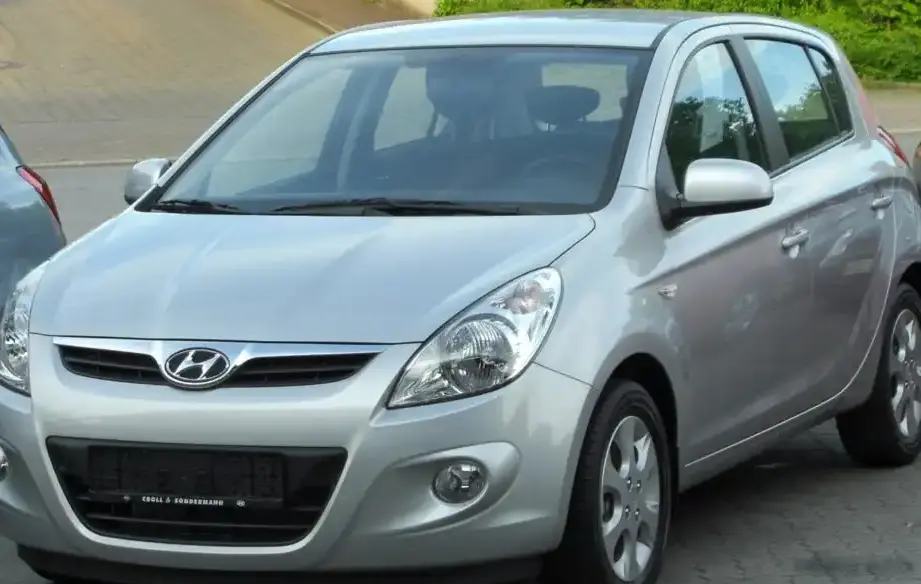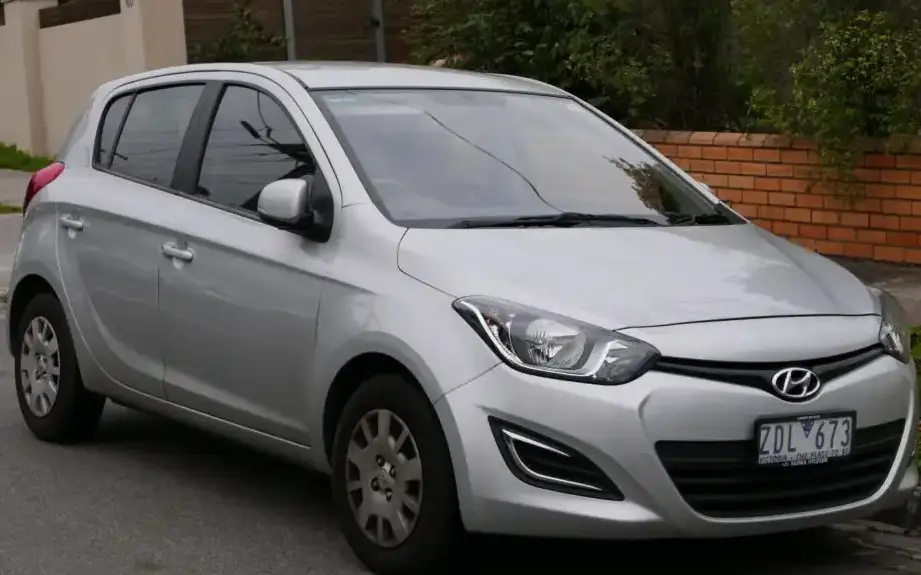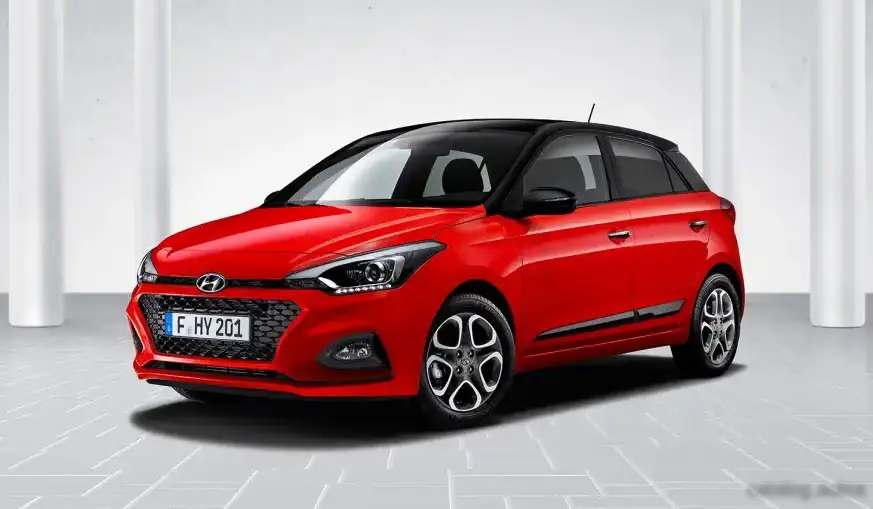
The Hyundai i20 II (GB facelift, produced from 2018 to 2020) 1.0 T-GDI 101 hp variant represents a significant step in Hyundai’s efforts to offer a compelling subcompact hatchback in the European market and beyond. This iteration of the second-generation i20, built on the PB platform, aimed to balance fuel efficiency, modern technology, and affordability. Positioned as a mid-range offering within the i20 lineup, it slotted between the base 1.2-liter naturally aspirated engine and the more powerful 1.4-liter options. The introduction of the 1.0 T-GDI engine with a dual-clutch transmission (DCT) was a key element in attracting buyers seeking a more refined and efficient driving experience.
Technical Specifications
| Brand | Hyundai |
| Model | i20 |
| Generation | i20 II (GB facelift 2018) |
| Type (Engine) | 1.0 T-GDI (101 Hp) DCT |
| Start of production | 2018 |
| End of production | 2020 |
| Powertrain Architecture | Internal Combustion engine |
| Body type | Hatchback |
| Seats | 5 |
| Doors | 5 |
| Fuel consumption (urban) | 5.9 l/100 km (39.9 US mpg, 47.9 UK mpg, 16.9 km/l) |
| Fuel consumption (extra urban) | 4.7 l/100 km (50 US mpg, 60.1 UK mpg, 21.3 km/l) |
| Fuel consumption (combined) | 5.2 l/100 km (45.2 US mpg, 54.3 UK mpg, 19.2 km/l) |
| CO2 emissions | 118 g/km |
| Fuel Type | Petrol (Gasoline) |
| Acceleration 0 – 100 km/h | 11.4 sec |
| Acceleration 0 – 62 mph | 11.4 sec |
| Acceleration 0 – 60 mph | 10.8 sec |
| Maximum speed | 182 km/h (113.09 mph) |
| Emission standard | Euro 6d |
| Weight-to-power ratio | 11.7 kg/Hp, 85.2 Hp/tonne |
| Weight-to-torque ratio | 6.9 kg/Nm, 145.1 Nm/tonne |
| Power | 101 Hp @ 4500 rpm |
| Power per litre | 101.2 Hp/l |
| Torque | 172 Nm @ 1500-4000 rpm (126.86 lb.-ft. @ 1500-4000 rpm) |
| Engine layout | Front, Transverse |
| Engine Model/Code | Kappa II / G3LC |
| Engine displacement | 998 cm3 (60.9 cu. in.) |
| Number of cylinders | 3 |
| Engine configuration | Inline |
| Cylinder Bore | 71 mm (2.8 in.) |
| Piston Stroke | 84 mm (3.31 in.) |
| Compression ratio | 10:1 |
| Number of valves per cylinder | 4 |
| Fuel injection system | Direct injection |
| Engine aspiration | Turbocharger, Intercooler |
| Valvetrain | D-CVVT |
| Engine oil capacity | 3.6 l (3.8 US qt | 3.17 UK qt) |
| Coolant | 6.4 l (6.76 US qt | 5.63 UK qt) |
| Kerb Weight | 1185-1325 kg (2612.48 – 2921.12 lbs.) |
| Max. weight | 1650 kg (3637.63 lbs.) |
| Max load | 325-465 kg (716.5 – 1025.15 lbs.) |
| Trunk (boot) space – minimum | 326 l (11.51 cu. ft.) |
| Trunk (boot) space – maximum | 1024 l (36.16 cu. ft.) |
| Fuel tank capacity | 50 l (13.21 US gal | 11 UK gal) |
| Max. roof load | 70 kg (154.32 lbs.) |
| Permitted trailer load with brakes (12%) | 800 kg (1763.7 lbs.) |
| Permitted trailer load without brakes | 450 kg (992.08 lbs.) |
| Permitted towbar download | 75 kg (165.35 lbs.) |
| Length | 4035 mm (158.86 in.) |
| Width | 1734 mm (68.27 in.) |
| Width including mirrors | 1985 mm (78.15 in.) |
| Height | 1474 mm (58.03 in.) |
| Wheelbase | 2570 mm (101.18 in.) |
| Front track | 1514-1520 mm (59.61 – 59.84 in.) |
| Rear (Back) track | 1513-1519 mm (59.57 – 59.8 in.) |
| Front overhang | 815 mm (32.09 in.) |
| Rear overhang | 650 mm (25.59 in.) |
| Ride height (ground clearance) | 140 mm (5.51 in.) |
| Minimum turning circle (turning diameter) | 10.2 m (33.46 ft.) |
| Drivetrain Architecture | The Internal combustion engine (ICE) drives the front wheels of the vehicle. |
| Drive wheel | Front wheel drive |
| Number of gears and type of gearbox | 7 gears, automatic transmission DCT |
| Front suspension | Independent, type McPherson with coil spring and anti-roll bar |
| Rear suspension | Independent coil spring |
| Front brakes | Ventilated discs |
| Rear brakes | Disc |
| Assisting systems | ABS (Anti-lock braking system) |
| Steering type | Steering rack and pinion |
| Power steering | Electric Steering |
| Tires size | 185/65 R15; 195/55 R16 |
| Wheel rims size | 6.0J x 15; 6.0J x 16 |
Powertrain & Engine Architecture
The heart of this i20 variant is the Kappa II 1.0 T-GDI engine, designated G3LC. This is a three-cylinder, inline gasoline engine featuring direct fuel injection and a single turbocharger with an intercooler. The engine produces 101 horsepower at 4500 rpm and 172 Nm (126.86 lb-ft) of torque between 1500 and 4000 rpm. The direct injection system, coupled with the turbocharger, allows for a broad torque curve, providing decent responsiveness in everyday driving situations. The engine utilizes Hyundai’s Dual Continuous Variable Valve Timing (D-CVVT) technology to optimize valve timing for improved efficiency and performance. The engine is transversely mounted at the front of the vehicle. Paired with the engine is a 7-speed Dual Clutch Transmission (DCT). This DCT provides quicker and smoother gear changes compared to a traditional automatic transmission, contributing to a more engaging driving experience and improved fuel economy.
Driving Characteristics
The 1.0 T-GDI with the DCT offers a noticeable improvement in driving dynamics compared to the base 1.2-liter engine. While not a performance-oriented setup, the turbocharger provides adequate acceleration for merging onto highways and overtaking. The 0-100 km/h (0-62 mph) time of 11.4 seconds reflects this. The DCT transmission contributes to a more responsive feel, although some drivers may notice slight hesitation at low speeds. The gear ratios are tuned for fuel efficiency, meaning the engine can feel slightly strained when pushed hard. Compared to higher-output i20 variants, this version prioritizes fuel economy and ease of driving over outright performance.
Equipment & Trim Levels
The 1.0 T-GDI DCT trim typically included standard features such as air conditioning, power windows, central locking, a touchscreen infotainment system with Bluetooth connectivity, and basic safety equipment like ABS and airbags. Higher trim levels offered additional features like alloy wheels, a rearview camera, parking sensors, and advanced safety systems like lane departure warning. Interior upholstery was typically cloth, with options for upgraded materials on higher trims. The dashboard layout was functional and modern, with a focus on user-friendliness.
Chassis & Braking
The i20 II utilizes a McPherson strut front suspension and a torsion beam rear suspension. This setup provides a comfortable ride quality, suitable for everyday commuting. The front brakes are ventilated discs, while the rear brakes are discs. ABS (Anti-lock Braking System) is standard. The steering is electrically assisted, providing light and precise control. The suspension tuning is geared towards comfort rather than sporty handling, resulting in a predictable and stable driving experience.
Market Reception & Comparison
The 1.0 T-GDI DCT i20 was generally well-received by automotive critics as a practical and efficient subcompact hatchback. It was praised for its fuel economy (5.2 l/100 km combined) and refined driving experience compared to its competitors. Compared to the naturally aspirated 1.2-liter engine, the 1.0 T-GDI offered a significant boost in performance and responsiveness. However, some reviewers noted that the engine could feel a bit underpowered when fully loaded or driving uphill. Compared to the 1.4-liter variants, this trim offered a better balance of fuel economy and price, making it an attractive option for budget-conscious buyers.
Legacy
The Kappa II 1.0 T-GDI engine and 7-speed DCT combination proved to be a reliable powertrain in the i20 II. While some early DCT units experienced minor software glitches, these were generally addressed through software updates. On the used car market, the 1.0 T-GDI DCT i20 remains a popular choice due to its fuel efficiency, affordability, and relatively low maintenance costs. The engine’s robust design and the DCT’s improved reliability have contributed to its enduring appeal. The introduction of this powertrain marked a significant step forward for Hyundai in offering technologically advanced and efficient vehicles in the subcompact segment.