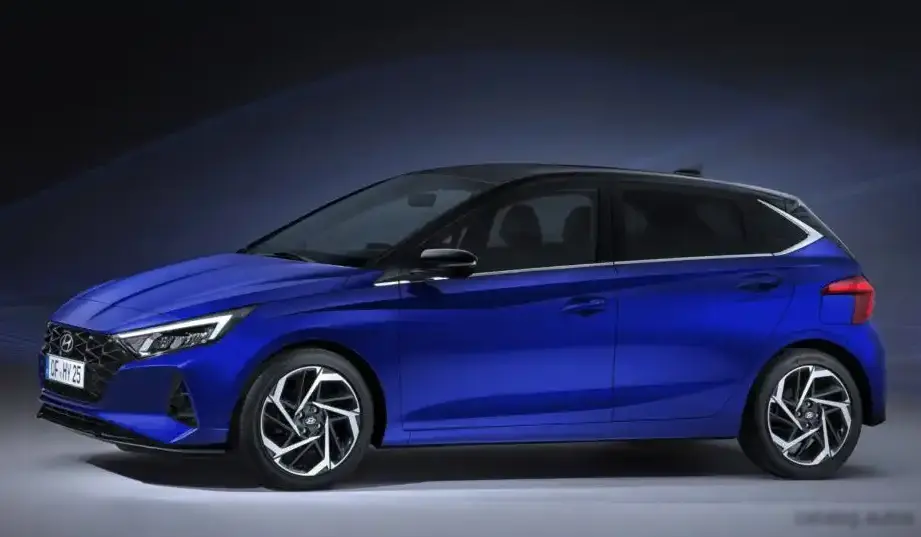
The Hyundai i20 III 1.0 T-GDi 48V (120 hp) represents a significant step forward in the subcompact hatchback segment, blending fuel efficiency with a surprisingly peppy driving experience. Introduced in October 2020 and continuing through August 2023, this variant occupied a key position within the i20 III range, offering a compelling alternative to base models while remaining accessible to budget-conscious buyers. It was primarily marketed in Europe and other regions where smaller, fuel-efficient vehicles are highly sought after. This model leverages a 48-volt mild hybrid system to enhance fuel economy and reduce emissions, aligning with increasingly stringent environmental regulations.
Technical Specifications
| Brand | Hyundai |
| Model | i20 |
| Generation | i20 III |
| Type (Engine) | 1.0 T-GDi 48V (120 Hp) Mild Hybrid |
| Start of production | October, 2020 |
| End of production | August, 2023 |
| Powertrain Architecture | MHEV (Mild Hybrid Electric Vehicle) |
| Body type | Hatchback |
| Seats | 5 |
| Doors | 5 |
| Fuel Type | Petrol (Gasoline) |
| Acceleration 0 – 100 km/h | 10.2 sec |
| Acceleration 0 – 62 mph | 10.2 sec |
| Acceleration 0 – 60 mph | 9.7 sec |
| Emission standard | Euro 6d |
| Power | 120 Hp @ 6000 rpm |
| Power per litre | 120.2 Hp/l |
| Torque | 200 Nm @ 2000 rpm (147.51 lb.-ft. @ 2000 rpm) |
| Engine Model/Code | G3LE |
| Engine displacement | 998 cm3 (60.9 cu. in.) |
| Number of cylinders | 3 |
| Engine configuration | Inline |
| Fuel injection system | Direct injection |
| Engine aspiration | Turbocharger, Intercooler |
| Engine oil capacity | 3.6 l (3.8 US qt | 3.17 UK qt) |
| Trunk (boot) space – minimum | 351 l (12.4 cu. ft.) |
| Length | 4040 mm (159.06 in.) |
| Width | 1750 mm (68.9 in.) |
| Height | 1450 mm (57.09 in.) |
| Wheelbase | 2580 mm (101.57 in.) |
| Drivetrain Architecture | Front wheel drive, MHEV. ICE and electric motor work in mixed mode. |
| Number of gears and type of gearbox | 6 gears, manual transmission iMT |
| Assisting systems | ABS (Anti-lock braking system) |
| Wheel rims size | 17 |
Powertrain & Engine Architecture
The heart of the i20 III 1.0 T-GDi 48V is the G3LE engine, a 998cc turbocharged three-cylinder gasoline engine. This engine utilizes direct fuel injection and a single scroll turbocharger with an intercooler to deliver a respectable 120 horsepower at 6000 rpm and 200 Nm (147.51 lb-ft) of torque at 2000 rpm. The “48V” designation indicates the inclusion of a mild hybrid system. This system comprises a 48-volt battery and a belt-driven starter generator (BSG). The BSG allows for start-stop functionality, regenerative braking (capturing energy during deceleration), and a small amount of electric assist during acceleration. The engine’s architecture is designed for efficiency, with features like optimized combustion chamber design and low-friction components. The iMT (intelligent Manual Transmission) is a 6-speed manual gearbox that uses sensors to determine when to shift, offering a more efficient driving experience.
Driving Characteristics
The 120 hp 1.0 T-GDi 48V powertrain delivers a surprisingly lively driving experience for a subcompact hatchback. While not a performance-oriented model, the turbocharger provides a noticeable boost in power, making overtaking and merging onto highways relatively effortless. The 0-60 mph time of around 9.7 seconds is competitive within its class. The iMT transmission, while aiming for efficiency, can feel slightly less engaging than a traditional manual. The mild hybrid system contributes to smoother starts and stops, and the electric assist provides a subtle boost during acceleration. Compared to the base 1.2-liter naturally aspirated engine, the 1.0 T-GDi offers significantly more power and torque, resulting in a more enjoyable and confident driving experience. It sits below higher-spec i20 models equipped with more powerful engines, offering a balance between performance and fuel economy.
Equipment & Trim Levels
The i20 III 1.0 T-GDi 48V was typically offered in mid-range trim levels, such as SE, Comfort, or similar designations depending on the specific market. Standard equipment generally included air conditioning, a touchscreen infotainment system with Apple CarPlay and Android Auto compatibility, Bluetooth connectivity, and a suite of safety features like ABS, ESC (Electronic Stability Control), and multiple airbags. Higher trim levels added features like alloy wheels, a rear-view camera, parking sensors, and more advanced driver-assistance systems. Interior upholstery was typically cloth, with options for upgraded materials in higher trims. The dashboard layout was modern and functional, with a focus on ease of use.
Chassis & Braking
The i20 III utilizes a front-wheel-drive platform with a MacPherson strut front suspension and a torsion beam rear suspension. This setup provides a good balance between ride comfort and handling. The steering is light and precise, making it easy to maneuver in urban environments. Braking systems typically consisted of disc brakes on the front wheels and drum brakes on the rear wheels, although some higher trim levels may have featured rear disc brakes. ABS (Anti-lock Braking System) was standard, ensuring safe and controlled braking in various conditions. Stabilizer bars were included on both axles to reduce body roll during cornering.
Market Reception & Comparison
The Hyundai i20 III 1.0 T-GDi 48V was generally well-received by automotive critics. It was praised for its fuel efficiency, surprisingly peppy engine, and well-equipped interior. Critics noted that the mild hybrid system provided a noticeable improvement in fuel economy without significantly impacting driving performance. Compared to competitors like the Volkswagen Polo, Ford Fiesta, and Renault Clio, the i20 offered a compelling value proposition, often undercutting its rivals in price while offering similar or better features. Fuel economy figures typically ranged from 50-60 mpg (combined cycle), making it an attractive option for drivers seeking a cost-effective and environmentally friendly vehicle.
Legacy
The Hyundai i20 III 1.0 T-GDi 48V has proven to be a reliable and durable vehicle in the used car market. The G3LE engine, while a three-cylinder, has demonstrated good long-term reliability, and the mild hybrid system has not been prone to major issues. Regular maintenance, including oil changes and adherence to the manufacturer’s service schedule, is crucial for ensuring continued reliability. The i20 III’s relatively low running costs and practical interior make it a popular choice for urban commuters and first-time car buyers. As a result, well-maintained examples continue to hold their value reasonably well in the used car market, representing a sensible and economical option for those seeking a small, fuel-efficient hatchback.