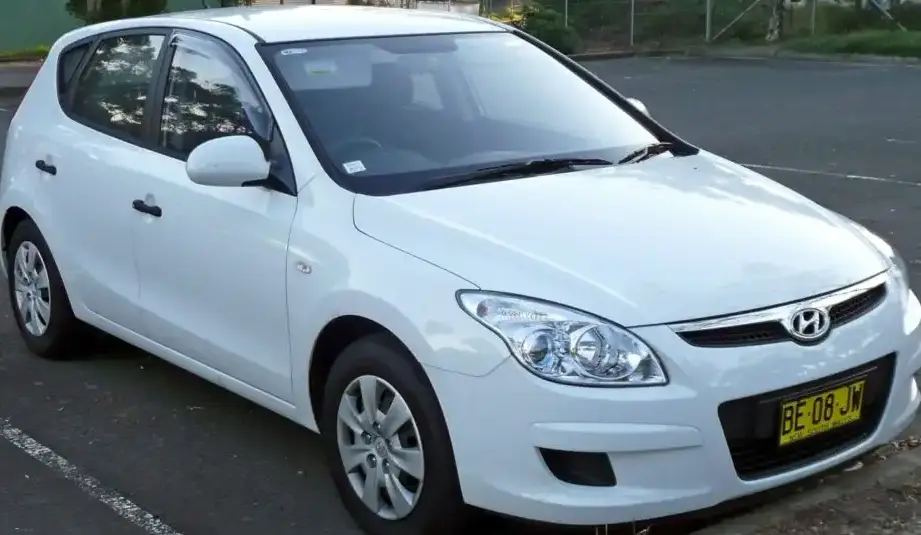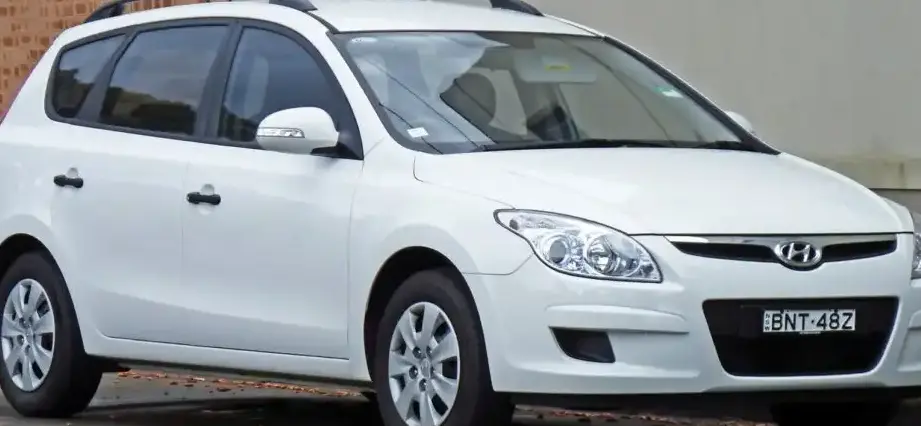
The Hyundai i30 CW 2.0, produced from 2008 to 2010, represents a key variant within the first generation (i30 I) of Hyundai’s compact wagon (estate) offering. Positioned as a mid-range option, it catered to buyers seeking a practical, spacious vehicle with a balance of performance and fuel efficiency. The “CW” designation signifies the “Cross Wagon” body style, distinguishing it from the five-door hatchback version of the i30. This model played a significant role in establishing Hyundai’s presence in the European market, offering a competitive alternative to established European brands in the C-segment.
Technical Specifications
| Brand | Hyundai |
| Model | i30 |
| Generation | i30 I CW |
| Type (Engine) | 2.0 (143 Hp) |
| Start of production | 2008 |
| End of production | 2010 |
| Powertrain Architecture | Internal Combustion engine |
| Body type | Station wagon (estate) |
| Seats | 5 |
| Doors | 5 |
| Fuel consumption (urban) | 9.3 l/100 km (25.3 US mpg) |
| Fuel consumption (extra urban) | 5.9 l/100 km (39.9 US mpg) |
| Fuel consumption (combined) | 7.1 l/100 km (33.1 US mpg) |
| Fuel Type | Petrol (Gasoline) |
| Acceleration 0 – 100 km/h | 11.1 sec |
| Acceleration 0 – 62 mph | 11.1 sec |
| Acceleration 0 – 60 mph | 10.5 sec |
| Maximum speed | 205 km/h (127.38 mph) |
| Emission standard | Euro 4 |
| Weight-to-power ratio | 9.1 kg/Hp |
| Weight-to-torque ratio | 7 kg/Nm |
| Power | 143 Hp @ 6000 rpm |
| Torque | 186 Nm @ 4600 rpm (137.19 lb.-ft. @ 4600 rpm) |
| Engine layout | Front, Transverse |
| Engine Model/Code | G4GC |
| Engine displacement | 1975 cm3 (120.52 cu. in.) |
| Number of cylinders | 4 |
| Engine configuration | Inline |
| Cylinder Bore | 82 mm (3.23 in.) |
| Piston Stroke | 93.5 mm (3.68 in.) |
| Compression ratio | 10.1:1 |
| Number of valves per cylinder | 4 |
| Fuel injection system | Multi-port manifold injection |
| Engine aspiration | Naturally aspirated engine |
| Valvetrain | DOHC |
| Engine oil capacity | 4 l (4.23 US qt | 3.52 UK qt) |
| Coolant capacity | 6.6 l (6.97 US qt | 5.81 UK qt) |
| Kerb Weight | 1296 kg (2857.19 lbs.) |
| Max. weight | 1890 kg (4166.74 lbs.) |
| Max load | 594 kg (1309.55 lbs.) |
| Trunk (boot) space – minimum | 415 l (14.66 cu. ft.) |
| Trunk (boot) space – maximum | 1395 l (49.26 cu. ft.) |
| Fuel tank capacity | 53 l (14 US gal | 11.66 UK gal) |
| Length | 4475 mm (176.18 in.) |
| Width | 1775 mm (69.88 in.) |
| Height | 1565 mm (61.61 in.) |
| Wheelbase | 2700 mm (106.3 in.) |
| Front track | 1538 mm (60.55 in.) |
| Rear track | 1536 mm (60.47 in.) |
| Drag coefficient (Cd) | 0.31 |
| Minimum turning circle | 10.4 m (34.12 ft.) |
| Drivetrain | Front wheel drive |
| Number of gears | 5 |
| Gearbox type | Manual transmission |
| Front suspension | Independent, McPherson with coil spring and anti-roll bar |
| Rear suspension | Independent multi-link with stabilizer |
| Front brakes | Ventilated discs |
| Rear brakes | Disc |
| Assisting systems | ABS (Anti-lock braking system) |
| Steering type | Steering rack and pinion |
| Tires size | 205/55 R16 H |
| Wheel rims size | 16 |
Powertrain & Engine Architecture
The i30 CW 2.0 utilized Hyundai’s G4GC engine, a 1.975-liter (120.52 cubic inches) inline-four cylinder gasoline engine. This engine featured a double overhead camshaft (DOHC) valvetrain with four valves per cylinder, and a compression ratio of 10.1:1. Fuel delivery was managed by a multi-port fuel injection system. The G4GC was known for its relatively simple design and robust construction. The engine produced 143 horsepower at 6000 rpm and 186 Nm (137.19 lb-ft) of torque at 4600 rpm. It was paired with a five-speed manual transmission, providing a direct and engaging driving experience. This configuration was a step up from the base 1.6L engine, offering noticeably improved acceleration and highway cruising ability.
Driving Characteristics
The 2.0-liter i30 CW offered a balanced driving experience. While not a performance-oriented vehicle, the 143 hp engine provided adequate power for everyday driving and occasional highway trips. Acceleration from 0 to 60 mph took approximately 10.5 seconds, and the top speed was rated at 205 km/h (127.38 mph). The five-speed manual transmission allowed for precise gear selection, and the engine delivered a reasonably linear power band. Compared to the base 1.6L model, the 2.0L felt significantly more responsive, particularly when fully loaded or tackling inclines. The manual transmission offered a more engaging experience than an automatic would have, providing better control and fuel efficiency.
Equipment & Trim Levels
The i30 CW 2.0 typically came equipped with features such as air conditioning, power windows, central locking, and an integrated audio system. Safety features included ABS (Anti-lock Braking System) and front airbags. Higher trim levels offered options like alloy wheels, a sunroof, and upgraded interior upholstery. The interior design was functional and straightforward, prioritizing practicality over luxury. The wagon body style provided ample cargo space, making it a suitable choice for families or individuals needing to transport larger items. Standard interior trim consisted of cloth upholstery, with options for upgraded materials available.
Chassis & Braking
The i30 CW featured an independent suspension system, with a McPherson strut setup at the front and a multi-link setup at the rear. This configuration provided a comfortable ride and decent handling characteristics. The front brakes were ventilated discs, while the rear brakes were solid discs. The steering was a rack and pinion system, offering precise and responsive control. The chassis was designed to provide a stable and predictable driving experience, prioritizing comfort and safety over sporty handling. The relatively modest weight of the vehicle (1296 kg / 2857.19 lbs) contributed to its manageable handling characteristics.
Market Reception & Comparison
The Hyundai i30 CW 2.0 was generally well-received by automotive critics as a practical and affordable family wagon. It offered a compelling alternative to established European competitors like the Ford Focus Estate and Volkswagen Golf Variant. Critics praised its spacious interior, comfortable ride, and competitive price point. Fuel economy was considered reasonable for its class, with combined fuel consumption of 7.1 l/100 km (33.1 US mpg). Compared to the 1.6L i30, the 2.0L offered a noticeable performance improvement, but at a slightly higher price. The 2.0L was often seen as a sweet spot in the i30 lineup, providing a good balance of performance, fuel economy, and value.
Legacy
The Hyundai i30 CW 2.0, while not a groundbreaking vehicle, played a significant role in establishing Hyundai as a credible competitor in the European market. The G4GC engine proved to be a reliable and durable unit, and many examples are still on the road today. The i30 CW’s spacious interior and practical design continue to appeal to used car buyers seeking an affordable and versatile family vehicle. While maintenance costs are generally reasonable, owners should be mindful of potential issues with age-related wear and tear, such as suspension components and exhaust system corrosion. The i30 CW 2.0 remains a solid choice for those seeking a dependable and economical wagon.