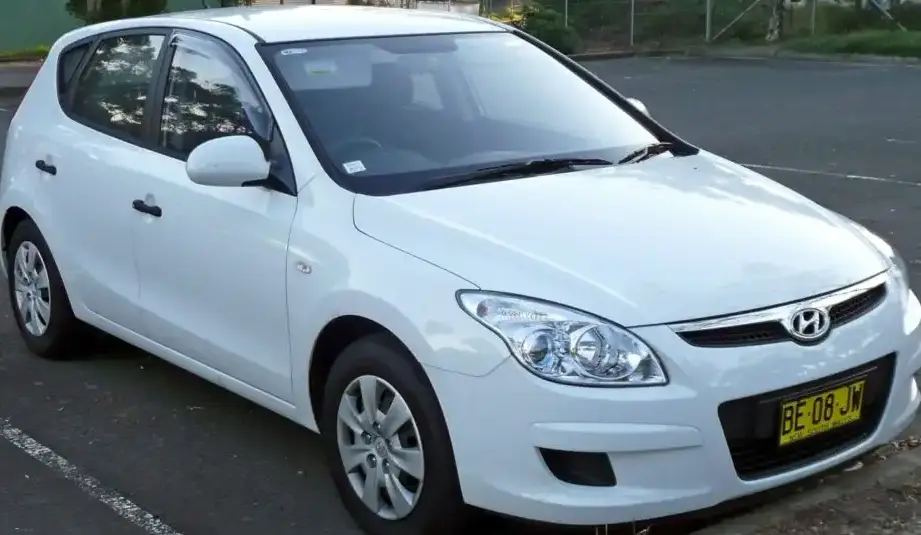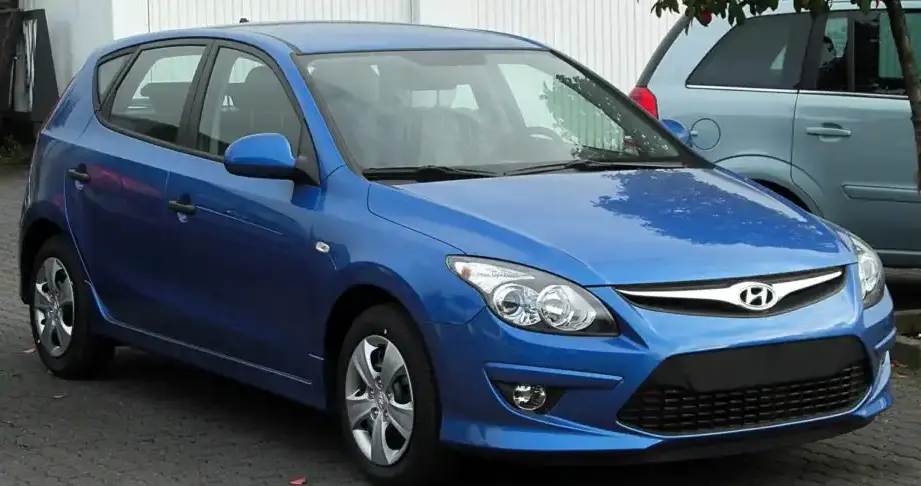
The Hyundai i30 (first generation, facelifted in 2010) 1.6 CRDi producing 116 horsepower represents a significant offering in the compact hatchback segment. Introduced as part of the i30’s mid-life refresh, this variant was available from 2010 through 2012. It aimed to balance fuel efficiency with acceptable performance, targeting buyers seeking a practical and economical daily driver. The i30, as a whole, was Hyundai’s first car specifically designed and engineered for the European market, though it was subsequently sold in other regions including North America (as the Elantra Touring). This 1.6 CRDi model occupied a middle ground in the i30 lineup, positioned above the base petrol engines but below the more powerful diesel options.
Technical Specifications
| Brand | Hyundai |
| Model | i30 |
| Generation | i30 I (facelift 2010) |
| Type (Engine) | 1.6 CRDi (116 Hp) |
| Start of production | 2010 |
| End of production | 2012 |
| Powertrain Architecture | Internal Combustion engine |
| Body type | Hatchback |
| Seats | 5 |
| Doors | 5 |
| Fuel consumption (urban) | 5.3 l/100 km (44.4 US mpg, 53.3 UK mpg, 18.9 km/l) |
| Fuel consumption (extra urban) | 4.1 l/100 km (57.4 US mpg, 68.9 UK mpg, 24.4 km/l) |
| Fuel consumption (combined) | 4.5 l/100 km (52.3 US mpg, 62.8 UK mpg, 22.2 km/l) |
| CO2 emissions | 119 g/km |
| Fuel Type | Diesel |
| Acceleration 0 – 100 km/h | 11.6 sec |
| Acceleration 0 – 62 mph | 11.6 sec |
| Acceleration 0 – 60 mph | 11 sec |
| Maximum speed | 188 km/h (116.82 mph) |
| Emission standard | Euro 5 |
| Weight-to-power ratio | 11.1 kg/Hp, 89.9 Hp/tonne |
| Weight-to-torque ratio | 5.1 kg/Nm, 197.5 Nm/tonne |
| Power | 116 Hp @ 4000 rpm |
| Power per litre | 73.3 Hp/l |
| Torque | 255 Nm @ 1900-2750 rpm (188.08 lb.-ft. @ 1900-2750 rpm) |
| Engine layout | Front, Transverse |
| Engine Model/Code | D4FB |
| Engine displacement | 1582 cm3 (96.54 cu. in.) |
| Number of cylinders | 4 |
| Engine configuration | Inline |
| Cylinder Bore | 77.2 mm (3.04 in.) |
| Piston Stroke | 84.5 mm (3.33 in.) |
| Compression ratio | 17.3:1 |
| Number of valves per cylinder | 4 |
| Fuel injection system | Diesel Commonrail |
| Engine aspiration | Turbocharger, Intercooler |
| Valvetrain | DOHC |
| Engine oil capacity | 5.3 l (5.6 US qt | 4.66 UK qt) |
| Coolant | 6.8 l (7.19 US qt | 5.98 UK qt) |
| Kerb Weight | 1291 kg (2846.17 lbs.) |
| Max. weight | 1820 kg (4012.41 lbs.) |
| Max load | 529 kg (1166.25 lbs.) |
| Trunk (boot) space – minimum | 340 l (12.01 cu. ft.) |
| Trunk (boot) space – maximum | 1250 l (44.14 cu. ft.) |
| Fuel tank capacity | 53 l (14 US gal | 11.66 UK gal) |
| Permitted trailer load with brakes (12%) | 1400 kg (3086.47 lbs.) |
| Permitted trailer load without brakes | 550 kg (1212.54 lbs.) |
| Length | 4280 mm (168.5 in.) |
| Width | 1775 mm (69.88 in.) |
| Height | 1480 mm (58.27 in.) |
| Wheelbase | 2650 mm (104.33 in.) |
| Front track | 1546 mm (60.87 in.) |
| Rear (Back) track | 1544 mm (60.79 in.) |
| Drag coefficient (Cd) | 0.33 |
| Minimum turning circle (turning diameter) | 10.2 m (33.46 ft.) |
| Drivetrain Architecture | The Internal combustion engine (ICE) drives the front wheels of the vehicle. |
| Drive wheel | Front wheel drive |
| Number of gears and type of gearbox | 6 gears, manual transmission |
| Front brakes | Ventilated discs |
| Rear brakes | Disc |
| Assisting systems | ABS (Anti-lock braking system) |
| Steering type | Steering rack and pinion |
| Tires size | 185/65 R15 H |
| Wheel rims size | 15 |
INTRODUCTION
The Hyundai i30 1.6 CRDi (116 hp) facelift, produced between 2010 and 2012, was a key model in Hyundai’s push to establish itself as a serious competitor in the European C-segment hatchback market. The facelift brought revised styling, improved interior materials, and refinements to the chassis. This particular engine and transmission combination was designed to appeal to buyers prioritizing fuel economy and low running costs, while still offering a reasonable level of performance for everyday driving. It sat within the first generation (PD) i30 range, which utilized the 1HX0/A3 platform shared with the Kia Cee’d.
Powertrain & Engine Architecture
At the heart of this i30 variant lies the Hyundai D4FB 1.6-liter common-rail direct injection (CRDi) diesel engine. This engine is a four-cylinder, inline configuration, boasting a displacement of 1582cc. The D4FB engine utilizes a turbocharger with an intercooler to boost power and torque. The engine features a double overhead camshaft (DOHC) valvetrain with four valves per cylinder. Fuel is delivered via a Bosch common-rail system, operating at a high pressure of 1600 bar, ensuring efficient combustion and reduced emissions. The 116 horsepower output is achieved at 4000 rpm, while the peak torque of 255 Nm (188 lb-ft) is available between 1900 and 2750 rpm. This broad torque curve contributes to the engine’s usability in everyday driving situations. The engine is paired with a six-speed manual transmission, which was the standard offering for this trim level.
Driving Characteristics
The 1.6 CRDi 116 hp i30 offers a comfortable and refined driving experience, prioritizing fuel efficiency over outright performance. Acceleration from 0 to 100 km/h (0-62 mph) takes approximately 11.6 seconds, and the top speed is rated at 188 km/h (117 mph). While not particularly sporty, the engine provides sufficient power for overtaking maneuvers and maintaining comfortable cruising speeds on the highway. The six-speed manual transmission is well-matched to the engine’s characteristics, offering smooth gear changes and allowing the driver to keep the engine within its optimal torque band. Compared to the more powerful 1.7 CRDi variant, the 1.6 CRDi feels less responsive, particularly at higher engine speeds. However, it offers a noticeable improvement in fuel economy. The gear ratios are tuned for efficiency, with a relatively long final drive contributing to lower fuel consumption.
Equipment & Trim Levels
The 1.6 CRDi 116 hp i30 typically came equipped with a reasonable level of standard features. These included air conditioning, electric front windows, central locking, a CD/MP3 stereo system, and ABS brakes. Higher trim levels, such as Comfort or Style, added features like alloy wheels, rear parking sensors, cruise control, and a leather-wrapped steering wheel. Interior upholstery was typically cloth, with a dark color scheme. Optional extras included a panoramic sunroof, a navigation system, and heated front seats. The dashboard layout was functional and straightforward, with easy-to-read instrumentation.
Chassis & Braking
The i30’s chassis features a MacPherson strut front suspension and a multi-link rear suspension. This setup provides a good balance between ride comfort and handling. The front brakes are ventilated discs, while the rear brakes are solid discs. ABS (Anti-lock Braking System) is standard, enhancing safety during emergency braking situations. The suspension tuning is geared towards comfort, resulting in a relatively soft ride quality. Stabilizer bars are fitted to both the front and rear axles to reduce body roll during cornering. The steering is a rack-and-pinion system, providing precise and responsive steering feel.
Market Reception & Comparison
The Hyundai i30 1.6 CRDi was generally well-received by automotive critics. It was praised for its fuel efficiency, comfortable ride, and competitive pricing. However, some reviewers noted that the engine lacked the refinement and performance of some of its rivals, such as the Volkswagen Golf or Ford Focus. Compared to the higher-output diesel variants within the i30 range, the 1.6 CRDi offered significantly better fuel economy, but at the expense of performance. The 1.6 CRDi was also more affordable than the more powerful models, making it an attractive option for budget-conscious buyers. Reliability reports generally indicate that the D4FB engine is a robust and dependable unit, although regular maintenance is essential.
Legacy
The Hyundai i30 1.6 CRDi (116 hp) has proven to be a reliable and economical used car. The D4FB engine, when properly maintained, is known for its longevity. Common issues are relatively minor, often related to wear and tear on components such as the turbocharger or fuel injectors. Today, these i30s represent a good value proposition for buyers seeking a practical and affordable hatchback. The combination of fuel efficiency, reasonable performance, and a comfortable ride continues to make this variant a popular choice in the used car market. The i30’s success helped establish Hyundai as a credible player in the European automotive landscape, paving the way for future models and innovations.