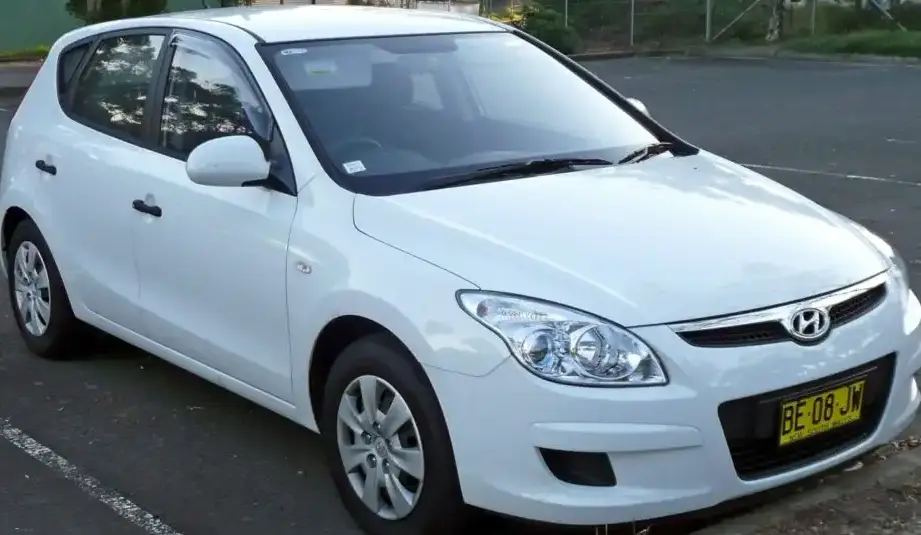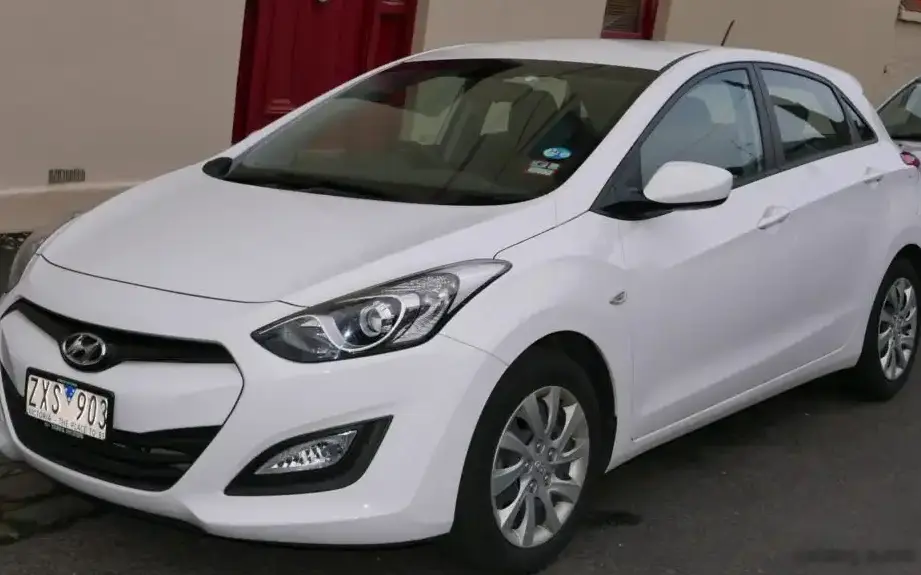
The Hyundai i30 II 1.6 MPI (120 hp) Automatic, produced between 2012 and 2015, represented a key entry point into the second generation of Hyundai’s globally successful compact hatchback. Positioned within the GD (i30 II) series, which utilized the Hyundai-Kia K3 platform, this variant aimed to provide a balance of affordability, practicality, and ease of use for buyers prioritizing comfort over outright performance. It served as a mainstream offering in European and Asian markets, where the i30 competed with established rivals like the Volkswagen Golf, Ford Focus, and Opel Astra. This specific configuration – the 1.6-liter naturally aspirated engine paired with a six-speed automatic transmission – was designed to appeal to a broader demographic, particularly those seeking a hassle-free driving experience in urban environments.
Technical Specifications
| Brand | Hyundai |
| Model | i30 |
| Generation | i30 II |
| Type (Engine) | 1.6 MPI (120 Hp) Automatic |
| Start of production | 2012 |
| End of production | 2015 |
| Powertrain Architecture | Internal Combustion engine |
| Body type | Hatchback |
| Seats | 5 |
| Doors | 5 |
| Fuel consumption (urban) | 9.5 l/100 km (24.8 US mpg) |
| Fuel consumption (extra urban) | 5.2 l/100 km (45.2 US mpg) |
| Fuel consumption (combined) | 6.8 l/100 km (34.6 US mpg) |
| Fuel Type | Petrol (Gasoline) |
| Acceleration 0 – 100 km/h | 11.9 sec |
| Acceleration 0 – 62 mph | 11.9 sec |
| Acceleration 0 – 60 mph | 11.3 sec |
| Maximum speed | 192 km/h (119.3 mph) |
| Emission standard | Euro 5 |
| Weight-to-power ratio | 10.2 kg/Hp |
| Weight-to-torque ratio | 7.8 kg/Nm |
| Power | 120 Hp @ 6300 rpm |
| Torque | 156 Nm @ 4850 rpm (115.06 lb.-ft. @ 4850 rpm) |
| Engine layout | Front, Transverse |
| Engine Model/Code | Gamma II / G4FG |
| Engine displacement | 1591 cm3 (97.09 cu. in.) |
| Number of cylinders | 4 |
| Engine configuration | Inline |
| Cylinder Bore | 77 mm (3.03 in.) |
| Piston Stroke | 85.44 mm (3.36 in.) |
| Compression ratio | 10.5:1 |
| Number of valves per cylinder | 4 |
| Fuel injection system | Multi-port manifold injection |
| Engine aspiration | Naturally aspirated engine |
| Valvetrain | D-CVVT |
| Engine oil capacity | 3.6 l (3.8 US qt | 3.17 UK qt) |
| Coolant capacity | 5.7 l (6.02 US qt | 5.02 UK qt) |
| Kerb Weight | 1220 kg (2689.64 lbs.) |
| Max. weight | 1850 kg (4078.55 lbs.) |
| Max load | 630 kg (1388.91 lbs.) |
| Trunk (boot) space – minimum | 378 l (13.35 cu. ft.) |
| Trunk (boot) space – maximum | 1316 l (46.47 cu. ft.) |
| Fuel tank capacity | 53 l (14 US gal | 11.66 UK gal) |
| Length | 4300 mm (169.29 in.) |
| Width | 1780 mm (70.08 in.) |
| Height | 1470 mm (57.87 in.) |
| Wheelbase | 2650 mm (104.33 in.) |
| Front track | 1563 mm (61.54 in.) |
| Rear track | 1571 mm (61.85 in.) |
| Minimum turning circle | 10.6 m (34.78 ft.) |
| Drivetrain | Front wheel drive |
| Number of gears | 6 |
| Gearbox type | Automatic transmission |
| Front suspension | Independent type McPherson |
| Rear suspension | Independent coil spring |
| Front brakes | Ventilated discs |
| Rear brakes | Disc |
| Steering type | Steering rack and pinion |
| Power steering | Electric Steering |
| Tires size | 195/65 R15; 205/55 R16; 225/45 R17 |
| Wheel rims size | 6.0J x 15; 6.5J x 16; 7.0J x 17 |
Powertrain & Engine Architecture
At the heart of the i30 1.6 MPI Automatic lies the Hyundai Gamma II engine family, specifically the G4FG code. This 1.6-liter inline-four cylinder engine is a naturally aspirated unit, meaning it relies solely on atmospheric pressure to draw air into the cylinders, rather than forced induction like a turbocharger. It utilizes a multi-point fuel injection system, delivering fuel directly into the intake ports. The engine features Hyundai’s Dual Continuously Variable Valve Timing (D-CVVT) technology, which optimizes valve timing for improved efficiency and power delivery across the rev range. The six-speed automatic transmission, a conventional torque converter type, was chosen for its smooth operation and ease of use, prioritizing comfort over the more engaging experience of a manual gearbox. While not a particularly high-performance engine, the Gamma II is known for its relative reliability and straightforward maintenance.
Driving Characteristics
The i30 1.6 MPI Automatic offered a comfortable and predictable driving experience. With 120 horsepower and 156 Nm (115 lb-ft) of torque, acceleration was adequate for everyday driving, but not particularly brisk. The 0-60 mph time of around 11.3 seconds reflects this. The automatic transmission, while smooth, could sometimes feel hesitant during quick overtaking maneuvers, requiring a deliberate kickdown. Gear ratios were tuned for fuel efficiency rather than outright performance. Compared to the more powerful 1.6 GDI (direct injection) or the diesel variants, the MPI engine felt noticeably less responsive. However, the automatic transmission made it a more accessible option for drivers unfamiliar or uninterested in manual gearboxes.
Equipment & Trim Levels
The i30 1.6 MPI Automatic typically came equipped with a reasonable level of standard features. Base models included air conditioning, power windows, central locking, and a basic audio system with USB connectivity. Higher trim levels, such as Style or Comfort, added features like alloy wheels, fog lights, cruise control, and a more sophisticated infotainment system. Interior upholstery was typically cloth, with options for upgraded materials on higher trims. Optional extras included a sunroof, leather seats, and a rear parking sensor system.
Chassis & Braking
The i30 II utilized a McPherson strut front suspension and an independent coil spring rear suspension. This setup provided a comfortable ride quality, absorbing bumps and imperfections in the road effectively. Braking duties were handled by ventilated discs at the front and solid discs at the rear. Anti-lock Braking System (ABS) was standard. The suspension tuning was geared towards comfort and stability, rather than sporty handling. Stabilizer bars were fitted front and rear to reduce body roll during cornering, but the overall driving experience was more focused on everyday usability than dynamic performance.
Market Reception & Comparison
The Hyundai i30 1.6 MPI Automatic was generally well-received by automotive critics as a practical and affordable family hatchback. It was praised for its comfortable ride, spacious interior, and good value for money. However, some reviewers noted that the engine lacked the punch of its turbocharged or diesel counterparts. Fuel economy was competitive for its class, averaging around 34.6 US mpg in combined driving. Compared to the 1.6 GDI version, the MPI offered lower running costs due to its simpler engine design, but sacrificed performance. The diesel models provided superior fuel economy but came with a higher purchase price and potentially higher maintenance costs.
Legacy
The Hyundai i30 II 1.6 MPI Automatic has proven to be a relatively reliable vehicle in the used car market. The Gamma II engine is known for its durability, and the six-speed automatic transmission has a good track record. Common issues are generally minor, such as wear and tear on suspension components or occasional sensor failures. Today, these i30s represent an affordable and practical option for buyers seeking a dependable compact hatchback. While not a particularly exciting car to drive, its blend of comfort, practicality, and affordability has ensured its continued presence on roads worldwide.