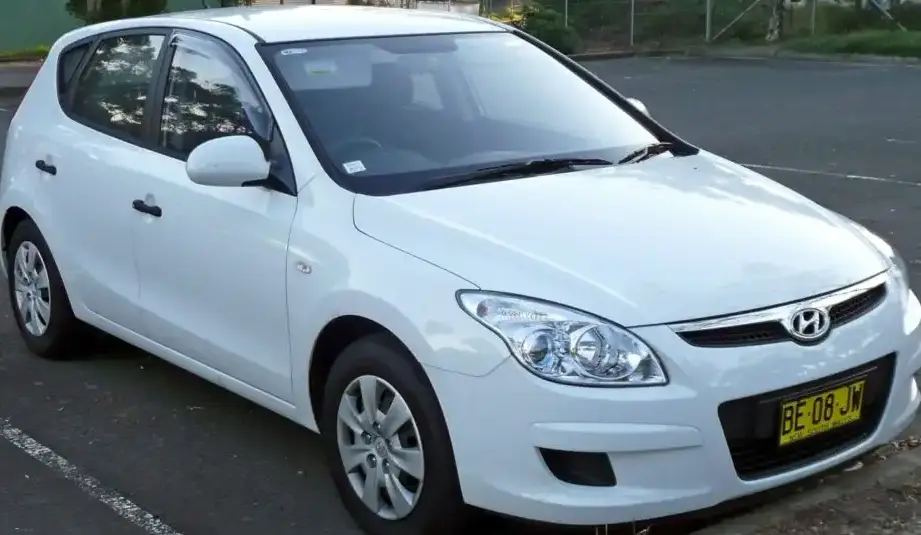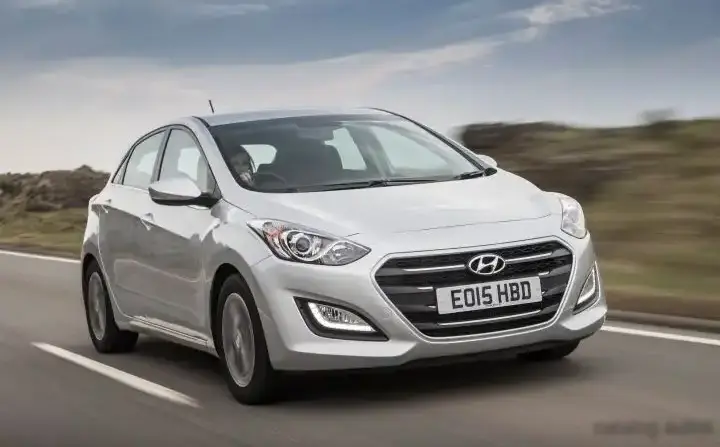
The Hyundai i30 II (facelift, produced 2015-2017) 1.6 CRDi Blue represents a significant iteration of Hyundai’s popular C-segment hatchback, aimed squarely at the European market. Introduced as part of a mid-cycle refresh, this variant combined a fuel-efficient diesel engine with a six-speed manual transmission, offering a balance of economy and practicality. Positioned as a mid-range offering within the i30 lineup, it catered to buyers seeking lower running costs without sacrificing everyday usability. The “Blue” designation indicated a focus on reduced emissions and improved fuel economy, aligning with increasingly stringent European regulations.
Technical Specifications
| Brand | Hyundai |
| Model | i30 |
| Generation | i30 II (facelift 2015) |
| Type (Engine) | 1.6 CRDi (136 Hp) blue |
| Start of production | 2015 |
| End of production | 2017 |
| Powertrain Architecture | Internal Combustion engine |
| Body type | Hatchback |
| Seats | 5 |
| Doors | 5 |
| Fuel consumption (urban) | 4.7 l/100 km (50 US mpg, 60.1 UK mpg, 21.3 km/l) |
| Fuel consumption (extra urban) | 3.6 l/100 km (65.3 US mpg, 78.5 UK mpg, 27.8 km/l) |
| Fuel consumption (combined) | 4 l/100 km (58.8 US mpg, 70.6 UK mpg, 25 km/l) |
| CO2 emissions | 104 g/km |
| Fuel Type | Diesel |
| Acceleration 0 – 100 km/h | 10.2 sec |
| Acceleration 0 – 62 mph | 10.2 sec |
| Acceleration 0 – 60 mph | 9.7 sec |
| Maximum speed | 196 km/h (121.79 mph) |
| Emission standard | Euro 6 |
| Weight-to-power ratio | 10.5 kg/Hp, 95.2 Hp/tonne |
| Weight-to-torque ratio | 5.1 kg/Nm, 195.9 Nm/tonne |
| Power | 136 Hp @ 4000 rpm |
| Power per litre | 86 Hp/l |
| Torque | 280 Nm @ 1500-3000 rpm (206.52 lb.-ft. @ 1500-3000 rpm) |
| Engine layout | Front, Transverse |
| Engine Model/Code | D4FB |
| Engine displacement | 1582 cm3 (96.54 cu. in.) |
| Number of cylinders | 4 |
| Engine configuration | Inline |
| Cylinder Bore | 77.2 mm (3.04 in.) |
| Piston Stroke | 84.5 mm (3.33 in.) |
| Compression ratio | 16:1 |
| Number of valves per cylinder | 4 |
| Fuel injection system | Diesel Commonrail |
| Engine aspiration | Turbocharger, Intercooler |
| Valvetrain | DOHC |
| Engine oil capacity | 5.3 l (5.6 US qt | 4.66 UK qt) |
| Coolant | 6.9 l (7.29 US qt | 6.07 UK qt) |
| Kerb Weight | 1429 kg (3150.41 lbs.) |
| Max. weight | 1920 kg (4232.88 lbs.) |
| Max load | 491 kg (1082.47 lbs.) |
| Trunk (boot) space – minimum | 378 l (13.35 cu. ft.) |
| Trunk (boot) space – maximum | 1316 l (46.47 cu. ft.) |
| Fuel tank capacity | 53 l (14 US gal | 11.66 UK gal) |
| Max. roof load | 80 kg (176.37 lbs.) |
| Permitted trailer load with brakes (12%) | 1500 kg (3306.93 lbs.) |
| Permitted trailer load without brakes | 650 kg (1433 lbs.) |
| Permitted towbar download | 75 kg (165.35 lbs.) |
| Length | 4300 mm (169.29 in.) |
| Width | 1780 mm (70.08 in.) |
| Height | 1470 mm (57.87 in.) |
| Wheelbase | 2650 mm (104.33 in.) |
| Front track | 1549 mm (60.98 in.) |
| Rear (Back) track | 1557 mm (61.3 in.) |
| Minimum turning circle | 10.6 m (34.78 ft.) |
| Drivetrain | Front wheel drive |
| Number of gears | 6 |
| Gearbox type | Manual transmission |
| Front suspension | Independent, McPherson with coil spring and anti-roll bar |
| Rear suspension | Independent multi-link suspension |
| Front brakes | Ventilated discs |
| Rear brakes | Disc |
| Assisting systems | ABS (Anti-lock braking system) |
| Steering type | Steering rack and pinion |
| Power steering | Electric |
| Tires size | 225/45 R17 |
| Wheel rims size | 7.0J x 17 |
Powertrain & Engine Architecture
The heart of the i30 1.6 CRDi Blue is the Hyundai D4FB engine, a 1.6-liter inline-four cylinder diesel. This engine utilizes a second-generation common-rail direct injection system, delivering fuel at extremely high pressures for optimized combustion. The D4FB is a turbocharged engine, employing a variable geometry turbocharger (VGT) to enhance low-end torque and improve responsiveness. An intercooler further cools the intake air, increasing air density and boosting power output. The engine features a double overhead camshaft (DOHC) valvetrain with four valves per cylinder, contributing to efficient gas exchange. The six-speed manual transmission was a standard offering, providing precise gear changes and contributing to the car’s fuel efficiency. The engine’s design prioritized fuel economy and reduced emissions, making it compliant with Euro 6 standards.
Driving Characteristics
The 136 horsepower and 280 Nm (206 lb-ft) of torque offered by the 1.6 CRDi engine provided adequate performance for everyday driving. Acceleration from 0-60 mph took around 9.7 seconds, and top speed was rated at 196 km/h (122 mph). While not a particularly sporty setup, the engine delivered strong low-end and mid-range torque, making it easy to navigate city streets and maintain comfortable cruising speeds on the highway. Compared to the more powerful 1.6 GDI gasoline engine or the higher-output diesel variants, the 1.6 CRDi felt less eager to rev, but its fuel economy advantage was significant. The six-speed manual transmission allowed drivers to effectively manage the engine’s powerband, while the gear ratios were optimized for both fuel efficiency and drivability.
Equipment & Trim Levels
The i30 1.6 CRDi Blue typically came equipped with a respectable level of standard features. These included air conditioning, electric front and rear windows, a USB audio connection, Bluetooth connectivity, and a multi-function steering wheel. Safety features such as ABS, ESC (Electronic Stability Control), and multiple airbags were also standard. Higher trim levels offered options like alloy wheels, a touchscreen infotainment system, rear parking sensors, and a panoramic sunroof. Interior upholstery was typically cloth, with a focus on durability and practicality. The “Blue” trim often featured unique badging and interior accents to distinguish it from other i30 variants.
Chassis & Braking
The i30 II utilized a McPherson strut front suspension and a multi-link rear suspension, providing a comfortable and controlled ride. The suspension was tuned to prioritize ride comfort over outright handling prowess. Front brakes were ventilated discs, while rear brakes were solid discs, offering adequate stopping power for the vehicle’s weight and performance. Electric power steering provided light and precise steering feel. The chassis was designed to be robust and durable, contributing to the i30’s reputation for reliability.
Market Reception & Comparison
The Hyundai i30 1.6 CRDi Blue was generally well-received by automotive critics for its fuel efficiency, practicality, and value for money. It was often praised for its comfortable ride and spacious interior. Compared to rivals like the Volkswagen Golf, Ford Focus, and Opel Astra, the i30 offered a competitive package with a longer warranty and a lower price point. However, some critics noted that the interior materials weren’t as premium as those found in some of its competitors. The 1.6 CRDi engine was considered a good compromise between performance and economy, making it a popular choice for drivers who prioritized fuel efficiency.
Legacy
The Hyundai i30 II 1.6 CRDi Blue has proven to be a reliable and durable vehicle in the used car market. The D4FB engine, while not without its potential issues (such as DPF clogging with infrequent long journeys), is generally considered robust when properly maintained. The availability of affordable spare parts and a relatively simple mechanical design contribute to its ongoing appeal. Today, these i30s represent a cost-effective option for buyers seeking a practical and fuel-efficient hatchback.