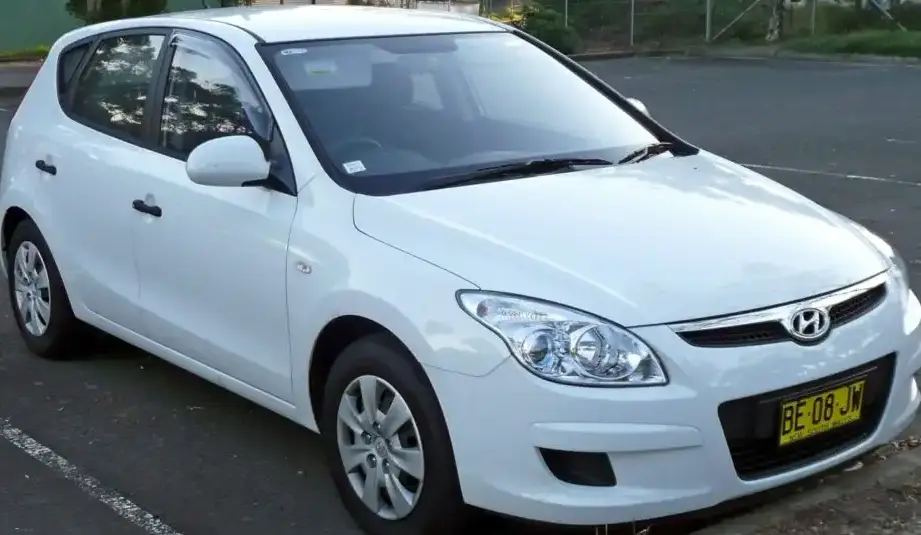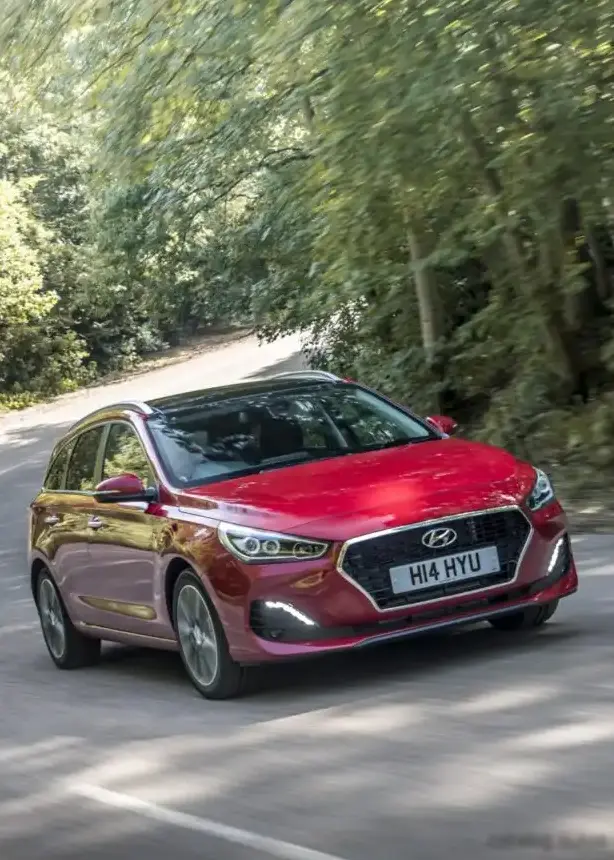
The Hyundai i30 III CW (facelift 2019) 1.4 T-GDI (140 hp) DCT represents a compelling offering within the third generation of Hyundai’s globally successful i30 compact family. Introduced as part of the 2019 facelift, this variant combined a turbocharged gasoline engine with a dual-clutch transmission (DCT) in a practical station wagon (estate) body style. Production of this specific configuration ran from 2019 to 2020, positioning it as a mid-range option aimed at buyers seeking a balance of fuel efficiency, performance, and versatility. It was primarily marketed in Europe, where the station wagon body style remains popular, offering a more spacious alternative to the hatchback version.
Technical Specifications
| Brand | Hyundai |
| Model | i30 |
| Generation | i30 III CW (facelift 2019) |
| Type (Engine) | 1.4 T-GDI (140 Hp) DCT |
| Start of production | 2019 |
| End of production | 2020 |
| Powertrain Architecture | Internal Combustion engine |
| Body type | Station wagon (estate) |
| Seats | 5 |
| Doors | 5 |
| Fuel consumption (urban) | 6.7 l/100 km (35.1 US mpg, 42.2 UK mpg, 14.9 km/l) |
| Fuel consumption (extra urban) | 5.1 l/100 km (46.1 US mpg, 55.4 UK mpg, 19.6 km/l) |
| Fuel consumption (combined) | 5.7 l/100 km (41.3 US mpg, 49.6 UK mpg, 17.5 km/l) |
| CO2 emissions | 130 g/km |
| Fuel Type | Petrol (Gasoline) |
| Acceleration 0 – 100 km/h | 9.4 sec |
| Acceleration 0 – 62 mph | 9.4 sec |
| Acceleration 0 – 60 mph | 8.9 sec |
| Maximum speed | 203 km/h (126.14 mph) |
| Emission standard | Euro 6d – TEMP |
| Weight-to-power ratio | 9.2 kg/Hp, 108.2 Hp/tonne |
| Weight-to-torque ratio | 5.3 kg/Nm, 187 Nm/tonne |
| Power | 140 Hp @ 6000 rpm |
| Power per litre | 103.5 Hp/l |
| Torque | 242 Nm @ 1500 rpm (178.49 lb.-ft. @ 1500 rpm) |
| Engine layout | Front, Transverse |
| Engine Model/Code | Kappa II / G4LD |
| Engine displacement | 1353 cm3 (82.57 cu. in.) |
| Number of cylinders | 4 |
| Engine configuration | Inline |
| Cylinder Bore | 71.6 mm (2.82 in.) |
| Piston Stroke | 84 mm (3.31 in.) |
| Number of valves per cylinder | 4 |
| Fuel injection system | Direct injection |
| Engine aspiration | Turbocharger, Intercooler |
| Engine oil capacity | 4.2 l (4.44 US qt | 3.7 UK qt) |
| Coolant | 6.1 l (6.45 US qt | 5.37 UK qt) |
| Kerb Weight | 1294-1450 kg (2852.78 – 3196.7 lbs.) |
| Max. weight | 1880 kg (4144.69 lbs.) |
| Max load | 430-586 kg (947.99 – 1291.91 lbs.) |
| Trunk (boot) space – minimum | 602 l (21.26 cu. ft.) |
| Trunk (boot) space – maximum | 1650 l (58.27 cu. ft.) |
| Fuel tank capacity | 50 l (13.21 US gal | 11 UK gal) |
| Max. roof load | 80 kg (176.37 lbs.) |
| Permitted trailer load with brakes (12%) | 1410 kg (3108.52 lbs.) |
| Permitted trailer load without brakes | 600 kg (1322.77 lbs.) |
| Permitted towbar download | 80 kg (176.37 lbs.) |
| Length | 4585 mm (180.51 in.) |
| Width | 1795 mm (70.67 in.) |
| Height | 1475 mm (58.07 in.) |
| Wheelbase | 2650 mm (104.33 in.) |
| Front track | 1559-1565 mm (61.38 – 61.61 in.) |
| Rear (Back) track | 1567-1573 mm (61.69 – 61.93 in.) |
| Front overhang | 905 mm (35.63 in.) |
| Rear overhang | 1030 mm (40.55 in.) |
| Ride height (ground clearance) | 140 mm (5.51 in.) |
| Drivetrain Architecture | The Internal combustion engine (ICE) drives the front wheels of the vehicle. |
| Drive wheel | Front wheel drive |
| Number of gears and type of gearbox | 7 gears, automatic transmission DCT |
| Front brakes | Ventilated discs |
| Rear brakes | Disc |
| Assisting systems | ABS (Anti-lock braking system) |
| Steering type | Steering rack and pinion |
| Power steering | Electric Steering |
Powertrain & Engine Architecture
At the heart of the i30 CW 1.4 T-GDI DCT lies the Hyundai-Kia Kappa II engine family. Specifically, the G4LD engine is a 1.4-liter, inline-four cylinder gasoline engine featuring direct injection and a single twin-scroll turbocharger. This configuration allows for a good balance between responsiveness and fuel efficiency. The engine produces 140 horsepower at 6000 rpm and 242 Nm (178 lb-ft) of torque from a low 1500 rpm, providing ample pulling power for everyday driving. The direct injection system optimizes combustion, while the turbocharger boosts power output. The engine is paired with a seven-speed dual-clutch transmission (DCT), which offers quick and smooth gear changes, enhancing both performance and fuel economy. The DCT operates with both fully automatic and manual shifting modes, allowing the driver to choose their preferred driving style.
Driving Characteristics
The 1.4 T-GDI engine, when coupled with the seven-speed DCT, delivers a refined driving experience. Acceleration from 0 to 100 km/h (0-62 mph) takes approximately 9.4 seconds, which is respectable for a family-oriented station wagon. The DCT contributes to seamless gear transitions, minimizing power interruption during acceleration. Compared to the base 1.0 T-GDI engine, the 1.4 T-GDI offers noticeably more power and torque, resulting in more confident overtaking and hill-climbing capabilities. While not as sporty as higher-performance i30 variants, such as those equipped with the 1.6 T-GDI engine, the 1.4 T-GDI provides a comfortable and capable driving experience for most drivers. The DCT’s programming prioritizes fuel efficiency, resulting in a slightly less aggressive shift pattern compared to sportier DCT setups.
Equipment & Trim Levels
The i30 CW 1.4 T-GDI DCT typically came equipped with a generous level of standard features. These included air conditioning, a touchscreen infotainment system with Apple CarPlay and Android Auto compatibility, Bluetooth connectivity, and a suite of safety features such as ABS, ESC (Electronic Stability Control), and multiple airbags. Higher trim levels offered additional features like automatic climate control, a larger touchscreen display, navigation system, rear parking sensors, and a reversing camera. Interior upholstery was typically cloth, with options for leather upgrades on higher trims. The dashboard layout was modern and functional, with a focus on user-friendliness.
Chassis & Braking
The i30 CW features a typical front-wheel-drive chassis layout with MacPherson strut front suspension and a multi-link rear suspension. This setup provides a good balance between ride comfort and handling. The braking system consists of ventilated disc brakes at the front and solid disc brakes at the rear. ABS (Anti-lock Braking System) is standard, enhancing braking performance and stability. The suspension tuning is geared towards comfort, providing a smooth ride over various road surfaces. Stabilizer bars are fitted to both the front and rear axles to reduce body roll during cornering.
Market Reception & Comparison
The Hyundai i30 CW 1.4 T-GDI DCT was generally well-received by automotive critics. It was praised for its fuel efficiency, comfortable ride, and well-equipped interior. The DCT was noted for its smooth operation, although some reviewers found it to be slightly less responsive than other DCTs on the market. Compared to other station wagons in its class, such as the Volkswagen Golf Estate and the Ford Focus Estate, the i30 CW offered a competitive level of equipment and value for money. Fuel economy figures were comparable to those of its rivals, and the i30 CW’s five-year warranty provided added peace of mind.
Legacy
The Kappa II engine family, including the G4LD 1.4 T-GDI, has proven to be relatively reliable, although regular maintenance is crucial. Common issues reported include occasional turbocharger problems and potential issues with the DCT’s mechatronic unit. However, these issues are not widespread and can often be addressed with proper servicing. On the used car market, the i30 CW 1.4 T-GDI DCT represents a sensible choice for buyers seeking a practical and fuel-efficient station wagon. Its combination of comfort, features, and affordability makes it a compelling alternative to more expensive rivals. The availability of spare parts and a relatively strong dealer network further enhance its appeal.