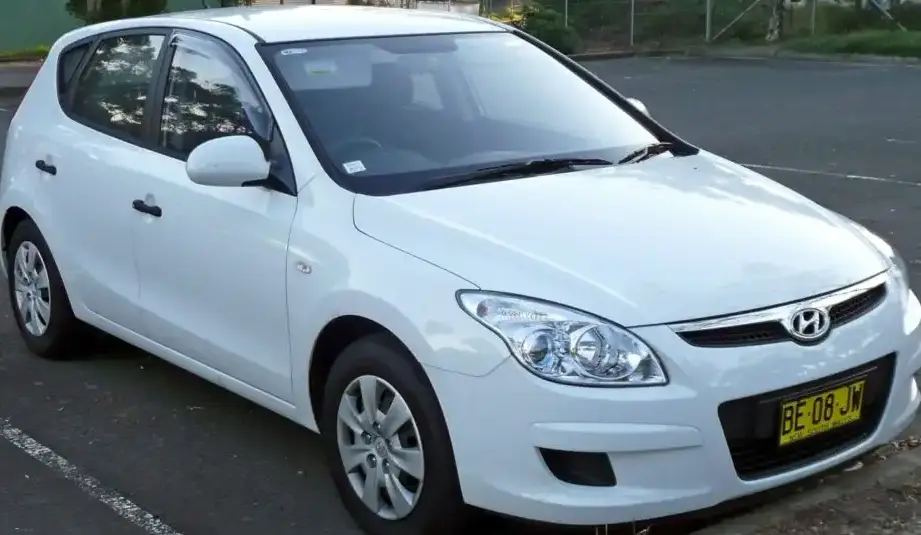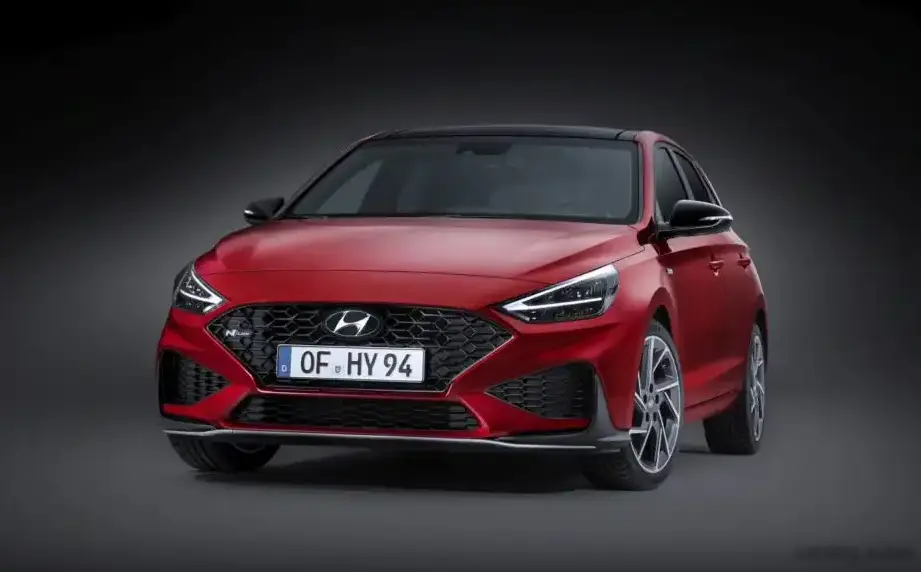
The Hyundai i30 III (facelift, introduced in May 2020 and produced through June 2024) represents a mid-cycle refresh of the third-generation i30, Hyundai’s globally-marketed compact hatchback. The 1.0 T-GDi (120 hp) variant, equipped with a 7-speed Dual Clutch Transmission (DCT), served as an entry-level offering in many European and Asian markets, aiming to balance fuel efficiency with reasonable performance. This model occupied a key position in Hyundai’s lineup, targeting buyers seeking a modern, well-equipped hatchback with lower running costs. It was positioned below the more powerful 1.5 T-GDi and diesel variants, and above the base engine options in some regions.
Technical Specifications
| Brand | Hyundai |
| Model | i30 |
| Generation | i30 III (facelift 2020) |
| Type (Engine) | 1.0 T-GDi (120 Hp) DCT |
| Start of production | May, 2020 |
| End of production | June, 2024 |
| Powertrain Architecture | Internal Combustion engine |
| Body type | Hatchback |
| Seats | 5 |
| Doors | 5 |
| Fuel Type | Petrol (Gasoline) |
| Acceleration 0 – 100 km/h | 11.2 sec |
| Acceleration 0 – 62 mph | 11.2 sec |
| Acceleration 0 – 60 mph | 10.6 sec |
| Maximum speed | 196 km/h (121.79 mph) |
| Emission standard | EURO 6d |
| Weight-to-power ratio | 10.3 kg/Hp, 97.2 Hp/tonne |
| Weight-to-torque ratio | 7.2 kg/Nm, 139.4 Nm/tonne |
| Power | 120 Hp @ 6000 rpm |
| Power per litre | 120.2 Hp/l |
| Torque | 172 Nm @ 1500-4000 rpm (126.86 lb.-ft. @ 1500-4000 rpm) |
| Engine layout | Front, Transverse |
| Engine Model/Code | Kappa II / G3LC |
| Engine displacement | 998 cm3 (60.9 cu. in.) |
| Number of cylinders | 3 |
| Engine configuration | Inline |
| Number of valves per cylinder | 4 |
| Fuel injection system | Direct injection |
| Engine aspiration | Turbocharger, Intercooler |
| Engine oil capacity | 3.6 l (3.8 US qt | 3.17 UK qt) |
| Coolant | 5.9 l (6.23 US qt | 5.19 UK qt) |
| Kerb Weight | 1234 kg (2720.5 lbs) |
| Max. weight | 1810 kg (3990.37 lbs) |
| Max load | 576 kg (1269.86 lbs) |
| Trunk (boot) space – minimum | 395 l (13.95 cu. ft) |
| Trunk (boot) space – maximum | 1301 l (45.94 cu. ft) |
| Max. roof load | 80 kg (176.37 lbs) |
| Permitted trailer load with brakes (12%) | 700 kg (1543.24 lbs) |
| Permitted trailer load without brakes | 300 kg (661.39 lbs) |
| Length | 4340 mm (170.87 in) |
| Width | 1795 mm (70.67 in) |
| Height | 1455 mm (57.28 in) |
| Wheelbase | 2650 mm (104.33 in) |
| Drivetrain Architecture | The Internal combustion engine (ICE) drives the front wheels of the vehicle. |
| Drive wheel | Front wheel drive |
| Number of gears and type of gearbox | 7 gears, automatic transmission DCT |
| Front suspension | Independent, type McPherson with coil spring and anti-roll bar |
| Rear suspension | Independent multi-link suspension |
| Assisting systems | ABS (Anti-lock braking system) |
| Steering type | Steering rack and pinion |
Powertrain & Engine Architecture
The heart of the i30 1.0 T-GDi DCT is Hyundai’s Kappa II engine, specifically the G3LC code. This is a 998cc, three-cylinder turbocharged gasoline engine. The engine utilizes direct fuel injection, a key technology for maximizing fuel efficiency and reducing emissions. The turbocharger, coupled with an intercooler, provides a boost in power despite the small displacement. The engine’s valvetrain features four valves per cylinder, contributing to its breathing efficiency. The 7-speed Dual Clutch Transmission (DCT) is a crucial component, offering quicker and smoother gear changes compared to a traditional automatic transmission. The DCT’s design allows for pre-selection of the next gear, minimizing power interruption during shifts. This engine is known for its relatively quiet operation and responsiveness, particularly in the mid-range.
Driving Characteristics
The 120 hp output, combined with the DCT, delivers adequate performance for everyday driving. Acceleration from 0-60 mph takes approximately 10.6 seconds, which is competitive within its class but noticeably slower than the more powerful i30 variants. The DCT provides brisk shifts, and the engine’s torque curve, peaking at 172 Nm (126.86 lb-ft) between 1500-4000 rpm, offers good drivability in urban and highway conditions. However, the three-cylinder engine can feel strained when pushed hard, especially during overtaking maneuvers or when fully loaded. The DCT’s gear ratios are tuned for fuel economy, which can sometimes result in the engine feeling slightly ‘disconnected’ from the wheels. Compared to the manual transmission versions, the DCT offers convenience but slightly diminishes the driver’s sense of control. Against the 1.5 T-GDi, the 1.0 T-GDi feels significantly less powerful, but offers a noticeable improvement in fuel economy.
Equipment & Trim Levels
The i30 1.0 T-GDi DCT typically came equipped with a solid base level of features. Standard equipment often included air conditioning, a touchscreen infotainment system with Apple CarPlay and Android Auto compatibility, Bluetooth connectivity, and a suite of safety features such as ABS, ESC (Electronic Stability Control), and multiple airbags. Interior upholstery was generally cloth, with options for upgraded materials available on higher trim levels. Optional extras included a sunroof, heated seats, a premium audio system, and advanced driver-assistance systems (ADAS) like lane keeping assist and adaptive cruise control. Trim levels varied by market, but generally followed a progression from ‘S’ or ‘SE’ (entry-level) to ‘Comfort’ and ‘Premium’ (higher-spec).
Chassis & Braking
The i30 III utilizes a McPherson strut front suspension and a multi-link rear suspension, providing a good balance between ride comfort and handling. The suspension setup is tuned to be relatively compliant, absorbing bumps and imperfections in the road surface effectively. The 1.0 T-GDi variant typically featured disc brakes on the front wheels and drum brakes on the rear, a cost-saving measure common in entry-level trims. The steering is a rack and pinion system, offering precise and responsive control. Stabilizer bars are fitted to both the front and rear axles to reduce body roll during cornering. The chassis is designed to provide a stable and predictable driving experience, prioritizing comfort over outright sportiness.
Market Reception & Comparison
The Hyundai i30 1.0 T-GDi DCT was generally well-received by automotive critics as a practical and efficient hatchback. Reviewers praised its fuel economy, comfortable ride, and well-equipped interior. However, some criticized its lack of outright performance compared to rivals and the slightly unrefined nature of the three-cylinder engine under hard acceleration. Compared to competitors like the Volkswagen Golf, Ford Focus, and Opel Astra, the i30 offered a compelling value proposition, often undercutting them in price while providing a similar level of equipment. In terms of reliability, the Kappa engine family has proven to be generally robust, although some owners have reported minor issues with the turbocharger and DCT. Fuel economy figures typically ranged from 45-55 mpg (combined cycle), making it an attractive option for cost-conscious buyers.
Legacy
The Hyundai i30 1.0 T-GDi DCT has established itself as a reliable and affordable used car option. The Kappa engine, while not known for its blistering performance, has demonstrated good long-term durability. The DCT transmission, if properly maintained (regular fluid changes are crucial), is generally reliable. The i30’s relatively low running costs and comfortable ride continue to make it a popular choice in the used car market. As Hyundai’s brand reputation has grown, the i30 has become increasingly sought after, holding its value reasonably well compared to earlier models. The 1.0 T-GDi variant represents a significant step forward in Hyundai’s efforts to offer fuel-efficient and technologically advanced vehicles to a wider audience.