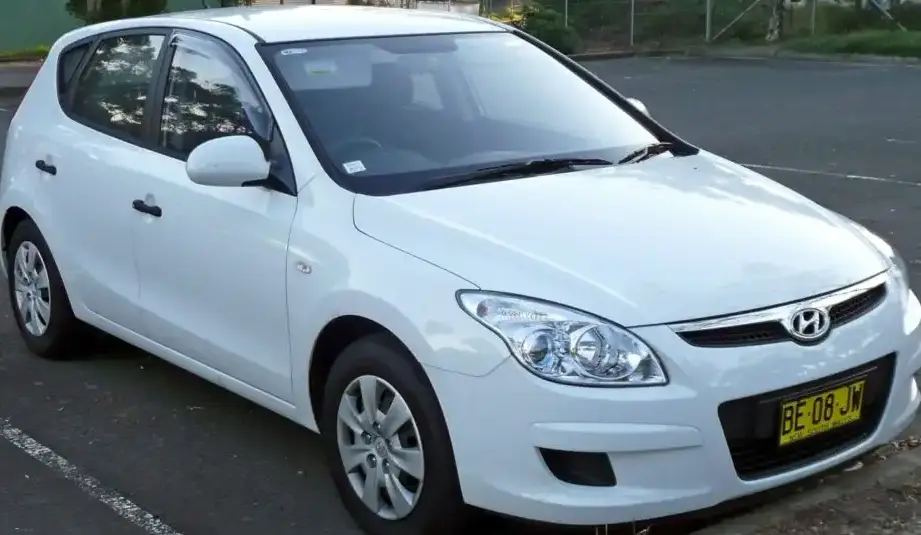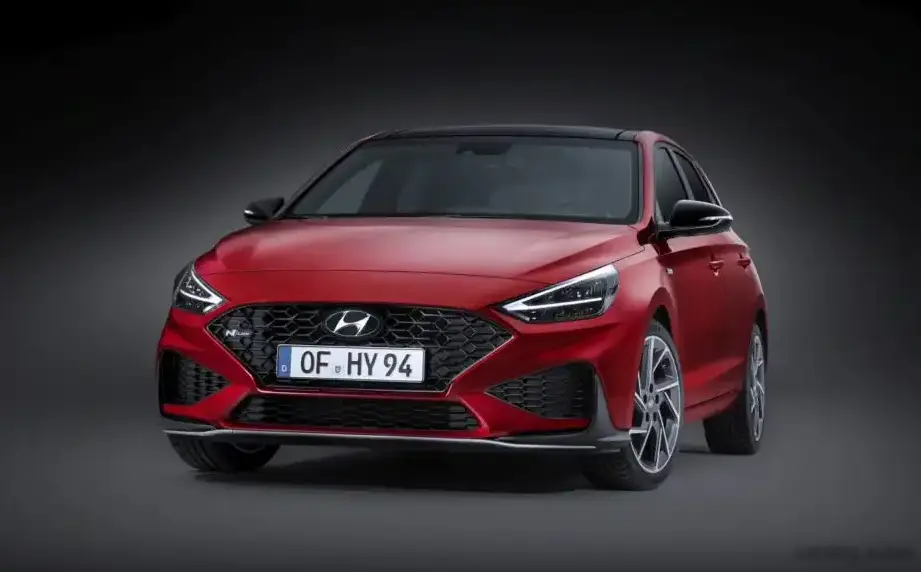
The Hyundai i30 III (facelift, introduced in May 2020 and produced through June 2024) represents a mid-cycle refresh of the third-generation i30, a compact hatchback designed primarily for the European market. This variant, the 1.0 T-GDi (120 hp) with a 7-speed Dual Clutch Transmission (DCT) and mild hybrid technology, occupied a key position in the i30 lineup as an entry-level offering that balanced fuel efficiency with reasonable performance. It aimed to appeal to buyers seeking a modern, well-equipped hatchback with lower running costs. The facelift brought styling updates, enhanced safety features, and powertrain refinements, including the introduction of 48V mild hybrid systems across several engine options.
Technical Specifications
| Brand | Hyundai |
| Model | i30 |
| Generation | i30 III (facelift 2020) |
| Type (Engine) | 1.0 T-GDi (120 Hp) Mild Hybrid DCT |
| Start of production | May, 2020 |
| End of production | June, 2024 |
| Powertrain Architecture | MHEV (Mild Hybrid Electric Vehicle) |
| Body type | Hatchback |
| Seats | 5 |
| Doors | 5 |
| Fuel Type | Petrol (Gasoline) |
| Acceleration 0 – 100 km/h | 11.2 sec |
| Acceleration 0 – 62 mph | 11.2 sec |
| Acceleration 0 – 60 mph | 10.6 sec |
| Maximum speed | 196 km/h (121.79 mph) |
| Emission standard | EURO 6d |
| Weight-to-power ratio | 10.4 kg/Hp |
| Weight-to-torque ratio | 7.2 kg/Nm |
| Power | 120 Hp @ 6000 rpm |
| Power per litre | 120.2 Hp/l |
| Torque | 172 Nm @ 1500-4000 rpm (126.86 lb.-ft. @ 1500-4000 rpm) |
| Engine layout | Front, Transverse |
| Engine Model/Code | Kappa II / G3LC |
| Engine displacement | 998 cm3 (60.9 cu. in.) |
| Number of cylinders | 3 |
| Engine configuration | Inline |
| Number of valves per cylinder | 4 |
| Fuel injection system | Direct injection |
| Engine aspiration | Turbocharger, Intercooler |
| Engine oil capacity | 3.6 l (3.8 US qt | 3.17 UK qt) |
| Coolant capacity | 6 l (6.34 US qt | 5.28 UK qt) |
| Kerb Weight | 1246 kg (2746.96 lbs.) |
| Max. weight | 1830 kg (4034.46 lbs.) |
| Max load | 584 kg (1287.5 lbs.) |
| Trunk (boot) space – minimum | 395 l (13.95 cu. ft.) |
| Trunk (boot) space – maximum | 1301 l (45.94 cu. ft.) |
| Max. roof load | 80 kg (176.37 lbs.) |
| Permitted trailer load with brakes (12%) | 700 kg (1543.24 lbs.) |
| Permitted trailer load without brakes | 300 kg (661.39 lbs.) |
| Length | 4340 mm (170.87 in.) |
| Width | 1795 mm (70.67 in.) |
| Height | 1455 mm (57.28 in.) |
| Wheelbase | 2650 mm (104.33 in.) |
| Number of gears and type of gearbox | 7 gears, automatic transmission DCT |
Powertrain & Engine Architecture
The heart of this i30 variant is Hyundai’s Kappa II 1.0 T-GDi engine, designated G3LC. This is a three-cylinder, turbocharged gasoline engine featuring direct fuel injection. The engine utilizes a single scroll turbocharger and an intercooler to enhance performance and efficiency. The 120 horsepower output is achieved at 6000 rpm, while peak torque of 172 Nm (126.86 lb-ft) is available from 1500 to 4000 rpm, providing a relatively broad torque band. The mild hybrid system incorporates a 48V battery and a belt-driven starter generator (BSG). This system allows for features like extended start-stop operation, regenerative braking (recapturing energy during deceleration), and a slight power assist during acceleration. The 7-speed Dual Clutch Transmission (DCT) is a crucial component, offering quick and smooth gear changes, contributing to both performance and fuel economy. The DCT’s programming is tuned for efficiency, prioritizing higher gears at cruising speeds.
Driving Characteristics
The 1.0 T-GDi with the DCT delivers a competent, if not exhilarating, driving experience. Acceleration from 0-60 mph takes around 10.6 seconds, making it suitable for everyday commuting and urban driving. The turbocharger provides a noticeable boost in power, but the three-cylinder engine lacks the refinement of larger, four-cylinder units. The DCT generally shifts smoothly, but can occasionally exhibit some hesitation at low speeds. Compared to the more powerful 1.6 T-GDi variants, this engine offers less outright performance, but it excels in fuel efficiency. Against diesel alternatives like the 1.6 CRDi, the 1.0 T-GDi provides a more responsive feel, though with slightly higher fuel consumption. The DCT’s gear ratios are optimized for fuel economy, meaning the engine can sometimes feel strained when accelerating hard.
Equipment & Trim Levels
The 1.0 T-GDi Mild Hybrid DCT typically came in mid-range trim levels, such as SE Nav or N-Line, depending on the specific market. Standard equipment generally included air conditioning, a touchscreen infotainment system with Apple CarPlay and Android Auto compatibility, Bluetooth connectivity, and a suite of safety features like lane keeping assist, forward collision avoidance assist, and automatic emergency braking. Higher trim levels added features like a larger touchscreen, navigation system, heated seats, a sunroof, and upgraded interior materials. Interior upholstery was typically cloth, with options for leather available on higher trims. The dashboard layout was modern and functional, with a focus on ease of use.
Chassis & Braking
The i30 III utilizes a McPherson strut front suspension and an independent multi-link rear suspension. This setup provides a good balance between ride comfort and handling. The suspension is tuned for everyday driving, prioritizing comfort over sporty handling. Braking systems varied depending on the trim level, with lower trims often featuring disc brakes at the front and drum brakes at the rear. Higher trims typically had disc brakes all around. Anti-lock Braking System (ABS) and Electronic Stability Control (ESC) were standard across all trims. Stabilizer bars were fitted front and rear to reduce body roll during cornering.
Market Reception & Comparison
The 1.0 T-GDi Mild Hybrid DCT i30 was generally well-received by automotive critics as a practical and efficient hatchback. Reviewers praised its fuel economy, comfortable ride, and well-equipped interior. However, some criticized the engine’s lack of refinement and the occasional hesitation of the DCT. Compared to rivals like the Volkswagen Golf, Ford Focus, and Opel Astra, the i30 offered a competitive package with a strong warranty and a good value proposition. Fuel economy figures typically ranged from 45-55 mpg (combined cycle), making it an attractive option for cost-conscious buyers. Reliability reports suggest that the Kappa engine and DCT transmission are generally reliable, although some owners have reported minor issues with the mild hybrid system.
Legacy
The 1.0 T-GDi Mild Hybrid DCT i30 represents a significant step in Hyundai’s efforts to offer fuel-efficient and technologically advanced vehicles. The powertrain combination proved popular in Europe, offering a compelling blend of performance, economy, and practicality. On the used car market, these i30s are generally considered a good value, offering a modern and well-equipped package at a reasonable price. The mild hybrid technology, while not a full hybrid system, helped to reduce emissions and improve fuel economy, paving the way for Hyundai’s further development of electrified powertrains. Long-term reliability appears to be good, with regular maintenance being key to ensuring the longevity of the engine and transmission.