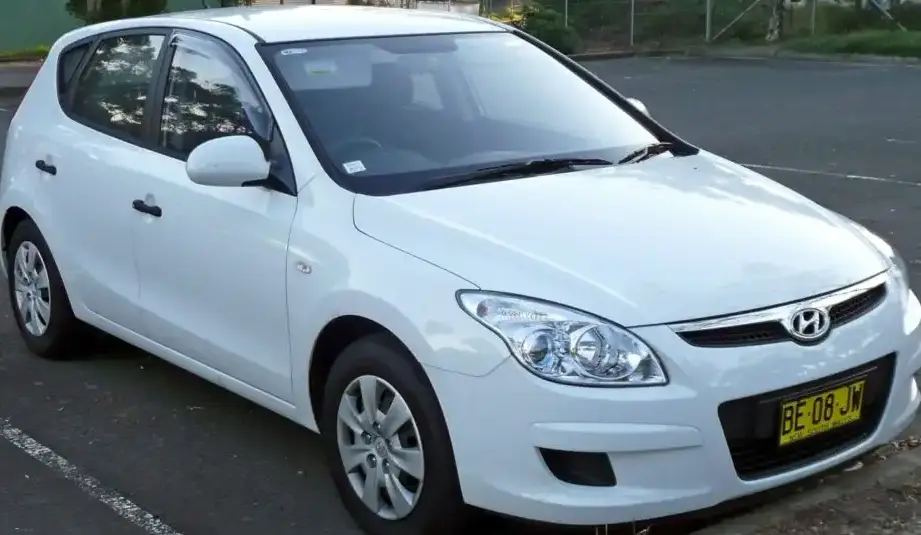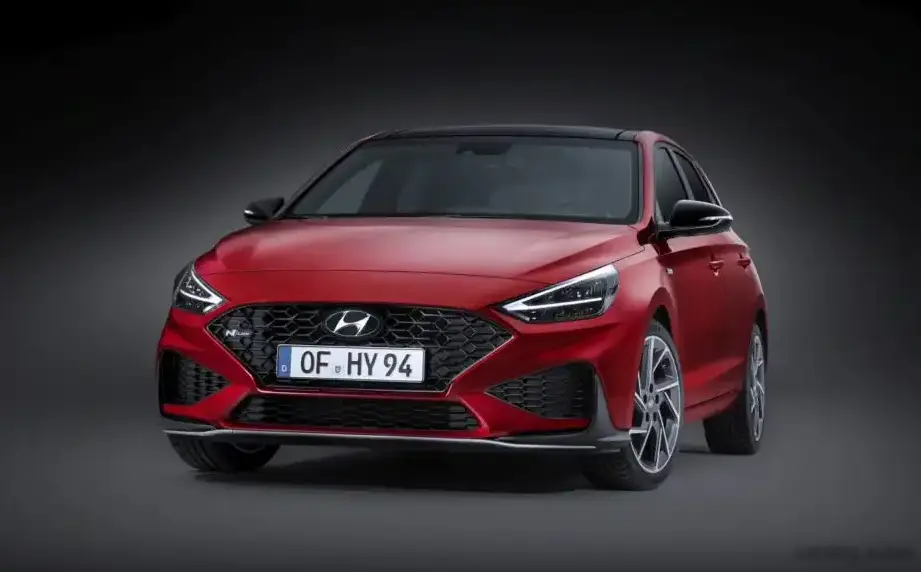
The Hyundai i30 III (facelift, introduced in May 2020) 1.5 DPi, producing 110 horsepower, represented an entry-level offering within the refreshed third-generation i30 lineup. Positioned as a fuel-efficient and accessible option, this variant aimed to attract buyers prioritizing practicality and affordability in the competitive European C-segment hatchback market. Production of this specific configuration continued through May 2022. The i30 III, built on the PQ35 platform (shared with models like the Volkswagen Golf), was Hyundai’s key competitor against established European rivals like the Ford Focus, Volkswagen Golf, and Opel Astra.
Technical Specifications
| Brand | Hyundai |
| Model | i30 |
| Generation | i30 III (facelift 2020) |
| Type (Engine) | 1.5 DPi (110 Hp) |
| Start of production | May, 2020 |
| End of production | May, 2022 |
| Powertrain Architecture | Internal Combustion engine |
| Body type | Hatchback |
| Seats | 5 |
| Doors | 5 |
| Fuel Type | Petrol (Gasoline) |
| Acceleration 0 – 100 km/h | 12.3 sec |
| Acceleration 0 – 62 mph | 12.3 sec |
| Acceleration 0 – 60 mph | 11.7 sec |
| Maximum speed | 187 km/h (116.2 mph) |
| Emission standard | EURO 6d |
| Weight-to-power ratio | 10.7 kg/Hp, 93.5 Hp/tonne |
| Weight-to-torque ratio | 8.2 kg/Nm, 122.4 Nm/tonne |
| Power | 110 Hp @ 6000 rpm |
| Power per litre | 73.4 Hp/l |
| Torque | 144 Nm @ 3500 rpm (106.21 lb.-ft. @ 3500 rpm) |
| Engine layout | Front, Transverse |
| Engine Model/Code | G4LG |
| Engine displacement | 1498 cm3 (91.41 cu. in.) |
| Number of cylinders | 4 |
| Engine configuration | Inline |
| Number of valves per cylinder | 4 |
| Fuel injection system | Indirect injection with two injectors on each intake port |
| Engine aspiration | Naturally aspirated engine |
| Engine oil capacity | 3.4 l (3.59 US qt | 2.99 UK qt) |
| Kerb Weight | 1176 kg (2592.64 lbs.) |
| Max. weight | 1750 kg (3858.09 lbs.) |
| Max load | 574 kg (1265.45 lbs.) |
| Trunk (boot) space – minimum | 395 l (13.95 cu. ft.) |
| Trunk (boot) space – maximum | 1301 l (45.94 cu. ft.) |
| Max. roof load | 80 kg (176.37 lbs.) |
| Permitted trailer load with brakes (12%) | 1200 kg (2645.55 lbs.) |
| Permitted trailer load without brakes | 600 kg (1322.77 lbs.) |
| Length | 4340 mm (170.87 in.) |
| Width | 1795 mm (70.67 in.) |
| Height | 1455 mm (57.28 in.) |
| Wheelbase | 2650 mm (104.33 in.) |
| Drivetrain Architecture | The Internal combustion engine (ICE) drives the front wheels of the vehicle. |
| Drive wheel | Front wheel drive |
| Number of gears and type of gearbox | 6 gears, manual transmission |
| Front suspension | Independent, type McPherson with coil spring and anti-roll bar |
| Rear suspension | Independent multi-link suspension |
| Assisting systems | ABS (Anti-lock braking system) |
| Steering type | Steering rack and pinion |
Powertrain & Engine Architecture
The heart of the i30 1.5 DPi was the Hyundai-Kia G4LG engine, a 1.5-liter naturally aspirated inline-four cylinder. This engine utilized a multi-point fuel injection system, employing two injectors per cylinder for improved fuel atomization and combustion efficiency. The engine featured a dual overhead camshaft (DOHC) valvetrain with four valves per cylinder, contributing to its relatively efficient power output. The ‘DPi’ designation indicated a direct port injection system, a refinement over earlier Hyundai engines. This engine was designed with a focus on fuel economy and reduced emissions, aligning with increasingly stringent European regulations. The six-speed manual transmission was the standard offering for this trim, chosen for its efficiency and lower cost compared to an automatic option. The transmission’s gear ratios were tuned for everyday drivability, prioritizing fuel efficiency over outright performance.
Driving Characteristics
The 110 horsepower and 144 Nm (106 lb-ft) of torque delivered by the 1.5 DPi engine resulted in a practical, but not particularly sporty, driving experience. Acceleration from 0-60 mph took approximately 11.7 seconds, and top speed was limited to 116 mph. Compared to the more powerful 1.6-liter turbocharged engine options available in the i30 range, the 1.5 DPi felt noticeably less responsive. However, the engine provided adequate power for typical commuting and highway driving. The six-speed manual transmission offered precise shifts, and the relatively light clutch pedal made it easy to drive in urban environments. The gear ratios were spaced to maximize fuel efficiency, meaning the engine often needed to be revved to access its peak power. Compared to diesel variants, the 1.5 DPi offered a smoother, quieter driving experience, albeit with lower torque figures.
Equipment & Trim Levels
The i30 1.5 DPi typically came equipped with a reasonable level of standard features, reflecting its position as an entry-level model. These included air conditioning, a touchscreen infotainment system with Apple CarPlay and Android Auto compatibility, Bluetooth connectivity, and a suite of safety features such as ABS, ESC (Electronic Stability Control), and multiple airbags. Interior upholstery was typically cloth, and the dashboard featured a functional, if somewhat understated, design. Optional extras included alloy wheels, a rear-view camera, parking sensors, and a more advanced infotainment system with navigation. Higher trim levels within the i30 range offered features like leather upholstery, a panoramic sunroof, and more sophisticated driver-assistance systems.
Chassis & Braking
The i30 III utilized a McPherson strut front suspension and a multi-link rear suspension, providing a comfortable and controlled ride. The suspension was tuned to prioritize comfort over outright handling prowess. The front brakes were ventilated discs, while the rear brakes were typically solid discs on higher trims, but drums on the base 1.5 DPi model. The steering was a rack-and-pinion system, offering reasonable precision and feedback. Stabilizer bars were fitted to both the front and rear axles to reduce body roll during cornering. The i30’s chassis was designed to provide a good balance between ride comfort and handling stability, making it a pleasant car to drive on a variety of road surfaces.
Market Reception & Comparison
The Hyundai i30 1.5 DPi was generally well-received by automotive critics as a sensible and affordable option in the C-segment hatchback market. It was praised for its fuel efficiency, comfortable ride, and generous standard equipment. However, it was also criticized for its relatively modest performance and somewhat bland styling. Compared to the more powerful i30 variants, the 1.5 DPi offered significantly lower running costs but lacked the same level of driving excitement. Against competitors like the Ford Focus and Volkswagen Golf, the i30 1.5 DPi offered a competitive price point and a longer warranty, but often lagged behind in terms of brand prestige and driving dynamics.
Legacy
The 1.5 DPi engine, while not known for its exceptional performance, proved to be a reliable and durable powertrain. The G4LG engine family has a generally good reputation for longevity, and the six-speed manual transmission is also considered to be robust. In the used car market, the i30 1.5 DPi represents a good value proposition for buyers seeking an affordable and fuel-efficient hatchback. Maintenance costs are relatively low, and parts availability is generally good. While it may not be the most exciting car to drive, the i30 1.5 DPi offers a practical and dependable transportation solution.