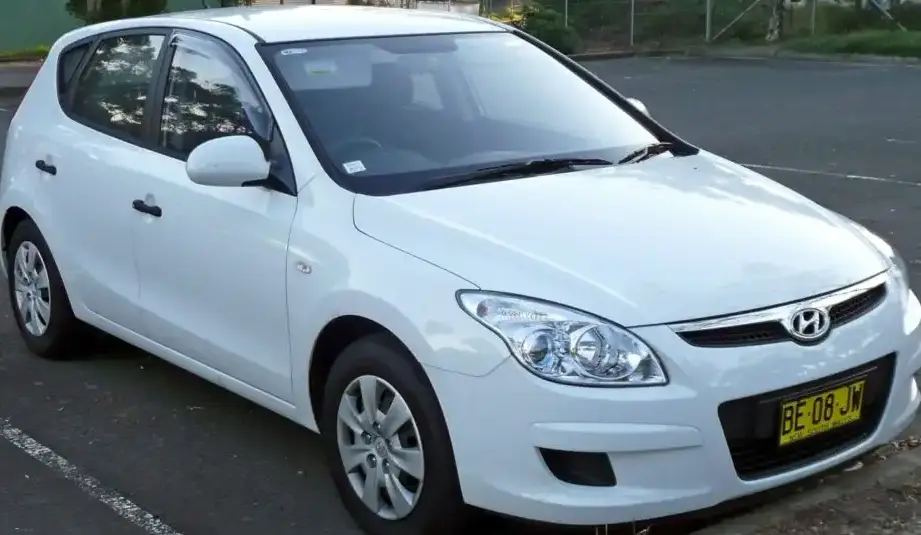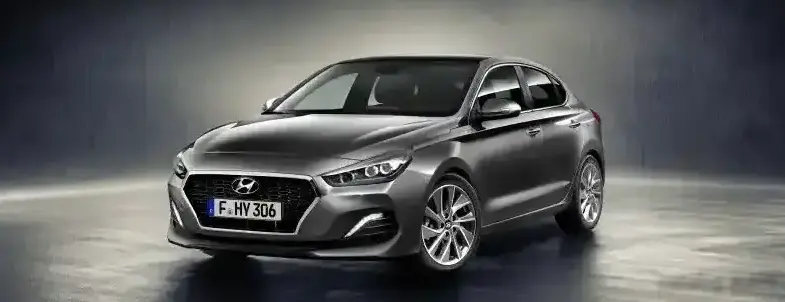
The Hyundai i30 III Fastback 1.0 T-GDI, producing 120 horsepower, was a variant offered between 2017 and 2018 as part of Hyundai’s third-generation i30 family. Positioned as an entry-level to mid-range offering within the Fastback body style, it aimed to provide a balance of fuel efficiency, modern styling, and affordability. This model represented Hyundai’s continued push into the European C-segment, competing with established rivals like the Volkswagen Golf, Ford Focus, and Opel Astra. The i30 III series, built on the PQ35 platform (also known as the 1HX0/A3 platform), sought to elevate Hyundai’s brand image through improved quality, design, and technology.
Technical Specifications
| Brand | Hyundai |
| Model | i30 |
| Generation | i30 III Fastback |
| Type (Engine) | 1.0 T-GDI (120 Hp) |
| Start of production | 2017 |
| End of production | 2018 |
| Powertrain Architecture | Internal Combustion engine |
| Body type | Fastback |
| Seats | 5 |
| Doors | 5 |
| Fuel consumption (urban) | 6 l/100 km (39.2 US mpg, 47.1 UK mpg, 16.7 km/l) |
| Fuel consumption (extra urban) | 4.6 l/100 km (51.1 US mpg, 61.4 UK mpg, 21.7 km/l) |
| Fuel consumption (combined) | 5.2 l/100 km (45.2 US mpg, 54.3 UK mpg, 19.2 km/l) |
| CO2 emissions | 120 g/km |
| Fuel Type | Petrol (Gasoline) |
| Acceleration 0 – 100 km/h | 11.5 sec |
| Acceleration 0 – 62 mph | 11.5 sec |
| Acceleration 0 – 60 mph | 10.9 sec |
| Maximum speed | 188 km/h (116.82 mph) |
| Emission standard | Euro 6 |
| Weight-to-power ratio | 10.4 kg/Hp, 96.6 Hp/tonne |
| Weight-to-torque ratio | 7.3 kg/Nm, 137.7 Nm/tonne |
| Power | 120 Hp @ 6000 rpm |
| Power per litre | 120.2 Hp/l |
| Torque | 171 Nm @ 1500-4000 rpm (126.12 lb.-ft. @ 1500-4000 rpm) |
| Engine layout | Front, Transverse |
| Engine Model/Code | Kappa II / G3LC |
| Engine displacement | 998 cm3 (60.9 cu. in.) |
| Number of cylinders | 3 |
| Engine configuration | Inline |
| Cylinder Bore | 71 mm (2.8 in.) |
| Piston Stroke | 84 mm (3.31 in.) |
| Compression ratio | 10.1:1 |
| Number of valves per cylinder | 4 |
| Fuel injection system | Direct injection |
| Engine aspiration | Turbocharger, Intercooler |
| Valvetrain | DOHC |
| Engine oil capacity | 3.6 l (3.8 US qt | 3.17 UK qt) |
| Coolant | 6 l (6.34 US qt | 5.28 UK qt) |
| Kerb Weight | 1242-1385 kg (2738.14 – 3053.4 lbs.) |
| Max. weight | 1820 kg (4012.41 lbs.) |
| Max load | 435-578 kg (959.01 – 1274.27 lbs.) |
| Trunk (boot) space – minimum | 450 l (15.89 cu. ft.) |
| Trunk (boot) space – maximum | 1351 l (47.71 cu. ft.) |
| Fuel tank capacity | 50 l (13.21 US gal | 11 UK gal) |
| Length | 4455 mm (175.39 in.) |
| Width | 1795 mm (70.67 in.) |
| Height | 1425 mm (56.1 in.) |
| Wheelbase | 2650 mm (104.33 in.) |
| Front overhang | 905 mm (35.63 in.) |
| Rear overhang | 900 mm (35.43 in.) |
| Ride height (ground clearance) | 135 mm (5.31 in.) |
| Minimum turning circle | 10.6 m (34.78 ft.) |
| Drivetrain Architecture | ICE, Front wheel drive |
| Drive wheel | Front wheel drive |
| Number of gears and type of gearbox | 6 gears, manual transmission |
| Front suspension | Independent type McPherson |
| Rear suspension | Independent multi-link suspension |
| Front brakes | Ventilated discs |
| Rear brakes | Disc |
| Assisting systems | ABS (Anti-lock braking system) |
| Steering type | Steering rack and pinion |
| Power steering | Electric Steering |
| Tires size | 225/45 R17; 225/40 ZR18 |
| Wheel rims size | 7.0J x 17; 7.5J x 18 |
Powertrain & Engine Architecture
The heart of the i30 Fastback 1.0 T-GDI is Hyundai’s Kappa II engine, specifically the G3LC code. This is a 998cc, three-cylinder turbocharged gasoline engine. The engine utilizes direct injection, a technology that improves fuel efficiency and power output by injecting fuel directly into the combustion chamber. The turbocharger, coupled with an intercooler, helps to mitigate turbo lag and maintain consistent power delivery. The engine features a dual overhead camshaft (DOHC) valvetrain with four valves per cylinder, optimizing airflow for improved performance. The 6-speed manual transmission was standard, offering a relatively direct connection between the engine and the front wheels. While an automatic transmission was available on other i30 variants, it wasn’t offered with this specific engine/power combination in most markets.
Driving Characteristics
The 120 hp 1.0 T-GDI engine in the i30 Fastback provided adequate, though not exhilarating, performance. Acceleration from 0-60 mph took around 10.9 seconds, and top speed was approximately 116.82 mph. The turbocharger provided a noticeable boost in power at lower RPMs, making it suitable for everyday driving. However, compared to the more powerful 1.4 T-GDI or diesel variants, the 1.0 T-GDI felt less responsive, particularly when fully loaded or tackling steep inclines. The manual transmission offered precise shifts, but the gear ratios were tuned for fuel economy rather than outright performance. The relatively lightweight nature of the three-cylinder engine contributed to nimble handling, but the suspension setup prioritized comfort over sporty dynamics.
Equipment & Trim Levels
The 1.0 T-GDI Fastback typically came with a reasonable level of standard equipment. This included air conditioning, a touchscreen infotainment system with Bluetooth connectivity, power windows and mirrors, and a suite of safety features like ABS, ESC (Electronic Stability Control), and multiple airbags. Higher trim levels offered upgrades such as alloy wheels, a larger touchscreen display, navigation system, rear parking sensors, and a panoramic sunroof. Interior upholstery was typically cloth, with options for leather upgrades on higher trims. The dashboard layout was modern and functional, with a focus on user-friendliness.
Chassis & Braking
The i30 Fastback utilized an independent McPherson strut suspension at the front and an independent multi-link suspension at the rear. This setup provided a good balance of ride comfort and handling. Front brakes were ventilated discs, while rear brakes were solid discs. The electric power steering offered light and precise steering feel. The car’s weight, ranging from 1242 to 1385 kg depending on equipment, was relatively moderate for its class, contributing to its manageable handling characteristics.
Market Reception & Comparison
The Hyundai i30 III Fastback 1.0 T-GDI was generally well-received by automotive critics as a practical and fuel-efficient option. It was praised for its stylish design, comfortable interior, and generous standard equipment. However, some reviewers noted that the 1.0 T-GDI engine lacked the punch of its larger counterparts. Compared to the 1.4 T-GDI, the 1.0 T-GDI offered better fuel economy but less performance. The diesel variants provided even greater fuel efficiency and torque, but at the expense of refinement and emissions. The i30 Fastback 1.0 T-GDI positioned itself as a value-oriented choice for buyers prioritizing economy and style.
Legacy
The Kappa II 1.0 T-GDI engine has proven to be a relatively reliable powertrain, although some owners have reported minor issues with the turbocharger and fuel injectors. The i30 III Fastback, in general, has maintained a decent reputation for reliability and build quality. On the used car market, the 1.0 T-GDI variant represents an affordable entry point into the i30 range, appealing to buyers seeking a fuel-efficient and stylish hatchback. Its continued availability and relatively low running costs make it a popular choice for city driving and commuting.