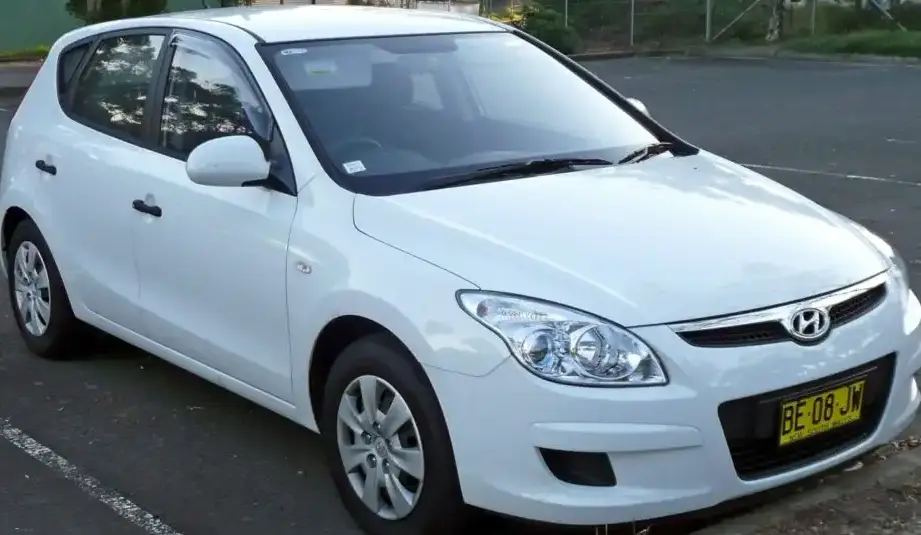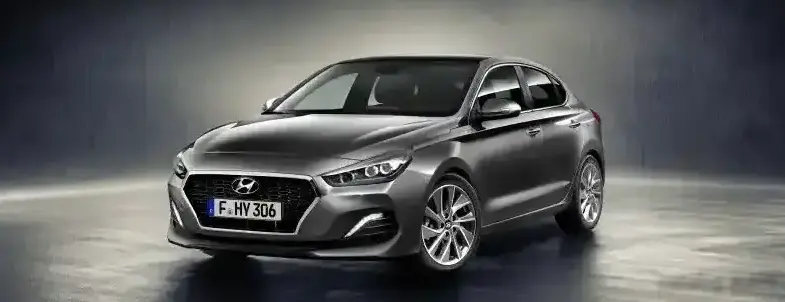
The Hyundai i30 III Fastback 1.6 CRDi (136 Hp) DCT represents a compelling offering within the third generation of Hyundai’s globally successful i30 range. Introduced for the 2018 model year and continuing through 2020, this variant combined a fuel-efficient diesel engine with the convenience of a dual-clutch transmission (DCT) packaged in the more stylish Fastback body style. Positioned as a mid-range option, it aimed to balance economy, practicality, and a more dynamic driving experience compared to lower-spec models. The i30 III, built on the PQ35 platform (shared with the Volkswagen Golf Mk7), was designed to appeal to European tastes, offering a refined and well-equipped compact car.
Technical Specifications
| Brand | Hyundai |
| Model | i30 |
| Generation | i30 III Fastback |
| Type (Engine) | 1.6 CRDi (136 Hp) DCT |
| Start of production | 2018 |
| End of production | 2020 |
| Powertrain Architecture | Internal Combustion engine |
| Body type | Fastback |
| Seats | 5 |
| Doors | 5 |
| Fuel consumption (urban) | 4.6 l/100 km (51.1 US mpg, 61.4 UK mpg, 21.7 km/l) |
| Fuel consumption (extra urban) | 4.1 l/100 km (57.4 US mpg, 68.9 UK mpg, 24.4 km/l) |
| Fuel consumption (combined) | 4.3 l/100 km (54.7 US mpg, 65.7 UK mpg, 23.3 km/l) |
| CO2 emissions | 113 g/km |
| Fuel Type | Diesel |
| Acceleration 0 – 100 km/h | 10.1 sec |
| Acceleration 0 – 62 mph | 10.1 sec |
| Acceleration 0 – 60 mph | 9.6 sec |
| Maximum speed | 200 km/h (124.27 mph) |
| Emission standard | Euro 6d – TEMP |
| Weight-to-power ratio | 10 kg/Hp, 99.6 Hp/tonne |
| Weight-to-torque ratio | 4.3 kg/Nm, 234.4 Nm/tonne |
| Power | 136 Hp @ 4000 rpm |
| Power per litre | 85.1 Hp/l |
| Torque | 320 Nm @ 2000-2250 rpm (236.02 lb.-ft. @ 2000-2250 rpm) |
| Engine layout | Front, Transverse |
| Engine Model/Code | D4FE |
| Engine displacement | 1598 cm3 (97.52 cu. in.) |
| Number of cylinders | 4 |
| Engine configuration | Inline |
| Cylinder Bore | 77 mm (3.03 in.) |
| Piston Stroke | 85.8 mm (3.38 in.) |
| Number of valves per cylinder | 4 |
| Fuel injection system | Diesel Commonrail |
| Engine aspiration | Turbocharger, Intercooler |
| Engine oil capacity | 4.4 l (4.65 US qt | 3.87 UK qt) |
| Coolant | 7 l (7.4 US qt | 6.16 UK qt) |
| Kerb Weight | 1365-1517 kg (3009.31 – 3344.41 lbs.) |
| Max. weight | 1940 kg (4276.97 lbs.) |
| Max load | 423-575 kg (932.56 – 1267.66 lbs.) |
| Trunk (boot) space – minimum | 450 l (15.89 cu. ft.) |
| Trunk (boot) space – maximum | 1351 l (47.71 cu. ft.) |
| Fuel tank capacity | 50 l (13.21 US gal | 11 UK gal) |
| Max. roof load | 80 kg (176.37 lbs.) |
| Permitted trailer load with brakes (12%) | 1500 kg (3306.93 lbs.) |
| Permitted towbar download | 80 kg (176.37 lbs.) |
| Length | 4455 mm (175.39 in.) |
| Width | 1795 mm (70.67 in.) |
| Height | 1425 mm (56.1 in.) |
| Wheelbase | 2650 mm (104.33 in.) |
| Front track | 1559-1555 mm (61.38 – 61.22 in.) |
| Rear (Back) track | 1567-1563 mm (61.69 – 61.54 in.) |
| Front overhang | 905 mm (35.63 in.) |
| Rear overhang | 900 mm (35.43 in.) |
| Ride height (ground clearance) | 135 mm (5.31 in.) |
| Drivetrain Architecture | The Internal combustion engine (ICE) drives the front wheels of the vehicle. |
| Drive wheel | Front wheel drive |
| Number of gears and type of gearbox | 7 gears, automatic transmission DCT |
| Front brakes | Ventilated discs |
| Rear brakes | Disc |
| Assisting systems | ABS (Anti-lock braking system) |
| Steering type | Steering rack and pinion |
| Power steering | Electric Steering |
Powertrain & Engine Architecture
At the heart of the i30 Fastback 1.6 CRDi DCT lies the Hyundai-Kia D4FE engine, a 1.6-liter inline-four cylinder diesel. This engine utilizes a second-generation common-rail direct injection system, delivering fuel at extremely high pressures for optimized combustion. A turbocharger with an intercooler further enhances performance, boosting power and torque. The engine produces 136 horsepower at 4,000 rpm and a substantial 320 Nm (236 lb-ft) of torque between 2,000 and 2,250 rpm. This torque output is a key characteristic of modern diesel engines, providing strong low-end and mid-range acceleration. The engine also incorporates a diesel particulate filter (DPF) to meet stringent Euro 6d-TEMP emissions standards.
The ‘DCT’ designation refers to the 7-speed dual-clutch transmission. This transmission offers faster and smoother gear changes compared to a traditional automatic, contributing to a more engaging driving experience. The DCT operates by utilizing two separate clutches for odd and even gears, allowing for pre-selection of the next gear and seamless shifts.
Driving Characteristics
The 1.6 CRDi DCT powertrain delivers a balanced driving experience. While not overtly sporty, the engine’s ample torque provides brisk acceleration, particularly in the lower gears. The DCT transmission contributes to responsive shifts, making overtaking and merging onto highways relatively effortless. The 0-60 mph time of around 9.6 seconds and a top speed of 124 mph are respectable for a diesel-powered compact car. Compared to the higher-output 1.6 T-GDI gasoline engine or the more economical 1.6 CRDi manual, this variant offers a compromise between performance and fuel efficiency. The automatic transmission prioritizes comfort and ease of use, making it well-suited for urban driving and long-distance journeys.
Equipment & Trim Levels
The i30 III Fastback 1.6 CRDi DCT typically came equipped with a generous level of standard features. These included air conditioning, a touchscreen infotainment system with Apple CarPlay and Android Auto compatibility, Bluetooth connectivity, and a suite of safety features such as ABS, ESC (Electronic Stability Control), and multiple airbags. Higher trim levels added features like automatic climate control, heated seats, a larger touchscreen display, and advanced driver-assistance systems (ADAS) such as lane departure warning and autonomous emergency braking. Interior upholstery was typically cloth, with options for leather upgrades on higher trims. The Fastback body style itself offered a more coupe-like silhouette compared to the standard hatchback, enhancing its visual appeal.
Chassis & Braking
The i30 III Fastback features a typical front-wheel-drive chassis configuration with MacPherson strut suspension at the front and a multi-link suspension at the rear. This setup provides a good balance between ride comfort and handling. The braking system consists of ventilated discs at the front and solid discs at the rear, providing adequate stopping power for everyday driving. The steering is electrically assisted, offering a light and precise feel.
Market Reception & Comparison
The Hyundai i30 III Fastback 1.6 CRDi DCT was generally well-received by automotive critics. It was praised for its fuel efficiency, comfortable ride, and well-equipped interior. However, some reviewers noted that the engine could be somewhat noisy under hard acceleration, a common characteristic of diesel engines. Compared to other trims in the i30 lineup, this variant offered a compelling blend of economy and convenience, appealing to buyers who prioritized practicality and ease of use over outright performance. Its fuel economy of around 54.7 US mpg combined made it an attractive option for those seeking to minimize running costs.
Legacy
The Hyundai i30 III Fastback 1.6 CRDi DCT has proven to be a reliable and durable vehicle. The D4FE engine, while not without its potential issues (like DPF clogging if not driven on longer journeys), is generally considered robust. The DCT transmission, when properly maintained, is also known for its longevity. On the used car market, these i30s represent good value for money, offering a well-equipped and fuel-efficient compact car at an affordable price. They continue to be a popular choice for buyers seeking a practical and reliable vehicle for daily commuting and family use.