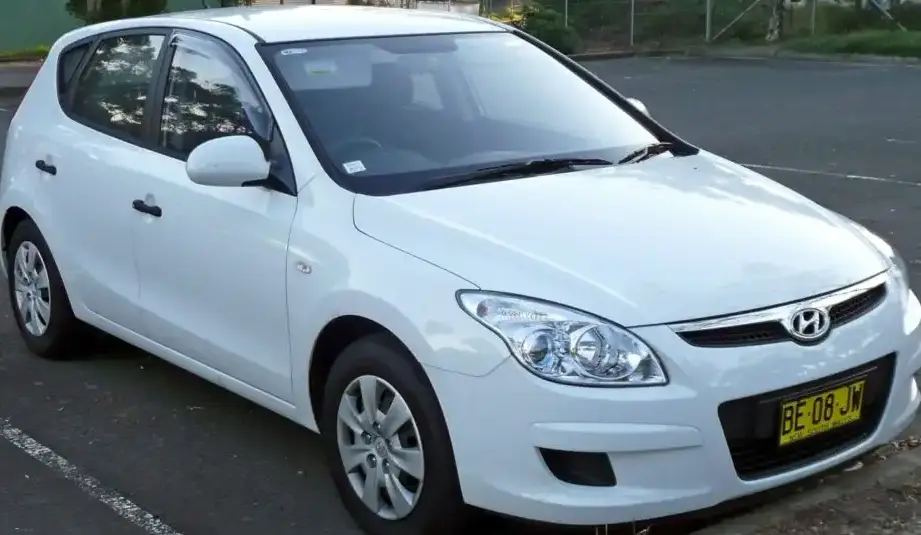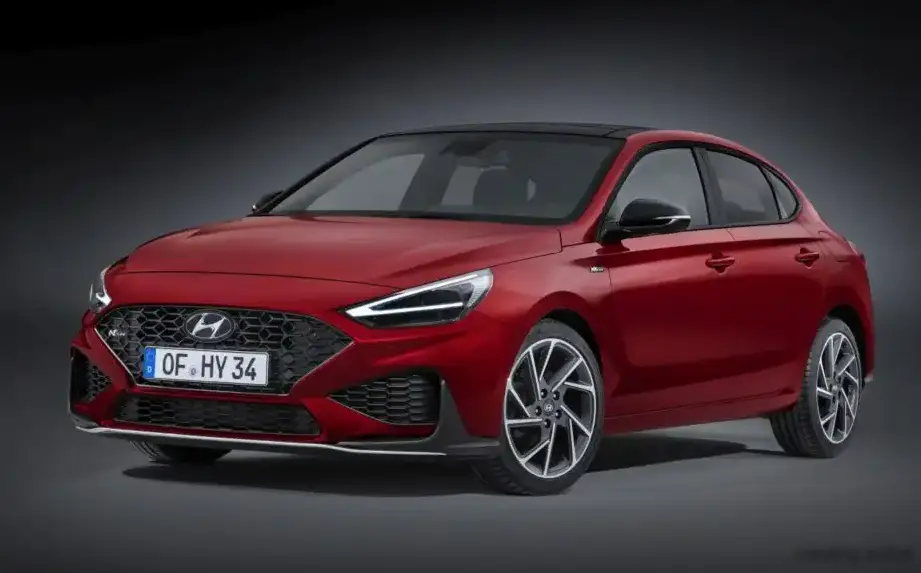
The Hyundai i30 III Fastback, specifically the 1.6 CRDi (136 hp) Mild Hybrid DCT variant produced from September 2020 to January 2022, represents a key offering within Hyundai’s European C-segment lineup. This model, part of the facelifted third generation (PD) i30 range, aimed to blend practicality, fuel efficiency, and a more dynamic aesthetic with the fastback body style. It positioned itself as a mid-range option, appealing to buyers seeking a balance between performance and economy, and incorporating Hyundai’s early mild-hybrid technology. The i30 Fastback competed directly with rivals like the Volkswagen Golf, Ford Focus, and Opel Astra, offering a compelling alternative with a generous warranty and a focus on value.
Technical Specifications
| Brand | Hyundai |
| Model | i30 |
| Generation | i30 III Fastback (facelift 2020) |
| Type (Engine) | 1.6 CRDi (136 Hp) Mild Hybrid DCT |
| Start of production | September, 2020 |
| End of production | January, 2022 |
| Powertrain Architecture | MHEV (Mild Hybrid Electric Vehicle) |
| Body type | Fastback |
| Seats | 5 |
| Doors | 5 |
| Fuel Type | Diesel |
| Acceleration 0 – 100 km/h | 9.9 sec |
| Acceleration 0 – 62 mph | 9.9 sec |
| Acceleration 0 – 60 mph | 9.4 sec |
| Maximum speed | 200 km/h (124.27 mph) |
| Emission standard | EURO 6d TEMP |
| Weight-to-power ratio | 10 kg/Hp |
| Weight-to-torque ratio | 4.3 kg/Nm |
| Power | 136 Hp @ 4000 rpm |
| Power per litre | 85.1 Hp/l |
| Torque | 320 Nm @ 2000-2250 rpm (236.02 lb.-ft.) |
| Engine layout | Front, Transverse |
| Engine Model/Code | D4FE |
| Engine displacement | 1598 cm3 (97.52 cu. in.) |
| Number of cylinders | 4 |
| Engine configuration | Inline |
| Number of valves per cylinder | 4 |
| Fuel injection system | Diesel Commonrail |
| Engine aspiration | Turbocharger, Intercooler |
| Engine oil capacity | 4.4 l (4.65 US qt | 3.87 UK qt) |
| Coolant capacity | 6.2 l (6.55 US qt | 5.46 UK qt) |
| Kerb Weight | 1365 kg (3009.31 lbs) |
| Max. weight | 1930 kg (4254.92 lbs) |
| Max load | 565 kg (1245.61 lbs) |
| Trunk (boot) space – minimum | 450 l (15.89 cu. ft.) |
| Trunk (boot) space – maximum | 1351 l (47.71 cu. ft.) |
| Max. roof load | 80 kg (176.37 lbs) |
| Permitted trailer load with brakes (12%) | 1500 kg (3306.93 lbs) |
| Permitted trailer load without brakes | 650 kg (1433 lbs) |
| Length | 4455 mm (175.39 in) |
| Width | 1795 mm (70.67 in) |
| Height | 1425 mm (56.1 in) |
| Wheelbase | 2650 mm (104.33 in) |
| Number of gears | 7 |
| Gearbox type | Automatic transmission DCT |
Powertrain & Engine Architecture
The heart of the i30 Fastback 1.6 CRDi MHEV is the D4FE engine, a 1.6-liter inline-four cylinder diesel. This engine utilizes a second-generation common-rail direct injection system, delivering fuel at extremely high pressures for optimized combustion. A turbocharger with an intercooler further enhances performance, providing increased air intake for greater power output. The engine produces 136 horsepower at 4,000 rpm and a substantial 320 Nm (236 lb-ft) of torque between 2,000 and 2,250 rpm. The ‘Mild Hybrid’ aspect comes from a 48V integrated starter generator (ISG) which assists the engine during acceleration and allows for regenerative braking, capturing energy normally lost during deceleration to recharge the battery. This system isn’t capable of fully electric driving, but it improves fuel economy and reduces emissions. The engine is paired with a 7-speed dual-clutch transmission (DCT), offering quick and smooth gear changes.
Driving Characteristics
The 1.6 CRDi with the DCT transmission delivers a comfortable and refined driving experience. While not a performance-oriented variant, the 320 Nm of torque provides ample pulling power for everyday driving and overtaking maneuvers. The DCT gearbox contributes to responsive acceleration, although some drivers may notice slight hesitation at low speeds. Compared to the higher-output 1.6 T-GDi gasoline engine, the diesel offers superior fuel economy and a broader torque curve, making it more suitable for long-distance journeys. Against the 1.9 TDI versions available in some markets, the 1.6 CRDi offers a more modern driving experience with the DCT, but may lack the ultimate durability of the older TDI engine. The gear ratios are tuned for efficiency, prioritizing fuel savings over outright acceleration.
Equipment & Trim Levels
The 1.6 CRDi Mild Hybrid DCT typically came equipped as a mid-range trim level, often designated as ‘SE Nav’ or similar. Standard features generally included air conditioning, a touchscreen infotainment system with navigation, Apple CarPlay and Android Auto compatibility, Bluetooth connectivity, and a suite of safety features such as lane keeping assist, forward collision avoidance assist, and automatic emergency braking. Interior upholstery was typically cloth, with options for leather upgrades. Optional extras included a panoramic sunroof, heated seats, and a premium sound system. The Fastback body style itself added a touch of sportiness with its sloping roofline compared to the standard hatchback.
Chassis & Braking
The i30 Fastback utilizes a McPherson strut front suspension and a multi-link rear suspension, providing a good balance between ride comfort and handling. The suspension is tuned to prioritize comfort, but still offers decent body control in corners. Braking systems varied depending on the specific trim level, but generally included disc brakes on the front wheels and either disc or drum brakes on the rear. Anti-lock Braking System (ABS) and Electronic Stability Control (ESC) were standard safety features. Stabilizer bars were fitted front and rear to reduce body roll during cornering.
Market Reception & Comparison
The i30 Fastback 1.6 CRDi Mild Hybrid DCT was generally well-received by automotive critics. It was praised for its fuel efficiency, comfortable ride, and generous equipment levels. However, some reviewers noted that the diesel engine could be slightly noisy and that the DCT transmission wasn’t always the smoothest in stop-start traffic. Compared to the gasoline-powered i30 variants, the diesel offered significantly better fuel economy, making it a popular choice for drivers covering high mileages. In terms of reliability, the D4FE engine proved to be generally robust, although the mild-hybrid system introduced some new potential failure points.
Legacy
The Hyundai i30 III Fastback 1.6 CRDi Mild Hybrid DCT represents an important step in Hyundai’s development of fuel-efficient and technologically advanced vehicles. While the mild-hybrid system has been superseded by more sophisticated hybrid and electric powertrains, it paved the way for Hyundai’s future electrification efforts. On the used car market, these models offer good value for money, providing a practical and economical option for buyers seeking a reliable and well-equipped family car. The longevity of the D4FE engine and the DCT transmission, when properly maintained, contribute to the continued appeal of this variant.