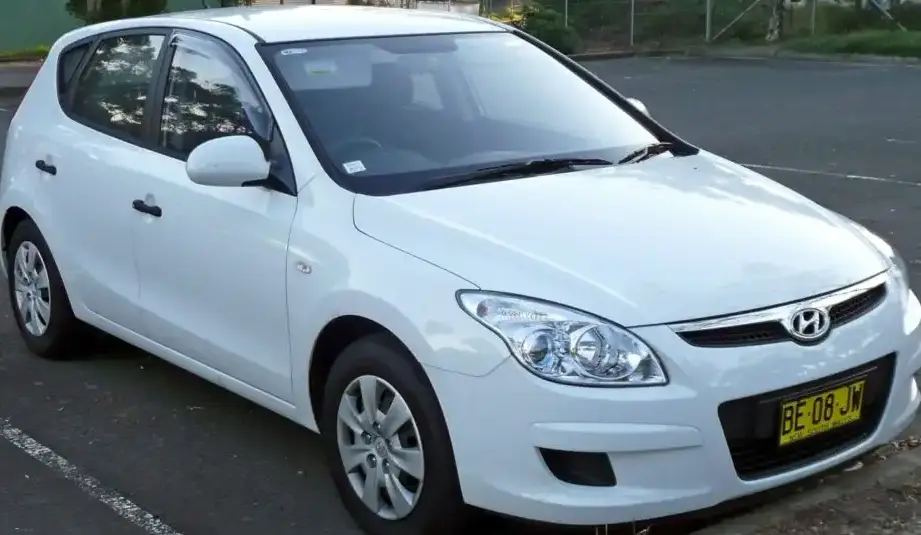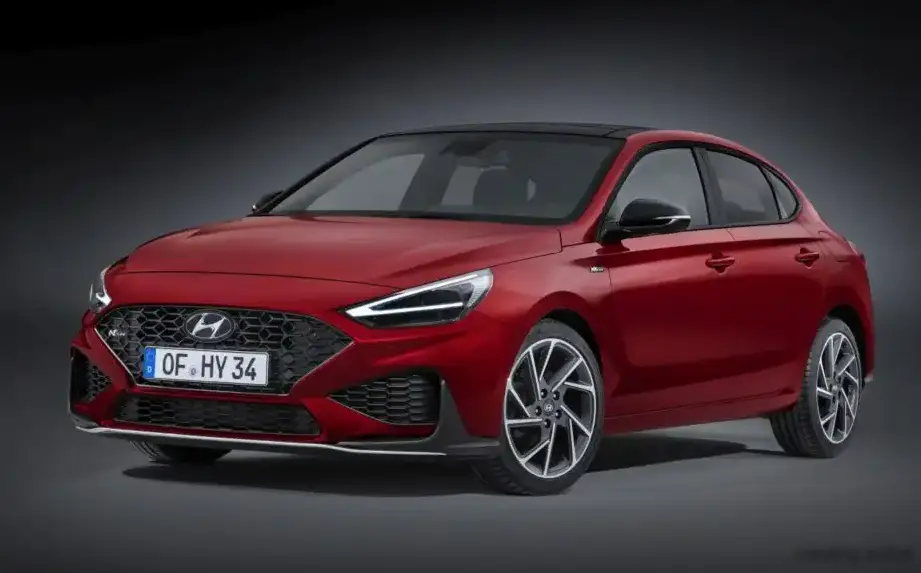
The Hyundai i30 III Fastback N Performance 2.0 T-GDi (280 Hp) DCT, produced from May 2021 to June 2024, represents the high-performance variant of Hyundai’s compact liftback. This model, part of the facelifted third generation (PD series) i30, was designed to compete directly with established hot hatches like the Volkswagen Golf GTI and Ford Focus ST. Positioned as the flagship trim, the N Performance offered a significant step up in power and handling compared to other i30 variants, aiming to deliver a genuinely engaging driving experience. It was primarily marketed in Europe and select global markets, bolstering Hyundai’s reputation for performance engineering.
Technical Specifications
| Brand | Hyundai |
| Model | i30 |
| Generation | i30 III Fastback (facelift 2020) |
| Type (Engine) | N Performance 2.0 T-GDi (280 Hp) DCT |
| Start of production | May, 2021 |
| End of production | June, 2024 |
| Powertrain Architecture | Internal Combustion engine |
| Body type | Fastback |
| Seats | 5 |
| Doors | 5 |
| Fuel Type | Petrol (Gasoline) |
| Maximum speed | 249 km/h (154.72 mph) |
| 0-100 km/h | 3.46 s |
| Emission standard | Euro 6d |
| Weight-to-power ratio | 5.3 kg/Hp, 190 Hp/tonne |
| Weight-to-torque ratio | 3.8 kg/Nm, 265.9 Nm/tonne |
| Power | 280 Hp @ 6000 rpm |
| Power per litre | 140.1 Hp/l |
| Torque | 392 Nm @ 2100-4700 rpm (289.12 lb.-ft. @ 2100-4700 rpm) |
| Engine layout | Front, Transverse |
| Engine Model/Code | G4KH |
| Engine displacement | 1998 cm3 (121.93 cu. in.) |
| Number of cylinders | 4 |
| Engine configuration | Inline |
| Cylinder Bore | 86 mm (3.39 in.) |
| Piston Stroke | 86 mm (3.39 in.) |
| Compression ratio | 9.5:1 |
| Number of valves per cylinder | 4 |
| Fuel injection system | Direct injection |
| Engine aspiration | Turbocharger, Intercooler |
| Valvetrain | DOHC, E-CVVT |
| Engine oil capacity | 4.8 l (5.07 US qt | 4.22 UK qt) |
| Coolant | 8.5 l (8.98 US qt | 7.48 UK qt) |
| Kerb Weight | 1474-1554 kg (3249.61 – 3425.98 lbs.) |
| Max. weight | 1980 kg (4365.15 lbs.) |
| Max load | 426-506 kg (939.17 – 1115.54 lbs.) |
| Trunk (boot) space – minimum | 436 l (15.4 cu. ft.) |
| Trunk (boot) space – maximum | 1337 l (47.22 cu. ft.) |
| Fuel tank capacity | 50 l (13.21 US gal | 11 UK gal) |
| Max. roof load | 80 kg (176.37 lbs.) |
| Permitted trailer load with brakes (12%) | 1600 kg (3527.4 lbs.) |
| Permitted trailer load without brakes | 700 kg (1543.24 lbs.) |
| Permitted towbar download | 80 kg (176.37 lbs.) |
| Length | 4455 mm (175.39 in.) |
| Width | 1795 mm (70.67 in.) |
| Height | 1445 mm (56.89 in.) |
| Wheelbase | 2650 mm (104.33 in.) |
| Minimum turning circle (turning diameter) | 11.66 m (38.25 ft.) |
| Drivetrain Architecture | Front wheel drive |
| Number of gears and type of gearbox | 8 gears, automatic transmission DCT |
| Front suspension | Independent type McPherson |
| Rear suspension | Independent multi-link suspension |
| Front brakes | Disc, 345 mm |
| Rear brakes | Disc, 314 mm |
| Assisting systems | ABS (Anti-lock braking system) |
| Steering type | Steering rack and pinion |
| Power steering | Electric Steering |
| Tires size | 235/35 R19 Y |
| Wheel rims size | 8.0J x 19 |
Powertrain & Engine Architecture
At the heart of the i30 N Performance lies the Hyundai-Kia G4KH 2.0-liter turbocharged inline-four engine. This engine, a member of the Smartstream family, utilizes direct injection and a twin-scroll turbocharger to produce 280 horsepower at 6,000 rpm and 392 Nm (289 lb-ft) of torque between 2,100 and 4,700 rpm. The engine features a cast aluminum block and head, along with a reinforced crankshaft and connecting rods to handle the increased power output. Hyundai’s E-CVVT (Electronic Continuously Variable Valve Timing) system optimizes valve timing for improved efficiency and performance. The engine is paired with a sophisticated 8-speed dual-clutch transmission (DCT), offering quick and precise gear changes. This DCT features paddle shifters for manual control, allowing drivers to engage more directly with the powertrain. A particulate filter is included to meet stringent Euro 6d emissions standards.
Driving Characteristics
The i30 N Performance delivers a noticeably more aggressive driving experience than its standard counterparts. The DCT provides rapid shifts, contributing to a 0-60 mph time of around 5.9 seconds. The engine’s torque curve is broad and flat, providing strong acceleration throughout the rev range. The DCT’s programming prioritizes performance, holding gears longer and downshifting quickly under braking. Compared to the standard i30’s manual transmission, the DCT offers smoother operation and quicker acceleration, but some enthusiasts may miss the engagement of a traditional manual gearbox. The N Performance’s suspension is tuned for greater handling precision, resulting in a firmer ride quality.
Equipment & Trim Levels
The N Performance trim came standard with a comprehensive list of features, including sport seats upholstered in a combination of suede and leather, a unique N-branded steering wheel, and aluminum pedals. The interior also featured a digital instrument cluster and an 8-inch touchscreen infotainment system with Apple CarPlay and Android Auto compatibility. Optional extras included a panoramic sunroof, premium sound system, and advanced driver-assistance systems such as adaptive cruise control and lane-keeping assist. Exterior styling cues included a more aggressive front fascia, a rear spoiler, and unique alloy wheel designs.
Chassis & Braking
The i30 N Performance features a reinforced chassis and upgraded suspension components compared to other i30 models. The front suspension utilizes McPherson struts with stiffer springs and dampers, while the rear suspension employs a multi-link setup with similar enhancements. Larger disc brakes (345mm front, 314mm rear) provide improved stopping power. The car is equipped with an electronic stability control system (ESC) that can be partially or fully deactivated for track use. The steering is a rack-and-pinion system with electric power assistance, offering precise and responsive handling.
Market Reception & Comparison
The i30 N Performance was generally well-received by automotive critics, who praised its engaging driving dynamics, powerful engine, and competitive price. It was often compared favorably to rivals such as the Volkswagen Golf GTI and Ford Focus ST. While some reviewers noted that the ride quality was firm, they acknowledged that this was a necessary trade-off for the car’s enhanced handling capabilities. Fuel economy was respectable for a performance car, averaging around 28-32 mpg in mixed driving. Reliability reports have been generally positive, with few major issues reported.
Legacy
The Hyundai i30 N Performance marked a significant step forward for Hyundai’s N performance division, demonstrating the brand’s ability to create genuinely engaging and competitive hot hatches. The G4KH engine and DCT transmission proved to be robust and reliable, and the car has maintained a strong following among enthusiasts. On the used car market, the i30 N Performance commands a premium over other i30 variants, reflecting its performance capabilities and desirability. It remains a popular choice for drivers seeking a fun-to-drive and practical compact car.