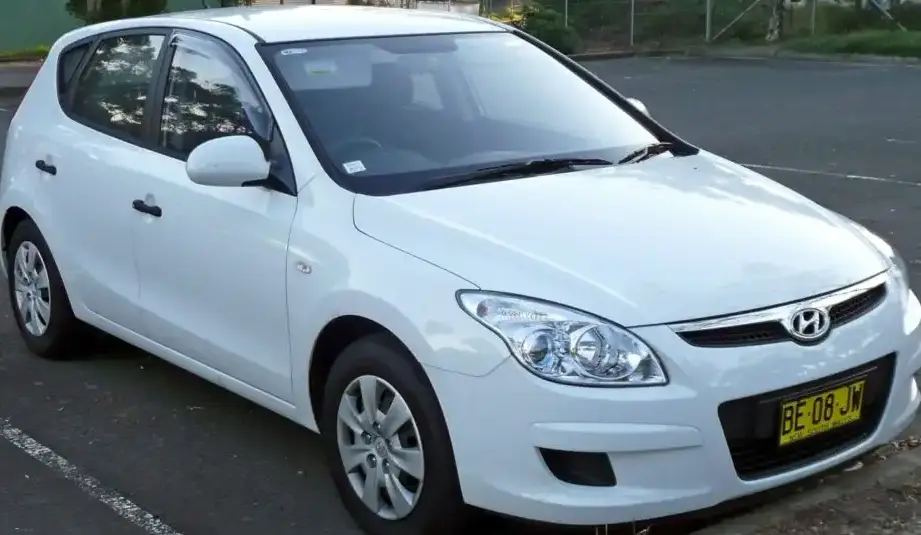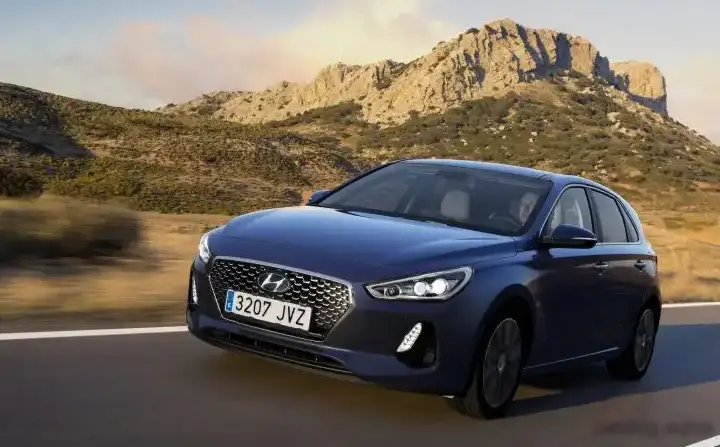
The Hyundai i30 III N Performance 2.0 T-GDI, produced from 2017 to 2018, represents Hyundai’s initial foray into the high-performance hot hatch segment. Positioned as the flagship variant of the third-generation i30 (PD), the ‘N’ model was developed with significant input from Hyundai’s motorsport division, aiming to compete directly with established European rivals like the Volkswagen Golf GTI and Ford Focus ST. This variant distinguished itself through a more powerful engine, upgraded suspension, and enhanced braking capabilities compared to the standard i30 trims. It was exclusively offered as a five-door hatchback, targeting driving enthusiasts seeking a blend of practicality and performance.
Technical Specifications
| Brand | Hyundai |
| Model | i30 |
| Generation | i30 III |
| Type (Engine) | N Performance 2.0 T-GDI (275 Hp) |
| Start of production | 2017 |
| End of production | 2018 |
| Powertrain Architecture | Internal Combustion engine |
| Body type | Hatchback |
| Seats | 5 |
| Doors | 5 |
| Fuel Type | Petrol (Gasoline) |
| Acceleration 0 – 100 km/h | 6.1 sec |
| Acceleration 0 – 62 mph | 6.1 sec |
| Acceleration 0 – 60 mph | 5.8 sec |
| Maximum speed | 250 km/h (155.34 mph) |
| Weight-to-power ratio | 5.2 kg/Hp, 192.4 Hp/tonne |
| Weight-to-torque ratio | 4 kg/Nm, 247 Nm/tonne |
| Power | 275 Hp @ 6000 rpm |
| Power per litre | 137.6 Hp/l |
| Torque | 353 Nm @ 1450-4500 rpm (260.36 lb.-ft. @ 1450-4500 rpm) |
| Engine layout | Front, Transverse |
| Engine Model/Code | G4KH |
| Engine displacement | 1998 cm3 (121.93 cu. in.) |
| Number of cylinders | 4 |
| Engine configuration | Inline |
| Cylinder Bore | 86 mm (3.39 in.) |
| Piston Stroke | 86 mm (3.39 in.) |
| Compression ratio | 9.5:1 |
| Number of valves per cylinder | 4 |
| Fuel injection system | Direct injection |
| Engine aspiration | Turbocharger, Intercooler |
| Valvetrain | DOHC, E-CVVT |
| Engine oil capacity | 4.8 l (5.07 US qt | 4.22 UK qt) |
| Coolant | 8.5 l (8.98 US qt | 7.48 UK qt) |
| Kerb Weight | 1429-1509 kg (3150.41 – 3326.78 lbs.) |
| Max. weight | 1950 kg (4299.01 lbs.) |
| Max load | 441-521 kg (972.24 – 1148.61 lbs.) |
| Trunk (boot) space – minimum | 395 l (13.95 cu. ft.) |
| Trunk (boot) space – maximum | 1301 l (45.94 cu. ft.) |
| Fuel tank capacity | 50 l (13.21 US gal | 11 UK gal) |
| Length | 4335 mm (170.67 in.) |
| Width | 1795 mm (70.67 in.) |
| Height | 1447-1451 mm (56.97 – 57.13 in.) |
| Wheelbase | 2650 mm (104.33 in.) |
| Front overhang | 905 mm (35.63 in.) |
| Rear overhang | 780 mm (30.71 in.) |
| Ride height (ground clearance) | 136-132 mm (5.35 – 5.2 in.) |
| Minimum turning circle | 11.6 m (38.06 ft.) |
| Drivetrain Architecture | Front wheel drive |
| Number of gears and type of gearbox | 6 gears, manual transmission |
| Front suspension | Independent type McPherson |
| Rear suspension | Independent multi-link suspension |
| Front brakes | Ventilated discs |
| Rear brakes | Disc |
| Assisting systems | ABS (Anti-lock braking system) |
| Steering type | Steering rack and pinion |
| Power steering | Electric Steering |
| Tires size | 225/40 R18; 235/35 R19 |
| Wheel rims size | 18; 19 |
Powertrain & Engine Architecture
At the heart of the i30 N Performance lies the Hyundai-Kia G4KH 2.0-liter turbocharged inline-four engine. This engine is a member of the Smartstream family, featuring direct injection and a twin-scroll turbocharger. The ‘N’ variant was specifically tuned to produce 275 horsepower at 6,000 rpm and 260 lb-ft of torque available from a low 1,450 rpm all the way to 4,500 rpm. The engine utilizes a cast aluminum block and cylinder head, incorporating Hyundai’s E-CVVT (Electronic Continuously Variable Valve Timing) technology for optimized performance and efficiency. The engine is paired exclusively with a six-speed manual transmission, a deliberate choice to enhance driver engagement. The transmission features reinforced components to handle the increased power output.
Driving Characteristics
The i30 N Performance delivers a noticeably more engaging driving experience than its standard counterparts. The 275 hp engine provides brisk acceleration, achieving 0-60 mph in around 5.8 seconds. The manual transmission offers precise shifts, and the engine’s broad torque curve ensures strong pull throughout the rev range. Hyundai engineers focused on improving throttle response and exhaust note, adding a distinctive growl that enhances the sporty character. The suspension is significantly stiffer than the standard i30, resulting in reduced body roll and improved handling. While this enhances cornering ability, it also results in a firmer ride quality, which may be less comfortable for everyday driving. The steering is well-weighted and provides good feedback, contributing to a confident feel behind the wheel.
Equipment & Trim Levels
The i30 N Performance came generously equipped, reflecting its position as the range-topping model. Standard features included sport seats upholstered in a combination of cloth and suede, a leather-wrapped steering wheel, and aluminum pedals. Infotainment was provided by a touchscreen display with Apple CarPlay and Android Auto compatibility. Available options included a panoramic sunroof, a premium sound system, and automatic climate control. Exterior styling cues included a more aggressive front fascia with larger air intakes, a rear spoiler, and unique alloy wheel designs. The interior also featured ‘N’ badging and distinctive blue stitching.
Chassis & Braking
The i30 N Performance benefits from a comprehensive chassis upgrade. The suspension features stiffer springs and dampers, along with thicker stabilizer bars, to minimize body roll and improve handling. The braking system was also upgraded with larger ventilated discs at the front and solid discs at the rear, providing enhanced stopping power. The car also features Hyundai’s Vehicle Stability Management (VSM) system and Anti-lock Braking System (ABS) as standard equipment. The steering system utilizes an electric power steering (EPS) system, tuned for greater responsiveness and feel.
Market Reception & Comparison
The i30 N Performance was generally well-received by automotive critics. Reviewers praised its engaging driving dynamics, powerful engine, and competitive price point. Compared to rivals like the Volkswagen Golf GTI, the i30 N was often lauded for its more raw and visceral driving experience, although some critics noted that the ride quality was less refined. Fuel economy was comparable to other hot hatches in its class, averaging around 25-30 mpg in mixed driving. Reliability reports have been generally positive, with few major issues reported.
Legacy
The i30 N Performance marked a significant turning point for Hyundai, demonstrating the brand’s commitment to performance and driving enjoyment. It established the ‘N’ sub-brand as a credible competitor in the hot hatch segment. While production of the original i30 N Performance was limited to 2017-2018, it laid the groundwork for subsequent ‘N’ models, including the i30 N (with a slightly less powerful engine) and the Kona N. On the used car market, the i30 N Performance remains a sought-after vehicle among enthusiasts, commanding a premium price due to its limited availability and engaging driving characteristics. The G4KH engine, while robust, requires regular maintenance, including oil changes and spark plug replacements, to ensure long-term reliability.