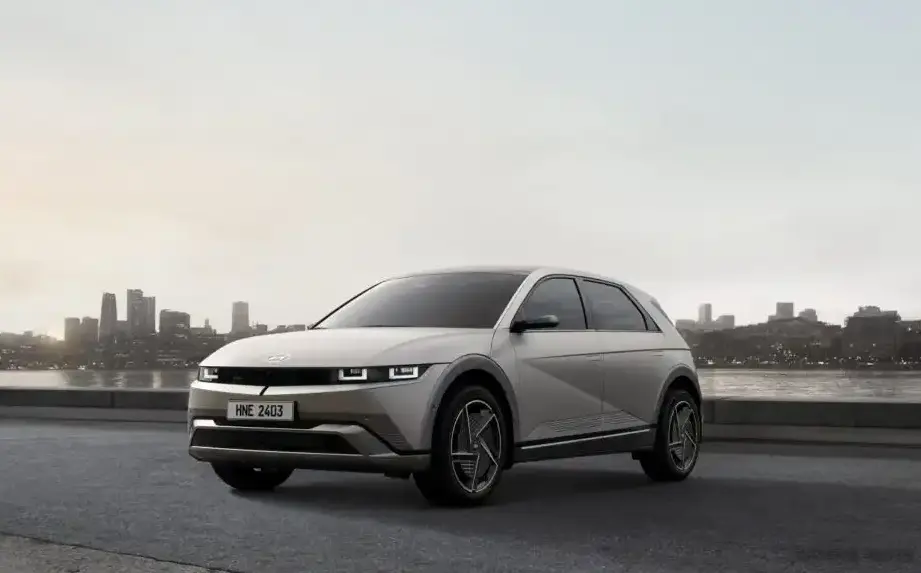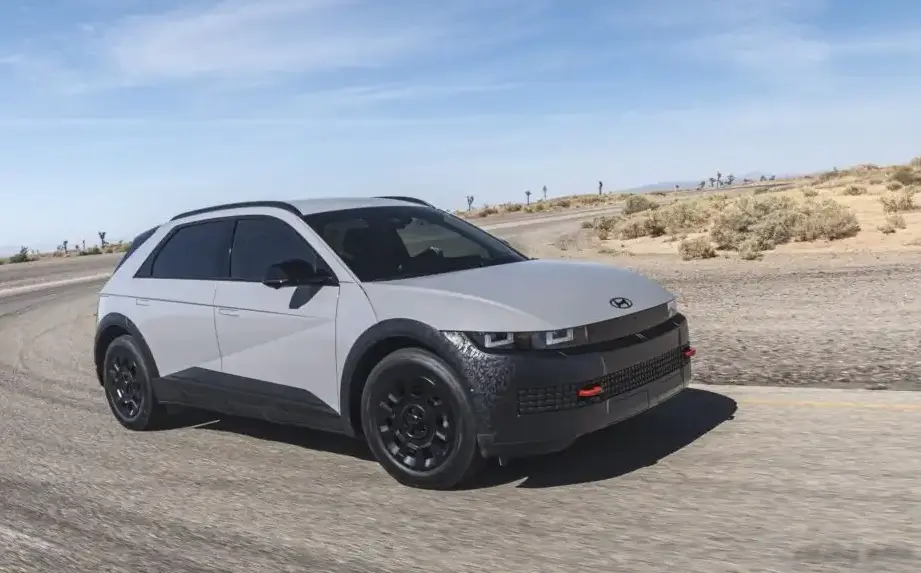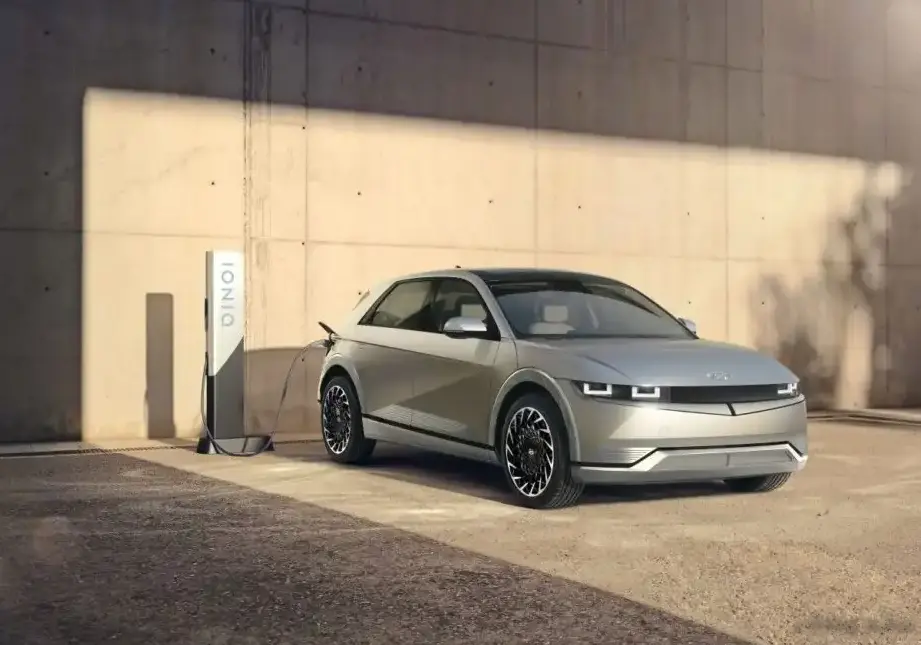
The Hyundai IONIQ 5 Standard Range, equipped with a 58 kWh battery and a single electric motor producing 170 horsepower, represents the entry point into Hyundai’s dedicated electric vehicle lineup. Introduced in February 2021 and continuing through the 2024 model year, this variant played a crucial role in making electric vehicle technology more accessible to a wider audience. Positioned as the most affordable IONIQ 5, it aimed to deliver a compelling combination of range, practicality, and modern features. The IONIQ 5 itself is built on Hyundai’s Electric Global Modular Platform (E-GMP), a dedicated EV architecture designed for optimal packaging and performance.
Technical Specifications
| Brand | Hyundai |
| Model | IONIQ 5 |
| Generation | IONIQ 5 |
| Type (Engine) | Standard Range 58 kWh (170 Hp) Electric |
| Start of production | February, 2021 |
| End of production | 2024 |
| Powertrain Architecture | BEV (Electric Vehicle) |
| Body type | SUV |
| Seats | 5 |
| Doors | 5 |
| Fuel Type | Electricity |
| Acceleration 0 – 100 km/h | 8.5 sec |
| Acceleration 0 – 62 mph | 8.5 sec |
| Acceleration 0 – 60 mph | 8.1 sec |
| Maximum speed | 185 km/h (114.95 mph) |
| Weight-to-power ratio | 10.8 kg/Hp, 92.9 Hp/tonne |
| Weight-to-torque ratio | 5.2 kg/Nm, 191.3 Nm/tonne |
| Gross battery capacity | 58 kWh |
| Net (usable) battery capacity | 54 kWh |
| Battery voltage | 522.7 V |
| Battery technology | Lithium-polymer (LiPo) |
| Battery location | Below the floor |
| All-electric range (WLTP) | 384 km (238.61 mi) |
| Average Energy consumption (WLTP) | 16.7 kWh/100 km (26.88 kWh/100 mi) |
| MPGe | 125 |
| km/kWh | 6 |
| mi/kWh | 3.7 |
| Electric motor power | 170 Hp |
| Electric motor Torque | 350 Nm (258.15 lb.-ft.) |
| Electric motor model/code | EM17 |
| Electric motor location | Rear axle, Transverse |
| System power | 170 Hp |
| System torque | 350 Nm (258.15 lb.-ft.) |
| Kerb Weight | 1830-1910 kg (4034.46 – 4210.83 lbs.) |
| Max. weight | 2370 kg (5224.96 lbs.) |
| Max load | 460-540 kg (1014.13 – 1190.5 lbs.) |
| Trunk (boot) space – minimum | 527 l (18.61 cu. ft.) |
| Trunk (boot) space – maximum | 1587 l (56.04 cu. ft.) |
| Max. roof load | 80 kg (176.37 lbs.) |
| Permitted trailer load with brakes (12%) | 750 kg (1653.47 lbs.) |
| Permitted trailer load without brakes | 750 kg (1653.47 lbs.) |
| Permitted towbar download | 100 kg (220.46 lbs.) |
| Length | 4635 mm (182.48 in.) |
| Width | 1890 mm (74.41 in.) |
| Height | 1605 mm (63.19 in.) |
| Wheelbase | 3000 mm (118.11 in.) |
| Front track | 1638 mm (64.49 in.) |
| Rear (Back) track | 1647 mm (64.84 in.) |
| Ride height (ground clearance) | 160 mm (6.3 in.) |
| Minimum turning circle (turning diameter) | 11.98 m (39.3 ft.) |
| Drivetrain Architecture | One electric motor drives the rear wheels. |
| Drive wheel | Rear wheel drive |
| Number of gears and type of gearbox | 1 gears, automatic transmission |
| Front suspension | Independent type McPherson |
| Rear suspension | Independent multi-link suspension |
| Front brakes | Ventilated discs, 325×30 mm |
| Rear brakes | Disc, 325×12 mm |
| Assisting systems | ABS (Anti-lock braking system) |
| Steering type | Steering rack and pinion |
| Power steering | Electric Steering |
| Tires size | 235/55 R19 |
| Wheel rims size | 7.5J x 19 |
INTRODUCTION
The Hyundai IONIQ 5 Standard Range, launched in 2021, marked a significant step for the Korean automaker into the rapidly expanding electric vehicle market. Built on the innovative E-GMP platform, it offered a compelling alternative to established EV competitors. This variant, with its 58 kWh battery pack and rear-wheel-drive configuration, was specifically designed to provide an accessible entry point into the IONIQ 5 family, prioritizing affordability and efficiency. It served as the base model, offering a solid foundation of features and technology while allowing customers to upgrade to longer-range or dual-motor options.
Powertrain & Engine Architecture
At the heart of the IONIQ 5 Standard Range lies a permanent magnet synchronous motor (PMSM) producing 170 horsepower and 258 lb-ft of torque. This motor is mounted on the rear axle, providing rear-wheel drive. The 58 kWh lithium-polymer battery pack is positioned under the floor, contributing to a low center of gravity and maximizing interior space. The E-GMP platform allows for 800V charging capability, enabling exceptionally fast DC fast charging times – capable of adding significant range in just minutes. The motor utilizes a single-speed reduction gear, effectively acting as the transmission. The EM17 motor code identifies this specific unit. The vehicle’s power electronics manage the flow of energy between the battery, motor, and other vehicle systems, optimizing efficiency and performance.
Driving Characteristics
The 170 hp and 258 lb-ft of torque provide adequate, though not exhilarating, performance. Acceleration from 0-60 mph takes approximately 8.1 seconds. The single-speed transmission delivers smooth, linear acceleration, characteristic of electric motors. Compared to the Long Range or dual-motor versions of the IONIQ 5, the Standard Range model feels noticeably less powerful, particularly during highway merging or overtaking maneuvers. However, the instant torque of the electric motor provides responsive acceleration in city driving. The rear-wheel-drive configuration contributes to a balanced feel, although traction can be limited in slippery conditions. The single-speed gearbox simplifies the driving experience, eliminating the need for gear changes.
Equipment & Trim Levels
The IONIQ 5 Standard Range typically came standard with features such as a 12.3-inch touchscreen infotainment system, digital instrument cluster, Hyundai SmartSense suite of safety features (including forward collision avoidance assist, lane keeping assist, and blind-spot monitoring), and cloth upholstery. Optional extras included features like a panoramic sunroof, leather upholstery, heated and ventilated front seats, and a premium Bose sound system. Trim levels varied slightly by market, but generally offered packages that added convenience and luxury features. The base trim focused on providing essential features at an accessible price point.
Chassis & Braking
The IONIQ 5 utilizes an independent McPherson strut suspension in the front and a multi-link suspension in the rear, providing a comfortable and controlled ride. The suspension is tuned to balance ride comfort with handling stability. Braking duties are handled by ventilated discs in the front (325x30mm) and solid discs in the rear (325x12mm). The vehicle is equipped with an Anti-lock Braking System (ABS) and Electronic Stability Control (ESC) as standard safety features. The relatively lower weight of the Standard Range model, compared to the Long Range variants, contributes to slightly improved braking performance.
Market Reception & Comparison
The IONIQ 5 Standard Range was generally well-received by critics, praised for its spacious interior, fast charging capabilities, and distinctive retro-futuristic styling. However, some reviewers noted that the base model’s acceleration was adequate but not particularly exciting. Compared to other entry-level EVs, such as the Nissan LEAF or Chevrolet Bolt, the IONIQ 5 offered a more premium interior and a more advanced charging system. Its WLTP range of 384 km (238.61 miles) was competitive within its segment, though real-world range varied depending on driving conditions and habits. Fuel economy, expressed as 125 MPGe, was also favorable compared to gasoline-powered vehicles.
Legacy
The Hyundai IONIQ 5 Standard Range played a pivotal role in establishing Hyundai as a serious contender in the electric vehicle market. The E-GMP platform proved to be a game-changer, offering exceptional packaging, fast charging, and a compelling driving experience. While the Standard Range model was eventually superseded by longer-range variants, it remains a popular choice in the used car market, offering a relatively affordable entry point into EV ownership. The powertrain has proven to be generally reliable, with few widespread issues reported. The IONIQ 5’s success paved the way for Hyundai’s continued expansion into the EV space, with subsequent models building upon the foundation laid by the Standard Range variant.