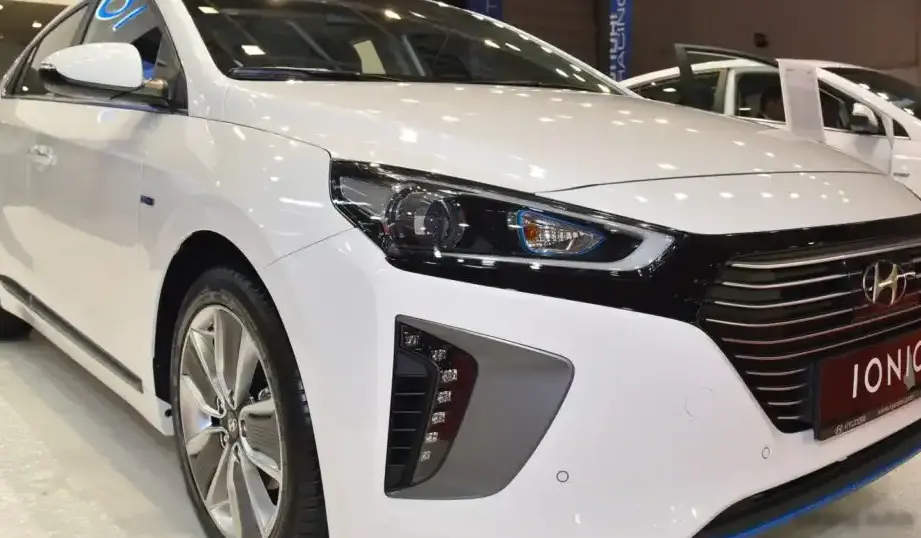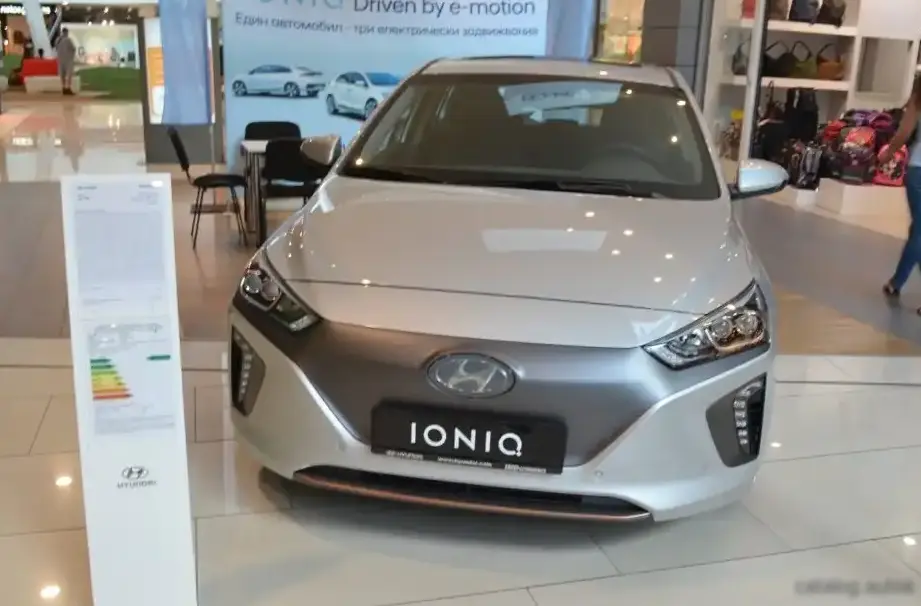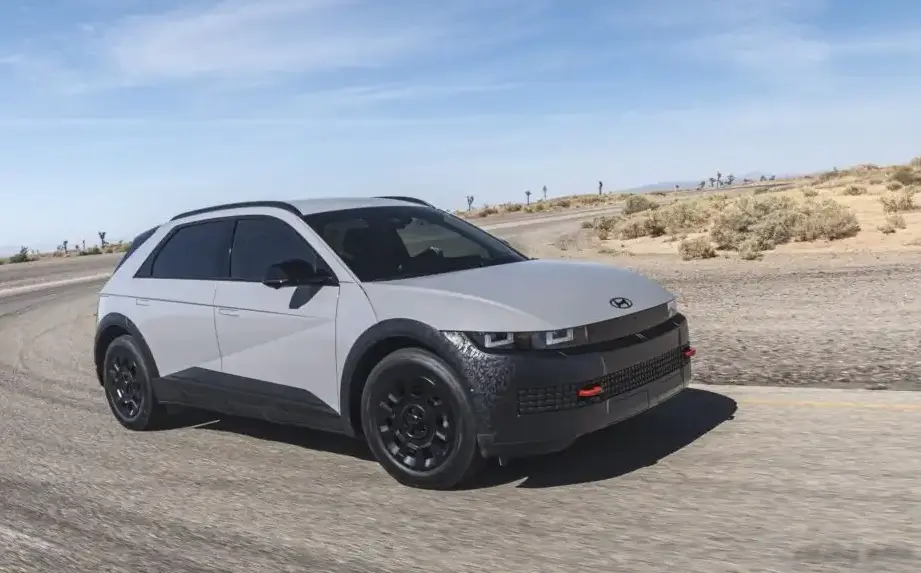
The Hyundai IONIQ (facelift, introduced in 2019) 1.6 GDI 141 hp Hybrid DCT represents a significant iteration of Hyundai’s foray into the hybrid vehicle market. Positioned as a mid-range offering within the IONIQ lineup – which also included fully electric and plug-in hybrid variants – this model aimed to provide a balance of fuel efficiency, practicality, and affordability. Production spanned from 2019 to July 2022, and it was primarily marketed towards consumers seeking a fuel-conscious compact liftback with the convenience of an automatic transmission. The facelift brought styling updates and refinements to the original IONIQ, enhancing its appeal in a competitive segment.
Technical Specifications
| Brand | Hyundai |
| Model | IONIQ |
| Generation | IONIQ (facelift 2019) |
| Type (Engine) | 1.6 GDI (141 Hp) Hybrid DCT |
| Start of production | 2019 |
| End of production | July, 2022 |
| Powertrain Architecture | FHEV (Full Hybrid Electric Vehicle) |
| Body type | Liftback |
| Seats | 5 |
| Doors | 5 |
| Fuel Type | Petrol (Gasoline) |
| Acceleration 0 – 100 km/h | 10.8 sec |
| Acceleration 0 – 62 mph | 10.8 sec |
| Acceleration 0 – 60 mph | 10.3 sec |
| Maximum speed | 185 km/h (114.95 mph) |
| Emission standard | Euro 6d-TEMP |
| Weight-to-power ratio | 10.4 kg/Hp, 96 Hp/tonne |
| Weight-to-torque ratio | 5.5 kg/Nm, 180.4 Nm/tonne |
| Gross battery capacity | 1.56 kWh |
| Battery voltage | 240 V |
| Battery technology | Lithium-polymer (LiPo) |
| Electric motor power | 44 Hp |
| Electric motor Torque | 170 Nm (125.39 lb.-ft.) |
| Electric motor type | Synchronous |
| System power | 141 Hp |
| System torque | 265 Nm (195.45 lb.-ft.) |
| Power | 105 Hp @ 5700 rpm |
| Power per litre | 66.5 Hp/l |
| Torque | 147 Nm @ 4000 rpm (108.42 lb.-ft. @ 4000 rpm) |
| Engine layout | Front, Transverse |
| Engine displacement | 1580 cm3 (96.42 cu. in.) |
| Number of cylinders | 4 |
| Engine configuration | Inline |
| Cylinder Bore | 72 mm (2.83 in.) |
| Piston Stroke | 97 mm (3.82 in.) |
| Compression ratio | 13:1 |
| Number of valves per cylinder | 4 |
| Fuel injection system | Direct injection |
| Engine aspiration | Naturally aspirated engine |
| Valvetrain | DOHC |
| Engine oil capacity | 3.8 l (4.02 US qt | 3.34 UK qt) |
| Coolant | 6.7 l (7.08 US qt | 5.9 UK qt) |
| Kerb Weight | 1469 kg (3238.59 lbs.) |
| Max. weight | 1870 kg (4122.64 lbs.) |
| Max load | 401 kg (884.05 lbs.) |
| Trunk (boot) space – minimum | 443 l (15.64 cu. ft.) |
| Trunk (boot) space – maximum | 1505 l (53.15 cu. ft.) |
| Fuel tank capacity | 45 l (11.89 US gal | 9.9 UK gal) |
| Permitted trailer load with brakes (12%) | 750 kg (1653.47 lbs.) |
| Permitted towbar download | 75 kg (165.35 lbs.) |
| Length | 4470 mm (175.98 in.) |
| Width | 1820 mm (71.65 in.) |
| Width including mirrors | 2045 mm (80.51 in.) |
| Height | 1450 mm (57.09 in.) |
| Wheelbase | 2700 mm (106.3 in.) |
| Front track | 1549-1563 mm (60.98 – 61.54 in.) |
| Rear (Back) track | 1563-1577 mm (61.54 – 62.09 in.) |
| Minimum turning circle | 10.6 m (34.78 ft.) |
| Number of gears and type of gearbox | 6 gears, automatic transmission DCT |
| Front suspension | Independent type McPherson |
| Rear suspension | Independent multi-link suspension |
| Front brakes | Disc |
| Rear brakes | Disc |
| Assisting systems | ABS (Anti-lock braking system) |
| Steering type | Steering rack and pinion |
| Power steering | Electric Steering |
| Tires size | 195/65 R15; 225/45 R17 |
| Wheel rims size | 6J x 15; 7J x 17 |
Powertrain & Engine Architecture
At the heart of the IONIQ Hybrid 1.6 GDI is a 1.6-liter inline-four cylinder gasoline engine, designated as the Gamma II family. This engine, utilizing direct injection (GDI) technology, produces 105 horsepower at 5700 rpm and 108.42 lb-ft of torque at 4000 rpm. The engine’s design prioritizes efficiency through features like a high compression ratio of 13:1 and a cooled exhaust gas recirculation (EGR) system. The engine is paired with a 44 hp electric motor, drawing power from a 1.56 kWh lithium-polymer battery pack. The combined system output reaches 141 hp and 195.45 lb-ft of torque. The powertrain utilizes a six-speed dual-clutch transmission (DCT), chosen for its responsiveness and efficiency compared to traditional automatic transmissions. The DCT allows for quick shifts and contributes to the overall fuel economy of the vehicle. The engine code is typically associated with the Gamma II engine family, and specific calibrations were implemented to optimize performance within the hybrid system.
Driving Characteristics
The 1.6 GDI Hybrid DCT delivers a comfortable and efficient driving experience. Acceleration from 0-60 mph takes approximately 10.3 seconds, which is adequate for everyday driving but not particularly sporty. The DCT provides smooth and relatively quick gear changes, although some drivers may notice a slight hesitation during low-speed maneuvers. The hybrid system seamlessly blends power from the gasoline engine and electric motor, offering a quiet and refined ride, especially in electric-only mode at lower speeds. Compared to the more powerful trims, this variant prioritizes fuel economy over outright performance. The gear ratios are tuned for efficiency, resulting in a slightly less engaging driving experience than the manual transmission options available in other IONIQ models. The electric motor provides instant torque, which helps to compensate for the engine’s modest power output.
Equipment & Trim Levels
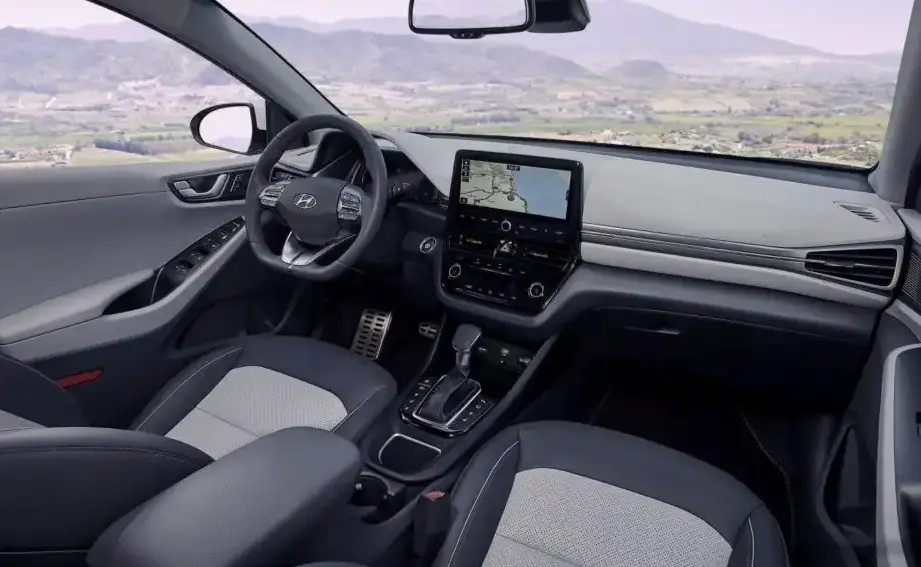
The 1.6 GDI Hybrid DCT was typically offered in SEL and Limited trim levels. The SEL trim included standard features such as a 7-inch touchscreen infotainment system with Apple CarPlay and Android Auto compatibility, a rearview camera, automatic emergency braking, lane departure warning, and a comfortable cloth interior. The Limited trim added features like leather upholstery, a larger 10.25-inch touchscreen, blind-spot monitoring, rear cross-traffic alert, and a premium audio system. Optional extras included a sunroof, heated and ventilated front seats, and a heads-up display. The interior design was modern and functional, with a focus on user-friendliness and practicality.
Chassis & Braking
The IONIQ Hybrid features a front-wheel-drive layout with an independent McPherson strut suspension in the front and an independent multi-link suspension in the rear. This suspension setup provides a comfortable ride and good handling characteristics. The car is equipped with disc brakes on all four wheels, along with ABS (Anti-lock Braking System) and electronic stability control. The steering is electric power-assisted, offering a light and responsive feel. The chassis was designed to minimize weight, contributing to improved fuel efficiency and handling. The suspension tuning was optimized for comfort and stability, rather than sporty performance.
Market Reception & Comparison
The Hyundai IONIQ Hybrid 1.6 GDI DCT was generally well-received by critics for its fuel efficiency, comfortable ride, and value for money. It consistently achieved impressive fuel economy ratings, making it a popular choice for commuters and environmentally conscious drivers. Compared to other hybrids in its class, such as the Toyota Prius, the IONIQ offered a more conventional styling and a more engaging driving experience. However, some critics noted that the interior materials were not as premium as those found in some competitors. The 1.6 GDI variant offered a more affordable entry point into the IONIQ Hybrid range compared to the plug-in hybrid and fully electric models.
Legacy
The Hyundai IONIQ Hybrid 1.6 GDI DCT has proven to be a reliable and durable vehicle. The powertrain, while not exceptionally powerful, is known for its longevity and relatively low maintenance costs. In the used car market, these models continue to be sought after for their fuel efficiency and practicality. The IONIQ helped establish Hyundai as a serious contender in the hybrid vehicle segment and paved the way for the company’s future electric vehicle offerings. The DCT transmission, while requiring occasional servicing, has generally proven to be reliable, and the hybrid system components have demonstrated good long-term durability.