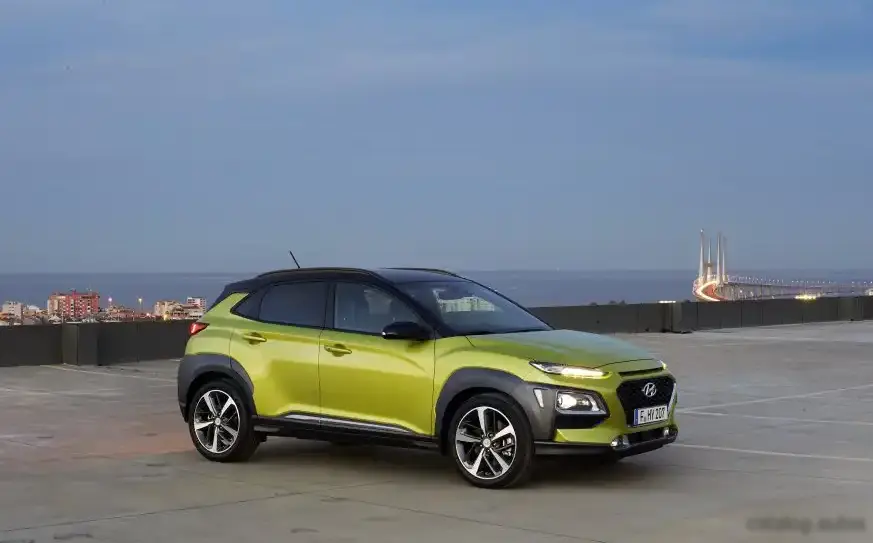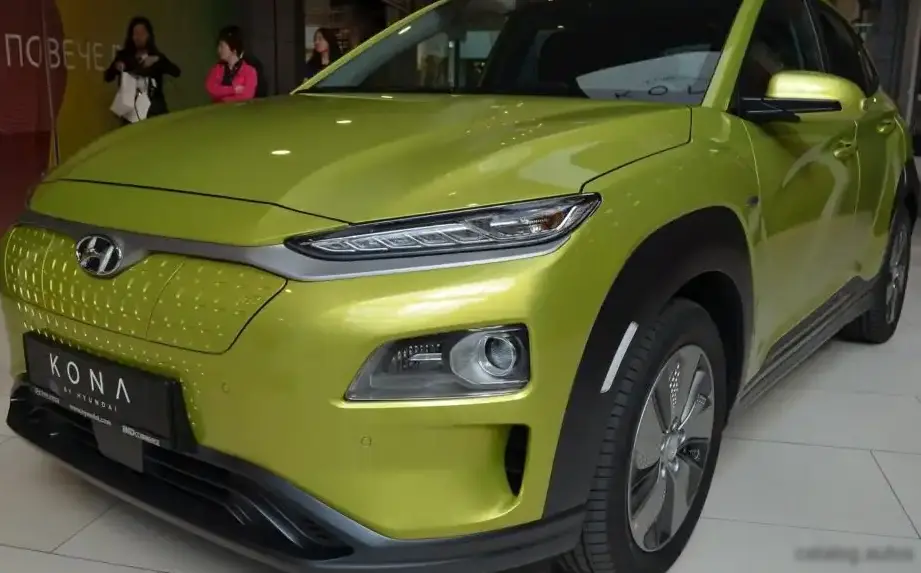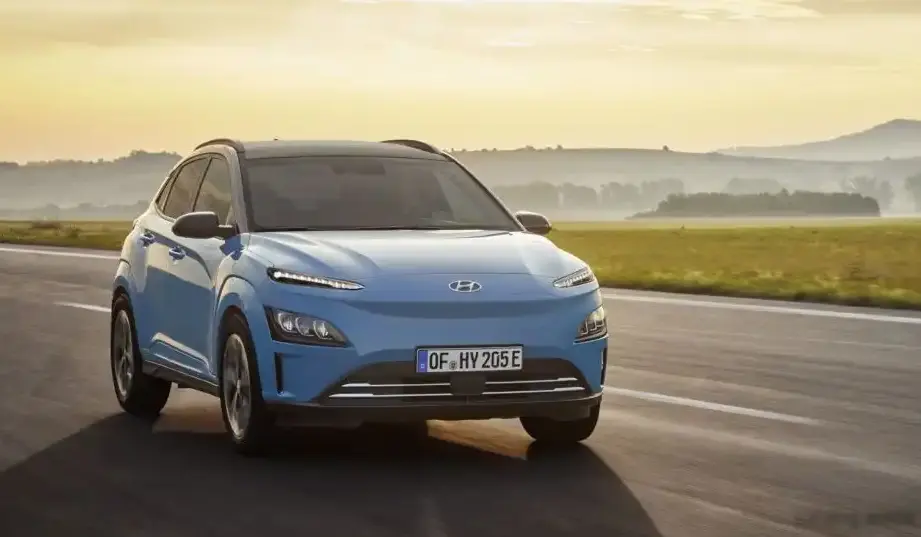
The Hyundai Kona Electric, specifically the Long Range variant with the 67 kWh battery pack and 204 horsepower electric motor, represents a significant step in Hyundai’s commitment to electric vehicle technology. Introduced with the facelift in November 2020 and continuing through April 2023, this version of the Kona aimed to address range anxiety – a key concern for potential EV buyers – while maintaining the subcompact SUV’s practical size and appealing styling. It slots into the Kona lineup as the premium electric offering, positioned above the shorter-range standard battery version and competing with other long-range EVs like the Nissan Leaf Plus and early model Chevrolet Bolt EUV.
Technical Specifications
| Brand | Hyundai |
| Model | Kona |
| Generation | Kona I (facelift 2020) |
| Type (Engine) | Long range 67 kWh (204 Hp) Electric |
| Start of production | November, 2020 |
| End of production | April, 2023 |
| Powertrain Architecture | BEV (Electric Vehicle) |
| Body type | SUV |
| Seats | 5 |
| Doors | 5 |
| Fuel Type | Electricity |
| Acceleration 0 – 100 km/h | 7.9 sec |
| Acceleration 0 – 62 mph | 7.9 sec |
| Acceleration 0 – 60 mph | 7.5 sec |
| Maximum speed | 167 km/h (103.77 mph) |
| Weight-to-power ratio | 8.3 kg/Hp, 121.1 Hp/tonne |
| Weight-to-torque ratio | 4.3 kg/Nm, 234.4 Nm/tonne |
| Gross battery capacity | 67 kWh |
| Net (usable) battery capacity | 64 kWh |
| Battery voltage | 356 V |
| Battery technology | Lithium-polymer (LiPo) |
| Battery location | Below the floor |
| All-electric range (WLTP) | 484 km (300.74 mi) |
| Average Energy consumption (WLTP) | 14.7 kWh/100 km (23.66 kWh/100 mi) |
| MPGe | 142 |
| km/kWh | 6.8 |
| mi/kWh | 4.2 |
| Electric motor power | 204 Hp |
| Electric motor Torque | 395 Nm (291.34 lb.-ft.) |
| Electric motor model/code | EM16 |
| Electric motor location | Front axle, Transverse |
| Electric motor type | Synchronous |
| System power | 204 Hp |
| System torque | 395 Nm (291.34 lb.-ft.) |
| Kerb Weight | 1685 kg (3714.79 lbs.) |
| Max. weight | 2170 kg (4784.03 lbs.) |
| Max load | 485 kg (1069.24 lbs.) |
| Trunk (boot) space – minimum | 332 l (11.72 cu. ft.) |
| Trunk (boot) space – maximum | 1114 l (39.34 cu. ft.) |
| Permitted towbar download | 100 kg (220.46 lbs.) |
| Length | 4205 mm (165.55 in.) |
| Width | 1800 mm (70.87 in.) |
| Height | 1570 mm (61.81 in.) |
| Wheelbase | 2600 mm (102.36 in.) |
| Front track | 1564 mm (61.57 in.) |
| Rear (Back) track | 1576 mm (62.05 in.) |
| Front overhang | 875 mm (34.45 in.) |
| Rear overhang | 730 mm (28.74 in.) |
| Ride height (ground clearance) | 158 mm (6.22 in.) |
| Drivetrain Architecture | One electric motor drives the front wheels. |
| Drive wheel | Front wheel drive |
| Number of gears and type of gearbox | 1 gears, automatic transmission |
| Front suspension | Independent type McPherson |
| Rear suspension | Independent multi-link suspension |
| Front brakes | Ventilated discs |
| Rear brakes | Disc |
| Assisting systems | ABS (Anti-lock braking system) |
| Steering type | Steering rack and pinion |
| Power steering | Electric Steering |
| Tires size | 215/55 R17 |
| Wheel rims size | 7J x 17 |
Powertrain & Engine Architecture
The Kona Electric Long Range utilizes a permanent magnet synchronous motor (PMSM) designated EM16, producing 204 horsepower and 291 lb-ft of torque. This motor is front-wheel drive and mounted transversely. The heart of the system is the 67 kWh lithium-polymer battery pack, positioned under the floor to optimize interior space and lower the vehicle’s center of gravity. Hyundai opted for a liquid-cooled battery thermal management system to maintain optimal operating temperatures and prolong battery life. The single-speed automatic transmission is a reduction gear designed to efficiently transfer power from the motor to the wheels. The vehicle features a standard onboard charger capable of Level 2 AC charging, and supports DC fast charging for quicker replenishment of the battery.
Driving Characteristics
The 204 hp and 291 lb-ft of instant torque deliver brisk acceleration, with a 0-60 mph time of around 7.5 seconds. While not a performance vehicle, the Kona Electric Long Range offers ample power for everyday driving and highway merging. The single-speed transmission provides seamless acceleration, and the low center of gravity contributes to stable handling. Compared to the standard range Kona Electric, the Long Range variant offers a noticeably more confident driving experience, particularly when fully loaded or tackling inclines. The regenerative braking system, adjustable through paddle shifters, allows drivers to recapture energy and extend range, offering a one-pedal driving experience in its strongest setting. Compared to gasoline-powered Kona models, the electric version provides a quieter and smoother ride.
Equipment & Trim Levels
The Kona Electric Long Range typically came well-equipped, often including features like a touchscreen infotainment system with Apple CarPlay and Android Auto compatibility, a digital instrument cluster, automatic climate control, and a suite of advanced driver-assistance systems (ADAS) such as lane keeping assist, forward collision avoidance assist, and adaptive cruise control. Higher trim levels added features like a sunroof, leather upholstery, heated and ventilated front seats, and a premium audio system. Interior upholstery was typically cloth on base trims, upgrading to leather on higher-spec models. Dashboard configurations were consistent across trims, with a focus on a modern and user-friendly layout.
Chassis & Braking
The Kona Electric utilizes an independent McPherson strut front suspension and an independent multi-link rear suspension, tuned to provide a comfortable ride and responsive handling. The front brakes are ventilated discs, while the rear brakes are solid discs. ABS (Anti-lock Braking System) is standard. Due to the added weight of the battery pack, the suspension components were slightly reinforced compared to gasoline-powered Kona models. The steering system is an electric power-assisted rack and pinion setup, providing precise and responsive steering feel. Standard tire size was 215/55 R17, mounted on 7J x 17 inch alloy wheels.
Market Reception & Comparison
The Kona Electric Long Range was generally well-received by automotive critics, praised for its impressive range, comfortable ride, and well-equipped interior. Its range of approximately 300 miles on a single charge was a significant selling point, addressing a major concern for EV buyers. Fuel economy, expressed as MPGe, was rated at 142, making it highly efficient. Compared to other trims in the Kona lineup, the Electric Long Range commanded a higher price but offered a significantly different driving experience and lower running costs. Reliability reports have been generally positive, with few major issues reported regarding the powertrain.
Legacy
The Hyundai Kona Electric Long Range played a crucial role in establishing Hyundai as a serious contender in the electric vehicle market. Its combination of range, practicality, and affordability made it a popular choice for consumers looking to transition to electric mobility. The powertrain has proven to be relatively reliable, and used models continue to hold their value reasonably well. The Kona Electric’s success paved the way for Hyundai’s broader EV strategy, including the introduction of models like the Ioniq 5 and Ioniq 6. The 67 kWh battery pack and EM16 motor continue to be refined and utilized in subsequent Hyundai electric vehicle offerings.