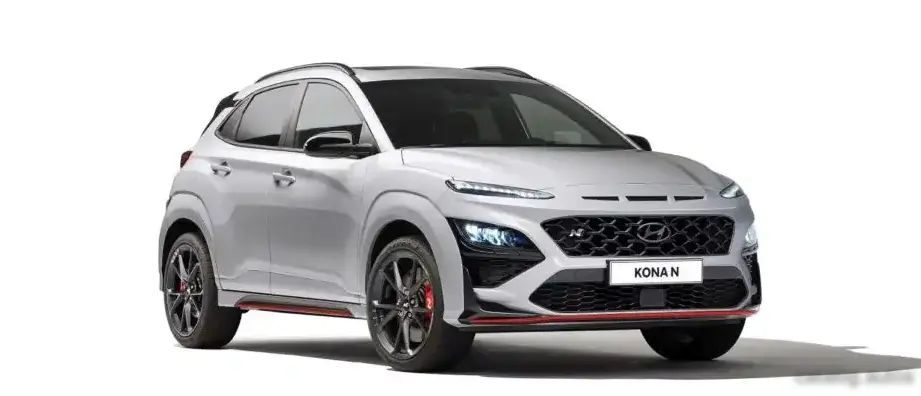
The Hyundai Kona N 2.0 T-GDi DCT, introduced in July 2021 as part of the Kona I facelift (produced through April 2023), represents the high-performance variant of Hyundai’s subcompact SUV. Positioned as the flagship model within the Kona range, it aimed to deliver a compelling blend of practicality, sporty handling, and substantial power. This variant was primarily marketed in Europe and select global markets, offering a more engaging driving experience than the standard Kona trims. It’s a key example of Hyundai’s increasing focus on performance-oriented vehicles under the “N” sub-brand, developed with motorsport-inspired engineering.
Technical Specifications
| Brand | Hyundai |
| Model | Kona |
| Generation | Kona I (facelift 2020) |
| Type (Engine) | N 2.0 T-GDi (280 Hp) DCT |
| Start of production | July, 2021 |
| End of production | April, 2023 |
| Powertrain Architecture | Internal Combustion engine |
| Body type | SUV |
| Seats | 5 |
| Doors | 5 |
| Fuel Type | Petrol (Gasoline) |
| Acceleration 0 – 100 km/h | 5.5 sec |
| Acceleration 0 – 62 mph | 5.5 sec |
| Acceleration 0 – 60 mph | 5.2 sec |
| Maximum speed | 240 km/h (149.13 mph) |
| Weight-to-power ratio | 5.4 kg/Hp, 185.4 Hp/tonne |
| Weight-to-torque ratio | 3.9 kg/Nm, 259.6 Nm/tonne |
| Power | 280 Hp |
| Power per litre | 140.1 Hp/l |
| Torque | 392 Nm (289.12 lb.-ft.) |
| Engine layout | Front, Transverse |
| Engine Model/Code | Theta II / G4KH |
| Engine displacement | 1998 cm3 (121.93 cu. in.) |
| Fuel injection system | Direct injection |
| Engine aspiration | Turbocharger, Intercooler |
| Engine oil capacity | 5.2 l (5.49 US qt | 4.58 UK qt) |
| Coolant | 6.9 l (7.29 US qt | 6.07 UK qt) |
| Kerb Weight | 1510 kg (3328.98 lbs.) |
| Trunk (boot) space – minimum | 361 l (12.75 cu. ft.) |
| Trunk (boot) space – maximum | 1143 l (40.36 cu. ft.) |
| Length | 4215 mm (165.94 in.) |
| Width | 1800 mm (70.87 in.) |
| Height | 1565 mm (61.61 in.) |
| Wheelbase | 2600 mm (102.36 in.) |
| Drivetrain Architecture | The Internal combustion engine (ICE) drives the front wheels of the vehicle. |
| Drive wheel | Front wheel drive |
| Number of gears and type of gearbox | 8 gears, automatic transmission DCT |
| Rear suspension | Independent multi-link suspension |
| Front brakes | Ventilated discs |
| Rear brakes | Ventilated discs |
| Assisting systems | ABS (Anti-lock braking system) |
| Steering type | Steering rack and pinion |
| Power steering | Electric Steering |
| Tires size | 235/40 R19 |
| Wheel rims size | 19 |
Powertrain & Engine Architecture
The Kona N is powered by the Theta II 2.0-liter turbocharged gasoline direct injection (TGDI) engine, specifically the G4KH engine code. This engine produces 280 horsepower and 392 Nm (289 lb-ft) of torque. The direct injection system optimizes fuel delivery for improved efficiency and performance. A twin-scroll turbocharger with an intercooler minimizes turbo lag and maximizes boost pressure. The engine features a reinforced piston and connecting rod design to handle the increased power output. The eight-speed dual-clutch transmission (DCT) provides rapid and precise gear changes, enhancing the sporty driving experience. Hyundai engineers specifically tuned the DCT for quicker upshifts and downshifts in N mode. The engine also incorporates a start/stop system to improve fuel economy during city driving.
Driving Characteristics
The Kona N delivers a noticeably more aggressive driving experience compared to other Kona variants. The 280 hp engine and quick-shifting DCT result in a 0-60 mph time of around 5.2 seconds. The DCT’s programming prioritizes performance, holding gears longer and downshifting more aggressively. The suspension is significantly stiffer and lower than standard Kona models, reducing body roll and improving cornering stability. Hyundai implemented electronically controlled suspension to adapt to varying road conditions. While the firm suspension provides excellent handling, it can result in a less comfortable ride on rough surfaces. The front-wheel-drive configuration, combined with the high power output, can lead to some torque steer under hard acceleration. The N Grin Shift button provides a temporary power boost, increasing horsepower to 290 for up to 20 seconds.
Equipment & Trim Levels
The Kona N came generously equipped with performance-focused features. Standard equipment included sport seats with enhanced bolstering, a unique N steering wheel with drive mode selectors, and N-branded accents throughout the interior and exterior. The infotainment system featured a touchscreen display with Apple CarPlay and Android Auto compatibility. Safety features included forward collision avoidance assist, lane keeping assist, and blind-spot monitoring. Optional extras included a head-up display, premium sound system, and a panoramic sunroof. Interior upholstery was typically a combination of cloth and leather, with distinctive blue stitching. The dashboard layout was similar to other Kona models but featured unique N-specific graphics and displays.
Chassis & Braking
The Kona N features a reinforced chassis to handle the increased stresses of high-performance driving. The suspension system utilizes stiffer springs and dampers, along with larger stabilizer bars, to minimize body roll. The front suspension incorporates a unique knuckle design for improved steering response. The braking system consists of ventilated discs on all four wheels, providing ample stopping power. The N variant also received larger brake rotors and calipers compared to standard Kona models. The electric power steering system is calibrated for greater precision and feedback. The standard tire size is 235/40 R19, providing a good balance of grip and ride comfort.
Market Reception & Comparison
The Hyundai Kona N was generally well-received by automotive critics, who praised its engaging driving dynamics and impressive performance. Reviewers noted that it offered a compelling alternative to more established performance SUVs like the Volkswagen T-Roc R and the Ford Puma ST. Compared to the standard Kona 1.0 T-GDi, the N variant offered significantly more power and a much sportier driving experience, but at the cost of fuel economy and ride comfort. The N’s DCT transmission was praised for its quick shifts, but some reviewers found it less refined than traditional automatic transmissions. Fuel economy was rated at around 25-28 mpg combined, which is lower than the 30-35 mpg achieved by the base Kona models. Reliability reports have been generally positive, with few major issues reported.
Legacy
The Hyundai Kona N represents a significant step forward for Hyundai’s N performance division. It demonstrated the brand’s ability to create a genuinely engaging and capable performance SUV. While production was relatively short-lived (2021-2023), the Kona N has established a strong following among enthusiasts. On the used car market, Kona N models command a premium over standard Kona variants, reflecting their performance capabilities and limited availability. The powertrain, while potent, has proven to be relatively reliable, with proper maintenance. The Kona N’s success paved the way for further N models, solidifying Hyundai’s commitment to the performance car segment.