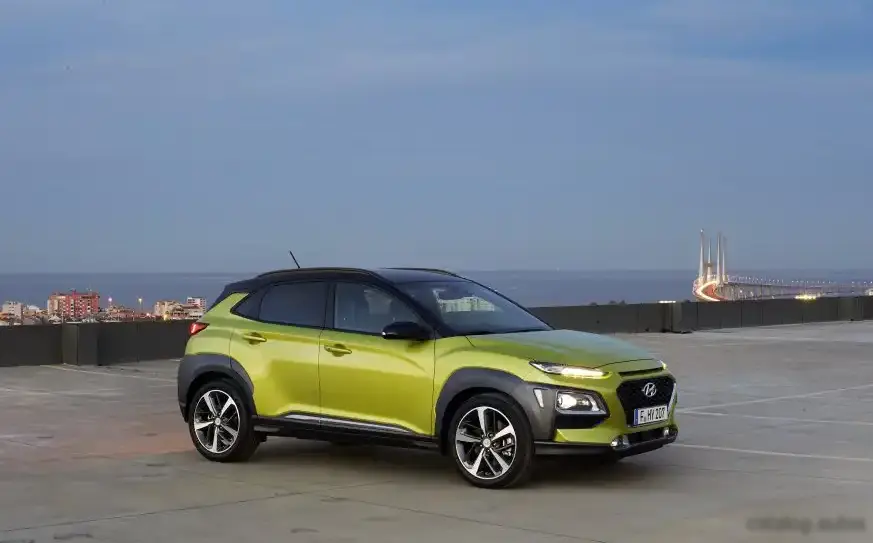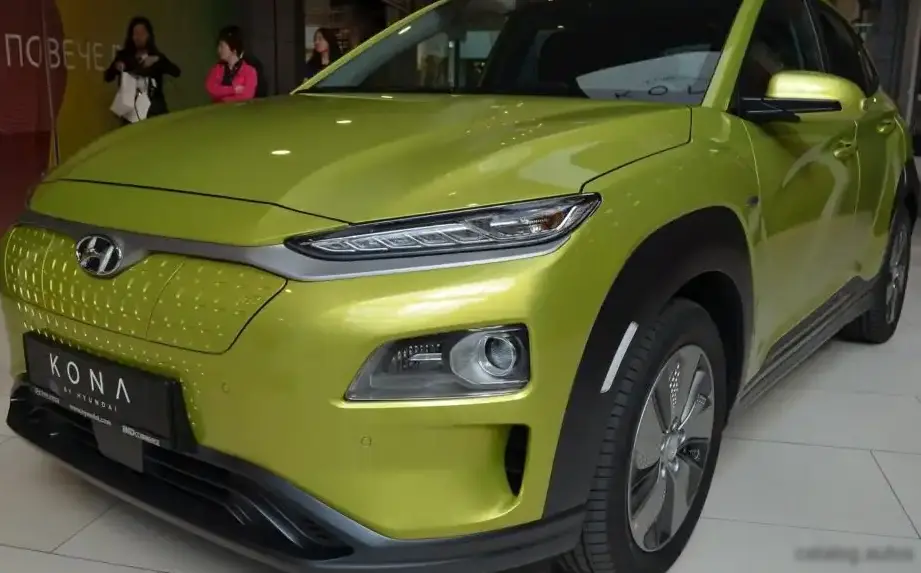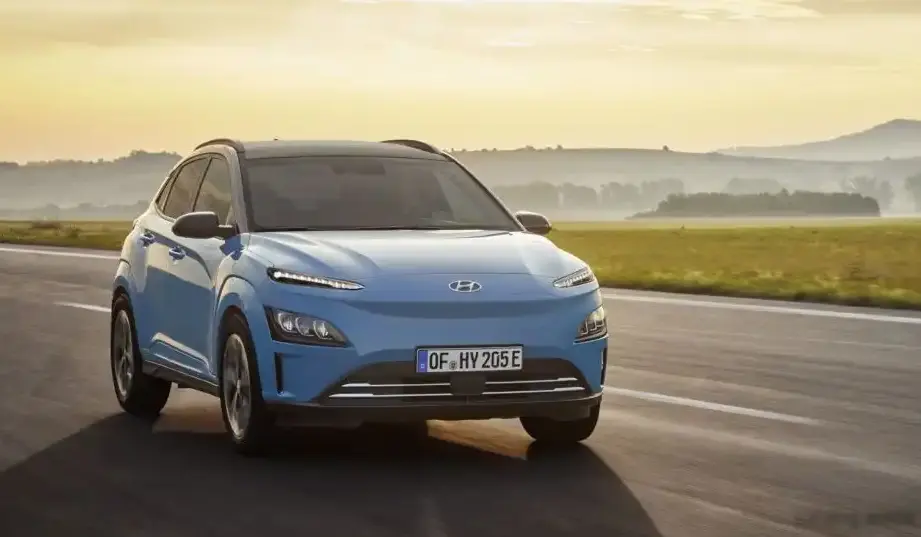
The Hyundai Kona Electric, specifically the Standard Range variant with the 42 kWh battery pack producing 136 horsepower, was a key model in Hyundai’s push towards electrification. Introduced with the facelift in November 2020 and continuing through April 2023, this version of the Kona represented an accessible entry point into the all-electric subcompact SUV market. It was positioned as the more affordable option within the Kona Electric lineup, slotting below the Long Range model with its larger battery and extended range. The Kona Electric, in general, is built on the Hyundai-Kia B-platform (also known as the 1HX0/A3 platform), shared with the Kia Niro and Hyundai Venue.
Technical Specifications
| Brand | Hyundai |
| Model | Kona |
| Generation | Kona I (facelift 2020) |
| Type (Engine) | Standard range 42 kWh (136 Hp) Electric |
| Start of production | November, 2020 |
| End of production | April, 2023 |
| Powertrain Architecture | BEV (Electric Vehicle) |
| Body type | SUV |
| Seats | 5 |
| Doors | 5 |
| Fuel Type | Electricity |
| Acceleration 0 – 100 km/h | 9.9 sec |
| Acceleration 0 – 62 mph | 9.9 sec |
| Acceleration 0 – 60 mph | 9.4 sec |
| Maximum speed | 155 km/h (96.31 mph) |
| Weight-to-power ratio | 11.3 kg/Hp, 88.6 Hp/tonne |
| Weight-to-torque ratio | 3.9 kg/Nm, 257.3 Nm/tonne |
| Gross battery capacity | 42 kWh |
| Net (usable) battery capacity | 39.2 kWh |
| Battery voltage | 327 V |
| Battery technology | Lithium-polymer (LiPo) |
| Battery location | Below the floor |
| All-electric range (WLTP) | 305 km (189.52 mi) |
| Average Energy consumption (WLTP) | 14.3 kWh/100 km (23.01 kWh/100 mi, 146 MPGe, 7 km/kWh, 4.3 mi/kWh) |
| Electric motor power | 136 Hp |
| Electric motor Torque | 395 Nm (291.34 lb.-ft.) |
| Electric motor model/code | EM16 |
| Electric motor location | Front axle, Transverse |
| Electric motor type | Synchronous |
| System power | 136 Hp |
| System torque | 395 Nm (291.34 lb.-ft.) |
| Kerb Weight | 1535 kg (3384.1 lbs.) |
| Max. weight | 2020 kg (4453.34 lbs.) |
| Max load | 485 kg (1069.24 lbs.) |
| Trunk (boot) space – minimum | 332 l (11.72 cu. ft.) |
| Trunk (boot) space – maximum | 1114 l (39.34 cu. ft.) |
| Length | 4205 mm (165.55 in.) |
| Width | 1800 mm (70.87 in.) |
| Height | 1570 mm (61.81 in.) |
| Wheelbase | 2600 mm (102.36 in.) |
| Front track | 1564 mm (61.57 in.) |
| Rear (Back) track | 1575 mm (62.01 in.) |
| Front overhang | 875 mm (34.45 in.) |
| Rear overhang | 730 mm (28.74 in.) |
| Ride height (ground clearance) | 158 mm (6.22 in.) |
| Drive wheel | Front wheel drive |
| Number of gears and type of gearbox | 1 gears, automatic transmission |
| Front suspension | Independent type McPherson |
| Rear suspension | Independent multi-link suspension |
| Front brakes | Ventilated discs |
| Rear brakes | Disc |
| Assisting systems | ABS (Anti-lock braking system) |
| Steering type | Steering rack and pinion |
| Power steering | Electric Steering |
| Tires size | 215/55 R17 |
| Wheel rims size | 7J x 17 |
INTRODUCTION
The 42 kWh Hyundai Kona Electric, launched with the 2020 facelift, was designed to broaden the appeal of electric vehicles to a wider audience. Hyundai recognized the need for a more affordable EV option, and this trim delivered on that front. It offered a practical range of approximately 189 miles (WLTP cycle) and a respectable level of performance for daily commuting and urban driving. The Kona Electric quickly became a popular choice in Europe and other markets where government incentives and growing environmental awareness were driving EV adoption. In the US market, it served as a competitive offering in the burgeoning subcompact electric SUV segment.
Powertrain & Engine Architecture
At the heart of the Kona Electric Standard Range is a permanent magnet synchronous motor (PMSM) producing 136 horsepower and 291 lb-ft of torque. The motor, designated EM16, is transversely mounted at the front axle, driving the front wheels. The 42 kWh lithium-polymer battery pack is located under the floor, contributing to a low center of gravity and improved handling. The battery utilizes a sophisticated thermal management system to maintain optimal operating temperatures, crucial for longevity and performance. The Kona Electric employs a single-speed automatic transmission, typical of most electric vehicles, providing seamless acceleration. The vehicle features a standard onboard charger capable of Level 2 AC charging, and supports DC fast charging for quicker replenishment of the battery. The power electronics and inverter are integrated into the powertrain to efficiently convert DC battery power to AC for the motor.
Driving Characteristics
The 136 hp and 291 lb-ft of instant torque deliver brisk acceleration, with a 0-60 mph time of around 9.4 seconds. While not as quick as the Long Range model, the Standard Range Kona Electric provides ample power for everyday driving situations. The single-speed transmission offers linear power delivery, and the regenerative braking system allows for one-pedal driving in many scenarios, enhancing efficiency and driver convenience. The suspension is tuned for comfort, providing a relatively smooth ride over typical road surfaces. Steering is light and precise, making the Kona Electric easy to maneuver in urban environments. Compared to the Long Range version, the Standard Range model feels slightly less responsive, particularly during highway overtaking maneuvers, but the difference is generally not significant for most drivers.
Equipment & Trim Levels
The Kona Electric Standard Range typically came well-equipped, even in its base trim. Standard features often included a touchscreen infotainment system with Apple CarPlay and Android Auto compatibility, a rearview camera, lane keeping assist, forward collision avoidance assist, and automatic emergency braking. Interior upholstery was typically cloth, with options for upgraded materials available on higher trims. Available options included a sunroof, heated and ventilated front seats, a premium audio system, and a head-up display. The dashboard layout is modern and driver-focused, with a digital instrument cluster providing key information about the vehicle’s status and energy consumption.
Chassis & Braking
The Kona Electric utilizes a McPherson strut front suspension and a multi-link rear suspension, providing a good balance of ride comfort and handling. The front brakes are ventilated discs, while the rear brakes are solid discs. ABS (Anti-lock Braking System) is standard, along with Electronic Stability Control (ESC) and Traction Control System (TCS). The steering system is an electric power-assisted rack and pinion, offering precise and responsive steering feel. The vehicle’s relatively low center of gravity, thanks to the underfloor battery pack, contributes to stable handling characteristics.
Market Reception & Comparison
The Hyundai Kona Electric Standard Range was generally well-received by automotive critics. It was praised for its practicality, affordability, and decent range. Compared to other EVs in its class, such as the Nissan LEAF and Chevrolet Bolt, the Kona Electric offered a more stylish design and a more refined interior. Fuel economy, expressed as MPGe, was competitive, typically around 146 MPGe combined. Reliability reports have been generally positive, with few major issues reported. The Standard Range model offered a compelling value proposition for buyers seeking an affordable and practical electric SUV.
Legacy
The Hyundai Kona Electric, including the 42 kWh Standard Range variant, played a significant role in establishing Hyundai as a major player in the electric vehicle market. The powertrain has proven to be relatively reliable, with the battery pack demonstrating good longevity. On the used car market, these models remain popular due to their affordability and practicality. While newer EVs with longer ranges and faster charging capabilities have emerged, the Kona Electric continues to be a viable option for buyers seeking a budget-friendly electric SUV. The Kona Electric helped pave the way for Hyundai’s continued expansion of its EV lineup, including the Ioniq 5 and Ioniq 6.