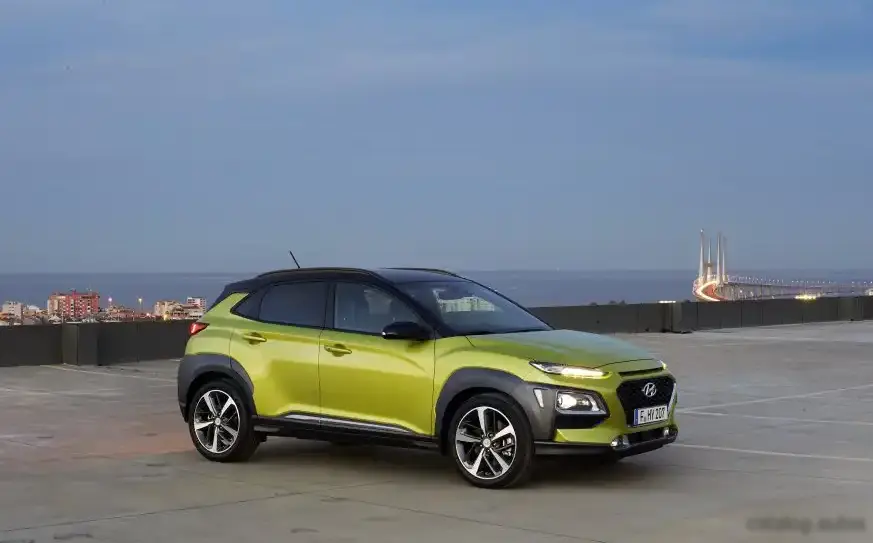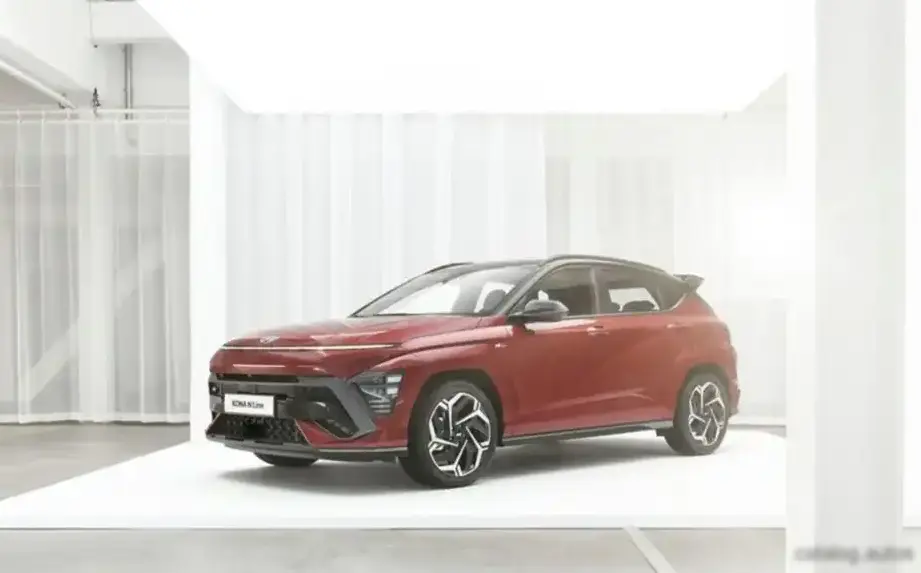
The Hyundai Kona II 1.6 T-GDI (170 hp) DCT represents a significant offering within the second generation of Hyundai’s popular subcompact SUV, launched in August 2024. Positioned as a mid-range trim level, this variant balances performance and efficiency, appealing to buyers seeking a modern and well-equipped vehicle. Production continued through August 2025, making it a relatively short-lived but important iteration of the Kona II. It builds upon the foundation of the first-generation Kona, addressing feedback and incorporating updated technology and styling. This model is primarily targeted towards the European and Asian markets, though it is also available in North America.
Technical Specifications
| Brand | Hyundai |
| Model | Kona |
| Generation | Kona II |
| Type (Engine) | 1.6 T-GDI (170 Hp) DCT |
| Start of production | August, 2024 |
| End of production | August, 2025 |
| Powertrain Architecture | Internal Combustion engine |
| Body type | SUV |
| Seats | 5 |
| Doors | 5 |
| Combined fuel consumption (WLTP) | 6.3-6.5 l/100 km (37.3 – 36.2 US mpg, 44.8 – 43.5 UK mpg, 15.9 – 15.4 km/l) |
| CO2 emissions (WLTP) | 143-146 g/km |
| Fuel Type | Petrol (Gasoline) |
| Acceleration 0 – 100 km/h | 8.5 sec |
| Acceleration 0 – 62 mph | 8.5 sec |
| Acceleration 0 – 60 mph | 8.1 sec |
| Maximum speed | 208 km/h (129.25 mph) |
| Emission standard | Euro 6e |
| Weight-to-power ratio | 8 kg/Hp, 125 Hp/tonne |
| Weight-to-torque ratio | 5.1 kg/Nm, 194.9 Nm/tonne |
| Power | 170 Hp @ 6000 rpm |
| Power per litre | 106.4 Hp/l |
| Torque | 265 Nm @ 1600-4000 rpm (195.45 lb.-ft. @ 1600-4000 rpm) |
| Engine layout | Front, Transverse |
| Engine Model/Code | G4FP |
| Engine displacement | 1598 cm3 (97.52 cu. in.) |
| Number of cylinders | 4 |
| Engine configuration | Inline |
| Cylinder Bore | 75.6 mm (2.98 in.) |
| Piston Stroke | 89 mm (3.5 in.) |
| Number of valves per cylinder | 4 |
| Fuel injection system | Direct injection |
| Engine aspiration | Turbocharger, Intercooler |
| Engine oil capacity | 4.8 l (5.07 US qt | 4.22 UK qt) |
| Coolant | 8.6 l (9.09 US qt | 7.57 UK qt) |
| Kerb Weight | 1360-1490 kg (2998.29 – 3284.89 lbs.) |
| Max. weight | 1915 kg (4221.85 lbs.) |
| Max load | 425-555 kg (936.96 – 1223.57 lbs.) |
| Trunk (boot) space – minimum | 466 l (16.46 cu. ft.) |
| Trunk (boot) space – maximum | 1300 l (45.91 cu. ft.) |
| Fuel tank capacity | 47 l (12.42 US gal | 10.34 UK gal) |
| Max. roof load | 100 kg (220.46 lbs.) |
| Permitted trailer load with brakes (12%) | 1310 kg (2888.06 lbs.) |
| Permitted trailer load without brakes | 600 kg (1322.77 lbs.) |
| Permitted towbar download | 80 kg (176.37 lbs.) |
| Length | 4350 mm (171.26 in.) |
| Width | 1825 mm (71.85 in.) |
| Height | 1585 mm (62.4 in.) |
| Wheelbase | 2660 mm (104.72 in.) |
| Front track | 1591 mm (62.64 in.) |
| Rear (Back) track | 1600 mm (62.99 in.) |
| Ride height (ground clearance) | 170 mm (6.69 in.) |
| Drivetrain Architecture | The Internal combustion engine (ICE) drives the front wheels of the vehicle. |
| Drive wheel | Front wheel drive |
| Number of gears and type of gearbox | 7 gears, automatic transmission DCT |
| Front suspension | Independent type McPherson |
| Rear suspension | Torsion |
| Front brakes | Ventilated discs |
| Rear brakes | Disc |
| Assisting systems | ABS (Anti-lock braking system) |
| Steering type | Steering rack and pinion |
| Power steering | Electric Steering |
| Tires size | 215/55 R18 |
| Wheel rims size | 7.0J x 18 |
Powertrain & Engine Architecture
At the heart of the Kona II 1.6 T-GDI DCT lies the Hyundai-Kia G4FP engine, a 1.6-liter turbocharged inline-four cylinder gasoline engine. This engine is part of Hyundai’s “Smartstream” engine family, designed for improved efficiency and performance. The G4FP utilizes direct fuel injection, optimizing combustion and contributing to its power output of 170 horsepower at 6000 rpm and 265 Nm (195 lb-ft) of torque available from a low 1600 rpm to 4000 rpm. The turbocharger, coupled with an intercooler, provides a noticeable boost in power delivery. The engine also incorporates a particulate filter to meet stringent Euro 6e emission standards. The engine is paired with a 7-speed Dual Clutch Transmission (DCT). This DCT offers quicker and smoother gear changes compared to a traditional automatic transmission, enhancing both acceleration and fuel economy. The DCT’s programming is tuned for a balance between responsive driving and comfortable cruising.
Driving Characteristics
The 1.6 T-GDI DCT powertrain delivers a surprisingly engaging driving experience for a subcompact SUV. The turbocharger provides ample low-end torque, making it easy to navigate city streets and execute overtaking maneuvers. Acceleration from 0 to 60 mph takes approximately 8.1 seconds, and 0-100 km/h in 8.5 seconds, which is competitive within its class. The DCT contributes to a seamless power delivery, minimizing turbo lag and providing quick shifts. Compared to lower-powered Kona variants, such as the 1.0 T-GDI, the 1.6 T-GDI offers a more spirited and confident driving experience. While not as sporty as some performance-oriented SUVs, it provides a comfortable and capable ride for everyday use. The DCT’s gear ratios are optimized for both fuel efficiency and acceleration, providing a good balance between the two.
Equipment & Trim Levels
The 1.6 T-GDI DCT trim typically includes a generous array of standard features. These often include automatic climate control, a touchscreen infotainment system with Apple CarPlay and Android Auto compatibility, a rearview camera, and a suite of advanced driver-assistance systems (ADAS) such as lane-keeping assist, forward collision avoidance assist, and automatic emergency braking. Interior upholstery is typically cloth, with options for leather upgrades. Higher trim levels within the 1.6 T-GDI range may offer features like a panoramic sunroof, heated and ventilated front seats, and a premium audio system. Exterior features often include alloy wheels, LED headlights, and roof rails.
Chassis & Braking
The Kona II utilizes a front-wheel-drive platform with an independent McPherson strut suspension in the front and a torsion beam suspension in the rear. This setup provides a comfortable ride quality while maintaining decent handling characteristics. The front brakes are ventilated discs, providing ample stopping power, while the rear brakes are solid discs. The steering is electrically assisted, offering a light and responsive feel. The Kona II’s chassis is designed to balance ride comfort with handling agility, making it suitable for a variety of driving conditions.
Market Reception & Comparison
The Hyundai Kona II 1.6 T-GDI DCT was generally well-received by automotive critics. Reviewers praised its stylish design, spacious interior, and well-equipped features list. The powertrain was noted for its responsiveness and fuel efficiency, although some critics found the ride quality to be slightly firm. Compared to other trims in the Kona lineup, the 1.6 T-GDI DCT offered a compelling balance of performance and value. It was positioned above the base 1.0 T-GDI in terms of power and features, but below the more expensive and sporty N Line models. Fuel economy figures of 6.3-6.5 l/100 km (37.3 – 36.2 US mpg) were competitive within its segment.
Legacy
The Hyundai Kona II 1.6 T-GDI DCT has proven to be a reliable and durable powertrain. The G4FP engine, while not without its minor issues (such as potential for carbon buildup with infrequent oil changes), has generally demonstrated good long-term reliability. The DCT transmission, when properly maintained, is also known for its durability. On the used car market, this variant holds its value reasonably well, thanks to its appealing combination of features, performance, and fuel efficiency. It remains a popular choice for buyers seeking a well-rounded and modern subcompact SUV.