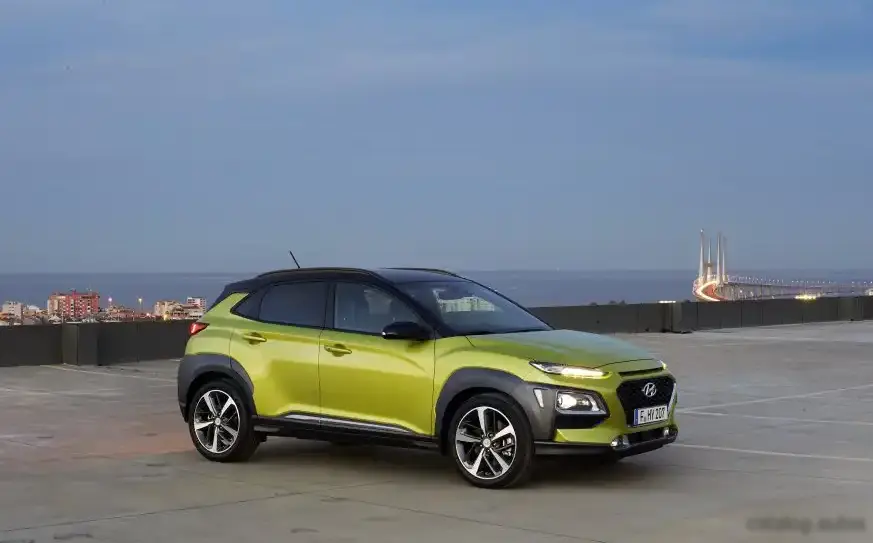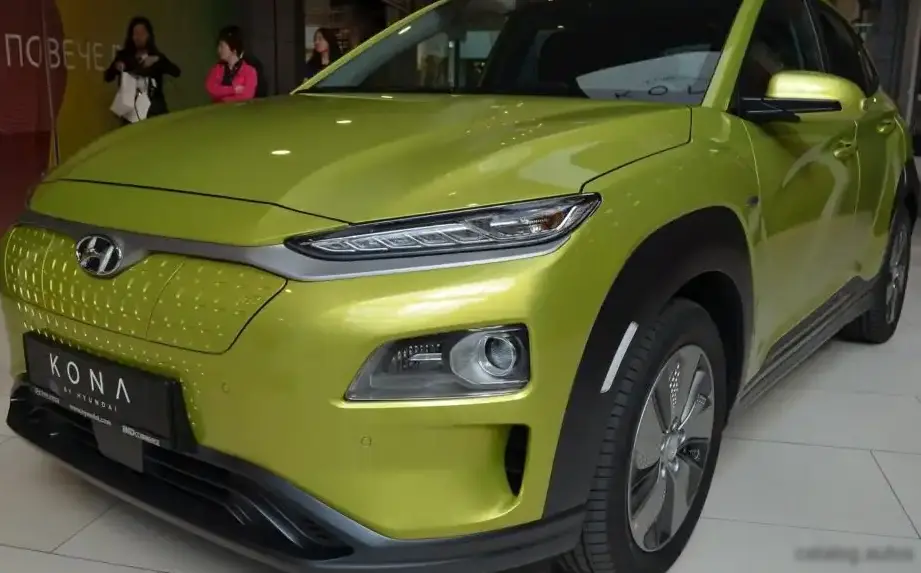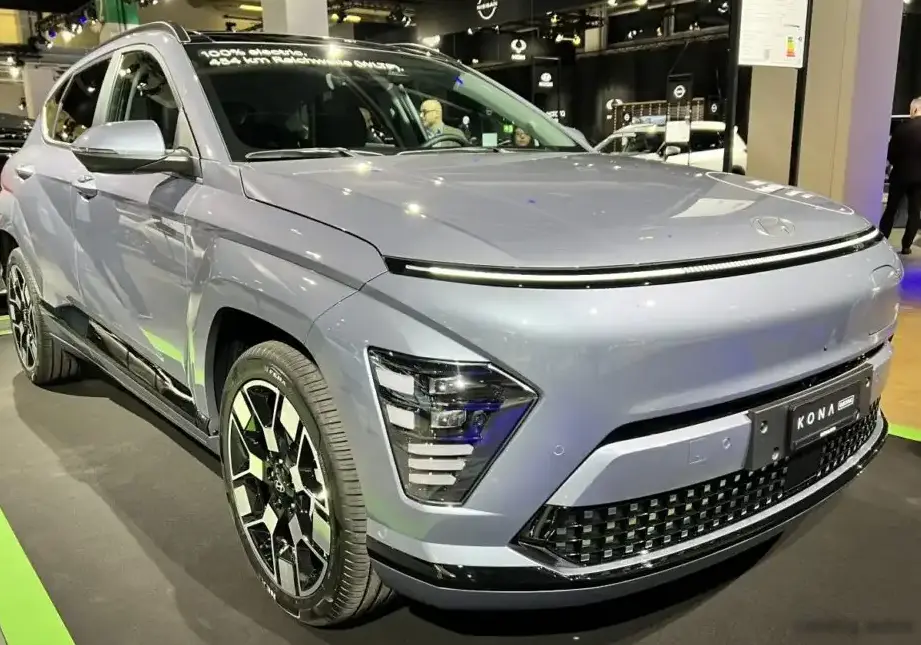
The Hyundai Kona II, specifically the 65.4 kWh (218 Hp) Electric variant, represents Hyundai’s second generation of its popular subcompact SUV. Introduced in March 2023, this model builds upon the success of the first-generation Kona, offering increased space, updated technology, and a fully electric powertrain option. Positioned as a mid-range offering within the Kona II lineup, the 65.4 kWh version balances range, performance, and price, targeting environmentally conscious buyers seeking a practical and efficient urban vehicle. It’s a key component of Hyundai’s broader strategy to expand its electric vehicle portfolio and compete in the rapidly growing EV market, particularly in Europe and North America.
Technical Specifications
| Brand | Hyundai |
| Model | Kona |
| Generation | Kona II |
| Type (Engine) | 65.4 kWh (218 Hp) Electric |
| Start of production | March, 2023 |
| Powertrain Architecture | BEV (Electric Vehicle) |
| Body type | SUV |
| Seats | 5 |
| Doors | 5 |
| Fuel Type | Electricity |
| Acceleration 0 – 100 km/h | 7.8 sec |
| Acceleration 0 – 62 mph | 7.8 sec |
| Acceleration 0 – 60 mph | 7.4 sec |
| Maximum speed | 172 km/h (106.88 mph) |
| Weight-to-power ratio | 8.1 kg/Hp, 123 Hp/tonne |
| Weight-to-torque ratio | 7 kg/Nm, 143.8 Nm/tonne |
| Gross battery capacity | 65.4 kWh |
| Battery voltage | 400 V |
| Battery technology | Lithium-ion (Li-Ion) |
| Battery location | Below the floor |
| All-electric range (WLTP) | 444-514 km (275.89 – 319.38 mi) |
| Average Energy consumption (WLTP) | 14.7-16.8 kWh/100 km (23.66 – 27.04 kWh/100 mi) |
| MPGe | 142 – 125 |
| km/kWh | 6.8 – 6 |
| mi/kWh | 4.2 – 3.7 |
| Electric motor power | 218 Hp |
| Electric motor Torque | 255 Nm (188.08 lb.-ft.) |
| Electric motor location | Front axle, Transverse |
| Electric motor type | Synchronous |
| System power | 218 Hp |
| System torque | 255 Nm (188.08 lb.-ft.) |
| Kerb Weight | 1773-1870 kg (3908.8 – 4122.64 lbs.) |
| Max. weight | 2220 kg (4894.26 lbs.) |
| Max load | 350-447 kg (771.62 – 985.47 lbs.) |
| Trunk (boot) space – minimum | 466 l (16.46 cu. ft.) |
| Max. roof load | 100 kg (220.46 lbs.) |
| Permitted trailer load with brakes (8%) | 750 kg (1653.47 lbs.) |
| Permitted trailer load with brakes (12%) | 750 kg (1653.47 lbs.) |
| Permitted trailer load without brakes | 300 kg (661.39 lbs.) |
| Permitted towbar download | 100 kg (220.46 lbs.) |
| Length | 4355 mm (171.46 in.) |
| Width | 1825 mm (71.85 in.) |
| Height | 1575 mm (62.01 in.) |
| Wheelbase | 2660 mm (104.72 in.) |
| Drag coefficient (Cd) | 0.27 |
| Drivetrain Architecture | One electric motor drives the front wheels. |
| Drive wheel | Front wheel drive |
| Number of gears and type of gearbox | 1 gears, automatic transmission |
| Front suspension | Independent type McPherson |
| Rear suspension | Independent multi-link suspension |
| Front brakes | Ventilated discs |
| Rear brakes | Disc |
| Assisting systems | ABS (Anti-lock braking system) |
| Steering type | Steering rack and pinion |
| Power steering | Electric Steering |
| Wheel rims size | 17; 19 |
Powertrain & Engine Architecture
The Kona II 65.4 kWh Electric utilizes a permanent magnet synchronous motor (PMSM) driving the front wheels. This motor produces 218 horsepower and 255 Nm (188 lb-ft) of torque. The powertrain is built around a 400V lithium-ion battery pack with a gross capacity of 65.4 kWh, providing a usable capacity of approximately 62.3 kWh. The battery is positioned under the floor of the vehicle, contributing to a lower center of gravity and improved handling. Hyundai employs an integrated charging system allowing for both AC and DC fast charging. The single-speed automatic transmission is inherent to electric vehicle design, providing seamless acceleration without traditional gear changes. The motor’s control unit manages power delivery, optimizing efficiency and performance based on driving conditions and driver input.
Driving Characteristics
The 65.4 kWh Kona Electric delivers brisk acceleration, achieving 0-60 mph in approximately 7.4 seconds. The instant torque characteristic of electric motors provides responsive acceleration, particularly at lower speeds. While not as dynamically focused as some performance-oriented EVs, the Kona Electric offers a comfortable and engaging driving experience. The single-speed transmission ensures smooth power delivery, and the relatively low center of gravity contributes to stable handling. Compared to the base model Kona with a smaller battery, the 65.4 kWh version offers significantly improved range and performance. Compared to internal combustion engine (ICE) Kona models, the electric variant provides a quieter and more refined driving experience, with minimal vibration and noise.
Equipment & Trim Levels
The Kona II 65.4 kWh Electric typically comes standard with a comprehensive suite of features, including a digital instrument cluster, a touchscreen infotainment system with Apple CarPlay and Android Auto compatibility, and a range of advanced driver-assistance systems (ADAS) such as forward collision avoidance assist, lane keeping assist, and blind-spot monitoring. Interior upholstery is typically cloth or available as an upgrade to leatherette. Optional extras often include a sunroof, premium audio system, heated and ventilated front seats, and a head-up display. Trim levels beyond the base model often add cosmetic enhancements, such as unique wheel designs and exterior accents.
Chassis & Braking
The Kona II utilizes a front-wheel-drive layout with an independent McPherson strut suspension in the front and an independent multi-link suspension in the rear. This suspension setup provides a good balance of ride comfort and handling. The vehicle is equipped with ventilated disc brakes in the front and solid disc brakes in the rear. ABS (Anti-lock Braking System) is standard, along with electronic stability control and traction control. The steering system is an electric power-assisted rack and pinion system, providing precise and responsive steering feel. Stabilizer bars are included front and rear to reduce body roll during cornering.
Market Reception & Comparison
The Hyundai Kona Electric has been well-received by critics and consumers alike, praised for its practicality, efficiency, and value. The 65.4 kWh variant, in particular, has been lauded for its improved range compared to earlier models. Compared to competitors such as the Nissan Leaf and Chevrolet Bolt, the Kona Electric offers a more modern design, a more refined interior, and a longer warranty. Fuel economy, expressed as MPGe, typically ranges from 125 to 142, depending on driving conditions. Reliability has generally been good, with few reported issues specific to the electric powertrain.
Legacy
The Hyundai Kona II 65.4 kWh Electric represents a significant step forward in Hyundai’s electric vehicle strategy. The powertrain, while not without its complexities, has proven to be relatively reliable in early model years. As the used car market matures, these vehicles are expected to hold their value reasonably well, particularly as demand for electric vehicles continues to grow. The Kona Electric has helped to establish Hyundai as a major player in the EV market, paving the way for future electric models and technologies. Its success demonstrates the growing acceptance of electric vehicles among mainstream consumers and the viability of affordable, long-range EVs.