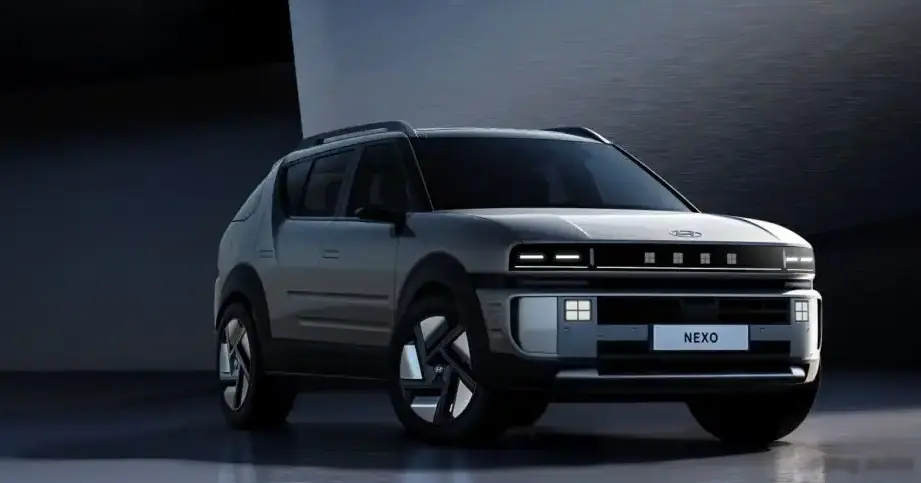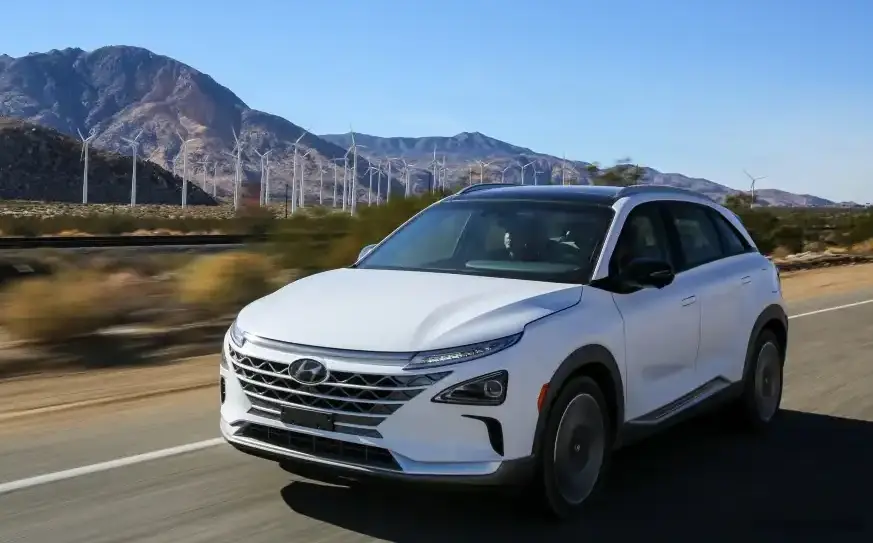
The Hyundai Nexo I, powered by a 1.56 kWh fuel cell delivering 184 horsepower, represents a significant step in Hyundai’s commitment to alternative fuel vehicles. Production spanned from February 2018 to April 2025, positioning the Nexo as a second-generation hydrogen fuel cell vehicle, succeeding the Hyundai Tucson Fuel Cell. The Nexo I is a compact SUV designed primarily for markets actively promoting hydrogen infrastructure, such as California in the United States, and South Korea. It’s built on a dedicated platform, unlike its predecessor which was based on an existing internal combustion engine vehicle. The “I” designation denotes a specific trim level within the Nexo lineup, generally representing the base or standard configuration.
Technical Specifications
| Brand | Hyundai |
| Model | Nexo |
| Generation | Nexo I |
| Type (Engine) | 1.56 kWh (184 Hp) Fuel Cell CVT |
| Start of production | February, 2018 |
| End of production | April, 2025 |
| Powertrain Architecture | FCEV (Fuel Cell Electric Vehicle) |
| Body type | SUV |
| Seats | 5 |
| Doors | 5 |
| Combined fuel consumption (WLTP) | 0.95 kg/100 km |
| Fuel consumption (economy) – urban | 0.77 kg/100 km |
| Fuel consumption (economy) – extra urban | 0.89 kg/100 km |
| Fuel consumption (economy) – combined | 0.84 kg/100 km |
| Fuel Type | Hydrogen |
| Acceleration 0 – 100 km/h | 9.2 sec |
| Acceleration 0 – 62 mph | 9.2 sec |
| Acceleration 0 – 60 mph | 8.7 sec |
| Maximum speed | 179 km/h (111.23 mph) |
| Weight-to-power ratio | 10.3 kg/Hp, 97.4 Hp/tonne |
| Gross battery capacity | 1.56 kWh |
| Electric motor power | 163 Hp |
| Electric motor Torque | 395 Nm (291.34 lb.-ft.) |
| System power | 184 Hp |
| Kerb Weight | 1889 kg (4164.53 lbs.) |
| Max. weight | 2340 kg (5158.82 lbs.) |
| Max load | 451 kg (994.28 lbs.) |
| Trunk (boot) space – minimum | 461 l (16.28 cu. ft.) |
| Trunk (boot) space – maximum | 1466 l (51.77 cu. ft.) |
| Fuel tank capacity | 6.33 kg |
| Max. roof load | 100 kg (220.46 lbs.) |
| Length | 4670 mm (183.86 in.) |
| Width | 1860 mm (73.23 in.) |
| Height | 1630-1640 mm (64.17 – 64.57 in.) |
| Wheelbase | 2790 mm (109.84 in.) |
| Front track | 1614/1618 mm (63.54 in.) |
| Rear (Back) track | 1625/1629 mm (63.98 in.) |
| Front overhang | 960 mm (37.8 in.) |
| Rear overhang | 920 mm (36.22 in.) |
| Ride height (ground clearance) | 162 mm (6.38 in.) |
| Drag coefficient (Cd) | 0.32 |
| Minimum turning circle (turning diameter) | 11.2 m (36.75 ft.) |
| Drive wheel | Front wheel drive |
| Number of gears and type of gearbox | 1 gears, automatic transmission CVT |
| Front suspension | Independent, type McPherson with coil spring and anti-roll bar |
| Rear suspension | Independent multi-link spring suspension with stabilizer |
| Front brakes | Ventilated discs |
| Rear brakes | Disc |
| Assisting systems | ABS (Anti-lock braking system) |
| Steering type | Steering rack and pinion |
| Power steering | Electric Steering |
| Tires size | 225/60 R17; 245/45 R19 |
| Wheel rims size | 7.0J x 17; 7.5J x 19 |
Powertrain & Engine Architecture
The Hyundai Nexo I doesn’t utilize a traditional internal combustion engine. Instead, it employs a 184-horsepower fuel cell stack. This stack combines hydrogen with oxygen from the air to generate electricity, with water as the only emission. The 1.56 kWh battery pack acts as a buffer, storing energy generated by regenerative braking and providing additional power during acceleration. The electric motor delivers 163 horsepower and 291 lb.-ft. of torque. The Nexo I utilizes a Continuously Variable Transmission (CVT) to deliver power to the front wheels. The fuel cell system itself is a complex arrangement of membranes, electrodes, and cooling systems, meticulously engineered for efficiency and durability. Hyundai made significant advancements in fuel cell stack density compared to the previous generation, resulting in a more compact and powerful system.
Driving Characteristics
The Nexo I offers a smooth and quiet driving experience, characteristic of electric vehicles. The CVT transmission provides seamless acceleration, although it lacks the responsiveness of a traditional geared automatic or manual transmission. Acceleration from 0-60 mph takes approximately 8.7 seconds, which is adequate for everyday driving but doesn’t offer particularly sporty performance. The weight of the vehicle (around 4,165 lbs) is noticeable, particularly during cornering. The low center of gravity, due to the battery pack positioned under the floor, contributes to stable handling. Compared to higher trim levels or potential future performance-oriented fuel cell vehicles, the Nexo I prioritizes efficiency and range over outright speed.
Equipment & Trim Levels
The Nexo I, as the base trim, came standard with a comprehensive suite of features including a 12.3-inch touchscreen infotainment system, Apple CarPlay and Android Auto compatibility, a suite of advanced driver-assistance systems (ADAS) such as lane keeping assist, automatic emergency braking, and adaptive cruise control. Interior upholstery was typically cloth, with available upgrades to leather in higher trims. Standard features also included heated front seats, a rearview camera, and automatic climate control. Optional extras for the Nexo I included a larger touchscreen display, a premium audio system, and a heads-up display.
Chassis & Braking
The Nexo I features a fully independent suspension system, with McPherson struts at the front and a multi-link setup at the rear. This configuration provides a comfortable ride and good handling characteristics. The vehicle utilizes ventilated disc brakes at the front and solid disc brakes at the rear. ABS (Anti-lock Braking System) is standard. The Nexo I’s chassis is constructed with a significant amount of aluminum to reduce weight and improve efficiency. Stabilizer bars are present at both the front and rear to minimize body roll during cornering.
Market Reception & Comparison
The Hyundai Nexo I received generally positive reviews from automotive critics, who praised its innovative technology, quiet operation, and long driving range. However, the limited hydrogen refueling infrastructure remained a significant barrier to widespread adoption. Compared to other Nexo trims, the “I” offered a more accessible entry point into fuel cell technology, making it appealing to environmentally conscious buyers on a budget. Fuel economy, measured in kilograms of hydrogen per 100 kilometers, was a key selling point, offering significantly lower running costs compared to gasoline-powered vehicles, assuming access to affordable hydrogen fuel. Reliability reports have been generally favorable, with few major issues reported with the fuel cell system itself.
Legacy
The Hyundai Nexo I represents a crucial step in the development and commercialization of fuel cell technology. While the hydrogen infrastructure remains a challenge, the Nexo demonstrated the viability of fuel cell vehicles as a zero-emission alternative to traditional gasoline and diesel cars. The powertrain has proven to be relatively reliable in real-world use, with the fuel cell stack showing good durability. On the used car market, the Nexo I holds its value reasonably well, particularly in areas with established hydrogen refueling networks. The lessons learned from the Nexo I will undoubtedly inform Hyundai’s future development of fuel cell vehicles and contribute to the broader adoption of hydrogen as a clean energy source.