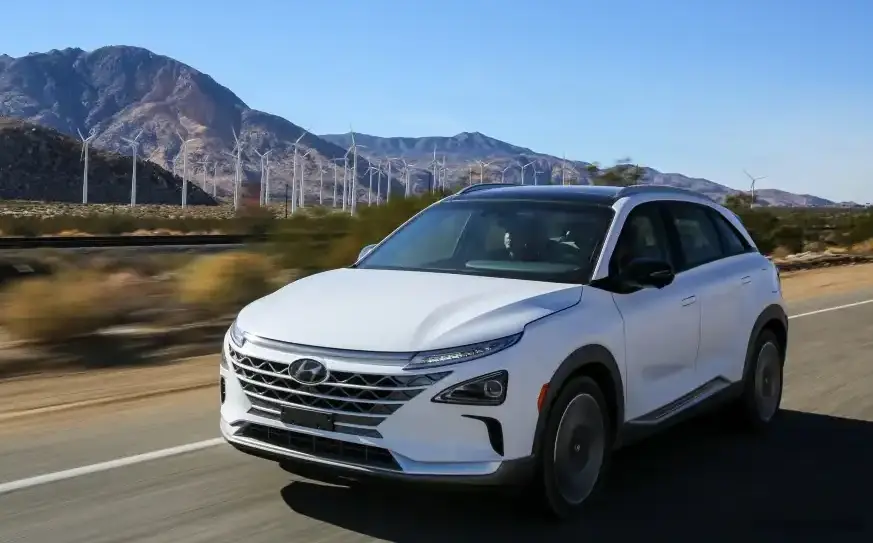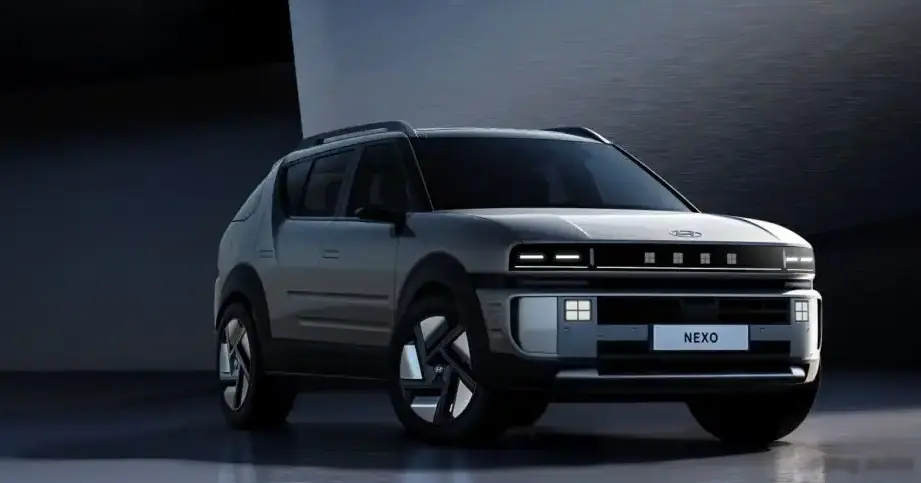
The Hyundai Nexo II, specifically the 2.64 kWh (258 Hp) Fuel Cell Electric Vehicle (FCEV) variant, represents the second generation of Hyundai’s hydrogen-powered crossover SUV. Introduced in April 2025, it builds upon the foundation laid by the first-generation Nexo, aiming to improve range, efficiency, and overall usability of hydrogen fuel cell technology. Positioned as a premium, zero-emission vehicle, the Nexo II targets environmentally conscious consumers seeking a long-range alternative to battery-electric vehicles, particularly in regions with developing hydrogen infrastructure. It competes directly with the Toyota Mirai and Honda Clarity Fuel Cell, offering a compelling blend of technology and practicality within the burgeoning FCEV market.
Technical Specifications
| Brand | Hyundai |
| Model | Nexo |
| Generation | Nexo II |
| Type (Engine) | 2.64 kWh (258 Hp) FCEV |
| Start of production | April, 2025 |
| Powertrain Architecture | FCEV (Fuel Cell Electric Vehicle) |
| Body type | SUV, Crossover |
| Seats | 5 |
| Doors | 5 |
| Fuel consumption (economy) – combined | 0.98 kg/100 km |
| Fuel Type | Hydrogen |
| Acceleration 0 – 100 km/h | 7.8 sec |
| Acceleration 0 – 62 mph | 7.8 sec |
| Acceleration 0 – 60 mph | 7.4 sec |
| Maximum speed | 179 km/h (111.23 mph) |
| Gross battery capacity | 2.64 kWh |
| All-electric range | 700 km (434.96 mi) |
| Electric motor power | 204 Hp |
| Electric motor Torque | 350 Nm (258.15 lb.-ft.) |
| Electric motor location | Front axle, Transverse |
| System power | 258 Hp |
| Trunk (boot) space – minimum | 993 l (35.07 cu. ft.) |
| Trunk (boot) space – maximum | 1719 l (60.71 cu. ft.) |
| Fuel tank capacity | 6.69 kg |
| Length | 4750 mm (187.01 in.) |
| Width | 1865 mm (73.43 in.) |
| Height | 1673 mm (65.87 in.) |
| Wheelbase | 2790 mm (109.84 in.) |
| Drivetrain Architecture | One electric motor drives the front wheels. |
| Drive wheel | Front wheel drive |
| Number of gears and type of gearbox | 1 gears, automatic transmission |
| Front brakes | Ventilated discs |
| Rear brakes | Disc |
| Assisting systems | ABS (Anti-lock braking system) |
| Steering type | Steering rack and pinion |
| Power steering | Electric Steering |
| Tires size | 225/55 R18; 245/45 R19 |
| Wheel rims size | 18; 19 |
Powertrain & Engine Architecture
The Nexo II’s core is its advanced fuel cell stack. This second-generation stack boasts improved efficiency and durability compared to its predecessor. Hydrogen gas, stored in a high-pressure tank, reacts with oxygen from the air, producing electricity, water, and heat. The electricity powers the electric motor, while the water is the only emission. The 2.64 kWh battery pack acts as a buffer, providing additional power during acceleration and recapturing energy during regenerative braking. The electric motor, positioned transversely at the front axle, delivers 204 horsepower, with the system output reaching 258 horsepower when combined with the fuel cell stack’s power contribution. The single-speed automatic transmission provides seamless power delivery, optimized for efficiency and smooth driving. The fuel injection system is integral to the fuel cell stack, precisely controlling the flow of hydrogen for optimal performance.
Driving Characteristics
The Nexo II offers a refined and quiet driving experience. The instant torque delivery of the electric motor provides brisk acceleration, achieving 0-60 mph in approximately 7.4 seconds. While not a performance vehicle, the Nexo II feels adequately powered for everyday driving and highway merging. The single-speed automatic transmission contributes to a smooth, linear power delivery. Compared to the first-generation Nexo, the II exhibits improved responsiveness and a slightly more engaging driving feel. The hydrogen fuel cell system operates silently, contributing to a serene cabin environment. The front-wheel-drive configuration provides predictable handling, although it lacks the all-weather capability of an all-wheel-drive system.
Equipment & Trim Levels
The Nexo II is well-equipped with standard features, reflecting its premium positioning. Interior appointments include comfortable seating upholstered in eco-friendly materials, a large touchscreen infotainment system with navigation, and a suite of advanced driver-assistance systems (ADAS). Standard ADAS features include lane keeping assist, adaptive cruise control, and automatic emergency braking. Optional extras include a premium sound system, a panoramic sunroof, and upgraded interior trim materials. The dashboard layout is modern and minimalist, emphasizing the vehicle’s high-tech nature. The Nexo II typically comes in a single, well-appointed trim level, with options primarily focused on cosmetic enhancements and convenience features.
Chassis & Braking
The Nexo II utilizes a MacPherson strut front suspension and a multi-link rear suspension, tuned for a comfortable ride and stable handling. Ventilated disc brakes are employed at the front, while solid discs are used at the rear. The electric power steering provides light and precise steering feel. ABS (Anti-lock Braking System) is standard, enhancing braking performance and safety. The vehicle’s relatively low center of gravity, due to the placement of the hydrogen tank and battery pack, contributes to its stable cornering behavior. Stabilizer bars are incorporated into both the front and rear suspension to minimize body roll.
Market Reception & Comparison
The Hyundai Nexo II has received generally positive reviews from automotive critics, who praise its long range, zero-emission operation, and advanced technology. However, the limited hydrogen refueling infrastructure remains a significant barrier to widespread adoption. Compared to the first-generation Nexo, the II offers improved range, efficiency, and a more refined driving experience. Against its primary competitors, the Toyota Mirai and Honda Clarity Fuel Cell, the Nexo II often stands out for its more modern design and user-friendly infotainment system. Fuel economy is measured in kilograms of hydrogen per 100 kilometers, with the Nexo II achieving approximately 0.98 kg/100 km. Reliability is expected to be high, given Hyundai’s reputation for building durable vehicles, although long-term data on fuel cell durability is still being collected.
Legacy
The Hyundai Nexo II represents a significant step forward in the development of hydrogen fuel cell technology. While the widespread adoption of FCEVs depends on the expansion of hydrogen infrastructure, the Nexo II demonstrates the potential of this technology to provide a sustainable and practical transportation solution. The powertrain, while complex, is designed for long-term durability, with Hyundai offering a comprehensive warranty on the fuel cell stack. In the used car market, the Nexo II is expected to hold its value relatively well, appealing to environmentally conscious buyers seeking a cutting-edge vehicle. The lessons learned from the Nexo II will undoubtedly inform Hyundai’s future development of hydrogen-powered vehicles and contribute to the broader transition towards a zero-emission transportation future.