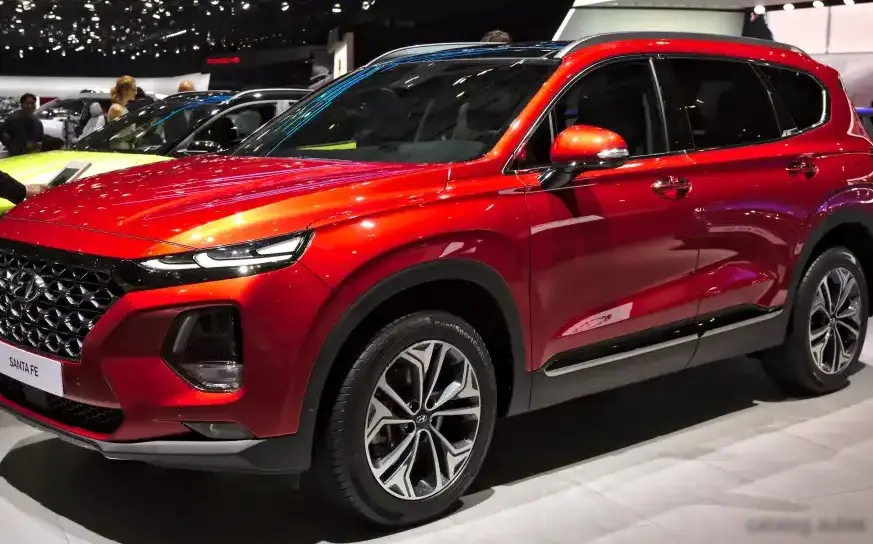
The Hyundai Santa Fe IV (TM) R 2.2 CRDi 4WD, produced from 2018 to 2020, represents a significant iteration in Hyundai’s popular mid-size SUV lineup. Positioned as a premium offering within the fourth-generation Santa Fe (TM) series, this variant combined a powerful diesel engine with all-wheel drive capability, targeting buyers seeking both performance and practicality. It was primarily marketed in Europe and other regions where diesel engines remained popular, offering a blend of fuel efficiency and towing capacity. The TM generation Santa Fe marked a departure from the previous model’s more angular styling, adopting a more refined and sophisticated aesthetic. This particular 2.2 CRDi 4WD trim sat towards the top of the range, offering a step up in performance and features compared to lower-spec models.
Technical Specifications
| Brand | Hyundai |
| Model | Santa Fe |
| Generation | Santa Fe IV (TM) |
| Type (Engine) | R 2.2 CRDi (197 Hp) 4WD |
| Start of production | 2018 |
| End of production | 2020 |
| Powertrain Architecture | Internal Combustion engine |
| Body type | SUV |
| Seats | 5 |
| Doors | 5 |
| Fuel Type | Diesel |
| Emission standard | Euro 6 |
| Power | 197 Hp @ 3800 rpm |
| Power per litre | 89.6 Hp/l |
| Torque | 436 Nm @ 1750 rpm / 321.58 lb.-ft. @ 1750 rpm |
| Engine layout | Front, Transverse |
| Engine Model/Code | R II / D4HB |
| Engine displacement | 2199 cm3 / 134.19 cu. in. |
| Number of cylinders | 4 |
| Engine configuration | Inline |
| Cylinder Bore | 85.4 mm / 3.36 in. |
| Piston Stroke | 96 mm / 3.78 in. |
| Compression ratio | 16:1 |
| Number of valves per cylinder | 4 |
| Fuel injection system | Diesel Commonrail |
| Engine aspiration | Turbocharger, Intercooler |
| Valvetrain | DOHC |
| Engine oil capacity | 6.5 l / 6.87 US qt | 5.72 UK qt |
| Coolant | 8.8 l / 9.3 US qt | 7.74 UK qt |
| Trunk (boot) space – minimum | 625 l / 22.07 cu. ft. |
| Length | 4770 mm / 187.8 in. |
| Width | 1890 mm / 74.41 in. |
| Height | 1680 mm / 66.14 in. |
| Wheelbase | 2765 mm / 108.86 in. |
| Front overhang | 940 mm / 37.01 in. |
| Rear overhang | 1065 mm / 41.93 in. |
| Ride height (ground clearance) | 185 mm / 7.28 in. |
| Drive wheel | All wheel drive (4×4) |
| Number of gears and type of gearbox | 6 gears, manual transmission |
| Front brakes | Ventilated discs |
| Rear brakes | Disc |
| Assisting systems | ABS (Anti-lock braking system) |
| Steering type | Steering rack and pinion |
| Power steering | Electric Steering |
| Tires size | 235/65 R17; 235/60 R18; 235/55 R19 |
| Wheel rims size | 17; 18; 19 |
Powertrain & Engine Architecture
The heart of the Santa Fe R 2.2 CRDi is the Hyundai-Kia R II diesel engine, specifically the D4HB variant. This is a four-cylinder, inline engine displacing 2.2 liters. It utilizes a cast iron block and aluminum cylinder head, a common configuration for durability and weight reduction. The engine employs a second-generation common rail direct injection system, delivering fuel at extremely high pressures for optimized combustion and reduced emissions. A variable geometry turbocharger (VGT) with an intercooler further enhances performance by providing increased air intake. The DOHC (Double Overhead Camshaft) valvetrain, with four valves per cylinder, contributes to efficient gas exchange. The 6-speed manual transmission was standard for this variant, providing a direct connection between the engine and the wheels. The transmission’s gear ratios were tuned to balance fuel economy with the engine’s torque characteristics.
Driving Characteristics
The 197 horsepower and 321 lb-ft of torque produced by the 2.2 CRDi engine provided the Santa Fe with respectable performance. Acceleration was brisk, particularly in the mid-range, making overtaking maneuvers relatively effortless. While not a sports SUV, the engine’s torque output allowed for confident cruising at highway speeds. The manual transmission offered drivers greater control over gear selection, enabling them to maximize engine efficiency or exploit the available power. Compared to the gasoline engine options available in the Santa Fe range, the diesel offered superior fuel economy and a more relaxed driving experience, especially when fully loaded or towing. The all-wheel-drive system provided enhanced traction in adverse weather conditions, making it a capable vehicle for year-round use.
Equipment & Trim Levels
The R 2.2 CRDi 4WD trim typically included a generous level of standard equipment. Interior features often included cloth or leather upholstery, a touchscreen infotainment system with navigation, Apple CarPlay and Android Auto compatibility, and a rearview camera. Safety features such as ABS, electronic stability control, and multiple airbags were standard. Optional extras could include a panoramic sunroof, heated and ventilated front seats, a premium sound system, and advanced driver-assistance systems (ADAS) like lane departure warning and automatic emergency braking. The specific equipment levels varied slightly depending on the market and optional packages selected.
Chassis & Braking
The Santa Fe IV (TM) utilized a front-engine, front-wheel-drive based platform with all-wheel drive available as an option. The suspension consisted of MacPherson struts at the front and a multi-link setup at the rear, providing a comfortable ride quality. The all-wheel-drive system employed a multi-plate clutch to distribute torque between the front and rear axles as needed. Braking duties were handled by ventilated discs at the front and solid discs at the rear, providing adequate stopping power. The steering system was an electrically assisted rack and pinion setup, offering precise and responsive handling.
Market Reception & Comparison
The Hyundai Santa Fe R 2.2 CRDi 4WD was generally well-received by automotive critics. It was praised for its spacious interior, comfortable ride, and strong diesel engine. The all-wheel-drive system was also noted as a valuable asset for drivers in regions with inclement weather. Compared to other diesel-powered SUVs in its class, the Santa Fe offered a competitive combination of performance, fuel economy, and value. However, some critics noted that the interior materials weren’t quite as premium as those found in some European rivals. Fuel economy figures typically ranged from 35 to 45 mpg (combined cycle), depending on driving conditions and style. Reliability reports generally indicated good long-term dependability, although diesel particulate filter (DPF) maintenance was a consideration for owners.
Legacy
The Hyundai Santa Fe IV (TM) R 2.2 CRDi 4WD remains a popular choice in the used car market. The R II diesel engine, while requiring diligent maintenance (particularly regarding the DPF), is known for its durability and longevity. The availability of all-wheel drive and a spacious interior continue to appeal to buyers seeking a practical and capable family SUV. As with any used vehicle, prospective buyers should carefully inspect the maintenance history and ensure that the DPF has been properly serviced. The TM generation Santa Fe represents a significant step forward for Hyundai in terms of design, technology, and overall refinement, solidifying its position as a major player in the global SUV market.