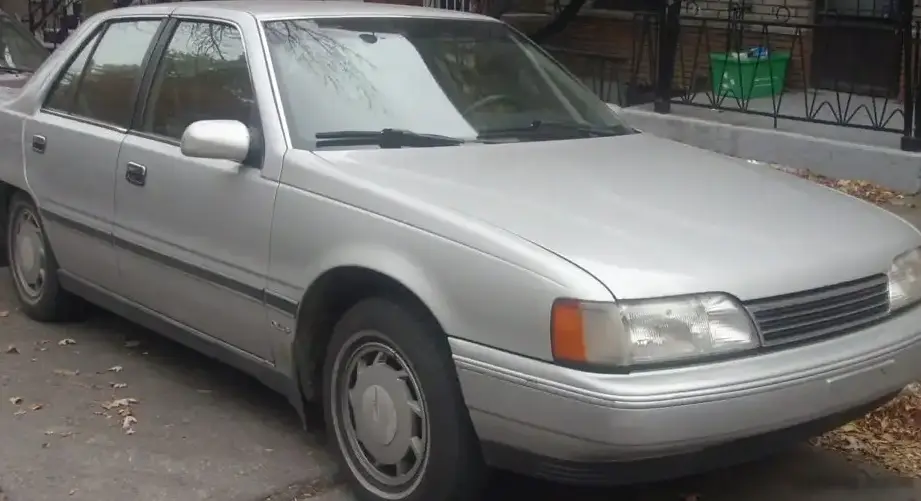
The Hyundai Sonata II (Y2), produced between 1988 and 1991, represented a significant step forward for the South Korean automaker in establishing a presence in the mid-size sedan market. This second generation Sonata, built on the Y2 platform, aimed to offer a more refined and modern alternative to established Japanese competitors. The 1.8-liter (97 hp) variant, while not the performance leader of the range, served as the entry point into the Sonata lineup, prioritizing affordability and fuel efficiency. It was primarily marketed towards family buyers seeking reliable transportation.
Technical Specifications
| Brand | Hyundai |
| Model | Sonata |
| Generation | Sonata II (Y2) |
| Type (Engine) | 1.8 (97 Hp) |
| Start of production | 1988 |
| End of production | 1991 |
| Powertrain Architecture | Internal Combustion engine |
| Body type | Sedan |
| Seats | 5 |
| Doors | 4 |
| Fuel consumption (urban) | 11.4 l/100 km (20.6 US mpg) |
| Fuel consumption (extra urban) | 6.7 l/100 km (35.1 US mpg) |
| Fuel consumption (combined) | 8.8 l/100 km (26.7 US mpg) |
| Fuel Type | Petrol (Gasoline) |
| Maximum speed | 180 km/h (111.85 mph) |
| Weight-to-power ratio | 12.4 kg/Hp |
| Weight-to-torque ratio | 8.2 kg/Nm |
| Power | 97 Hp @ 5200 rpm |
| Power per litre | 54 Hp/l |
| Torque | 146 Nm @ 4000 rpm (107.68 lb.-ft. @ 4000 rpm) |
| Engine layout | Front, Transverse |
| Engine displacement | 1796 cm3 (109.6 cu. in.) |
| Number of cylinders | 4 |
| Engine configuration | Inline |
| Cylinder Bore | 80.6 mm (3.17 in.) |
| Piston Stroke | 88 mm (3.46 in.) |
| Compression ratio | 8.8:1 |
| Number of valves per cylinder | 2 |
| Fuel injection system | Multi-port manifold injection |
| Engine aspiration | Naturally aspirated engine |
| Valvetrain | OHC |
| Kerb Weight | 1200 kg (2645.55 lbs.) |
| Trunk (boot) space (minimum) | 473 l (16.7 cu. ft.) |
| Fuel tank capacity | 60 l (15.85 US gal | 13.2 UK gal) |
| Length | 4680 mm (184.25 in.) |
| Width | 1750 mm (68.9 in.) |
| Height | 1410 mm (55.51 in.) |
| Wheelbase | 2650 mm (104.33 in.) |
| Front track | 1461 mm (57.52 in.) |
| Rear track | 1440 mm (56.69 in.) |
| Drivetrain Architecture | Front wheel drive |
| Drive wheel | Front wheel drive |
| Number of gears and type of gearbox | 5 gears, manual transmission |
| Front suspension | Independent, type McPherson with coil spring and anti-roll bar |
| Rear suspension | Coil spring |
| Front brakes | Ventilated discs |
| Rear brakes | Disc |
| Assisting systems | ABS (Anti-lock braking system) |
| Steering type | Steering rack and pinion |
| Power steering | Hydraulic Steering |
| Tires size | 185/70 R14 |
| Wheel rims size | 5.5J x 14 |
Powertrain & Engine Architecture
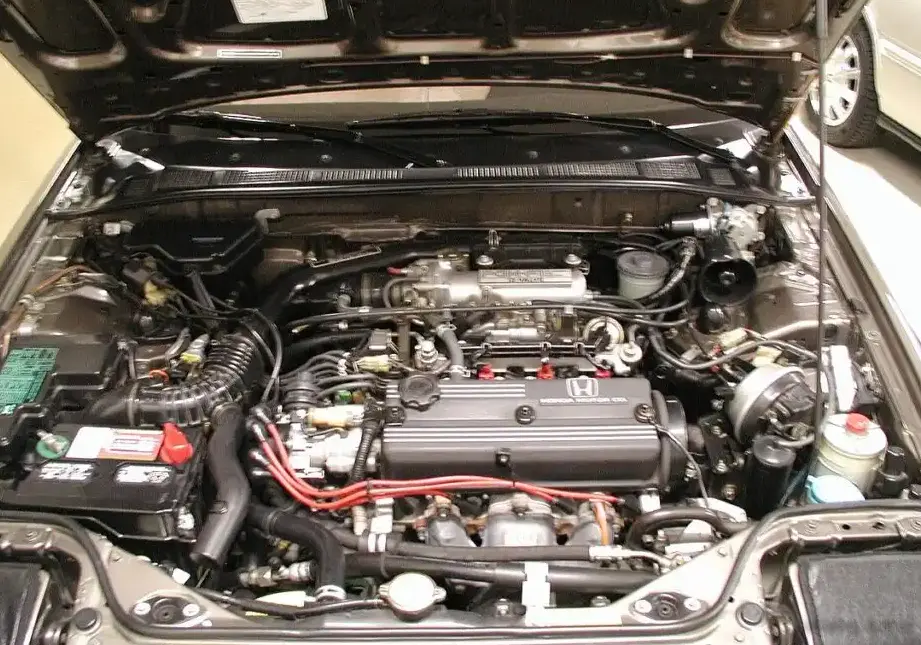
The heart of the Sonata II 1.8 was the Mitsubishi-sourced 4G63 inline-four cylinder engine, displacing 1796cc. This engine featured a single overhead camshaft (SOHC) valvetrain with two valves per cylinder. Multi-port fuel injection was employed, a relatively modern feature for the time, contributing to improved fuel efficiency and smoother operation compared to carbureted engines. The 8.8:1 compression ratio was a compromise between performance and the quality of fuel available in many markets. The engine produced 97 horsepower at 5200 rpm and 146 Nm (107.68 lb-ft) of torque at 4000 rpm. The engine was transversely mounted, driving the front wheels. The standard transmission was a 5-speed manual, although a 4-speed automatic transmission was also offered, albeit at a slight cost to performance and fuel economy.
Driving Characteristics
The 1.8-liter Sonata, particularly with the manual transmission, offered adequate, though not exhilarating, performance. Acceleration was modest, with a 0-60 mph time estimated around 11-12 seconds. The automatic transmission further dulled acceleration, making it more suited for relaxed city driving. The gear ratios were tuned for fuel economy rather than outright speed. Handling was generally considered safe and predictable, but not particularly sporty. The McPherson strut front suspension provided a comfortable ride, while the rear coil springs offered a reasonable level of stability. Compared to the later 2.0-liter versions, the 1.8 felt noticeably less powerful, especially when fully loaded with passengers and cargo.
Equipment & Trim Levels
The 1.8-liter Sonata typically represented the base trim level. Standard features included cloth upholstery, a basic AM/FM radio, and manual windows and door locks. Air conditioning was often an optional extra. Interior plastics were durable but not luxurious. Higher trim levels, available with the larger engines, added features such as power windows, power locks, a more sophisticated stereo system, and upgraded interior trim. The dashboard layout was functional and straightforward, prioritizing ease of use over aesthetic flair.
Chassis & Braking
The Sonata II utilized a front-engine, front-wheel-drive layout. The front suspension employed independent McPherson struts with coil springs and an anti-roll bar, providing a reasonable balance of ride comfort and handling. The rear suspension consisted of a simple coil spring setup. Braking was accomplished via ventilated discs at the front and solid discs at the rear. An Anti-lock Braking System (ABS) was available as an option, enhancing safety, particularly in slippery conditions. The steering system was a rack-and-pinion setup with hydraulic power assistance, providing relatively light and precise steering feel.
Market Reception & Comparison
The 1.8-liter Sonata was generally well-received as an affordable and reliable family sedan. Critics praised its spacious interior and comfortable ride. However, the engine’s lack of power was a common criticism, particularly in comparison to some of its Japanese rivals. Fuel economy was considered good for its class. Compared to the 2.0-liter Sonata, the 1.8 offered a lower purchase price but sacrificed performance. The 2.0-liter was favored by drivers who prioritized acceleration and highway passing power. The 1.8’s simplicity also meant potentially lower maintenance costs over the long term.
Legacy
The Hyundai Sonata II 1.8, while not a groundbreaking vehicle, played a crucial role in establishing Hyundai as a credible automaker in international markets. The 4G63 engine proved to be remarkably durable and reliable, and many examples remain on the road today. The 1.8-liter variant, due to its affordability and simplicity, often represents the most accessible entry point into Sonata II ownership. In the used car market, these models are typically valued for their practicality and low running costs, making them a popular choice for budget-conscious buyers. While not a collector’s item, the Sonata II 1.8 represents a significant milestone in Hyundai’s history and a testament to the brand’s growing engineering capabilities.